Duolingo taught you words. No one taught you to speak.
PracticeMe: real voice conversations with an AI tutor, 24/7.
American English Conversation Practice: Topics & Phrases

Whether you're ordering a latte in Chicago, making small talk with a neighbor in Texas, or navigating office banter in New York, American English conversation practice comes down to one thing: knowing how real Americans actually talk — not how textbooks and teachers say they talk.
Quick Summary: This guide covers 7 real-world American English conversation practice scenarios with full dialogues, everyday slang (gonna, wanna, kinda, no worries), cultural tips Americans won't tell you (like how "How are you?" isn't really a question), and an American vs. British English comparison table. Practice speaking these scenarios with Practice Me's American accent AI tutors Sarah and Marcus to start learning American English naturally.
Why American English Conversation Practice Matters
If you've studied English from a textbook or with teachers who focused on formal grammar lessons, your first real conversation with an American might throw you off. Not because your English is wrong — but because everyday American English runs on informal shortcuts that classroom learning rarely covers.
Americans routinely say gonna instead of "going to," wanna instead of "want to," and kinda instead of "kind of." These aren't mistakes. They're how 330 million people actually speak. Learning to recognize these patterns is the first lesson in real American English conversation practice — and it's something every English learner discovers sooner or later.
Beyond contractions, American conversations are filled with filler words (like, you know, I mean), softening phrases (no worries, no biggie), and cultural patterns that can confuse even fluent English speakers from other countries. It's easy to feel lost, too — especially when what you hear doesn't match what you learned in English language classes.
The good news? Once you learn these patterns, American English becomes much more predictable. Here are 7 everyday scenarios with real dialogues you can practice speaking out loud — plus the cultural context that makes them click.
7 Everyday American English Conversations With Dialogues
Each scenario below includes a realistic dialogue, key phrases to learn, and a cultural note that explains the unspoken rules Americans follow. Think of these as mini conversation lessons you can use for English language speaking practice right now.
1. Ordering at a Coffee Shop
Coffee shops are where most visitors first interact with American English. Here's what a typical exchange sounds like — and what you should learn from it:
Barista: Hey! What can I get started for you? You: Hi, can I get a medium iced coffee with oat milk? Barista: Sure thing! Room for cream? You: No, I'm good, thanks. Barista: Alright, that'll be five fifty. Name for the order? You: It's Ana. Barista: Cool, we'll have that right out for you!
Key phrases to learn:
- "Can I get a…" — The standard American way to order (not "May I have" or "I would like," though those work too)
- "I'm good" — Means "no, thank you" in casual contexts
- "Sure thing" — A casual way of saying "of course"
- "Right out" — Means it'll be ready quickly
🇺🇸 Cultural note: Tipping at coffee shops is optional but common. Most Americans leave a dollar per drink or tap 15–20% on the card reader. You won't be judged for skipping it, but baristas notice and appreciate it too.
2. Small Talk With Neighbors
Americans love small talk. It might feel pointless at first, but it's the social glue that keeps neighborhoods friendly. Learning this conversational skill is an essential lesson for anyone living in or visiting the United States.
Neighbor: Hey! How's it going? You: Pretty good! Just enjoying the weather. How about you? Neighbor: Can't complain. Been doing any yard work? You: A little bit, yeah. Finally planted some flowers. Neighbor: Nice! Well, have a good one! You: Thanks, you too!
Key phrases to learn:
- "How's it going?" — A casual greeting, not a real question about your life
- "Pretty good" — The standard positive response (not "I am fine, thank you")
- "Can't complain" — Means things are going well enough
- "Have a good one!" — All-purpose friendly goodbye
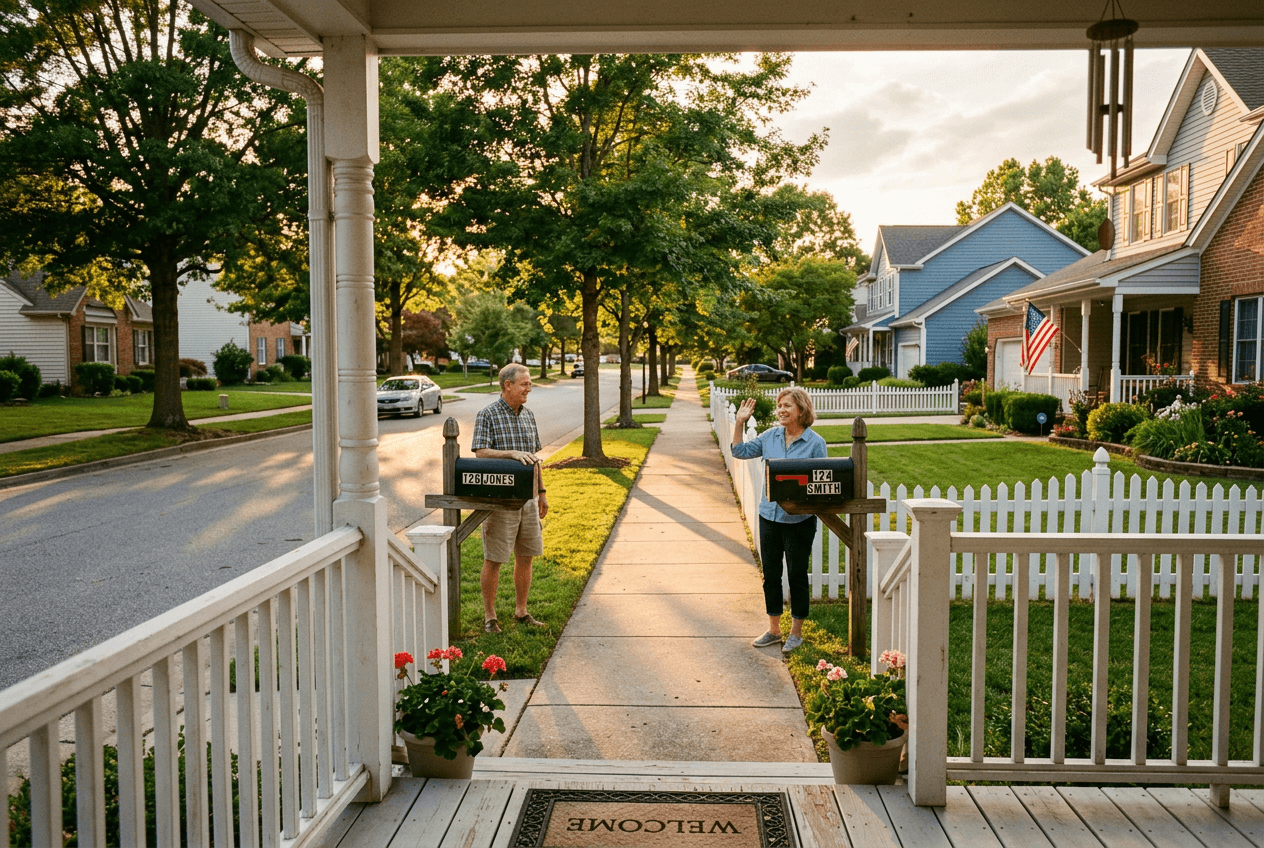
🇺🇸 Cultural note: When an American asks "How are you?" they expect a brief, positive answer — "Good, thanks!" or "Not bad!" Launching into a detailed update about your health or problems will make things awkward. Save real answers for close friends. Americans also value personal space — standing about an arm's length apart during casual conversation is the norm.
3. Workplace Water Cooler Chat
Office small talk follows its own rules. It's casual but careful — you want to be friendly without crossing lines. This is one of the trickier American English conversation practice scenarios for learners, because the tone is so specific.
Coworker: Hey, TGIF, right? You: Seriously. This week was so long. Coworker: Did you catch that new show on Netflix? The one everyone's talking about? You: Not yet, but it's on my list. Is it worth it? Coworker: Totally. You're gonna love it. You: Cool, I'll check it out this weekend.
Key phrases to learn:
- "TGIF" — "Thank God It's Friday" — used every Friday in workplaces across America
- "Gonna" — Spoken form of "going to"
- "Check it out" — Means to try or look at something
- "Totally" — Enthusiastic "yes" or "absolutely"
- "On my list" — Something you plan to do but haven't yet
🇺🇸 Cultural note: Safe work conversation topics include TV shows, weekend plans, sports, weather, and food. Topics to avoid: politics, religion, salary, and personal health. Americans keep work conversations light unless you're genuinely close with someone. Cultural guides for international visitors emphasize this lesson too — keep it casual, keep it friendly.
4. At the Grocery Store
Grocery store interactions are short but have their own script. Practice these too — they're some of the most common American English exchanges you'll have, and a good lesson in everyday conversation.
You: Excuse me, do you know where I can find olive oil? Employee: Yeah, aisle seven, about halfway down on the left. You: Awesome, thanks! Employee: No problem!
[At checkout]
Cashier: Did you find everything okay? You: Yep, all good! Cashier: Paper or plastic? You: Plastic's fine. Cashier: Alright, your total is thirty-four seventy-two. Debit or credit? You: Debit, please. Cashier: Have a great day! You: Thanks, you too!
Key phrases to learn:
- "Did you find everything okay?" — Cashiers ask this almost every time. Just say "Yep!" even if you didn't find everything
- "Paper or plastic?" — Asking which bag type you prefer
- "Have a great day" — Standard goodbye in retail settings
- "Awesome" — Americans use this constantly to mean "great" or "thank you"
🇺🇸 Cultural note: Unlike some countries, you typically bag your own groceries at many American stores (especially self-checkout). At full-service registers, the cashier or a bagger does it for you. No tipping required at grocery stores.
5. Making a Phone Call
Phone calls in American English follow a predictable pattern, which is helpful if calling makes you nervous. If you experience anxiety about speaking English, having a learned script in your head for phone calls can reduce that stress dramatically.
Receptionist: Good morning, Dr. Chen's office. How can I help you? You: Hi, this is Ana Martinez. I'm calling to schedule an appointment. Receptionist: Sure! Have you been here before? You: No, I'd be a new patient. Receptionist: No problem. Does next Thursday at 2:30 work for you? You: Hmm, could we do something in the morning? Receptionist: Let me check… How about 10:15? You: That works. Thanks so much! Receptionist: Great, you're all set. We'll see you then!

Key phrases to learn:
- "This is [name]" — How Americans identify themselves on the phone (not "I am [name]")
- "I'm calling to…" — The standard way to state your purpose
- "Does [time] work for you?" — A polite way to suggest an appointment
- "You're all set" — Means everything is confirmed and done
🇺🇸 Cultural note: Americans always identify themselves at the start of a call. Voicemail is totally normal too — don't be offended if someone doesn't answer. Leave a brief message with your name, reason for calling, and phone number.
Duolingo taught you words. No one taught you to speak.
PracticeMe: real voice conversations with an AI tutor, 24/7.
6. Making Plans With Friends
Making plans sounds different in American English than in textbooks — it's more casual, more tentative, and often happens over text. Learning this informal style is a key part of American English conversation practice that many learners overlook.
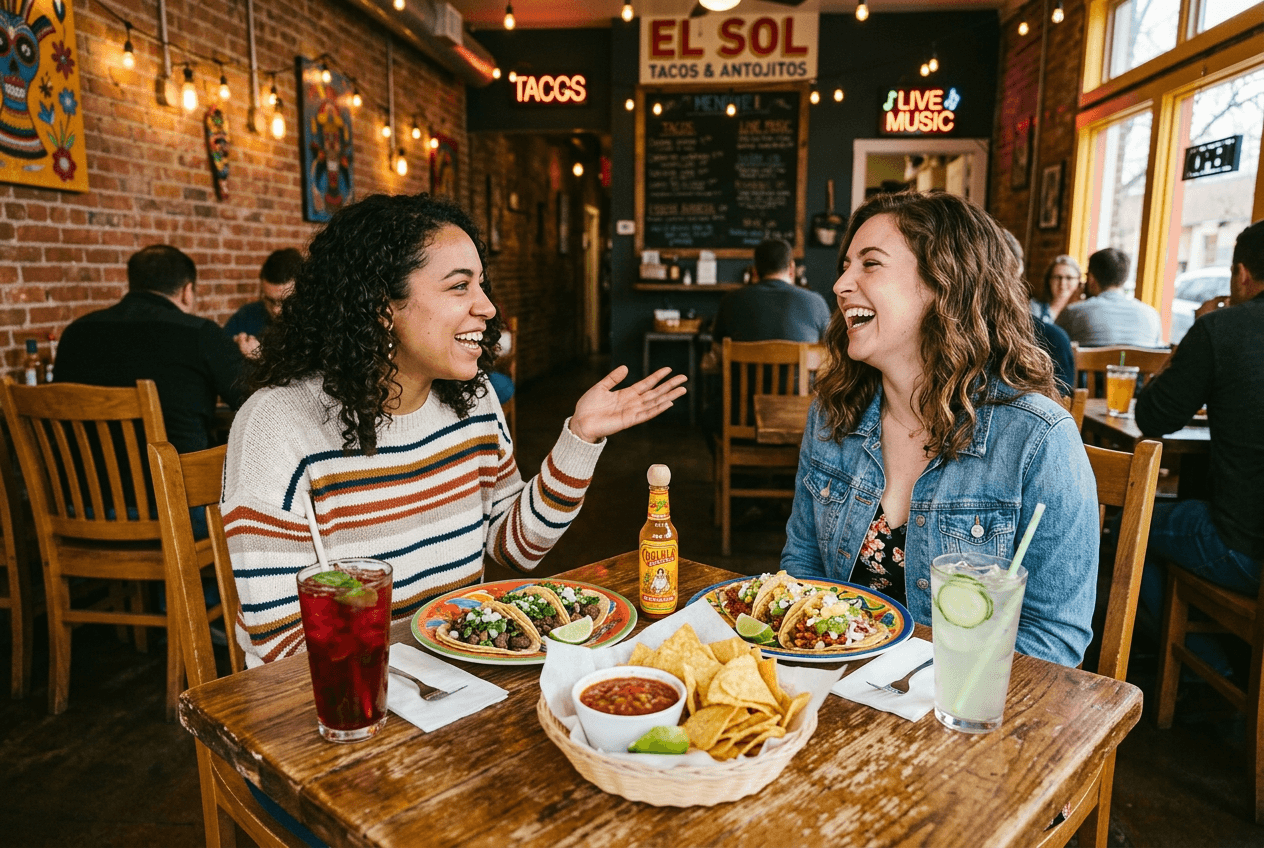
Friend: Hey, wanna grab lunch this weekend? You: Yeah, I'm down! Saturday work? Friend: Hmm, Saturday's kinda packed. How about Sunday? You: Sunday works. Where are you thinking? Friend: There's this new taco place on Main Street. Wanna check it out? You: Sounds like a plan! What time? Friend: Like noon-ish? You: Perfect. See you there!
Key phrases to learn:
- "Wanna" — Casual "want to"
- "I'm down" — "I'm interested" or "count me in"
- "Kinda" — "Kind of" / "a little bit"
- "Sounds like a plan" — Confirming you agree with the suggestion
- "-ish" — Added to any time to mean "approximately" (noon-ish = around noon)
🇺🇸 Cultural note: Be aware that "We should hang out sometime!" is often just a friendly thing to say — not an actual invitation. If an American says this without suggesting a specific date, they're being polite but may not follow through. To actually make plans, pin down a day and time.
7. At a Restaurant
Restaurant conversations in America include some cultural expectations that surprise many visitors too. This is also where the difference between American English and British English vocabulary becomes very practical — and worth learning before you dine out.
Server: Hi there! Can I start you guys off with something to drink? You: I'll have a water, and could I get an iced tea too? Server: Sure! Are you ready to order, or do you need a minute? You: I think we're ready. I'll have the grilled chicken sandwich. Server: Great choice. Fries or salad on the side? You: Fries, please.
[After the meal]
You: Could we get the check, please? Server: Of course! I'll be right back with that.
Key phrases to learn:
- "You guys" — Gender-neutral way to address a group in American English
- "Can I start you off with…" — Server's way of asking about drinks first
- "I'll have the…" — Standard ordering phrase
- "Could we get the check?" — How to ask for the bill (Americans say "check," not "bill")
- "On the side" — Something served separately

🇺🇸 Cultural note: This is the big one. Tipping 15–20% is expected, not optional. Under the Fair Labor Standards Act, many American servers earn a base wage of just two dollars and thirteen cents per hour — tips are their real income. Leaving under 15% is considered rude. Use your phone's calculator if you need to: multiply the pre-tax total by 0.18 for a standard 18% tip.
American English Slang You'll Hear Every Day
No English language lesson or textbook covers all of these, but learning them will transform your listening comprehension. Here's a quick-reference cheat sheet of informal American English that most teachers don't teach:
| Slang/Shortcut | Meaning | Example |
|---|---|---|
| Gonna | Going to | "I'm gonna grab coffee." |
| Wanna | Want to | "Wanna come with?" |
| Kinda | Kind of | "I'm kinda tired." |
| Gotta | Got to / have to | "I gotta go." |
| Lemme | Let me | "Lemme think about it." |
| Dunno | Don't know | "I dunno, maybe Thursday?" |
| My bad | My mistake, sorry | "Oh, my bad — wrong room." |
| No worries | It's okay / you're welcome | "No worries, it happens!" |
| For sure | Definitely / yes | "For sure, I'll be there." |
| I'm good | No thank you / I'm fine | "Want more? — Nah, I'm good." |
| Y'all | You all (Southern, but spreading) | "Are y'all coming tonight?" |
| Bucks | Dollars | "That's like 20 bucks." |
You don't need to learn all of these at once, and you don't need to use them yourself right away either. But recognizing them instantly will make American conversations feel less overwhelming — and eventually, they'll slip into your own speech naturally. For more strategies on learning to speak English fluently, check out our guide on how to become fluent in English.
American English vs. British English: Key Vocabulary Differences
If you've been learning British English with British teachers, some American words will catch you off guard. Here are the most common vocabulary differences — learning these will save you from confusion:

| American English 🇺🇸 | British English 🇬🇧 | Category |
|---|---|---|
| Apartment | Flat | Housing |
| Elevator | Lift | Buildings |
| Sidewalk | Pavement | Getting around |
| Parking lot | Car park | Getting around |
| Gas / Gasoline | Petrol | Transportation |
| Trunk (of a car) | Boot | Transportation |
| Check (restaurant) | Bill | Dining |
| Fries | Chips | Food |
| Cookies | Biscuits | Food |
| Chips | Crisps | Food |
| Trash / Garbage | Rubbish | Everyday |
| Cell phone | Mobile | Technology |
| Sneakers | Trainers | Clothing |
| Vacation | Holiday | Travel |
| Restroom / Bathroom | Toilet / Loo | Everyday |
| Line | Queue | Everyday |
| Zip code | Postcode |
Neither version is "more correct" — they're simply different. But if you're focused on American English conversation practice, staying consistent with American vocabulary helps you sound natural and avoids confusion too. Asking for the check at a restaurant in New York will always get you further than asking for the bill — even if both are technically understood.
American English pronunciation practice matters too. Americans pronounce the "r" in words like car, water, and later — something British speakers often soften or drop entirely. According to the U.S. State Department's American English program, these pronunciation and vocabulary differences are among the most common challenges for learners switching between British and American English. The British Council notes these same differences from the British perspective, confirming that vocabulary is where most confusion happens.
Practice These American English Conversations With AI Tutors
Reading dialogues is a good start for learning. Speaking them out loud is what actually builds fluency — and it's the real lesson behind this entire guide.
That's where Practice Me comes in. AI tutors Sarah and Marcus both speak with native American accents, and you can practice any of these scenarios — ordering coffee, making plans, small talk — in a real voice conversation that feels like a phone call.
The difference from practicing alone? The AI actually responds, adapts to your level, and saves new vocabulary from your conversations automatically. There's no judgment, no scheduling, and no awkward pauses where a human teacher waits while you search for a word. It's American English conversation practice on your terms, available 24/7 on your iPhone or iPad.
If you're working on becoming fluent in English or overcoming the fear of speaking, consistent conversation practice is the single most effective habit you can build. Even 10–15 minutes a day of speaking practice adds up fast. Check out our pricing plans to get started with your learning journey.
Frequently Asked Questions
What's the fastest way to improve American English conversation skills?
Speak every day, even for short periods. Research consistently shows that frequency matters more than duration for language learning — fifteen minutes of daily American English conversation practice beats a two-hour weekly lesson. Use an AI conversation partner like Practice Me to remove scheduling barriers, and focus on real-world scenarios (ordering food, making plans) rather than abstract topics. Teachers often recommend starting with the everyday dialogues above and practicing them out loud until they feel natural.
Is American English harder to learn than British English?
Not inherently. The grammar is essentially the same. The biggest adjustments when learning are vocabulary (trunk vs. boot, check vs. bill), pronunciation patterns (Americans pronounce the "r" in words like "car" and "water"), and informal speech habits (gonna, wanna, kinda). If you're exposed to American media — movies, TV shows, podcasts — you'll pick up these patterns quickly too. Many English language learners find American English more accessible because of how much American content is available online.
What are the most common American slang words beginners should learn first?
Start with the everyday contractions: gonna, wanna, kinda, gotta. Then learn response phrases: no worries, for sure, sounds good, my bad, I'm good. These appear in almost every casual American conversation and learning them instantly will transform your comprehension. Recognizing these informal patterns is arguably more important than memorizing vocabulary lists from traditional English language lessons — it's the real lesson that teachers and textbooks often skip.
How can I practice American English conversation if I don't live in the US?
You have more options than ever for learning American English remotely. AI speaking apps like Practice Me let you have real voice conversations with American-accent tutors 24/7 from anywhere in the world. You can also consume American media (podcasts, YouTube, TV shows with subtitles), join online English-speaking communities, or find language exchange partners. The key is active speaking practice — not just passive listening or reading. Many learners find that pairing a conversation practice app with regular exposure to American English content creates the fastest path to natural-sounding fluency.