Duolingo taught you words. No one taught you to speak.
PracticeMe: real voice conversations with an AI tutor, 24/7.
Best Duolingo Alternatives for Speaking Practice [2026]
![Best Duolingo Alternatives for Speaking Practice [2026]](https://cdn.babyseo.ai/images/practiceme.app/duolingo-alternatives/duolingo-alternatives-speaking-practice-hero.png)
You've kept your Duolingo streak alive for months. Maybe years. You've matched thousands of words, translated hundreds of sentences, and collected more XP than you'd care to admit. But then someone asks you a question in English and your mind goes blank.
Sound familiar? You're not alone — and Duolingo's speaking problems are well-documented. If you're searching for Duolingo alternatives that actually help you speak, this guide covers the eight best options for English speaking practice in 2026.
Quick Summary: Duolingo excels at vocabulary games but consistently fails at building real speaking skills. The best Duolingo alternatives for English speaking practice are Practice Me (best for speaking confidence with AI tutors), ELSA Speak (best for pronunciation drills), and TalkPal (best free option). Below you'll find a detailed comparison of 8 apps with verified pricing, features, and honest pros/cons.
Why Duolingo Falls Short for Speaking Practice
Duolingo deserves credit for making language learning accessible to millions. The gamification works — it keeps you opening the app daily. But there's a fundamental gap between recognizing words on a screen and actually producing language with your mouth.

Here's what Duolingo learners consistently report:
Speaking exercises are unreliable. Reddit's r/duolingo community is filled with frustrated users. One post with 266 upvotes describes the speaking exercises as "broken" with speech recognition failing roughly 50% of the time. Another user with a multi-year streak wrote: "I switched off the speaking exercises a while ago because they simply didn't work properly."
The energy system throttles practice time. In a thread with over 500 upvotes, a long-time user called the energy system "the most demotivating" change ever, noting it "makes it impossible to complete more than two, maximum three, lessons per day, even if you get every answer correct."
Word banks kill real language production. With 854 upvotes, one Redditor complained: "You can't even really type anything out — it's all word banks." Selecting pre-written words from a list is fundamentally different from producing phrases and sentences yourself.
No actual conversations happen. Duolingo's exercises are repeat-after-me drills and sentence translations. At no point are you having an unscripted conversation — which is exactly what real-world English requires. A Class Central analysis studying the r/Duolingo subreddit observed that "learners are breaking multi-year streaks and canceling subscriptions due to growing frustration with the platform."
A note on other popular alternatives: Apps like Memrise, LingoDeer, and Drops are frequently recommended as Duolingo alternatives, and they're solid choices for vocabulary and reading practice. But none of them focus on speaking. This guide specifically covers apps that help you practice talking — because that's where Duolingo learners struggle most.
If your goal is English speaking confidence, you need a tool built specifically for that. Here are eight alternatives to Duolingo worth trying now.
8 Best Duolingo Alternatives for English Speaking Practice
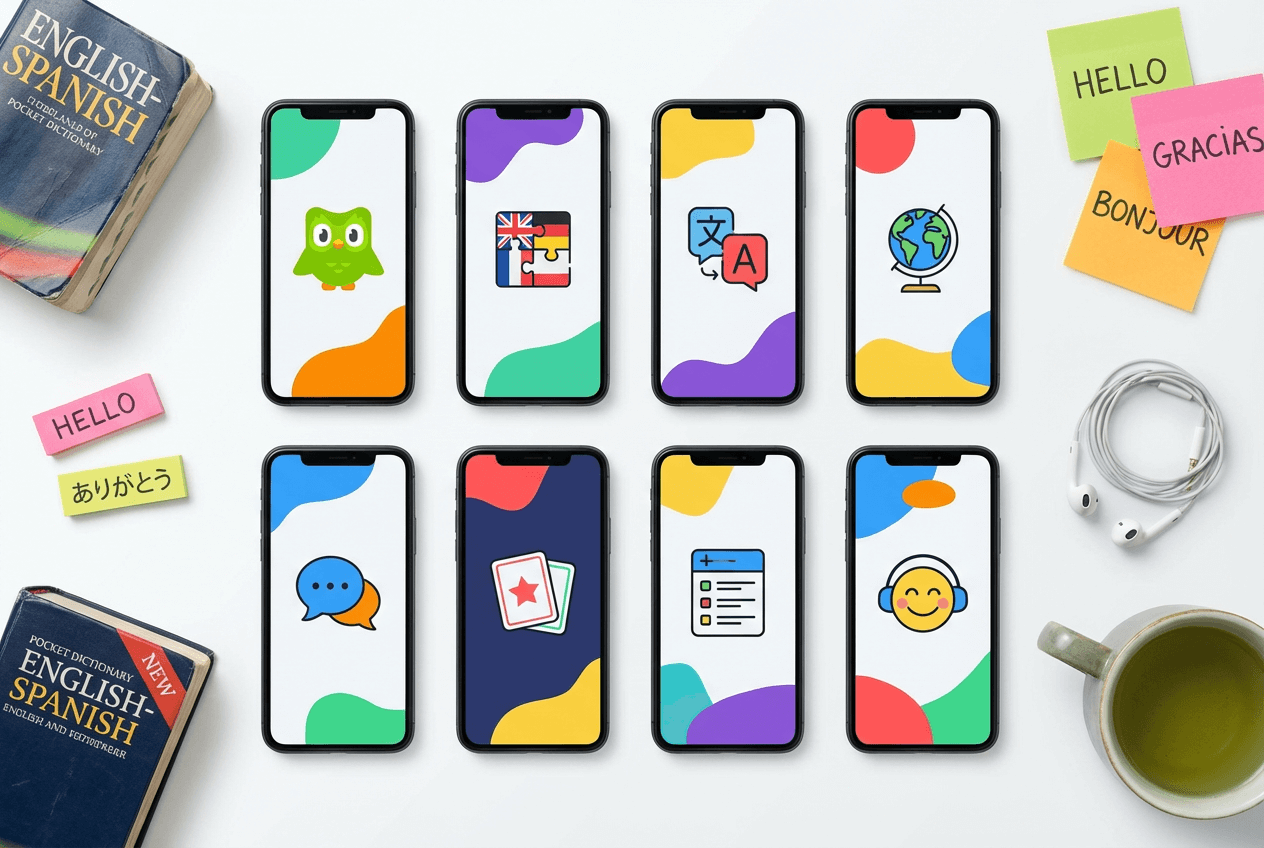
Before diving into detailed reviews, here's a quick side-by-side comparison of every alternative to Duolingo on this list:
| App | Best For | Real-Time Voice AI | Accent Options | Free Plan | Platforms |
|---|---|---|---|---|---|
| Practice Me | English speaking confidence | ✅ Yes | American & British | ✅ 3-day trial | iOS, Web |
| ELSA Speak | Pronunciation drills | Partial (drills) | American English | ✅ Limited | iOS, Android |
| Speak | Multi-language conversations | ✅ Yes | Limited | ❌ | iOS, Android |
| TalkPal | Free casual practice | ✅ Yes | Varies | ✅ 10 min/day | Web, iOS, Android |
| Loora | Structured English coaching | ✅ Yes | Limited | ❌ (7-day trial) | iOS, Android |
| Gliglish | Budget AI conversations | ✅ Yes | US, UK, Australian | ✅ 10 min/day | Web, mobile |
| Babbel | Structured lessons + speaking | Partial (add-on) | Limited | ❌ (1 free lesson) | iOS, Android, Web |
| Busuu | Community native feedback | ❌ Recording-based | N/A | ✅ Limited | iOS, Android, Web |
Now let's look at each app in detail.
1. Practice Me — Best for English Speaking Confidence
If your specific goal is to actually speak English with confidence, Practice Me is purpose-built for exactly that.

Unlike most apps on this list that try to cover dozens of languages, Practice Me focuses exclusively on English. That specialization shows in every feature. The app creates real-time voice conversations with AI English tutors that feel remarkably like actual phone calls — not robotic drill sessions.
What makes it different:
- Multiple tutor personalities. You're not stuck talking to one generic AI voice. Choose between tutors like Sarah, Oliver, and Marcus — each with a distinct conversational style. This variety keeps practice sessions fresh and mirrors how you'd naturally interact with different native speakers.
- American and British accents. Pick the accent you want to learn or practice with. Training your ear for a specific native accent accelerates comprehension and helps you sound more natural.
- Smart vocabulary tracking. New words that come up during conversations get saved automatically. You don't have to manually log anything — the app tracks what you're learning as you speak.
- Progress you can see. The app tracks your total speaking time, vocabulary growth, and improvement trends day by day. Watching these numbers climb is genuinely motivating.
Pricing: An affordable weekly or yearly subscription, making it one of the most budget-friendly options for unlimited AI conversation practice using real-time voice.
The honest limitations: Practice Me is available on iOS and Android, and teaches English only. There's a 3-day free trial but no permanent free plan. If you want to learn Spanish or French, this isn't your app.
Who it's for: English learners who are tired of studying vocabulary in isolation and want to build the muscle memory of actual conversation. It's especially useful if you feel anxious speaking English with real people — a judgment-free AI tutor lets you stumble and try again without embarrassment.
2. ELSA Speak — Best for Pronunciation Drills
ELSA (English Language Speech Assistant) takes a different approach than conversation-focused apps. It zeroes in on pronunciation accuracy using some of the best speech recognition technology in any language learning app.
How it works: ELSA analyzes your pronunciation at the phoneme level — individual sounds, not just whole words. Say a word or phrase, and it highlights exactly which sounds you're nailing and which need more practice. The feedback is granular, specific, and genuinely helpful for learners whose native language uses very different sounds than English.
Strengths: If your main challenge is pronunciation rather than conversational flow, ELSA is exceptional. The AI identifies patterns in your errors and builds personalized lessons around your weak spots. It's also one of the few apps with a genuinely useful free tier for daily pronunciation practice.
Weaknesses: ELSA is drill-based, not conversational. You're repeating words and phrases, not having free-flowing discussions. It focuses primarily on American English pronunciation, with limited accent variety. The premium subscription is billed monthly, with a lower rate on an annual plan.
Best used as: A complement to a conversation app. Use ELSA to sharpen your pronunciation, then practice using those sounds naturally in real-time conversations with apps like Practice Me.
3. Speak — Best for Multi-Language AI Conversations
Speak (by Speakeasy Labs) offers polished AI-powered conversations across multiple languages including English, Spanish, French, Italian, Japanese, and Korean.
Strengths: The interface is clean and the AI voices sound natural. The roleplay scenarios provide good contextual practice for beginners, and the app introduces vocabulary in full-sentence contexts rather than isolated word lists — a sound approach backed by language acquisition research.
Weaknesses: Independent reviews flag several issues worth noting. Speech recognition is overly lenient — users report mispronouncing words or reversing word order and still receiving perfect scores. There's no option to choose different voices or regional accents per language. Feedback after conversations is brief with no cumulative tracking of recurring mistakes. One thorough 2026 review from a language learning publication concluded that Speak's "feedback and customization features are unlikely to satisfy serious learners."
Pricing: Premium and Premium Plus subscription tiers. The distinction between tiers can be confusing, with some features locked behind the more expensive plan.
Best for: Beginners learning multiple languages who want a clean, guided experience. Less ideal if English is your sole focus or if you're past the beginner stage.
4. TalkPal — Best Free Option for Casual Practice
If budget is your primary concern, TalkPal offers the most generous free tier among AI conversation apps available today.
What you get for free: 10 minutes of daily speaking practice across 57 languages, powered by GPT. That's enough for a quick daily session, though serious learners will hit the time limit fast.
Premium features: A paid subscription (cheaper on a 2-year plan) unlocks unlimited conversations, debate mode, character conversations, and photo descriptions. TalkPal also offers a 14-day free trial of premium features.
Weaknesses: TalkPal isn't specialized for English — it's a generalist app spread across dozens of languages. It's available on all platforms (web, iOS, Android), which is convenient, but the conversation quality and feedback depth don't match English-focused alternatives. Think of it as an accessible entry point rather than a serious daily training tool.
Duolingo taught you words. No one taught you to speak.
PracticeMe: real voice conversations with an AI tutor, 24/7.
5. Loora — Best for Structured English Coaching
Loora is the app most directly comparable to Practice Me — it's also an AI-powered English speaking coach available 24/7.
Strengths: Loora provides real-time feedback on grammar, pronunciation, and fluency during conversations. The app personalizes each lesson based on your level and learning goals, and it's available on both iOS and Android.
Weaknesses: Pricing is steep, though the annual plan roughly halves the monthly cost. Several users on Reddit note that conversations feel too easy at advanced levels. One user commented: "I feel like Loora's speaking level is slightly easy, even though I set the highest level." There's also less accent variety compared to Practice Me's American and British tutor options.
The trial: Loora does offer a 7-day free trial, which gives you a real chance to evaluate the app before committing to a subscription.
Best for: Intermediate English learners who want structured coaching with grammar corrections, and who need an app that works on Android devices.
6. Gliglish — Best Budget AI Conversation Practice
Gliglish takes a straightforward approach: ChatGPT-powered language conversations with real-time grammar feedback.
Notable feature: Gliglish supports multiple English accent options — US, UK, and Australian — which is rare among competitor apps. It also covers numerous other languages for learners studying more than just English.
Free tier: 10 minutes per day (about 50 messages), which is enough for a daily warm-up. A paid subscription unlocks unlimited practice.
Weaknesses: There's no dedicated vocabulary tracking system, and it's primarily a web-based experience with mobile as a secondary option. The free tier is quite limited for regular practice, and the paid pricing is actually higher than several alternatives to Duolingo on this list.
Best for: Learners who specifically want to practice with different English accents and don't mind a web-first experience.
7. Babbel — Best for Structured Lessons with Some Speaking
Babbel is one of the most established language learning apps, offering structured courses across 14 languages. It takes the traditional approach: lessons progress through grammar, vocabulary, writing, and listening exercises in a defined course order.
Speaking features: Babbel does include speech recognition in some exercises and has launched a beta "Babbel Speak" feature for conversation practice. But speaking remains supplementary — it's an add-on to the lesson-based core, not the main focus.
Pricing: A subscription that varies by plan length, with a one-time lifetime purchase option. You get one free lesson to try before subscribing.
Weaknesses: Progress can feel slow past the beginner level. The speaking practice is limited and feels bolted on rather than integrated. If you specifically need conversation practice to build confidence, Babbel will leave you wanting more.
Best for: Beginners who want a structured grammar-first approach with speaking as a bonus, not a primary focus.
8. Busuu — Best for Community Feedback from Native Speakers
Busuu's unique angle among Duolingo alternatives is its community: real native speakers review your recordings and provide human feedback. It also partners with McGraw Hill to offer official language certificates.
How speaking practice works: You record yourself completing speaking exercises, and community members review and correct your recordings. This is valuable feedback but fundamentally different from real-time conversation — it's asynchronous and limited to structured prompts.
Pricing: A free plan is available with limited features. Premium is a paid subscription that varies by length, with the best rate on the annual plan.
Weaknesses: The "speaking practice" is recording-based, not live conversation. Audio quality can be inconsistent. The community review process means feedback isn't instant — you're waiting hours or even days for another user to listen and respond.
Best for: Learners who value real human feedback over AI speed, and those interested in earning recognized language certificates. Busuu works well alongside a real-time conversation app for a balanced approach.

How to Choose the Right Duolingo Alternative
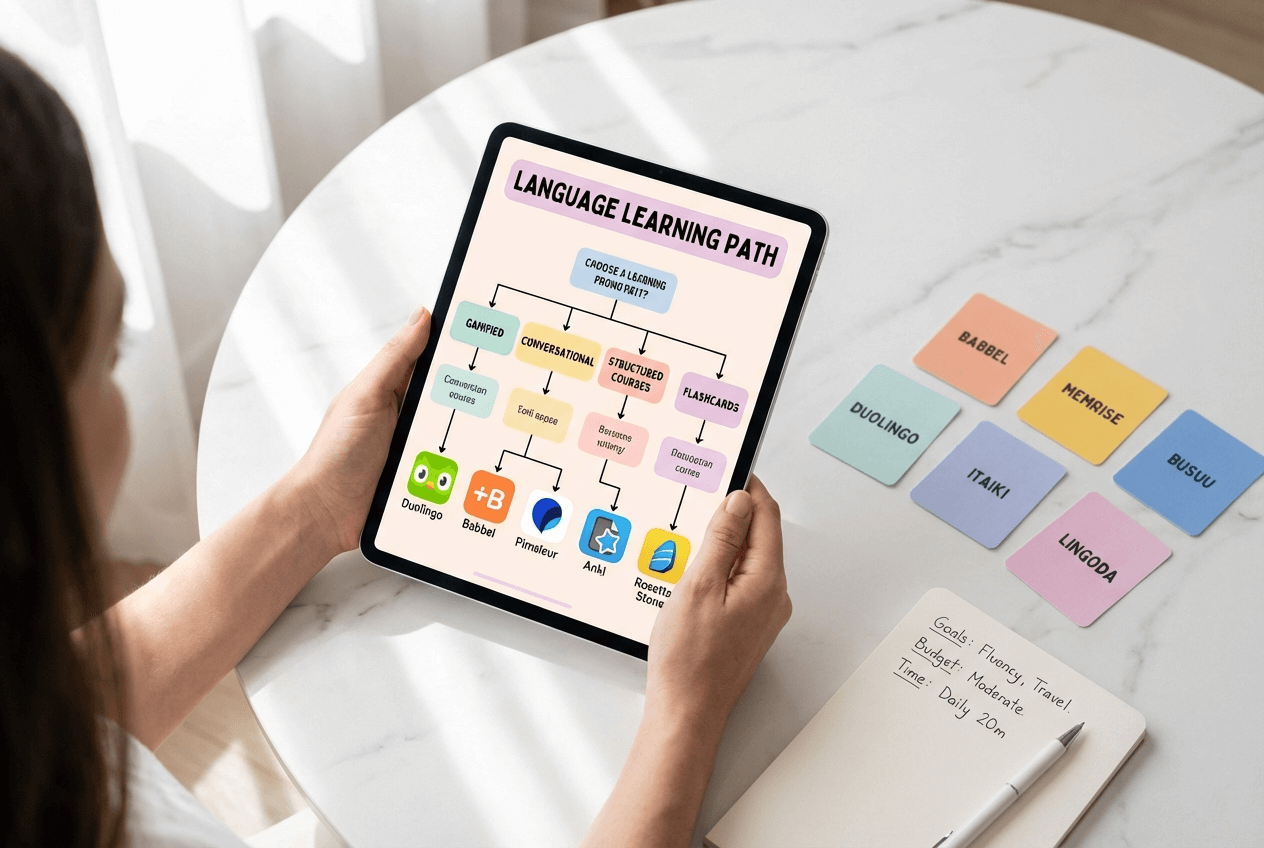
The best alternative to Duolingo depends entirely on what you're trying to achieve. Here's a quick decision framework to help you make the right choice:
"I want to speak English confidently in everyday situations." → Practice Me — purpose-built for English conversation practice with multiple tutor personalities and native accent options.
"I need to fix my pronunciation first." → ELSA Speak — best-in-class phoneme-level pronunciation feedback and drill-based lessons.
"I'm learning multiple languages, not just English." → Speak or TalkPal — both support many languages with AI conversations.
"I need something free right now." → TalkPal (10 min/day free) or Busuu (limited free plan) are your top choices.
"I want grammar-first structured lessons." → Babbel — the most traditional, structured course-based learning path available.
"I want feedback from real humans." → Busuu — its native speaker community reviews your recordings and provides corrections.
The power combo: Many successful English learners combine tools to cover different skills. Try using ELSA Speak for 10 minutes of focused pronunciation practice, then spend 20 minutes in a real-time AI conversation to put those skills to work. Our realistic guide to becoming fluent in English breaks down how to structure your daily practice time for maximum progress.
Frequently Asked Questions
What is the best alternative to Duolingo for English speaking?
For English speaking specifically, Practice Me stands out because it's the only app on this list built exclusively for English conversation practice. The combination of multiple AI tutor personalities, American and British accent options, and smart vocabulary tracking makes it uniquely suited for building speaking confidence. If pronunciation accuracy is your main concern, pair it with ELSA Speak for a comprehensive approach.
Is there a free alternative to Duolingo for speaking practice?
TalkPal offers 10 minutes of free AI conversation practice daily across 57 languages. Gliglish also provides a free tier (10 minutes per day). Busuu has a free plan with limited speaking exercises. However, free tiers are generally too restricted for meaningful daily practice — most serious learners find that investing in an affordable paid app pays for itself in weeks of faster progress compared to the free alternatives.
Can AI apps really help you improve English speaking?
Yes — with a caveat. AI conversation apps are effective for building fluency, reducing hesitation, and expanding your active vocabulary. They work because they remove the anxiety many learners feel when speaking with native speakers (no judgment, no awkward pauses) while still forcing you to produce language in real time. However, AI apps work best as part of a broader learning strategy that includes exposure to native English media and, eventually, real conversations with people.
How much time should I spend on speaking practice daily?
Research on language acquisition suggests that 15–30 minutes of focused speaking practice daily produces noticeable improvement within weeks. Consistency matters far more than marathon sessions — four 15-minute conversations spread across a week will outperform one 2-hour cram session. The key is making practice a daily habit, which is exactly why 24/7 availability in apps like Practice Me matters. If you can practice whenever motivation strikes — morning, lunch break, or midnight — you're far more likely to stick with it.
Is Duolingo good enough for learning English?
Duolingo is a solid starting point for vocabulary and basic grammar. However, it doesn't build speaking skills effectively — the app is better at teaching you to recognize English than to produce it. If your goal goes beyond passing multiple-choice quizzes to actually holding conversations, you'll need to supplement Duolingo with a speaking-focused app. Many learners keep their Duolingo streak going for daily vocabulary exposure while using a separate tool like Practice Me for focused conversation practice.