Duolingo taught you words. No one taught you to speak.
PracticeMe: real voice conversations with an AI tutor, 24/7.
ESL Speaking Practice: 15 Activities for Self-Study

Most ESL speaking practice activities are written for teachers managing a class of 20 students. Group role-plays. Partner interviews. Team debates. Great resources for a classroom — but if you're an ESL student trying to improve your speaking on your own, those activities are a dead end.
This guide is different. These 15 ESL speaking practice activities are designed for self-study. Every one works when you're practicing alone — no partner, no class, no teacher required. Just you, your voice, and a willingness to feel a little awkward talking to yourself (it gets easier, promise).
Quick Summary: These 15 ESL speaking activities are organized by type — warm-ups, fluency builders, real-world scenarios, critical thinking exercises, and recording practice. Each includes step-by-step instructions, difficulty level, and time estimate. Pick 2-3, practice daily for 15-20 minutes, and you'll notice real improvement within weeks.
Why Most ESL Speaking Practice Activities Fail Solo Learners
The majority of ESL speaking resources assume you have a conversation partner. "Put students in pairs." "Have the class discuss." "One student asks while another responds."
If you're learning English on your own — preparing for a move abroad, building skills for your career, or working to become fluent in English — those classroom instructions aren't useful.
Solo ESL students face specific challenges:
- No real-time feedback on pronunciation or grammar mistakes
- No accountability partner to keep you practicing
- No conversation pressure to force quick thinking in English
- Motivation dips when you're the only one tracking progress
The speaking practice activities below address each challenge. They're structured with clear steps, time limits, and difficulty levels so you always know what to do and how long to spend.
How to use this guide: Don't try all 15 at once. Pick one activity from each category, practice for a week, then rotate. The variety keeps things fun and develops different speaking skills.
Warm-Up ESL Speaking Activities (5 Minutes or Less)
These quick exercises get your mouth moving and switch your brain into English mode. Think of them like stretching before a run — they prepare you for deeper practice.

1. Think-Aloud Narration
What it is: Narrate your daily activities in English as you do them — one of the simplest and most effective ESL speaking practice activities you can do anywhere.
How to do it:
- Pick any routine moment — making breakfast, getting dressed, walking to the bus
- Describe everything out loud: "I'm pouring water into the kettle. Now I'm opening the fridge to get milk."
- Add sensory details: what you see, hear, feel, smell
Why it works: This trains your brain to think in English rather than translate from your native language. It builds automatic connections between actions and English vocabulary — the foundation of fluency.
Level up: Start with present tense ("I'm making coffee"), then try past tense ("Yesterday I made coffee and realized we were out of sugar") or future ("Tomorrow I'm going to try that new recipe").
⏱️ Time: 5 minutes | 📊 Difficulty: Beginner
2. Tongue Twisters for Problem Sounds
What it is: Short, repetitive phrases targeting specific English sounds ESL students commonly struggle with. A fun warm-up that doubles as serious pronunciation practice.
How to do it:
- Identify which English sounds are hardest for you
- Say the tongue twister slowly 3 times, focusing on the target sound
- Gradually increase speed until you can say it clearly at conversational pace
Tongue twisters by problem sound:
- TH sound: "The thirty-three thieves thought that they thrilled the throne throughout Thursday"
- R vs. L: "Red lorry, yellow lorry, red lorry, yellow lorry"
- S vs. SH: "She sells seashells by the seashore"
- V vs. W: "Very well, very well — William went west wearing wet woolen winter wear"
- CH vs. SH: "If a dog chews shoes, whose shoes does he choose?"
Pro tip: Record yourself on day one and again after a week. The improvement in clarity is motivating — and the recordings track your progress over time.
⏱️ Time: 5 minutes | 📊 Difficulty: Beginner to Intermediate
3. Minimal Pairs Speed Drill
What it is: Practicing word pairs that differ by one sound, training your mouth and ear to make distinctions that matter in real English conversation.
How to do it:
- Pick a pair from the list below
- Alternate: "ship, sheep, ship, sheep"
- Speed up until you switch cleanly
- Use each in a sentence: "The ship sailed across the ocean. The sheep grazed in the field."
Common minimal pairs for ESL speaking practice:
| Sound Contrast | Pair 1 | Pair 2 | Pair 3 |
|---|---|---|---|
| /ɪ/ vs. /iː/ | ship / sheep | sit / seat | bit / beat |
| /æ/ vs. /ɛ/ | bat / bet | pan / pen | man / men |
| /r/ vs. /l/ | right / light | road / load | fry / fly |
| /θ/ vs. /s/ | think / sink | path / pass | math / mass |
| /b/ vs. /v/ | berry / very | boat / vote | ban / van |
Pro tip: Focus on pairs matching your language background. Spanish-speaking students often struggle with /b/ vs. /v/. Japanese speakers need /r/ vs. /l/ work. Chinese speakers usually focus on /θ/ vs. /s/. Targeting your specific weaknesses makes this ESL activity far more effective than random practice.
⏱️ Time: 5 minutes | 📊 Difficulty: Beginner to Intermediate
Fluency-Building ESL Speaking Activities (10–15 Minutes)
These activities stretch your ability to speak continuously. Fluency isn't about perfect grammar — it's about keeping words flowing without long pauses.
4. One-Minute Monologue
What it is: Pick a random topic, start a timer, speak for 60 seconds without stopping. One of the most popular speaking practice activities among ESL students working on fluency.
How to do it:
- Choose a topic from the list below
- Start a 60-second timer
- Talk — don't stop to worry about grammar or vocabulary, just keep going
- Note where you paused or struggled
- Repeat the same topic. Your second attempt will be smoother
10 fun starter topics:
- Describe your ideal weekend
- Explain what you do for work or school
- Talk about a meal you enjoyed recently
- Describe your hometown to someone who's never visited
- Explain why you're learning English
- Describe a person you admire
- Talk about a movie you watched recently
- Explain how to make your favorite dish
- Describe what you see from your window right now
- Talk about a trip you'd like to take
Track progress: Count long pauses (3+ seconds) per attempt. Over weeks, that number drops — concrete evidence your fluency is improving.
⏱️ Time: 10 minutes (5 topics × 1 min + review) | 📊 Difficulty: Intermediate
5. Picture Description Challenge
What it is: Find any image and describe everything in it — a fun, vocabulary-rich speaking exercise.
How to do it:
- Open your camera roll, a magazine, or search for interesting photos
- Set a 2-minute timer
- Describe using this structure:
- What you see: "There's a woman at a wooden table in what looks like a café…"
- What might be happening: "She seems to be working on her laptop…"
- What you think: "The café looks cozy. I'd like to work somewhere like that…"
Why it works: Picture descriptions force vocabulary you don't normally use — spatial words (beside, behind, in the corner), adjectives (rustic, crowded, brightly-lit), and speculative language (it looks like, she might be). This builds the descriptive vocabulary that makes everyday conversations more interesting.
⏱️ Time: 10 minutes (3-4 images) | 📊 Difficulty: Beginner to Intermediate
6. News Summary Practice
What it is: Read a short English news article, close it, summarize the main points aloud from memory.
How to do it:
- Find a short article (200-300 words). Great free sources: BBC Learning English, VOA Learning English, or News in Levels
- Read it once, noting: who, what, where, when, why
- Close the article
- Summarize aloud in 1-2 minutes using your own words
- Re-read and notice what you missed
The LRS Cycle — a technique used by ESL teachers and self-study students alike:
- Listen/Read the article carefully
- Repeat 2-3 key phrases out loud
- Summarize the whole thing in your own words
This builds comprehension and speaking production simultaneously — one of the highest-value ESL speaking practice activities in this list.
⏱️ Time: 15 minutes | 📊 Difficulty: Intermediate to Advanced

7. Shadowing
What it is: Listen to a native English speaker and repeat exactly what they say, matching rhythm, intonation, and speed.
How to do it:
- Find audio with clear speech — TED Talks, English learning podcasts, YouTube channels for ESL students
- Level 1 (Pause-and-Repeat): Play a sentence, pause, repeat it
- Level 2 (Simultaneous): Speak at the same time as the speaker, like singing along
- Level 3 (Shadow + Summarize): Shadow for 2 minutes, then summarize in your own words
Why it works: Research in applied linguistics consistently shows shadowing improves pronunciation, intonation, and natural speech patterns. You're training your mouth muscles to produce English sounds the way native speakers do — something reading alone can't replicate.
Pro tip: Choose speakers with the accent you want. American English? Shadow American speakers. British English? Choose British speakers. Sticking with one accent produces faster results.
⏱️ Time: 10-15 minutes | 📊 Difficulty: Intermediate
Real-World Scenario ESL Speaking Activities (15–20 Minutes)
These role-play activities prepare you for actual English-speaking situations. You'll play both parts — and that's exactly why it works. You learn the questions and the answers.

8. Role-Play: Ordering Food at a Restaurant
The scenario: You're at a restaurant. Practice being the customer — then the waiter.
Round 1 — Basic order (scripted):
- "Hi, could I see the menu please?"
- "I'd like to order the grilled chicken, please."
- "Could I have that with a side salad instead of fries?"
- "And a glass of water, thank you."
- "Could I get the check, please?"
Round 2 — Complications (off-script):
- "I'm allergic to nuts — does this dish contain any?"
- "Actually, I'd like to change my order."
- "I'm sorry, but this isn't what I ordered."
Round 3 — Play both sides: Ask "Are you ready to order?" and "Would you like anything to drink?" Learning to anticipate questions is just as valuable as answering them.
⏱️ Time: 10 minutes | 📊 Difficulty: Beginner
9. Role-Play: Making a Doctor's Appointment
The scenario: You need to call and schedule a medical appointment — a real-world situation many ESL students find stressful.
Key vocabulary to practice first:
- Symptoms: headache, sore throat, cough, fever, dizzy, nauseous
- Body parts: chest, stomach, lower back, wrist, ankle
- Time expressions: "first thing in the morning," "sometime next week," "as soon as possible"
Practice this conversation:
- "Hello, I'd like to make an appointment with Dr. [name], please."
- "I've been having [symptom] for about [duration]."
- "Is there anything available this week?"
- "Wednesday at 2 PM works for me."
- "Do I need to bring anything?"
Add complications: You're put on hold. Your preferred time isn't available. You need to reschedule. Practicing these curveballs removes the anxiety of real English phone calls. If speaking anxiety is a barrier for you, our guide on overcoming the fear of speaking a foreign language covers specific strategies that help.
⏱️ Time: 10 minutes | 📊 Difficulty: Intermediate
Duolingo taught you words. No one taught you to speak.
PracticeMe: real voice conversations with an AI tutor, 24/7.
10. Role-Play: Job Interview Preparation
The scenario: You're answering interview questions in English — high stakes, high impact.
Practice these common questions aloud:
- "Tell me about yourself." (Under 2 minutes — background, skills, why this role)
- "What are your strengths?" (Name one, give a specific example)
- "What's your biggest weakness?" (Honest answer + how you're working on it)
- "Why do you want to work here?" (Show you researched the company)
- "Where do you see yourself in five years?"
- "Do you have any questions for us?" (Always say yes)
Critical technique: Record answers on your phone. Listen for:
- Filler words ("um," "uh," "like") — fewer sounds more confident
- Answer length — under 30 seconds feels rushed, over 3 minutes rambles
- Conviction — do you sound like you believe it?
This is arguably the highest-impact ESL speaking activity for career-focused students. Practicing aloud makes an enormous difference versus just writing answers down. See our guide to becoming fluent in English for broader strategies on building speaking confidence.
⏱️ Time: 20 minutes | 📊 Difficulty: Intermediate to Advanced
Critical Thinking ESL Speaking Activities (15–20 Minutes)
These push your English beyond everyday conversation into analysis, persuasion, and complex thought — the kind of speaking that impresses in class, at work, and in academic settings.

11. Debate With Yourself
What it is: Pick a debatable topic and argue both sides aloud — a challenging, fun ESL speaking activity that builds advanced vocabulary and persuasive language.
How to do it:
- Choose a topic below
- Spend 2 minutes arguing "for"
- Spend 2 minutes arguing "against"
- Spend 1 minute delivering your actual opinion with your strongest arguments
5 debate topics to start with:
- Should social media have age restrictions?
- Is working from home better than office work?
- Should public transportation be free?
- Is it better to learn one language deeply or several at a basic level?
- Should universities be free for everyone?
Key phrases to practice:
- "On one hand… on the other hand…"
- "While some argue that… I believe…"
- "Despite the fact that… evidence suggests…"
- "The strongest argument for this is…"
⏱️ Time: 15 minutes | 📊 Difficulty: Intermediate to Advanced
12. Storytelling from Memory
What it is: Retell a movie plot, book, or personal experience from memory — natural practice for past tenses and narrative structure.
How to do it:
- Pick a story you know well — a movie, childhood memory, or last week's events
- Tell it aloud as if explaining to a friend
- Include details: "It was a cold Tuesday morning, and I was running late…"
The compression challenge: Tell the same story three times:
- First: 2 minutes (full details)
- Second: 1 minute (key points only)
- Third: 30 seconds (essential summary)
Each round forces sharper vocabulary choices — a skill that directly improves everyday English conversation.
Sequencing vocabulary: first, then, after that, meanwhile, eventually, finally, at that point, by the time
⏱️ Time: 15 minutes | 📊 Difficulty: Intermediate
13. The Teach-Back Method
What it is: Explain something you know well, entirely in English, as if teaching a beginner student.
How to do it:
- Pick a subject — your job, a hobby, a recipe, how something works, a sport's rules
- Explain from scratch, assuming your listener knows nothing
- Use organized language: "First, you need to… The reason this matters is… A common mistake is…"
Why it works: Teaching forces you to organize thoughts logically, choose precise vocabulary, and structure sentences clearly — the skills that separate intermediate ESL speakers from advanced ones.
Fun topic ideas:
- How your favorite app or game works
- The rules of a sport you follow
- How to cook a dish from your culture
- What a typical day at your job looks like
⏱️ Time: 15 minutes | 📊 Difficulty: Intermediate to Advanced
Recording and Feedback ESL Activities (10–15 Minutes)
You can't improve what you can't hear. These activities use your phone's voice recorder as a feedback tool that partially replaces having a teacher.

14. Record-and-Review Sessions
What it is: Record yourself speaking, listen back critically, then re-record with improvements.
How to do it:
- Record a 2-minute monologue on any topic
- Play back with a single focus per session:
- Pronunciation: Which words sounded unclear?
- Grammar: Did you mix up tenses? Drop articles?
- Fluency: How many long pauses or filler words?
- Vocabulary: Did you repeat words? Where did you get stuck?
- Re-record addressing those issues
- Compare the two recordings
Track over time: Save recordings with dates. Listening to yourself from a month ago is incredibly motivating — you'll hear improvements you don't notice day-to-day.
If speaking anxiety holds you back, you're not alone. Many ESL students deal with fear of speaking a foreign language — and recording privately is one of the best first steps to overcome it.
⏱️ Time: 10 minutes | 📊 Difficulty: All Levels
15. Conversation Question Practice
What it is: Answer English conversation questions aloud, as if someone just asked you — simple but surprisingly effective for building speaking confidence.
How to do it:
- Search "English conversation questions" — thousands of free lists exist
- Pick 5-10 questions
- Answer each aloud for 30-60 seconds with complete, detailed responses
- Record your answers
- Re-do 2 answers with improvements
Example questions:
- "What would you do if you won the lottery?"
- "Describe the best vacation you've ever had."
- "What's the most interesting thing you've learned recently?"
- "If you could have dinner with anyone, who would it be and why?"
- "What's a skill you'd like to learn?"
Pro tip: Speaking answers out loud is completely different from thinking them. Your brain processes language differently when your mouth forms the words — that's why active ESL speaking practice can't be replaced by reading or listening alone.
⏱️ Time: 15 minutes | 📊 Difficulty: Beginner to Intermediate
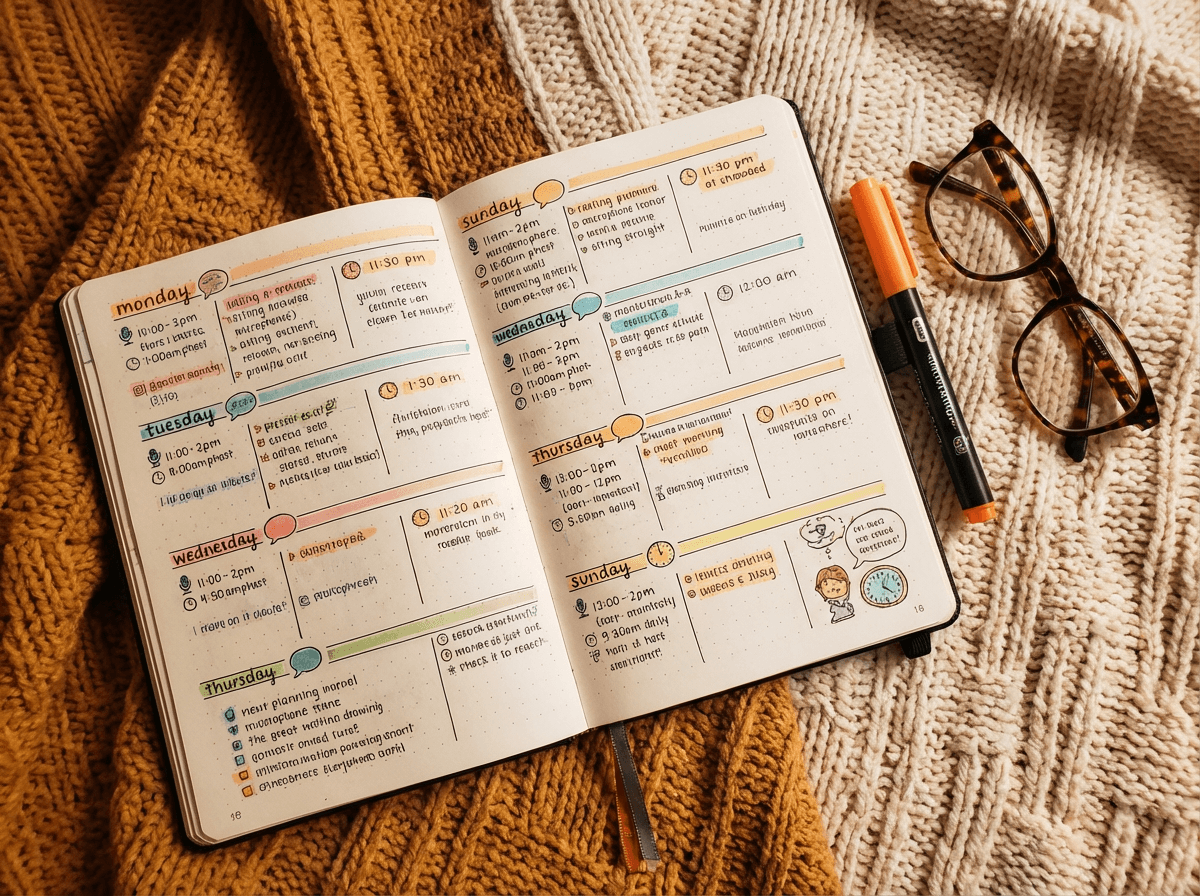
How to Build a Weekly ESL Speaking Practice Routine
Fifteen activities means nothing without consistency. Here's a realistic routine that sticks.
The Daily Minimum (15 minutes):
- 5 minutes: One warm-up (Activities 1-3)
- 10 minutes: One main activity (rotate through 4-15)
Sample Weekly Schedule:
| Day | Warm-Up (5 min) | Main Activity (10-15 min) |
|---|---|---|
| Monday | Think-Aloud Narration | One-Minute Monologue |
| Tuesday | Tongue Twisters | News Summary Practice |
| Wednesday | Minimal Pairs | Role-Play: Restaurant |
| Thursday | Think-Aloud Narration | Shadowing |
| Friday | Tongue Twisters | Debate With Yourself |
| Saturday | Minimal Pairs | Record-and-Review |
| Sunday | — | Storytelling from Memory |
Three rules for success:
- Same time daily. Attach ESL speaking practice to an existing habit — after morning coffee, during your commute, before bed. Consistency beats intensity every time.
- Track your minutes. A simple note: "Mon: 15 min, Tue: 20 min." Watching the total grow is motivating.
- Rotate weekly. Swap activities to keep practice fun and develop different skills.
Extend These Activities With an AI Speaking Partner
Every activity above works solo — that's the point. But there's one limitation: real conversations are unpredictable.
When you role-play both sides of a restaurant order, you control the script. In real English conversation, the other person responds in ways you can't anticipate. That unpredictability is exactly what makes live speaking challenging — and it's the one gap solo ESL speaking practice activities can't fully close.
AI conversation practice bridges that gap. The Practice Me app lets you have real voice conversations with AI English tutors who respond naturally — like a speaking partner available 24/7.
How it extends the activities in this guide:
- Role-plays become dynamic: Instead of scripting both sides, the AI plays the waiter, doctor, or interviewer. It throws curveballs and asks follow-up questions you didn't plan for.
- Debates get a real opponent: Present your argument, and the AI responds with counterpoints — how real discussions work.
- Multiple accents: Practice Me offers tutors with American and British accents, so you practice understanding and producing different English pronunciations.
- No judgment: Practice any time without the anxiety of being evaluated — making it ideal for students who feel nervous speaking English with real people.
The best approach? Use the solo activities in this guide to build your foundation, then use Practice Me to test those skills in live, unscripted conversation.
Frequently Asked Questions
How can I practice ESL speaking alone?
The most effective solo techniques are think-aloud narration (describing daily activities in English), shadowing (repeating after native speakers), and record-and-review (recording yourself and listening for specific errors). Even 15 minutes of daily speaking practice produces real improvement. The key is physically producing sounds — thinking in English helps, but moving your mouth trains different skills only active speaking develops.
How long should I practice speaking English each day?
Fifteen minutes of focused speaking practice daily beats two hours once a week. Consistency builds the automatic processing needed for fluent conversation. If you can do 15-20 minutes of active speaking (not just listening), expect meaningful progress within 4-6 weeks. The ESL speaking activities here use 5-20 minute blocks so they fit any schedule.
What is the best ESL speaking activity for beginners?
Think-aloud narration (Activity 1). It needs zero preparation, no materials, and you can do it during activities you already do — cooking, commuting, cleaning. It builds the habit of producing English and trains your brain to think in the language. Picture description (Activity 5) is a great next step for beginners building vocabulary.
Can I improve my English speaking without a teacher?
Yes — significantly. These ESL speaking practice activities target the same skills a teacher works on: pronunciation, fluency, vocabulary in context, and real-world conversation readiness. Self-recording provides feedback, and structured activities like shadowing and minimal pairs drill specific pronunciation skills methodically. Where a teacher or AI conversation partner adds unique value is in unpredictable, real-time back-and-forth — harder to replicate solo but possible to prepare for.
What is the shadowing technique for language learning?
Shadowing means listening to a native speaker and repeating what they say in real time, matching rhythm, intonation, speed, and pronunciation as closely as possible. Originally developed for interpreter training, it's validated by research in applied linguistics as effective for pronunciation and fluency improvement. Start with pause-and-repeat, then progress to simultaneous shadowing. Resources like BBC Learning English and TED Talks work well as practice material.