Duolingo taught you words. No one taught you to speak.
PracticeMe: real voice conversations with an AI tutor, 24/7.
Free Duolingo Alternatives That Teach You to Speak

Duolingo's green owl might have gotten you started, but if you've ever finished a lesson and thought, "I still can't actually speak English," you're not alone. Millions of language learners hit this wall — and start searching for free Duolingo alternatives that focus on speaking.
The good news? You don't need to spend money to start practicing real speaking skills. Several free alternatives to Duolingo focus specifically on getting words out of your mouth — not just into your head.
Quick Summary: The best free Duolingo alternatives for speaking practice are ChatGPT Voice Mode (free AI conversations), Gliglish (AI speaking partner, no signup), HelloTalk (language exchange with native speakers), Busuu (structured lessons with community feedback), and YouTube channels like BBC Learning English. Each has real free value, but also real limitations. Free gets you started — structured practice with apps like Practice Me accelerates fluency.
Why Duolingo's Free Tier Falls Short on Speaking
Duolingo does many things well. It builds vocabulary habits, gamifies language learning, and makes daily practice feel approachable. But speaking? That's where this popular language app struggles.
The free tier limits you to 5 "hearts" — lose one for every mistake, and you're locked out until they regenerate or you watch ads. This system punishes experimentation, which is the opposite of what speaking practice requires. You need to make mistakes to learn.
More fundamentally, Duolingo's exercises are mostly tap-and-translate. You're selecting words from a word bank, not forming sentences on your own. The speaking exercises that do exist ask you to repeat scripted phrases — there's no open-ended conversation, no back-and-forth, and no real feedback on pronunciation.
If your goal is to become fluent in English, you need practice that feels like actual conversation. That means finding alternatives built for speaking, not just studying.
5 Free Duolingo Alternatives That Actually Get You Speaking
Every option below has a genuinely useful free tier (not a 3-day trial that auto-charges your card). I've focused specifically on apps and tools that involve actual speaking — not more flashcards or word-matching games.
1. ChatGPT Voice Mode — The Free AI Conversation Partner
OpenAI's Advanced Voice Mode turned ChatGPT into one of the most capable free speaking partners available. It's free on the mobile app with a GPT-4o account (no Plus subscription needed for basic voice access).
What you get for free:
- Real-time voice conversations that respond in under 3 seconds
- Natural conversational flow — you can interrupt mid-sentence, just like talking to a real person
- Any topic you want: job interview prep, travel scenarios, casual chat, or explaining your day
- Multiple voice options with natural intonation
How to use it for English practice: Tell ChatGPT something like: "I'm learning English. Let's have a conversation about weekend plans. Correct my grammar gently after each response." It's surprisingly effective at adapting to your level and providing corrections when you ask.
The honest limitations:
- ChatGPT isn't built for language learning. There's no curriculum, no progress tracking, and no vocabulary saving. Every session starts from zero.
- You have to engineer your own prompts. Without clear instructions, it might not correct your mistakes or adapt to your level.
- There are usage limits on the free tier — heavy users may hit caps during peak times.
- Background noise can confuse the voice recognition.
Best for: Self-directed learners who enjoy open-ended conversation and don't mind setting up their own practice sessions.
2. Gliglish — AI Speaking Practice Without Signing Up
Gliglish is purpose-built for speaking practice and offers something rare among language learning apps: free conversations without creating an account. Just visit their free page, pick a language, and start talking.
What you get for free:
- AI-powered voice conversations on specific topics
- Role-play scenarios (restaurant ordering, travel situations, introductions)
- Real-time speech recognition and responses
- No registration required to try it — one of the lowest-barrier free alternatives available
The honest limitations:
- The free tier limits how many conversations you can have per day
- Sessions tend to be shorter than what you'd get with a paid plan
- Progress tracking is minimal — the app doesn't remember what you practiced yesterday
- Conversations can feel repetitive over time, since the AI doesn't deeply adapt to your learning patterns
Best for: Quick 10-minute daily practice sessions. A good Duolingo alternative for learners who want to start speaking immediately without commitment.
3. HelloTalk — Language Exchange with Real People
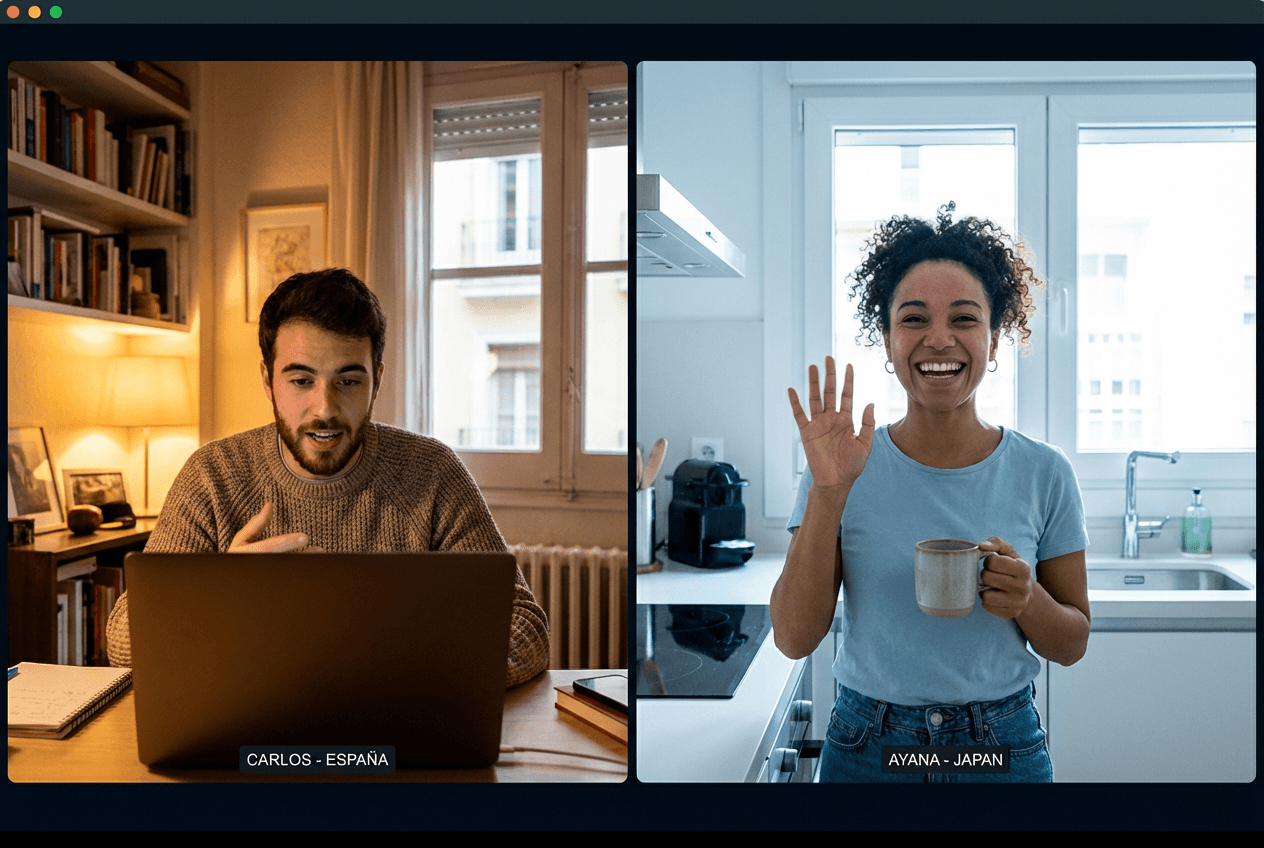
HelloTalk takes a completely different approach to the other apps on this list: instead of AI, you practice with actual native speakers. The app matches you with language partners who want to learn your native language while helping you learn theirs. Think of it as a language skills swap.
What you get for free:
- Access to a community of native English speakers across 260+ languages
- Text messages, voice messages, and voice calls with exchange partners
- "Voiceroom" feature for group voice conversations on various topics
- Built-in translation and correction tools within the chat
The honest limitations:
- Your experience depends entirely on finding good partners. Some language exchanges are fantastic. Others fizzle out after two messages.
- Scheduling is tricky — your partner might be in a timezone 12 hours away
- Free users can only set one target language
- It's a social app, not a structured learning tool. There's no curriculum guiding your progress.
- Some learners who experience fear of speaking a foreign language with strangers may find the social pressure stressful rather than helpful
Best for: Learners who enjoy meeting new people and don't mind the unpredictability of human conversation partners.
4. Busuu — Structured Lessons with Community Feedback
Busuu offers something the other free Duolingo alternatives on this list don't: actual structured lessons. It follows a traditional language course format with vocabulary, grammar, and exercises — plus a community feature where native speakers review your work.
What you get for free:
- Access to a limited number of lessons per language (13 languages available)
- Writing and speaking exercises that get submitted to the Busuu community for review
- Feedback from native speakers on your submissions
- A taste of the full course structure and learning path
The honest limitations:
- The free tier is genuinely limited. Multiple reviews describe it as "more like a demo than a complete learning tool."
- The best features — personalized study plans, grammar reviews, offline access, and McGraw-Hill certificates — are all locked behind Premium
- Speaking exercises aren't real-time conversations. You record a response and wait for community feedback, which can take hours
- Community feedback quality varies — some corrections are thorough, others are a quick thumbs-up with no useful detail
Best for: Learners who prefer structured language courses over free-form conversation and want human feedback on their writing and speaking.
Duolingo taught you words. No one taught you to speak.
PracticeMe: real voice conversations with an AI tutor, 24/7.
5. YouTube Channels — Free Listening Practice (with a Catch)
YouTube is the largest free language learning resource in the world. Channels like BBC Learning English (all levels, trusted content), Rachel's English (American pronunciation with detailed mouth position guides), and Speak English with Vanessa (confidence-building conversational approach) offer thousands of hours of free content.
What you get for free:
- Unlimited access to pronunciation guides, grammar lessons, and listening practice
- Native speaker models you can imitate and learn from
- Content organized by level, topic, and skill
- New videos published weekly on most popular channels
The honest limitation you need to hear: YouTube is entirely passive. You watch. You listen. But you never speak back, and nobody corrects you. It's like training for a marathon by watching running videos — helpful for understanding technique, but it won't build your endurance.
YouTube channels are excellent supplements to active speaking practice, but they can't replace it. Use them alongside one of the other tools on this list, not instead of them.
Best for: Building listening comprehension and learning pronunciation patterns to practice elsewhere.
Free vs. Paid: What You Actually Get
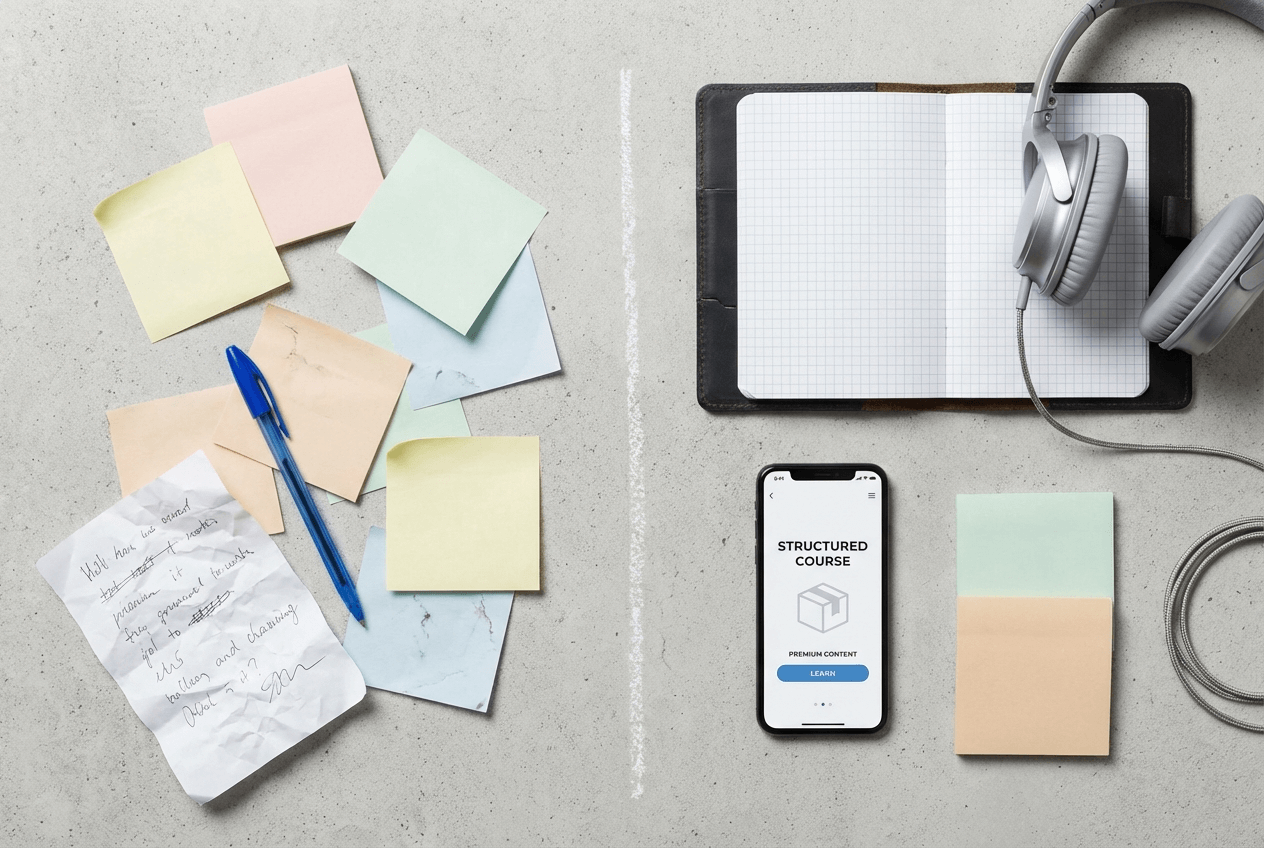
Here's what surprised me when comparing free alternatives side by side — the gap between "free speaking practice" and "structured speaking practice" is bigger than most people expect:
| Feature | Free Options | Dedicated Paid Apps |
|---|---|---|
| Speaking practice | Limited minutes or partner-dependent | Unlimited, on-demand |
| Conversation quality | Varies widely (AI prompting, partner availability) | Consistent, level-adapted |
| Pronunciation feedback | Minimal or none | Real-time corrections |
| Progress tracking | Little to none | Speaking time, vocabulary growth, trends |
| Vocabulary management | Manual (you track it yourself) | Automatic word saving from conversations |
| Availability | Depends on partners or usage limits | 24/7, no restrictions |
| Structure | Self-directed (you build your own plan) | Guided curriculum or adaptive tutoring |
| Cost | Free | A few dollars a week typically |
This isn't to say free is bad. It's to show that free tools and apps require more effort from you to get the same results.
The Honest Truth About Free Speaking Practice
Let me be direct: every free option on this list can genuinely help you improve your English. ChatGPT Voice Mode is legitimately impressive for a free language learning tool. HelloTalk connects you with real humans. YouTube has world-class teachers.
But all these Duolingo alternatives share the same core limitations:
No structured progression. Free tools don't know where you started, where you are now, or where you should go next. You're navigating without a map.
Inconsistent practice quality. Some days you'll have a great ChatGPT conversation. Other days your HelloTalk partner won't show up. Free apps make consistency your responsibility.
No automatic vocabulary tracking. When you learn a new word in a free conversation, it vanishes unless you write it down yourself. There's no system automatically capturing and reviewing what you've learned.
Limited feedback. Free AI tools offer basic responses but rarely pinpoint specific pronunciation issues or grammar patterns you repeat. Human partners may be too polite to correct you consistently.
Here's the bottom line: free gets you started, but structured AI practice accelerates fluency. If you've been using free tools for months and still feel stuck, the issue isn't effort — it's structure.
When It's Worth Paying for Speaking Practice
You don't need to pay on day one. Start with the free Duolingo alternatives above. Get comfortable speaking aloud. Build the habit.
But consider upgrading to a dedicated language learning app when:
- You've plateaued. You've been practicing for weeks, but conversations feel the same. You're not learning new words, and your confidence isn't growing.
- Free tools feel like work. Setting up ChatGPT prompts, scheduling HelloTalk partners, and tracking your own vocabulary takes energy that could go toward actual practice.
- You want accountability. You need something that tracks how much you spoke this week, what words you learned, and whether you're actually improving.

This is exactly what Practice Me is designed for. It's an AI English speaking app built specifically for conversation practice — not repurposed from a general-purpose chatbot or social network.
What you get: voice conversations with AI tutors (Sarah, Oliver, and Marcus) who have American and British accents, adapt to your level, and are available 24/7. New vocabulary from your conversations is automatically saved and tracked. Your progress — speaking time, vocabulary growth, improvement trends — is measured so you can actually see results over time.
On the yearly plan, it costs less than a single coffee per week. And unlike the free alternatives, every conversation is designed to push your English forward.
Frequently Asked Questions
Is there a completely free alternative to Duolingo for speaking practice?
Yes — ChatGPT Voice Mode and Gliglish both offer free AI-powered speaking practice. HelloTalk provides free language exchange with native speakers. However, all free options have limitations: usage caps, no progress tracking, or inconsistent availability. They're great for getting started but may not be enough for sustained improvement on their own.
Can ChatGPT really help me improve my English speaking?
It can, with caveats. ChatGPT's Advanced Voice Mode handles natural conversations well and can correct your grammar when asked. But it's a general-purpose AI, not a dedicated language learning app. You'll need to prompt it specifically (e.g., "correct my mistakes after each response") and track your own progress manually. For dedicated English speaking practice with built-in progress tracking and vocabulary management, purpose-built apps like Practice Me are more effective long-term.
What's the best free app for English pronunciation?
For pronunciation specifically, YouTube channels like Rachel's English provide detailed guides with mouth position demonstrations — completely free. For interactive pronunciation practice, ChatGPT Voice Mode and Gliglish both offer real-time speech recognition so you can hear yourself and get responses. None of the free options provide detailed pronunciation scoring, though — that typically requires a paid app with dedicated speech analysis technology.
How much does speaking practice actually cost?
Free options exist (see the five alternatives above), but dedicated speaking practice apps typically cost only a few dollars a week. Practice Me is priced low on the yearly plan, which includes unlimited conversations with AI tutors, automatic vocabulary tracking, and progress monitoring. For comparison, a single session with a human English tutor typically costs far more per hour.