Duolingo taught you words. No one taught you to speak.
PracticeMe: real voice conversations with an AI tutor, 24/7.
TOEFL Speaking Topics & Sample Questions for 2026
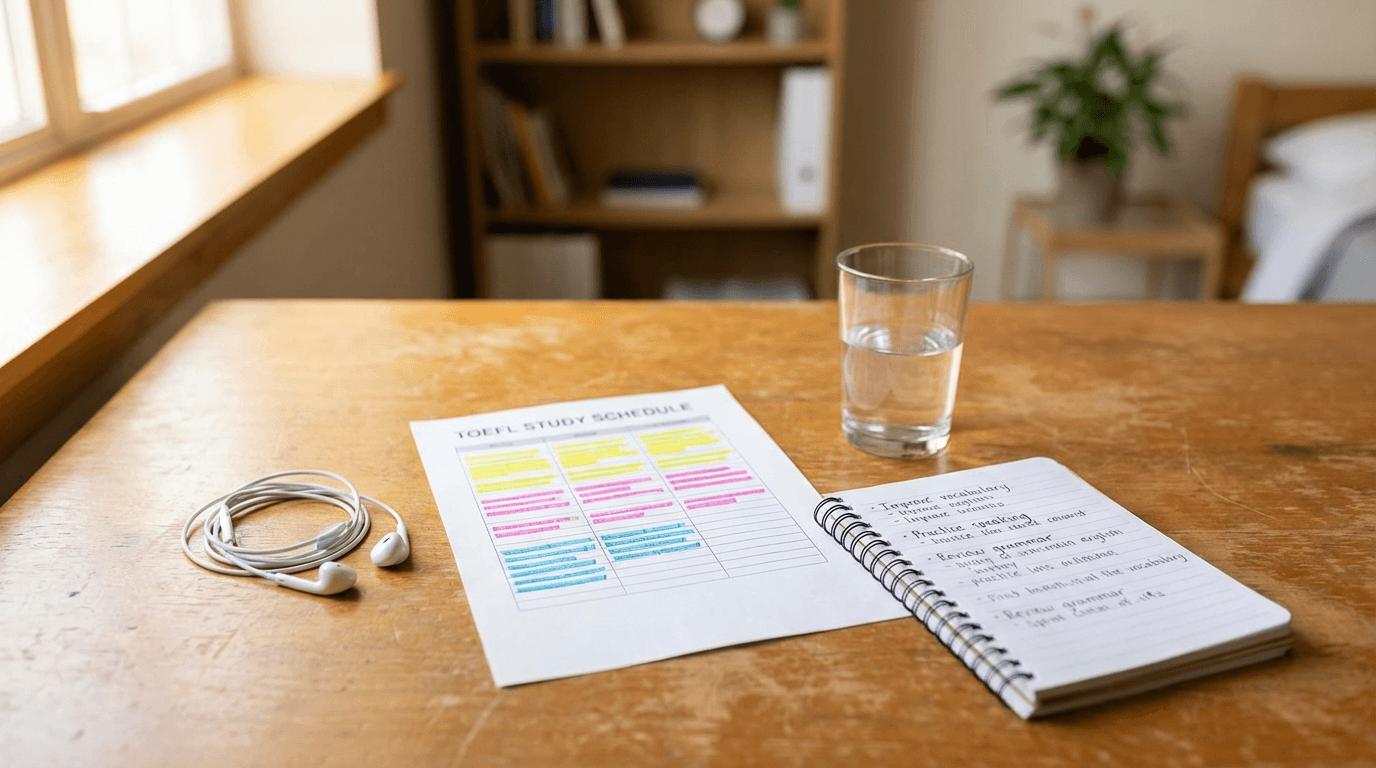
The TOEFL speaking section underwent its biggest overhaul in 60 years on January 21, 2026. Gone are the four old tasks you may have practiced. In their place: two brand-new task types that prioritize spontaneous, real-time English — exactly the kind you'll use in a university classroom or a job interview.
If you're preparing for the new test, you need TOEFL speaking practice topics that actually match the 2026 format. Most guides online still reference the old four-task structure. This one doesn't. Below you'll find 33 topics with over 130 sample questions for both new task types, plus a proven response framework and timing strategies you can use on test day.
Quick Summary: The 2026 TOEFL speaking section has 11 questions across two tasks — Listen and Repeat (7 sentences) and Take an Interview (4 questions). There's zero preparation time. This guide covers 13 Listen and Repeat topics and 20 Interview topics with sample TOEFL speaking practice questions, model response frameworks, and scoring tips for each task type.
What Changed in the 2026 TOEFL Speaking Section
ETS replaced all four previous speaking tasks with two completely new ones on January 21, 2026. The old independent and integrated tasks are gone entirely — and so are the reading passages, listening clips, and 15-second prep windows that defined the old test. Here's how the new structure compares:
| Feature | Old Format (pre-2026) | New Format (2026) |
|---|---|---|
| Tasks | 4 (independent + integrated) | 2 (Listen and Repeat + Interview) |
| Questions | 4 total | 11 total |
| Duration | ~17 minutes | ~8–10 minutes |
| Prep time | 15–30 seconds per task | None |
| Scoring | 0–30 scale | 1.0–6.0 band (plus 0–120 overall) |
| Scored by | Human raters + AI | AI only |
Every response is now evaluated on four constructs:
- Fluency — smooth, natural pace without long pauses
- Intelligibility — clear pronunciation and word stress
- Language Use — grammar variety and vocabulary range
- Organization — logical structure and direct relevance to the question
The biggest shift? No preparation time whatsoever. You hear a sentence and repeat it immediately. You hear an interview question and answer it right away. This rewards genuine English ability, not memorized templates — which is why working through TOEFL speaking practice topics before test day is more important than ever.
How to Use These TOEFL Speaking Practice Topics
Before diving into the topics themselves, here's how to get the most out of this guide:
For Listen and Repeat topics: Read each sample sentence aloud at a natural pace. Then cover it, try to recall it from memory, and repeat it. This mimics the actual test experience where you hear the sentence once and reproduce it. Record yourself on your phone and compare your pronunciation to the original.
For Interview topics: Set a 45-second timer. Read one question, then immediately start answering out loud — no planning, no notes. This forces the kind of spontaneous thinking that the real test requires. After answering, review what you said: Did you state a clear position? Did you include a specific example? Did you wrap up cleanly?
Practice frequency: Work through 2–3 TOEFL speaking practice topics per day rather than cramming them all at once. The AI scorer rewards the kind of natural fluency that only comes from consistent daily practice, not last-minute marathon sessions.
Task 1: Listen and Repeat Topics (Questions 1–7)
In this task, you'll hear seven sentences about a specific location or situation — typically a campus facility tour or a daily life procedure. After each sentence, you repeat it exactly once. You have 8–12 seconds to respond.
The sentences start short and simple, then grow longer and more complex:
- Sentences 1–2: 4–5 words (e.g., "Welcome to the campus gym.")
- Sentences 3–5: 8–12 words with more specific detail
- Sentences 6–7: Full complex sentences with multiple clauses
The task is scored on three constructs: Fluency (steady rhythm, no long pauses), Intelligibility (clear pronunciation), and Repeat Accuracy (reproducing the exact words in the right order). Repeat Accuracy carries the most weight — dropping a content word costs you significantly more than dropping an article like "a" or "the."
Here are 13 TOEFL speaking practice topics you're likely to encounter on test day, organized by setting, with sample sentences to practice repeating aloud.
Campus Facility Topics
1. University Library
Typical sentences describe borrowing procedures, quiet zones, and research services.
- "Welcome to the university library."
- "Please keep your voice low while inside the reading areas."
- "Books can be borrowed for up to two weeks at a time."
- "Return all borrowed items to the front desk or the return box near the entrance."
- "Food and drinks are not allowed near computers or study materials."
- "If you need research assistance, our librarians are available from nine to five."
- "Printing and copying services are located on the second floor."
2. Campus Gym / Fitness Center
Sentences cover equipment areas, locker rooms, and class schedules.
- "Welcome to our campus gym."
- "Cardio machines are near the entrance."
- "Free weights are in the back."
- "All of our locker rooms are equipped with showers and towels."
- "Our fitness instructors hold exercise classes over here."
- "You can check the schedule for available classes and timings."
- "If you have any questions, please seek assistance from the attendants at the help desk."
3. Student Health Center
Expect sentences about appointments, services, and insurance.
- "The student health center is open weekdays from eight to five."
- "Walk-in appointments are available for urgent concerns."
- "Please bring your student ID and insurance card to every visit."
- "Flu vaccinations are offered free of charge during the fall semester."
- "If you need to see a specialist, our staff can provide a referral."
4. Campus Dining Hall
Topics include meal plans, hours, and dietary accommodations.
- "The dining hall serves breakfast, lunch, and dinner."
- "Meal plans can be purchased online through the student portal."
- "Vegetarian and allergen-free options are clearly labeled at every station."
- "Please return your trays and dishes to the collection area when you are finished."
5. Student Housing / Dormitory
Orientation-style sentences about residence rules and amenities.
- "Welcome to your new residence hall."
- "Quiet hours begin at ten p.m. on weeknights."
- "Each floor has a shared kitchen and a laundry room."
- "If you experience a maintenance issue, submit a request through the housing portal."
- "Your resident advisor is available to answer questions and provide support."
Academic Setting Topics
6. Science Laboratory
Safety-focused sentences about procedures and equipment.
- "Welcome to the chemistry lab."
- "Safety goggles must be worn at all times during experiments."
- "Please do not eat or drink inside the laboratory."
- "All chemicals should be disposed of in the designated waste containers."
- "In case of an emergency, locate the nearest eyewash station and fire extinguisher."
7. University Bookstore
Sentences about textbooks, returns, and digital materials.
- "The bookstore is located on the first floor of the student center."
- "Required textbooks are listed by course number."
- "You may return books within fourteen days with your original receipt."
- "Digital textbook codes cannot be returned once activated."
8. Lecture Hall / Auditorium
Procedures for events, seating, and technology.
- "Please find a seat and silence your phone before the presentation begins."
- "Recording the lecture without permission is not allowed."
- "If you need assistive listening devices, they are available at the front desk."
9. Computer Lab
Hours, printing, and reservation info.
- "The computer lab is open to all students with a valid ID."
- "Each student receives fifty free pages of printing per semester."
- "Please save your work frequently, as computers restart automatically at midnight."
Community and Daily Life Topics
10. International Airport
Security, boarding, and luggage procedures.
- "Welcome to the international airport."
- "Baggage claim is straight ahead."
- "Please have your boarding passes and identification ready for security."
- "Carry-on liquids must be placed in clear plastic bags."
- "Do not leave your luggage unattended at any time."
- "If your flight is delayed, you may receive updates through the airline's mobile app."
11. Hotel Check-in
Room policies, amenities, and services.
- "Welcome to the Grandview Hotel, and thank you for choosing to stay with us."
- "Check-in time begins at three p.m., and check-out is at eleven a.m."
- "Breakfast is served in the dining area on the first floor from six thirty to ten."
- "Complimentary toiletries are available at the front desk upon request."
- "Please keep noise to a minimum after ten p.m. to respect other guests."
- "Our fitness center and pool are open daily from seven a.m. to nine p.m."
- "If you need anything during your stay, please contact the front desk at any time."
12. Art Gallery / Museum
Tour sentences about exhibits, photography rules, and guides.
- "Welcome to the art gallery."
- "A free audio guide is available for all visitors."
- "Digital maps can be used for planning your visit."
- "If you have questions, just ask a staff member."
- "When taking photos, please turn off your flash."
- "There's also a quiet area over here for personal reflection."
- "Before leaving the gallery, please make sure to return your audio guide at the entrance."
13. Zoo / Botanical Garden
Animal areas, safety rules, and visitor services.
- "We have a variety of wildlife."
- "Bears, wolves, and large cats are to the right."
- "You can find sea lions and elephants further down the path."
- "Please, no outside food or drinks, and do not feed the animals."
- "Avoid banging or tapping on the displays and enclosures."
- "For those with children, we offer summer camps and educational opportunities."
- "The visitor's center, located near the front entrance, can give you more information."
Listen and Repeat: Daily Practice Strategy
The key to scoring well isn't just having good pronunciation — it's developing your auditory memory so you can hold a full sentence in your head long enough to reproduce it accurately. Here's a simple daily practice routine:
- Find short audio clips (podcast intros, news clips, YouTube videos) with clear English speakers.
- Play one sentence, pause, and repeat it word for word without looking at a transcript.
- Record yourself, then compare your version to the original.
- Focus on content words first — nouns, verbs, and adjectives carry the most scoring weight.
- Gradually increase sentence length from 4-word phrases to full 15-word sentences over the course of a few weeks.
This shadowing technique directly trains the skill the Listen and Repeat task tests. Aim for 10–15 minutes of daily practice. You can also practice this with Practice Me's AI tutors — listening to their responses and repeating key phrases back trains the same auditory memory muscles the test demands.
Task 2: Interview Topics and TOEFL Speaking Practice Questions (Questions 8–11)
The interview task simulates a conversation with a researcher. You'll see them on screen, hear four questions about one topic, and respond to each for 45 seconds. You can't read the questions — you only hear them.

The four questions follow a predictable pattern that builds from personal to abstract:
- Personal experience — "Tell me about a time when you..."
- Preference or choice — "Would you rather X or Y?"
- Opinion on an issue — "Do you agree that...?"
- Policy or broader view — "Should schools/companies/governments...?"
Understanding this pattern is crucial for test day. Question 1 is typically the easiest because you're simply drawing on real personal memory. Question 4 is hardest because you need to form and defend an opinion on a societal issue under time pressure. Make sure you practice both ends of the spectrum when working through these TOEFL speaking test practice questions.

Here are 20 interview topics with sample questions for each. The four questions in every topic follow the real interview pattern — personal experience, preference, opinion, policy. Set a 45-second timer and practice responding to each one spontaneously.
Technology & Digital Life
14. Smartphones
- "Think back to the last time you used your phone for something important. What did you use it for and why?"
- "Some people feel phones make them more connected and efficient. Others feel distracted or overwhelmed. How do you usually react to your phone in daily life?"
- "Do you believe smartphones clearly make life better in the modern world?"
- "Should schools and workplaces encourage healthier phone habits, like turning off phones during breaks?"
15. Social Media
- "How do you typically use social media in your daily life?"
- "Do you prefer to share personal updates online, or do you prefer to keep things private? Why?"
- "Some people say social media brings people closer together. Do you agree with that idea?"
- "Should employers be allowed to check an applicant's social media profiles before making a hiring decision?"
16. Online Learning
- "Have you ever taken an online course or used an educational app? What was that experience like?"
- "Would you prefer studying online or in a traditional classroom? Why?"
- "Do you think online education is as effective as in-person learning?"
- "Should universities offer more fully online degree programs to reach students worldwide?"
Duolingo taught you words. No one taught you to speak.
PracticeMe: real voice conversations with an AI tutor, 24/7.
Education & Student Life
17. Study Habits
- "Describe your typical study routine. Where and when do you study best?"
- "Do you prefer studying alone or with a group of classmates? Why?"
- "Do you agree that students today have more distractions than previous generations of students?"
- "Should universities require all first-year students to attend study skills workshops?"
18. Campus Life
- "What activity or experience has been most important to you during your time as a student?"
- "Would you rather live on campus in a dormitory or off campus in an apartment?"
- "Do you think extracurricular activities are as important as academic performance?"
- "Should universities require community service as a graduation requirement for all students?"
Work & Career
19. Work Preferences
- "Tell me about a job or work experience that was particularly meaningful to you."
- "Would you prefer a high-paying job with long hours, or a lower-paying job with more free time?"
- "Do you agree that job satisfaction matters more than salary in the long run?"
- "Should companies offer four-day work weeks to improve employee wellbeing?"
20. Remote Work
- "Have you ever worked or studied from home for an extended period? What was that experience like?"
- "Do you prefer working in a shared office environment or from home?"
- "Do you believe working remotely makes people more or less productive overall?"
- "Should employers allow permanent remote work options for all employees who want them?"
Travel & Exploration
21. Travel Experiences
- "Describe a memorable trip you've taken. What made it special?"
- "Do you prefer traveling to completely new places or revisiting somewhere you already love?"
- "Some people say travel is the best form of education. Do you agree?"
- "Should governments invest more in making travel affordable and accessible for young people?"
22. Living Abroad
- "Have you ever lived in or visited a different country? What was the biggest adjustment you had to make?"
- "Would you rather live in your home country or move abroad permanently?"
- "Do you think living abroad fundamentally changes a person's worldview?"
- "Should universities require students to spend at least one semester studying abroad?"
Health & Daily Life
23. Health & Wellness
- "What do you do to stay healthy in your daily life?"
- "Would you rather exercise at a gym or outdoors in nature?"
- "Do you agree that mental health is just as important as physical health?"
- "Should workplaces be required to offer wellness programs for all employees?"
24. Daily Routines & Sleep
- "Walk me through your typical morning routine."
- "Would you rather wake up early or stay up late to be productive?"
- "Do you think people today get enough quality sleep?"
- "Should schools start classes later in the morning to help students get more rest?"
25. Food & Cooking
- "Do you enjoy cooking? Tell me about something you've made recently."
- "Would you rather eat home-cooked meals or eat at restaurants most of the time?"
- "Do you agree that cooking is an essential life skill everyone should learn?"
- "Should schools include cooking classes as part of the regular curriculum?"
Environment & Community
26. Environment & Sustainability
- "What's one thing you do in your daily life to help the environment?"
- "Would you rather use public transportation or drive your own car? Why?"
- "Do you think individuals can make a real difference in fighting climate change, or is it mainly the responsibility of governments?"
- "Should governments ban single-use plastics entirely?"
27. Community & Volunteering
- "Have you ever volunteered or helped your local community? Tell me about that experience."
- "Do you prefer volunteering your time or donating money to a cause?"
- "Do you agree that volunteering should be a required part of every student's education?"
- "Should companies give employees paid time off specifically for community volunteering?"
Hobbies & Personal Interests
28. Hobbies & Free Time
- "What do you enjoy doing in your free time?"
- "Would you rather spend free time on a creative hobby or a physical activity?"
- "Do you think hobbies are important for a person's overall wellbeing?"
- "Should employers actively encourage employees to pursue hobbies outside of work hours?"
29. Reading & Books
- "What's the last book you read, and what did you think of it?"
- "Do you prefer reading physical books or using digital devices like tablets and e-readers?"
- "Do you agree that reading for pleasure is declining among young people?"
- "Should schools assign more or less required reading to students?"
30. Music & Entertainment
- "What role does music play in your daily life?"
- "Do you prefer listening to music alone at home or attending live concerts and events?"
- "Do you think streaming services have fundamentally changed how people enjoy and discover music?"
- "Should schools invest more in arts and music education programs?"
Relationships & Communication
31. Friendship & Relationships
- "Tell me about a close friend and what makes your friendship strong."
- "Do you prefer having a few close friends or a large group of acquaintances?"
- "Do you think technology has made it easier or harder to maintain real friendships?"
- "Should schools teach students about building and maintaining healthy relationships?"
32. Commuting & Transportation
- "How do you usually get to school or work? Is it a positive or negative experience for you?"
- "Would you choose a faster commute by car or a cheaper commute by public transit?"
- "Some people believe commuting is always stressful and tiring. What do you think are one or two ways to make it more enjoyable?"
- "Should cities invest more heavily in public transportation to reduce traffic and pollution?"
33. Urban vs. Rural Life
- "Do you currently live in a big city, a small town, or a rural area? What do you like or dislike about it?"
- "Would you rather live in a busy city with lots of opportunities or a quiet countryside with more space and nature?"
- "Some people argue that people who live in cities lead more interesting lives. Do you agree with that idea?"
- "Should governments offer financial incentives for people to move to less populated rural areas?"
The IRT Response Framework for TOEFL Speaking Practice

You have exactly 45 seconds per interview answer. That's roughly 100–120 words at a natural speaking pace. The IRT framework gives your answer clear structure without sounding rehearsed or robotic:
I — Idea (0–15 seconds) State your answer directly. Don't waste time restating the question or giving unnecessary background.
R — Reason (15–30 seconds) Give one clear reason with a specific example. Personal stories and concrete details score better than vague generalities every time.
T — Tie-in (30–45 seconds) Connect back to the question and wrap up cleanly. A brief concluding thought demonstrates strong organization — one of the four scoring constructs the AI evaluates.
Sample IRT Response: Question Type 3 (Opinion)
Question: "Do you agree that job satisfaction matters more than salary?"
Idea: "Yes, I do believe that job satisfaction is more important than money in the long run."
Reason: "I've seen this firsthand with my older sister. She left a well-paying banking job because she was miserable and constantly stressed. She took a lower-paying position at a nonprofit, and within months she was happier, sleeping better, and actually excited to go to work. The salary drop was significant, but she says she'd never go back."
Tie-in: "So from what I've observed, being satisfied with your work affects your entire quality of life — not just the hours you spend at the office. That's worth more than a bigger paycheck."
Sample IRT Response: Question Type 4 (Policy)
Question: "Should governments ban single-use plastics entirely?"
Idea: "I think a complete ban would be too extreme, but I believe governments should do much more to reduce plastic waste."
Reason: "For example, in some countries, plastic bag charges at supermarkets have already cut usage by over 80 percent without banning anything outright. That kind of approach — making it less convenient but still technically available — gives people time to adjust and find alternatives. A sudden ban could hurt small businesses that can't afford to switch materials overnight."
Tie-in: "So I'd support stricter regulations and financial incentives over an outright ban, at least as a first step toward reducing plastic pollution."
Notice the pattern in both sample responses: no complex vocabulary, no rehearsed phrases like "I wholeheartedly believe" or "in conclusion." Just a clear position, one vivid example, and a clean finish. This natural, conversational style is exactly what the TOEFL AI scoring engine rewards for Organization and Language Use.
Timing and Pacing Tips for the 2026 TOEFL Speaking Test

For Listen and Repeat
- Don't rush. You have 8–12 seconds — that's more than enough time to repeat a 6-second sentence clearly.
- Pause briefly before speaking if you need a moment to process what you heard. A short, deliberate pause is fine.
- Self-correct if you catch a mistake. The scoring rubric explicitly allows this — it's better to fix an error than leave it.
- Focus on content words. If you forget a small word like "the" or "a," it costs less than missing a key noun or verb.
- Maintain natural intonation. The AI evaluates not just what you say but how you say it — monotone delivery scores lower on Intelligibility.
For the Interview
- Start talking within 2–3 seconds. Long initial pauses signal hesitation to the AI scorer and cost you points on Fluency.
- Aim for ~150 words per minute. That's a natural conversational pace — not so slow that you sound unsure, not so fast that you trip over words.
- Don't try to fill all 45 seconds. A strong, well-structured 35-second answer beats a 45-second ramble with no clear direction. But aim to get past the 20-second mark at minimum so the AI has enough speech to score.
- Use natural fillers sparingly. Words like "well," "honestly," and "actually" sound human and buy you a second to think without creating a dead pause. Just don't use them in every sentence.
- Refer back to earlier answers when relevant. If Question 3 connects to something you said in Question 1, mentioning that shows conversational fluency and coherence — skills the interview task specifically measures.
5 Tips to Sound Natural in the New Interview Format

1. Practice thinking out loud, not memorizing answers. The new format specifically punishes rehearsed-sounding responses. Instead of memorizing answers to specific TOEFL speaking practice topics, practice the skill of forming coherent thoughts on the spot. Pick any random subject — your morning coffee, a movie you watched last week, why you chose your backpack — and talk about it for 45 seconds. Do this daily and your spontaneity will dramatically improve within just a couple of weeks.
2. Use simple transitions that sound conversational. You don't need "furthermore" or "notwithstanding" to score well. Simple connectors like "because," "for example," "so," "also," and "on the other hand" score just as high and sound much more natural in a conversational interview setting. The AI isn't impressed by big words — it's measuring whether your ideas connect logically.
3. Get specific with your examples. Compare these two responses to the same question:
- ❌ "I like traveling because it's fun and educational."
- ✅ "Last summer I spent two weeks in Portugal, and just ordering food at local restaurants taught me more about the culture than any guidebook could."
The second answer is personal, specific, and vivid. The AI scores it higher on both Organization and Language Use because it demonstrates your ability to develop an idea with concrete detail rather than relying on vague, generic claims.
4. Don't panic over mistakes — keep going. If you mispronounce a word or lose your train of thought, just continue speaking. The scoring engine evaluates your overall fluency across the entire 45 seconds — one small mistake won't tank your score. What will hurt you is freezing, going silent, or restarting from the beginning. Smooth recovery is a sign of fluency.
5. Build your spontaneous speaking muscle with daily conversation practice. The single biggest challenge of the new TOEFL speaking section is that everything is spontaneous. No prep time. No notes. Just you and the question. The most effective way to train for this isn't drilling TOEFL speaking practice questions in isolation — it's having real, unscripted conversations in English as often as possible.
AI conversation tools like Practice Me let you have unlimited voice conversations with AI tutors who adapt to your level — great for building the kind of real-time speaking confidence the TOEFL now demands. You can practice anytime, respond to questions on the spot, and work on your fluency without the pressure of a human listener judging you. If you're someone who gets anxious about speaking English with real people, practicing with AI first can help you build a solid foundation before test day.
The goal isn't to rehearse specific test answers. It's to practice speaking English spontaneously until it feels like second nature. The more real conversations you have, the easier the interview task becomes on test day.
For more strategies on building lasting fluency beyond test prep, check out our guide on how to become fluent in English.
Frequently Asked Questions
How many questions are in the 2026 TOEFL speaking section?
There are 11 questions total: 7 in the Listen and Repeat task and 4 in the Interview task. The entire speaking section takes about 8–10 minutes — significantly shorter than the old 17-minute format. The speaking section is now the final part of the TOEFL test, coming after Reading, Listening, and Writing.
Is there preparation time in the new TOEFL speaking section?
No. This is one of the biggest changes from the old format. You hear each sentence or question and must respond immediately — there's no prep time and no note-taking allowed. Every response is completely spontaneous, which is why practicing with real TOEFL speaking practice topics and sample questions beforehand is so valuable.
How is the 2026 TOEFL speaking section scored?
All responses are scored entirely by AI on a 0–5 scale per item. The 7 Listen and Repeat scores are averaged into one task score, and the 4 Interview scores are averaged into another. Your final Speaking band (1.0–6.0) is the average of these two task scores, rounded to the nearest half-band. The AI evaluates four constructs: Fluency, Intelligibility, Language Use, and Organization (which includes Relevancy — whether you actually answer the specific question asked).
What topics appear in the TOEFL Listen and Repeat task?
Topics typically involve campus or community locations that students might encounter in daily academic life: library tours, gym orientations, hotel check-ins, airport procedures, laboratory safety briefings, museum and gallery tours, dining hall introductions, and similar guided scenarios. You'll hear 7 progressively longer sentences describing one specific location or procedure.
How long are the interview responses in the 2026 TOEFL?
You get 45 seconds per question — four questions total about one single topic. At a natural speaking pace of around 150 words per minute, that's roughly 100–120 words per answer. You should aim to speak for at least 20 seconds to give the AI enough speech to score accurately, but a focused 35-second answer with clear IRT structure beats 45 seconds of unfocused rambling every time.
Can I practice the new TOEFL speaking format with AI?
Absolutely. Since the new format heavily emphasizes spontaneous spoken English without any preparation time, practicing with AI voice tools is one of the most effective preparation methods available today. Apps like Practice Me offer real-time voice conversations with AI tutors — which closely mirrors the interview-style format on the actual test. You can practice responding to questions spontaneously, build natural fluency at your own pace, and get comfortable speaking English in real time — all skills that directly translate to better TOEFL speaking performance.