Duolingo taught you words. No one taught you to speak.
PracticeMe: real voice conversations with an AI tutor, 24/7.
Best English Pronunciation Apps in 2026 [Reviewed]
![Best English Pronunciation Apps in 2026 [Reviewed]](https://cdn.babyseo.ai/images/practiceme.app/best-english-pronunciation-apps/best-english-pronunciation-apps-hero.png)
You can nail every grammar rule and memorize thousands of English words, but if native speakers keep asking you to repeat yourself, something's missing. Pronunciation is the bridge between knowing English and actually being understood — and the best English pronunciation app can close that gap faster than you'd expect.
The problem? There are dozens of pronunciation apps, and they all claim to be the best. Some drill you on individual sounds. Others throw you into full conversations. A few just have you watch videos and hope the accent rubs off.
We tested seven of the most popular English pronunciation apps in 2026 to find out which approach actually delivers results — and which app fits your specific learning style. Whether you want to practice English pronunciation through focused drills, real conversations, or immersive media, this guide breaks it all down.
Quick Summary: The best English pronunciation app depends on how you learn. ELSA Speak leads for detailed phoneme drills, Practice Me excels at building natural pronunciation through real AI conversations, and BoldVoice offers professional accent coaching. Speakometer is the top free option for beginners looking to improve their English pronunciation sounds. Read our full breakdown by approach below.
Three Approaches to Pronunciation Training
Not all pronunciation apps work the same way, and understanding the differences saves you from wasting time (and money) on the wrong tool.
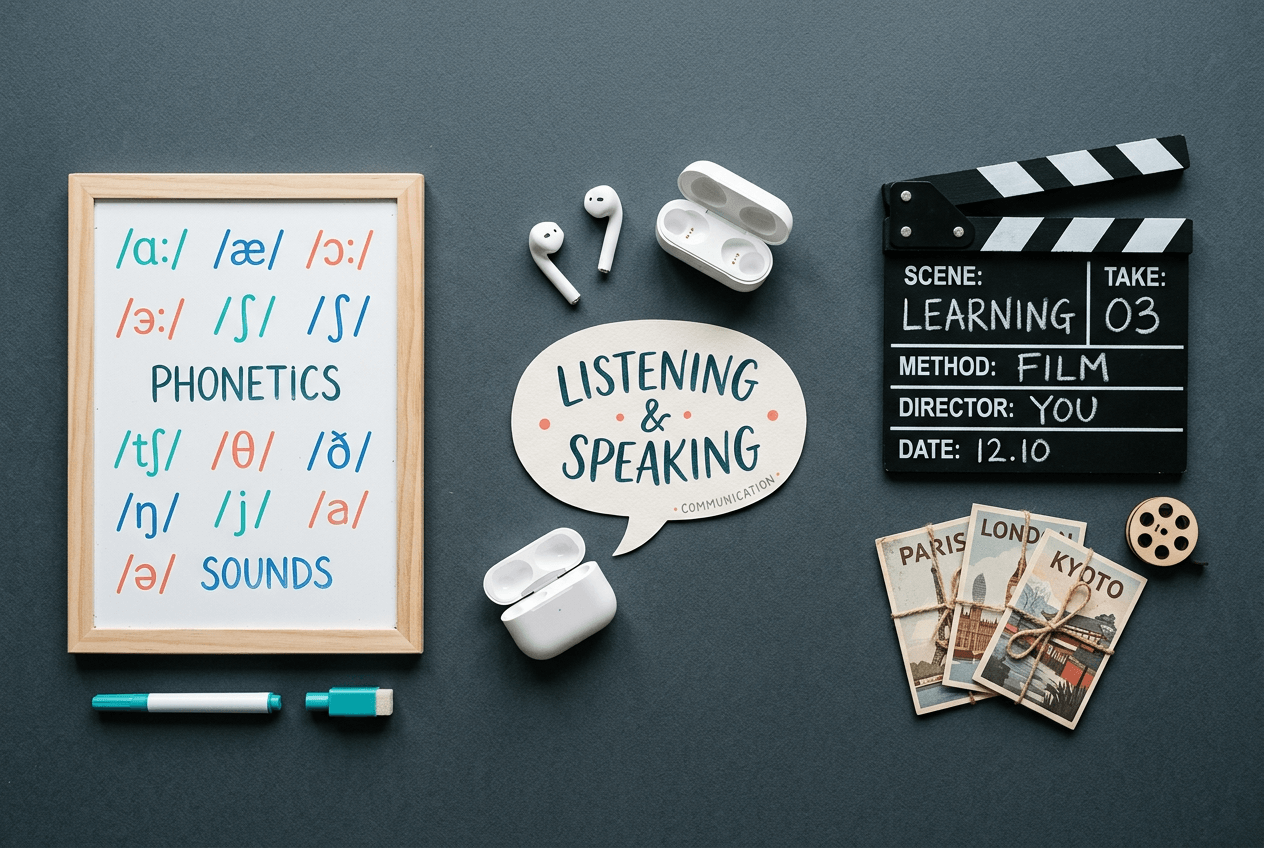
Drill-based apps isolate specific sounds, words, or phrases and have you repeat them until AI scores your accuracy. Think of it like scales for a musician — focused, repetitive, and targeted at individual pronunciation problems. Best for learning specific English sounds you consistently mispronounce.
Conversation-based apps improve your pronunciation through real speaking practice. Instead of drilling the "th" sound 50 times, you use it naturally while talking about your weekend plans. Your pronunciation develops in context, alongside fluency and confidence. Best for learners who freeze up when speaking English with real people.
Media-based apps expose you to native English pronunciation through real-world videos, podcasts, and film clips. The idea is immersion — absorb natural speech patterns by listening to how native speakers actually talk. Best for learners who want to improve their listening ear and pick up natural rhythms.
Each approach has trade-offs. Drills are precise but can feel robotic. Conversations are natural but less targeted. Media builds your ear but doesn't actively correct your pronunciation. According to research published in the Journal of Second Language Pronunciation, combining active speaking practice with targeted feedback produces the fastest improvement. Many successful learners use two apps together.
Quick Comparison: All 7 English Pronunciation Apps at a Glance
| App | Approach | Pricing | Accents | Platforms | Best For |
|---|---|---|---|---|---|
| ELSA Speak | Drill-based | Free plan; paid Pro | American | iOS, Android | Phoneme-level precision |
| BoldVoice | Drill-based | Paid subscription | American | iOS, Android, Web | Professional accent coaching |
| Speakometer | Drill-based | Free | American, British | iOS, Android | Budget-friendly beginners |
| Practice Me | Conversation | Affordable subscription | American, British | iOS | Natural pronunciation + fluency |
| Pronounce AI | Conversation | Free (limited); paid plans | Am, Br, Aus, Indian | Android, Web | Professional speech analysis |
| Speechling | Dictation | Free (limited); paid unlimited | General | iOS, Android, Web | Human coach feedback |
| FluentU | Media-based | Paid subscription | Various (native content) | iOS, Android, Web | Listening immersion |
Drill-Based Pronunciation Apps
If you want to isolate specific English sounds and get granular feedback on exactly what your tongue is doing wrong, drill-based apps are your tools. These apps break pronunciation into its smallest components and help you practice each sound until you get it right.
ELSA Speak — Best English Pronunciation App for Phoneme-Level Analysis
ELSA Speak (English Language Speech Assistant) is the heavyweight of drill-based pronunciation apps, with over 25 million users and AI that breaks your speech down to individual phonemes — the smallest units of sound in the English language.
How it works: You read words, phrases, and sentences aloud. ELSA's AI scores each sound on accuracy, highlighting exactly which phonemes need work. It builds personalized study plans based on your weaknesses and tracks progress with CEFR-level predictions (A1 through C1).

What stands out: The phoneme-level precision is unmatched among pronunciation apps. If you consistently struggle with the difference between "ship" and "sheep," ELSA will drill you on those specific sounds until you've mastered them. The app includes over 1,400 structured lessons and gamified elements that keep practice sessions engaging.
Pricing: Free plan with limited features. Paid Pro subscription, plus a slightly pricier Premium tier that adds AI conversation practice.
Accent support: Primarily American English pronunciation practice — a real limitation if you're targeting a British accent.
The catch: ELSA can be frustratingly strict. Users on G2 reviews report the AI marking pronunciation as incorrect even when native speakers understand them fine. It also focuses heavily on isolated sounds rather than how those sounds flow in real conversation.
Best for: Learners who know they have specific sound problems and want surgical precision to fix them.
BoldVoice — Best Accent Coaching App
BoldVoice pairs AI pronunciation feedback with video lessons from actual Hollywood accent coaches — the same professionals who train actors to sound convincingly American on screen. The company recently raised a major funding round, signaling strong market confidence in their approach.
How it works: You watch short video lessons where coaches demonstrate mouth positioning, airflow, and sound production for specific English sounds. Then you practice by recording yourself, and the AI scores your pronunciation sound-by-sound.
What stands out: The video coaching is genuinely helpful for learning pronunciation. Seeing a professional demonstrate exactly how to position your mouth for tricky sounds is more intuitive than reading phonetic descriptions. BoldVoice has surpassed five million downloads and serves users in over 150 countries.
Pricing: Paid monthly or yearly subscription after a 7-day free trial. No free tier beyond the trial.
Accent support: American English only. If you want British English pronunciation practice, look elsewhere.
The catch: Reddit users in r/EnglishLearning have reported inconsistent speech detection — the AI occasionally misinterprets correctly spoken sounds. And without a free plan, you're committing financially before knowing if the coaching style works for you.
Best for: Professionals who want a structured American English pronunciation program with expert coaching.
Speakometer — Best Free English Pronunciation App
Speakometer is a no-frills, free pronunciation trainer that does one thing well: letting you practice individual English words and comparing your pronunciation against both American and British English models.
How it works: You search for any English word, listen to native pronunciation in both accents, record yourself saying it, and get AI feedback on how closely your sounds match. Simple, focused, and surprisingly effective for word-level pronunciation practice.
What stands out: It's completely free. In a category where most English pronunciation apps charge a monthly subscription, Speakometer offers solid word-level practice at no cost. It's rated 4.65+ on both app stores with over 530,000 downloads.
Pricing: Free. Some premium features available, but the core pronunciation practice costs nothing.
Accent support: Both American and British English — one of the few free apps offering both. Helpful whether you're focused on American English pronunciation practice or working toward a British accent.
The catch: Speakometer is limited to individual words and sounds. It won't help you practice sentences, conversations, or the rhythm of connected speech. Multiple reviews note it's helpful as a supplement but not sufficient on its own for improving overall pronunciation fluency.
Best for: Absolute beginners and budget-conscious learners who want a free tool to start practicing English pronunciation immediately.
Conversation-Based Pronunciation Apps
Here's a different philosophy: instead of drilling English sounds in isolation, these apps improve your pronunciation by having you actually speak English in real conversations. Your pronunciation develops naturally — the same way it would living in an English-speaking country.

Duolingo taught you words. No one taught you to speak.
PracticeMe: real voice conversations with an AI tutor, 24/7.
Practice Me — Best App for Natural English Pronunciation Through Conversation
Practice Me's AI tutors take a fundamentally different approach to pronunciation improvement: they don't drill you. Instead, they have real voice conversations with you — and your pronunciation improves because you're actually using English words and sounds in context, not just repeating them.
How it works: You pick an AI tutor personality (Sarah, Oliver, or Marcus), choose between American and British accents, and start talking. The experience feels like a phone call with a patient, encouraging English speaker. You discuss real topics — your day, your goals, travel plans — and the tutors adapt to your level.

What stands out: This is the closest thing to practicing pronunciation with a native speaker, available 24/7 without the anxiety of being judged. New vocabulary from your conversations is automatically tracked, and progress monitoring shows your speaking time and improvement trends over time.
For learners dealing with fear of speaking a foreign language, this judgment-free environment is particularly valuable. You can stumble, pause, and self-correct without embarrassment — exactly the kind of practice that builds both pronunciation and real-world confidence.
Pricing: Weekly or yearly subscription — one of the most affordable options for unlimited English conversation practice. See current plans.
Accent support: Both American and British English accents across all AI tutor personalities — making it a strong choice for learners practicing either American English pronunciation or British pronunciation.
The catch: Practice Me doesn't isolate individual phonemes or score each sound separately. If you need to drill one specific sound repeatedly, pairing it with a dedicated drill app works well. Currently available on iPhone and iPad only.
Best for: Learners who want pronunciation that actually works in real conversations — not just in app exercises. Especially effective for anyone working on becoming fluent in English who wants speaking confidence alongside better pronunciation.
Pronounce AI — Best App for Professional Speech Analysis
Pronounce AI is built for a specific use case: analyzing your pronunciation during actual work conversations, meetings, and presentations to help you improve in the context that matters most.
How it works: Pronounce can record your real conversations (meetings, calls, presentations) and analyze them for pronunciation errors, grammar issues, fluency patterns, and vocabulary usage. It also offers an AI speaking partner for structured practice, plus read-aloud exercises to practice specific English sounds.
What stands out: The ability to analyze real work conversations is unique among pronunciation apps. Instead of practicing in a simulated environment, you get feedback on how you actually speak English when it counts. It supports four accent models: American, British, Australian, and Indian — the widest accent variety in this comparison.
Pricing: Free plan with 3 voice recordings. Paid Premium plans add unlimited recordings and advanced speech analysis.
Accent support: American, British, Australian, and Indian English pronunciation models.
The catch: There's no iOS app yet (Android, Web, and Windows only), which limits accessibility for iPhone users. The tool is also geared toward intermediate-to-advanced English speakers — absolute beginners may find it overwhelming.
Best for: Working professionals who need to improve English pronunciation specifically for business communication — interviews, presentations, and client calls.
Dictation-Based Pronunciation App
Speechling — Best App for Listen-and-Repeat Pronunciation Practice
Speechling takes an old-school approach to learning pronunciation and does it well: listen to native English speakers, repeat what they said, and get feedback. The twist? Feedback comes from actual human coaches, not just AI.
How it works: You browse a library of English sentences organized by difficulty and topic, listen to native speaker audio, record yourself repeating the sentence, and submit it for review. A human coach listens to your recording and sends back detailed pronunciation feedback — usually within 24 hours. The app also includes dictation exercises, listening drills, flashcards, and quizzes to practice English pronunciation from multiple angles.
What stands out: Human feedback on your pronunciation is rare in this price range. A real person evaluating your speaking catches nuances that AI sometimes misses. Speechling also supports 13 languages, making it useful if you're learning pronunciation beyond just English.
Pricing: Free plan with limited coaching submissions (around 35/month). Unlimited coaching is available on a paid subscription.
Accent support: General English — Speechling isn't specifically designed for accent training, but the native speaker models provide exposure to natural English pronunciation patterns.
The catch: Feedback is delayed by up to 24 hours, so there's no real-time correction while you practice. The interface also feels dated compared to more modern pronunciation apps. And because practice is phrase-level, you won't build the conversational fluency that comes from actually speaking in real English exchanges.
Best for: Learners who value human validation and prefer structured, listen-and-repeat pronunciation practice at their own pace.
Media-Based Pronunciation App
FluentU — Best for English Pronunciation Through Immersion
FluentU doesn't teach English pronunciation directly — it surrounds you with it. The app uses real-world videos (movie clips, news segments, music videos, vlogs) with interactive subtitles to immerse you in how English actually sounds when native speakers use it.
How it works: You watch curated native English videos. Every word in the subtitle is tappable — tap to hear its pronunciation, see its definition, and find the word used in other clips. Vocabulary quizzes reinforce what you've absorbed. The idea is that sustained exposure to native speech patterns trains your ear to recognize correct English sounds, and over time, your speaking follows.
What stands out: The content is genuinely engaging for language learning. Instead of repeating textbook phrases, you're watching real people speak real English. This builds familiarity with stress patterns, intonation, slang, and connected speech — pronunciation elements that drill-based apps don't always cover well.
Pricing: Paid monthly or yearly subscription with a 14-day free trial. FluentU is the most expensive English pronunciation app in this comparison.
Accent support: Various — since content comes from real media, you'll hear American, British, Australian, and other English accents naturally in context.
The catch: FluentU provides zero active pronunciation feedback. You watch and listen, but the app never evaluates your speech or sounds. Multiple reviewers have noted this gap — it won't directly improve your pronunciation output. At its premium price, that's a significant limitation. It works best as a supplement alongside an app that gives you actual speaking practice.
Best for: Intermediate English learners who want to improve listening comprehension and absorb natural pronunciation patterns — ideally paired with a speaking-focused app for active practice.
Which Approach Is Right for You?

Choosing the best English pronunciation app starts with understanding what's actually holding you back.
You can't produce certain sounds at all → Start with a drill-based app like ELSA Speak or BoldVoice. You need targeted exercises that isolate the problem sounds and teach you how to physically form them.
You know the sounds but can't use them in real conversations → This is where conversation-based pronunciation apps shine. Practice Me lets you build natural English pronunciation while also developing fluency and speaking confidence. If you're working on learning an American accent or mastering a British accent, practicing in real conversations locks in pronunciation patterns faster than drills alone.
You struggle to understand native English speakers → Media-based immersion through FluentU can train your ear to recognize natural English sounds and words. But pair it with active speaking practice — listening alone won't fix your own pronunciation.
You want expert human feedback on your pronunciation → Speechling's human coaches are worth the subscription if personalized corrections matter to you.
You want the best overall approach → Many successful learners combine two tools. A common pairing: a drill app for targeted sounds + a conversation app like Practice Me for real-world English speaking practice. This covers both the surgical fixes and the natural fluency building that lasting pronunciation improvement requires.
The best English pronunciation app isn't always the most advanced one — it's the one you'll actually use consistently.
Frequently Asked Questions
Can an app really improve my English pronunciation?
Yes — and research backs this up. A 2025 study from Iowa State University published in the Journal of Second Language Pronunciation found that learners using AI pronunciation tools showed measurable improvement in speaking accuracy. The key factor isn't the app itself but consistent daily practice. Even 10-15 minutes of pronunciation practice per day produces noticeable results within a few weeks.
What's the difference between pronunciation drills and conversation practice?
Drills isolate specific English sounds and have you repeat them until you hit a target accuracy score. They're precise and efficient for fixing known pronunciation problems. Conversation practice improves pronunciation in context — you use sounds naturally while speaking about real topics, which builds both pronunciation and fluency simultaneously. Drills are like practicing free throws; conversation practice is like playing a full game of basketball.
Do I need an app that matches my target accent (American vs British)?
It depends on your goals. If you're learning American English pronunciation for work in the US or preparing for TOEFL, choose an app with American English models. If you're targeting British English pronunciation for IELTS or work in the UK, look for British accent support. Apps like Practice Me and Speakometer offer both accents. ELSA Speak and BoldVoice focus exclusively on American English sounds.
How long does it take to see pronunciation improvement with an app?
Most learners report noticeable improvement within 2-4 weeks of daily pronunciation practice (10-15 minutes minimum). Significant accent reduction typically takes 3-6 months of consistent work. The speed depends on your native language — speakers of Romance languages often improve faster with English sounds than speakers of tonal languages, simply because there's more phonetic overlap with English pronunciation patterns.
Can I use multiple pronunciation apps at the same time?
Absolutely, and many learners do. A practical combination: use a drill-based app (like ELSA Speak) for 5 minutes to warm up on problem sounds, then switch to a conversation app (like Practice Me) for 10-15 minutes of real English speaking practice. This covers both targeted pronunciation fixes and real-world application — without overwhelming your daily learning schedule.