Duolingo taught you words. No one taught you to speak.
PracticeMe: real voice conversations with an AI tutor, 24/7.
How to Learn an American Accent: Tips & Exercises

Wondering how to learn American accent pronunciation that actually sounds natural? You're not alone — learning the American accent is one of the most common goals for English learners worldwide. The good news: you don't need to move to the US or pay for expensive accent training. With the right tips, exercises, and consistent practice, anyone can learn American English accent patterns and start speaking with convincing American pronunciation from anywhere.
This guide gives you the specific sounds, accent tips, and practical exercises you need to speak American English with real confidence — whether you're preparing for life in the US, an English-speaking career, or just want to become fluent in English more naturally.
Quick Summary: The American accent is defined by five key sounds — the rhotic R, flap T, dark L, schwa, and flat A — plus a distinctive stress-timed rhythm. Master these through the 10 targeted exercises below, learn the common mistakes for your native language, and build consistency with daily speaking practice using an app like Practice Me.
How to Learn American Accent: Start With the Fundamentals
When people want to learn American accent pronunciation, they usually mean General American (GenAm) — the neutral, widely understood accent used by most US newscasters. It's not a Southern drawl or a New York accent. It's the standard American English accent that roughly two-thirds of Americans speak with, and the most useful version for English learners to master.
Many learners ask: how can I learn American accent skills quickly? The answer starts with understanding what makes this accent unique. According to linguists who study English phonology, American English pronunciation stands apart from British English and other English accents in several specific ways:
- It's rhotic — Americans pronounce every written R sound
- Ts get softened — the letter T between vowels becomes a quick flap, sounding like a soft D
- Vowels are wider — especially the flat A in words like cat and bath
- Rhythm is stress-timed — stressed syllables arrive at roughly equal intervals, while unstressed syllables get compressed
If your native language is Spanish, Mandarin, Arabic, or Japanese, these pronunciation features feel very different from what your mouth and tongue are used to. But each sound is learnable with practice — and this guide gives you the tips and exercises for every step of learning the American accent.
The 5 Key American English Sounds
These are the sounds that make the biggest difference in how American your spoken English sounds to native speakers. Learning to pronounce these five correctly is the fastest way to learn American accent pronunciation.
The Rhotic R
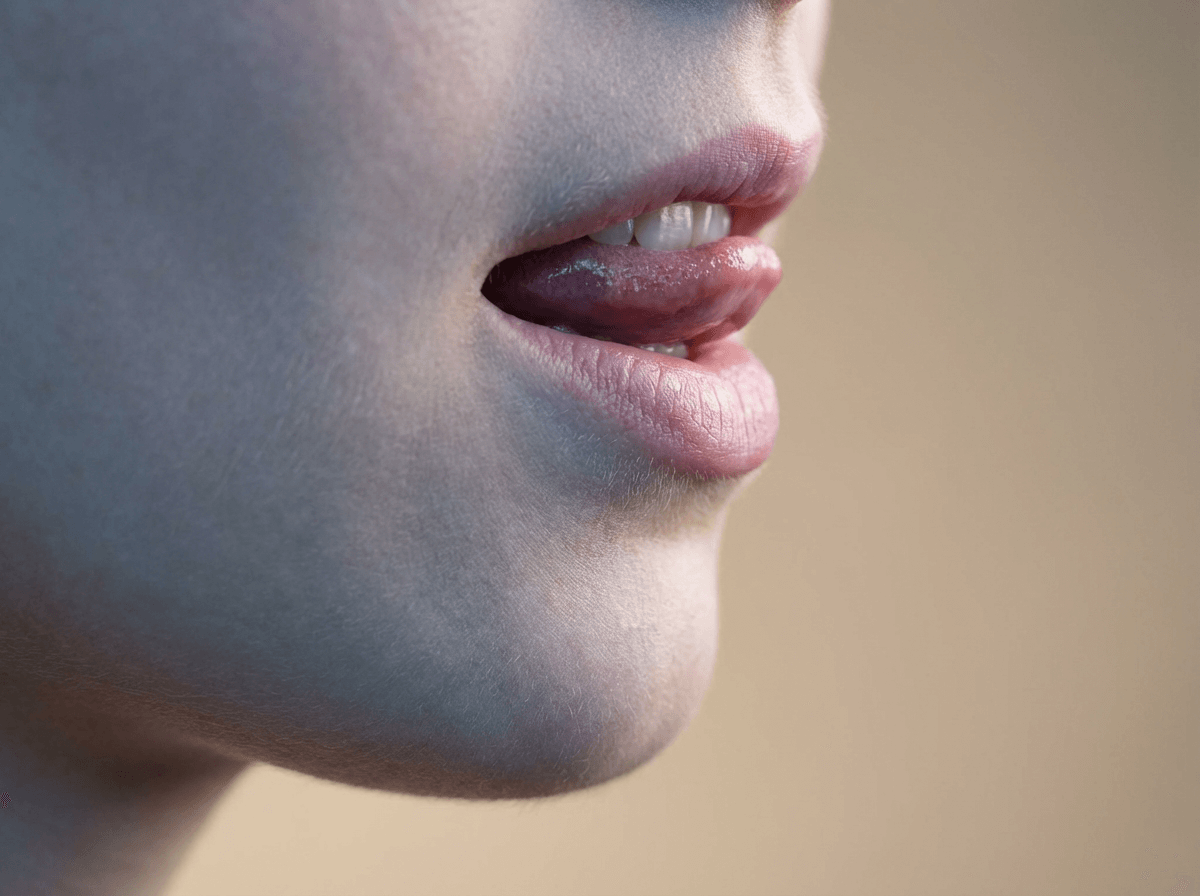
This is the most iconic sound in American English. Native American English speakers pronounce the R in every position — beginning, middle, and end of words. Say car, park, or teacher out loud, and you'll hear that R clearly.
Compare this to British English, where speakers drop the R after vowels — called non-rhoticity. A British speaker says car more like "cah" and teacher like "teachuh."
How to produce this sound: Curl the tip of your tongue slightly back without touching the roof of your mouth. Your lips push forward slightly. Your tongue doesn't contact anything — the American R sound comes from the shape of the space inside your mouth.
Practice words: river, world, remember, car, work, error, mirror
The Flap T
This sound makes water sound like "wah-der" and butter sound like "buh-der" in spoken American English. When a T appears between two vowels and the following syllable is unstressed, Americans turn it into a quick, light tap — almost like a soft D. This is called flapping in linguistics.
In British English, that same T stays crisp or becomes a glottal stop (a catch in the throat, like the pause in "uh-oh").
How to produce this sound: Tap the tip of your tongue quickly against the alveolar ridge — the bony ridge behind your upper front teeth. Fast and light, like flicking a switch with your tongue.
Practice words: water, butter, better, city, party, little, hospital
The Dark L
In American English, the L sound is always "dark" — the back of your tongue rises toward your soft palate while speaking. This gives it a deeper, fuller quality than the L in most other languages.
British English uses a "light L" (before vowels, as in life) and a "dark L" (after vowels, as in full). Americans use the dark version everywhere.
How to produce this sound: Press your tongue tip against the ridge behind your top teeth, then raise the back of your tongue toward the soft palate. You should feel this sound vibrate deeper in your throat.
Practice words: full, bell, people, trouble, milk, help, tall
The Schwa (ə)
The schwa is the most common vowel sound in American English — and most English learners have never heard of it. It's the quick, neutral "uh" that appears in unstressed syllables of spoken English.
Native American speakers say banana as "buh-NAN-uh," not "ba-NA-na." The unstressed syllables collapse into the schwa. This matters because many languages — Spanish, Italian, Arabic — give every syllable roughly equal weight. American English doesn't. Mastering the schwa is what makes your speaking sound natural and fluent.
Practice words: about (uh-BOUT), banana (buh-NAN-uh), sofa (SOH-fuh), problem (PRAH-blum)
Nasal Vowels and the Flat A
The American /æ/ vowel — as in cat, bat, man — is wider and more open than its British English counterpart. Drop your jaw, push your tongue forward behind your lower teeth, and stretch this vowel sound out slightly.
Americans say bath with the same flat A as cat. British speakers use a broader "ah" sound — the "bath-class-dance" split.
Before nasal consonants (M, N, NG), American English vowels become slightly nasalized — air flows through your nose during the vowel. Hear this in words like can, man, and hang.
American vs. British Pronunciation: Side-by-Side
Here's a quick reference for the biggest pronunciation differences between the American and British English accents. If you've been learning a British accent, this shows where to shift when learning American English instead.
| Feature | American English | British English |
|---|---|---|
| R after vowels | Always pronounced (car = "car") | Dropped (car = "cah") |
| T between vowels | Flap T (water = "wah-der") | Clear T or glottal stop |
| L sound | Always dark | Light before vowels, dark after |
| "Bath" words | Flat A /æ/ (bath = "bath") | Broad A /ɑː/ (bath = "bahth") |
| "Advertisement" | AD-ver-tise-ment | ad-VER-tise-ment |
| "Garage" | guh-RAHJ | GA-rahj |
| "Can't" | Rhymes with "ant" | Rhymes with "aunt" |
| Schwa usage | Heavy reduction of unstressed vowels | Less extreme reduction |
American Intonation: The Melody Behind the Accent
Getting individual sounds right is only half the work when learning the American English accent. The other half is intonation — the rise and fall of pitch across a sentence. Intonation gives spoken American English its distinctive melody, and it's often harder to learn than individual sounds.
American English is a stress-timed language — stressed syllables arrive at roughly regular intervals and everything between gets compressed. Compare this to syllable-timed languages like Spanish, French, or Mandarin, where each syllable takes about the same time.

The main American English intonation patterns:
Falling intonation ↘ — Statements and wh-questions. Pitch drops at the end.
- "I'm going to the STORE." ↘ · "Where are you FROM?" ↘
Rising intonation ↗ — Yes/no questions. Pitch rises at the end.
- "Are you COMing?" ↗ · "Did you CALL her?" ↗
Rise-fall ↗↘ — Surprise, emphasis, or listing items.
- "REAlly?!" ↗↘ · "I bought apples ↗, bananas ↗, and oranges ↘."
The content word rule: Native speakers stress content words (nouns, verbs, adjectives) and reduce function words (the, a, to, is, was). "I want to go to the store" becomes "I WANT tuh GO tuh thuh STORE."
Quick exercise: read any English sentence aloud and clap only on the content words. That steady beat is the American rhythm.
Duolingo taught you words. No one taught you to speak.
PracticeMe: real voice conversations with an AI tutor, 24/7.
10 Practical Exercises to Learn American Accent
Theory only gets you so far. Here are 10 actionable tips and exercises to learn American accent pronunciation right away.
1. Minimal Pair Drills for the R Sound
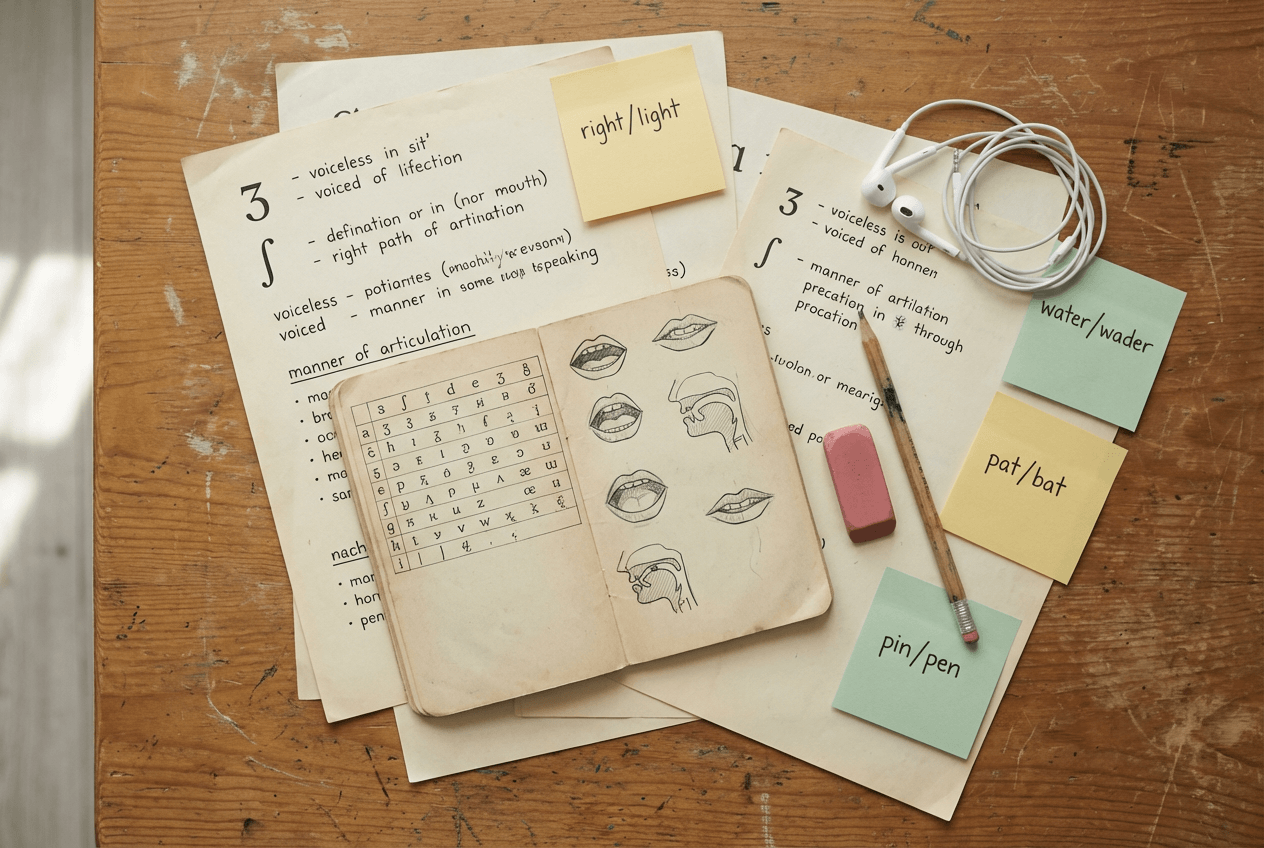
Say these word pairs out loud, exaggerating the difference:
- right / light — road / load — crime / climb — rake / lake — rip / lip
Record yourself speaking and play it back. Can you hear the American R clearly?
2. Flap T Tongue Taps
Start slow, then speed up: water → better → city → pretty → party
Try at natural speed: "A little bit of butter makes the batter better."
3. Dark L Hold Technique
Hold the L for 2–3 seconds to feel the tongue position: fuuuulll → beeeellll → puuuulll → miiiiilk. Then say each word normally — you should feel the back of your tongue engage.
4. Schwa Reduction Practice
De-stress the unstressed syllables: aBOUT → baNAna → PHOtography → COMfortable. The unstressed parts should sound like a quick, lazy "uh."
5. Shadowing American Media
Pick any American podcast, YouTube video, or Netflix show. Listen to one sentence, pause, repeat — matching rhythm, speed, and pitch, not just words. Good sources for learning American English online: NPR podcasts, TED Talks, or sitcoms like The Office.
6. Record and Compare
Read a paragraph aloud and record yourself. Find a native American English speaker reading the same text (audiobooks work great). Compare specific sounds that differ. Repeat weekly to track your accent progress.
7. Stress Pattern Clapping
Read aloud and clap on stressed syllables: "I WANT to GO to the STORE and BUY some BREAD." (5 claps). This trains your body to feel American English rhythm — especially helpful if your native language is syllable-timed.
8. Connected Speech and Tongue Twisters
Practice linking words together — Americans don't pause between every word when speaking:
- "turn it off" → "tur-ni-toff" · "check it out" → "che-ki-tout" · "what are you doing" → "whaddaya doing"
Then build speed with tongue twisters that target American sounds:
- R and L: "Red lorry, yellow lorry" (5x fast)
- Flap T: "Betty Botter bought some butter, but the butter was bitter"
- Th sounds: "The thirty-three thieves thought they thrilled the throne"
9. Daily Conversation Practice with AI

All the exercises above build isolated pronunciation skills. But real accent improvement happens when you use these sounds in conversation, where you're thinking about meaning rather than mouth position.
Practice Me's AI tutors — Sarah and Marcus — speak with natural American English accents and respond in real time, like a phone call. No scheduling, no judgment, no limit on speaking time. You can practice your American accent anytime — see pricing for unlimited conversation access.
The key tip for how to learn American accent faster: consistency beats intensity. Even 10 minutes of daily English conversation practice builds the muscle memory that makes American pronunciation automatic. It's the difference between knowing how sounds work and producing them naturally while speaking.
If pronunciation is new to you, start with our pronunciation practice guide for beginners to build a foundation first.
Common American Accent Mistakes by Native Language
Your native language creates specific pronunciation habits when you speak English. Knowing yours helps you learn American accent patterns faster.
Spanish Speakers
- B/V confusion: Spanish doesn't distinguish B and V. Practice: vest/best, very/berry, vote/boat
- Adding "e" before S-clusters: Speak becomes "e-speak." Start with the S sound consciously
- Equal syllable stress: Spanish is syllable-timed. Focus on compressing unstressed syllables into schwas when speaking English
- Ship/sheep confusion: Short I (/ɪ/) and long E (/iː/) sound nearly identical to Spanish speakers
Mandarin and Cantonese Speakers
- R/L confusion: Drill right/light and road/load minimal pairs daily
- Dropping final consonants: Words like hand, walked, dogs need endings pronounced
- Flat intonation: Mandarin tones are within words; English intonation spans phrases. Exaggerate pitch at first
- Th sounds: Practice think/sink, this/dis — the English th doesn't exist in Chinese
Arabic Speakers
- P/B confusion: Arabic has no /p/. Drill park/bark, pig/big, pan/ban
- V/F confusion: /v/ doesn't exist in standard Arabic. Practice very/ferry, vest/fest
- Consonant clusters: Break down words like strengths and splashed slowly
- Short vowel distinctions: Bit, bet, and bat are three distinct American English vowels
Japanese and Korean Speakers
- R/L distinction: Japanese has one sound between R and L. Use minimal pair drills daily
- Inserted vowels: Street is one syllable, not "su-to-ree-to"
- Mora-timed rhythm: Consciously stress some syllables and compress others to match American English patterns
Frequently Asked Questions
How long does it take to learn an American accent?
Most English learners see improvement within 3–6 months of consistent daily practice (15–30 minutes). Reaching near-native American pronunciation typically takes 1–2 years. Your timeline depends on your native language, English level, and whether you practice through real conversations.
Can I learn American English online without living in the US?
Yes — many learners achieve near-native American pronunciation remotely. American media, audiobooks, and AI conversation apps like Practice Me provide quality American English speaking practice from anywhere. The key: daily active speaking, not just passive listening.
Is it better to learn American or British English?
It depends on your goals. American English pronunciation is more widely encountered globally. British English is the standard in some countries. The key tip: pick one accent and stay consistent — mixing accents sounds unnatural. For a comparison, check our guide to learning a British accent.
Can AI help me learn American English pronunciation?
AI conversation apps are among the best ways to practice speaking and pronunciation online. Speaking with an AI tutor forces you to produce correct sounds while thinking — which is how pronunciation becomes automatic. Practice Me offers American-accented AI tutors (Sarah and Marcus) for real-time voice conversations 24/7. It's especially valuable for learners who feel anxious about speaking English with other people.
Now you know how to learn American accent pronunciation step by step — focus on the five key sounds, internalize the rhythm and intonation, and speak as much as possible every day.
Ready to start practicing? Try a conversation with Sarah or Marcus — Practice Me's American English AI tutors are available whenever you are.