Duolingo taught you words. No one taught you to speak.
PracticeMe: real voice conversations with an AI tutor, 24/7.
Cambly Review 2026: Is It Worth It for Learners?

If you're reading a Cambly review, you're probably one click away from paying a significant monthly fee for English lessons — and you want to know if that money is going to work for you. This Cambly review is learner-focused, not an affiliate pitch and not a tutor's complaint. I'll show you what Cambly actually costs in 2026, who it's genuinely good for, what real students say on Reddit and Trustpilot, and the cheaper alternatives worth considering before you subscribe.
Quick Summary: Cambly is a legitimate, on-demand way to practice English with native speakers, with monthly costs ranging from a budget group tier up to a premium one-on-one tier. It works best for intermediate and advanced learners who want conversation practice. It works poorly for complete beginners, grammar drills, and serious IELTS/TOEFL prep — and tutor quality is genuinely a lottery because Cambly pays tutors very little per minute and requires no teaching credentials. If you want unlimited speaking practice without the recurring monthly price tag or the camera anxiety, AI alternatives like Practice Me (affordable, unlimited) are now a serious option.
What Cambly Actually Is (Quick Refresher)
Cambly is a San Francisco-based platform that connects English learners with native speakers over one-on-one video chat. It was founded in 2012 by Sameer Shariff and Kevin Law, and today it serves students in roughly 150 countries. Unlike marketplaces such as italki or Preply where tutors set their own prices, Cambly works on a flat subscription model — you pay one monthly fee and any tutor in the network costs the same.
The platform has two distinct products that often get confused:
- Cambly — for adult students, ages 18+ (or 21+ for Small Groups). Conversation-focused, light on curriculum.
- Cambly Kids — for ages 4 to 15. Structured lesson plans, dedicated children's tutors.
One thing worth knowing upfront: Cambly only teaches English. There are no Spanish, Japanese, or French tutors here. That focus is a strength — it means every tutor is a native English speaker from the US, UK, Canada, Australia, Ireland, or New Zealand. It's also a limitation if you want a multi-language learning hub.
The big promise is "instant" lessons. You log in, see who's online right now, click their profile, and you can be in a live video conversation within a few minutes. That on-demand tutoring model is what made Cambly famous. As we'll see, it's also where most of the friction lives.
Cambly Pricing in 2026: The Numbers Most Reviews Get Wrong
Most "Cambly review" articles you'll read online quote pricing from 2022 or 2023. That pricing is outdated — Cambly restructured its plans in 2024-2025, and the old "15 / 30 / 60 / 120 minute" options have been streamlined. Here's what you actually see on the subscribe page in May 2026:
Cambly now sells three plan tiers, and all lessons are 30 minutes long. You then choose how many lessons per week (1, 2, 3, 5, or 10) and a billing cycle (monthly, every 3 months for 30% off, or yearly for 50% off). The plan tier determines what kind of lesson you get and what kind of tutor you can book.
Small Groups Plan (the cheapest tier)
This is the cheapest entry point and the only group format on the platform. You join a 30-minute lesson with a tutor and one or two other students. It's adults only (21+), and the appeal is exposure to mixed accents — your tutor might be American, your fellow students might be from Brazil and Korea.
The trade-off is obvious: you share speaking time with two other students. If you're shy or slow to jump in, you may only speak for five or six minutes of a 30-minute lesson. That works out to a poor rate per minute of your own speaking time, which is really not a great deal.
Small Groups is best for learners who want to listen to native English in a low-pressure social setting and don't mind a smaller share of the airtime.
Private+ Plan (mid-range one-on-one)
This is Cambly's bread and butter — one-on-one tutoring lessons with any tutor in the general pool. The lowest advertised prices reflect promotional rates for 1 lesson per week on annual billing. For committed students, the real monthly cost scales with how often you practice and how you pay:
- 2 lessons/week, monthly billing: one hour of total practice time for a mid-range monthly cost
- 3 lessons/week, monthly billing: noticeably more per month
- 5 lessons/week, monthly billing: one of the most expensive monthly options
- 2 lessons/week, yearly billing: a lower effective monthly cost, but paid as a large lump sum up front
When tutors and ex-students on Reddit complain about Cambly being expensive, this is the plan they mean. At full Private+ pricing, your per-hour cost of speaking practice is comparable to a community tutor on italki or a mid-range Preply teacher.
Pro Plan (premium vetted tutors)
Pro gives you access to Cambly's vetted "Pro tutors" — teachers who've passed a higher-bar curation. Lessons are structured, goal-oriented, and come with targeted feedback and self-study recommendations. This is the plan that feels closest to working with a real online tutor who has actual teaching experience.
Two 30-minute Pro lessons per week on monthly billing is one of the pricier ways to use Cambly; yearly billing brings the equivalent monthly cost down considerably. If you're serious about Cambly and you have a specific outcome — a presentation, a job interview, a CEFR level you want to hit — Pro is the only tier I'd recommend. The non-Pro tutor pool varies enough in quality that paying mid-range Private+ rates for someone you might not click with is a frustrating gamble.
What "Per Hour" Actually Works Out To
Here's where the math gets useful. Once you account for the billing cycle, the per-hour cost of actual speaking practice varies a lot. On monthly billing, Small Groups and Private+ work out to a similar per-hour rate for your own speaking time, while Pro runs noticeably higher. Yearly billing pulls every plan's per-hour rate down sharply — and a higher-frequency Pro plan on annual billing delivers the cheapest per-hour rate Cambly offers.
The catch: that annual rate requires a large up-front payment and a commitment to 50+ weeks of weekly lessons. That commitment is exactly what makes a lot of students drop out by month four. Plan accordingly.
One last note on pricing: Cambly does not offer a true free trial. There's a low-cost trial lesson that buys you 30 minutes with one tutor, and that's it. If the trial tutor was great, you have no guarantee the next one will be. If they were mediocre, you've already paid to find out. Other platforms (italki, Preply) let you message tutors and book discounted trial lessons with each one — that's not how Cambly works.
What a Real Cambly Lesson Actually Looks Like
Most reviews skip the part where they describe what the tutoring experience really feels like minute to minute. Here's the typical flow of a 30-minute Cambly lesson based on student descriptions on Reddit and Quora:
Minutes 0–2: Login and connection. You open Cambly in your browser or the app, click "Start lesson" or pick a tutor who's online. The video call connects. There's usually a moment of "can you hear me?" and a quick wave at each other while audio settles.
Minutes 2–5: Small talk. Most tutors open with light conversation — "How's your week going?" "What did you do today?" — partly to be friendly, partly to gauge your level. For a lot of students this is the most useful part of the entire lesson, because it's spontaneous and unscripted.
Minutes 5–25: Main content. This is where the experience really diverges depending on your tutor. A good tutor will steer the conversation toward language goals you mentioned: vocabulary you're working on, a presentation you're preparing, an accent you want to soften. A weaker tutor will just keep small-talking — pleasant, but not really learning.
Minutes 25–30: Wrap-up and feedback. Pro tutors typically save a couple of minutes at the end to highlight 2-3 mistakes they noticed, suggest a phrase or two to practice, and recommend a topic for next time. Many non-Pro tutors skip this part entirely, which is a real shame because it's where the lesson stops being "just chatting" and starts being instruction.
After the lesson, you rate the tutor, leave optional written feedback, and the lesson recording becomes available for review. Automatic transcripts arrived on the Pro tier in 2024 — they're genuinely useful for going back and seeing your own mistakes in context.
For students who use Cambly well, this tutoring loop builds up over time: you start to recognize tutors who push you, you stop wasting lessons on small talk, and you develop a working relationship with one or two regulars. For students who don't put in that homework, every lesson feels like starting from zero with a stranger.
Tutor Quality: The Uncomfortable Truth
Here's the part Cambly's own marketing won't tell you: the platform pays tutors very little per minute. That works out to little more than minimum wage for the adult side, and slightly higher for Cambly Kids. This pay rate has not increased meaningfully in years — Trustpilot reviews from 2024-2026 repeatedly complain about it.
Why does this matter to you as a learner? Because it shapes who teaches on the platform.
Cambly's tutor requirements are minimal. You don't need a university degree. You don't need a TEFL or CELTA certificate. You don't need any prior teaching experience. You just need to:
- Be a native English speaker from the US, UK, Canada, Australia, Ireland, or New Zealand
- Pass a basic intro video review
- Have a laptop and decent internet
That's it. There's no screening for pedagogy. No verification that you can actually teach grammar, scaffold a beginner, or correct pronunciation effectively. Cambly is, by design, a low-barrier marketplace for native speakers who want to chat for little more than minimum wage.
The result is what Reddit's r/Cambly community and the Quora threads consistently describe as "a lottery." Some tutors are wonderful — retired teachers, ESL professionals moonlighting, university students who happen to be naturals. Others are well-meaning but inexperienced people who really do just chat with you. A user on Quora put it bluntly: "If you're already a B2 or C1 level it will be great practice. But if you need real help? For what Cambly charges per hour you can get a real tutor. Need to get a 7 on IELTS or pass your university English test? You might get lucky on Cambly, but don't bet on it."
Cambly tries to surface higher-quality tutors through two features:
- The Supertutor label. This identifies tutors with consistently high student ratings over time. Filter for these aggressively.
- Cambly Pro tutors. Only available on the Pro plan, these have gone through a higher curation process and tend to be more experienced as teachers.
Public ratings tell a complicated story:
- Trustpilot: 2.1/5 from roughly 245 reviews (heavily skewed by tutor complaints about pay, but includes student frustration with refunds, scheduling, and tutor matching)
- Sitejabber: 1.3/5 from a much smaller sample
- Glassdoor (employee/tutor side): 3.2/5 from 1,723 reviews
Worth noting: these aggregate scores skew negative partly because Cambly is a place tutors go to vent. Individual student experiences on Reddit are often more positive ("My speaking confidence genuinely improved"), but they're also more likely to mention spending 3-4 paid lessons before finding a tutor they wanted to stick with.
The takeaway: if you sign up for Cambly, plan to "shop" through 4-6 tutors during your first month before you settle on a regular. Don't judge the platform on one bad lesson — judge it on whether you find at least one good tutor in your first 5 attempts.
Who Cambly Actually Works For (Based on Real Learner Feedback)
After reading hundreds of Reddit threads, Quora answers, and Trustpilot reviews specifically from students (not tutors), the picture is clear. Cambly works extremely well for a specific kind of learner and not at all for others. Here's the breakdown.
Cambly Works Well For You If...

You're intermediate to advanced (B1–C1) and want spontaneous conversation. This is the consensus sweet spot. You already have the grammar, vocabulary, and listening to hold a conversation — what you lack is the reps. Cambly delivers reps. As one r/Cambly learner put it after six months on the platform: "If you can use Cambly in a correct way, I believe you will speak much better. The first change is in confidence."
You learn by talking, not by drilling. If structured grammar tables and exercises bore you, Cambly is your kind of place. Most adult lessons are essentially conversation — you and the tutor pick a topic, you talk, they gently correct, you talk more. That experience suits students who get bored by traditional classroom drills.
You want exposure to native speakers and cultural quirks. This is something AI can't fully replace — and we'll be honest about that. A real human from Glasgow will use slang an AI doesn't generate. A retired teacher from Toronto has cultural references your textbook never covered. If that exposure matters to you, Cambly delivers it.
You're comfortable on camera with strangers. This is non-negotiable. Cambly is video chat. If you can't bear to be on camera, the platform is going to feel like a panic attack waiting to happen.
You can commit to a weekly schedule. Subscription billing punishes inconsistency. If you can do 2 lessons per week for 12 weeks straight, your math works. If you'll do 8 lessons in week one, then ghost the app for three months, you're paying for nothing.
Cambly Probably Isn't Right For You If...
You're a true beginner (A1). Reddit tutors are open about this — Cambly's no-credential model means most tutors aren't trained to scaffold a complete beginner. Without shared vocabulary, lessons quickly stall in awkward silence. You'd be paying a premium hourly rate to sit through that silence. Most credentialed teachers will tell you to start with structured lessons (Duolingo, a textbook, a real beginner course) until you can sustain a basic exchange, then graduate to Cambly.
You're prepping for IELTS, TOEFL, or another standardized test. This is the most consistent Reddit warning. Cambly's IELTS prep materials are described by working IELTS tutors on r/Cambly as "totally out of date and embarrassing to use." If you're going to spend that kind of money on test prep, spend it on a credentialed teacher on Preply or italki who specializes in your specific test. (Or use our TOEFL speaking practice guide and a dedicated practice app for the high-volume reps.)
You need grammar drills, writing feedback, or reading practice. Cambly is built for speaking. The platform's own course list (English Conversation 101, Movies & Television, Workshop: Presentations) makes this obvious. If you want a teacher who'll mark up your essays, Cambly is not the tool.
You have speaking anxiety with strangers. This is the one nobody warns you about. If you already feel anxious about speaking English, putting yourself on camera with a stranger who's silently judging your every "uh" can make things worse, not better. A lot of students with fear of speaking English (xenoglossophobia) need to build base confidence in a low-stakes environment first — typically by practicing English speaking by yourself or with an AI before they're ready to face a human tutor.
You want flexible, pay-per-lesson pricing. Cambly locks you into subscriptions. If you want to take 3 lessons one month and 12 the next, italki's pay-per-lesson model fits better. Our italki vs AI English practice comparison covers the trade-offs in detail.
Your honest budget is tight. The math doesn't work on a small budget. You'll either get too few lessons per week to make real progress or you'll resent the auto-renewal charges.
The Scheduling and Tutor-Search Friction Nobody Warns You About

In Cambly's marketing, finding a tutor takes 60 seconds. In reality, there are three friction points that show up in nearly every honest review:
1. The trial-and-error tutor search
You can browse tutor profiles before subscribing, but profiles are basically a photo, a self-written bio, and a 30-second intro video. There's no transcript of a real lesson, no neutral skill rating, no third-party verification of teaching experience. You essentially have to spend 1-3 paid lessons with someone to know if they're any good. Plan on burning 4-6 lessons in your first month finding tutors you actually want to rebook.
2. Specialized topics have surprisingly few tutors online
The on-demand promise works for general conversation. It often falls apart for niche topics. One reviewer found that searching for "Workshop: Practicing Presentations" returned exactly one tutor who was about to start another lesson. If you want to use Cambly for specific scenarios — business meetings, medical English, advanced debate — be prepared to book ahead by 24-48 hours or rely on free-form lessons where you direct the topic yourself.
3. The best tutors fill their calendars
Once you find a Supertutor or Pro tutor you love, you'll discover their calendar is locked up two or three weeks out. The instant-on-demand model only really works if you're willing to talk to whoever happens to be online at the moment — which often isn't your favorite person. Most experienced Cambly students end up booking their preferred tutors a week ahead, which kind of defeats the spontaneity promise.
A smaller but real friction: subscription minutes don't always carry over. If you have a 30-minute lesson per week and you skip a week, that lesson time is gone. Cambly does sell "Anytime Minutes" you can buy à la carte to extend a session or make up for missed time, but they expire and the math is fiddly.
Compared to AI alternatives where you literally open an app and start talking, Cambly involves a meaningful amount of overhead per session. That overhead is part of what you're paying for — and whether it's worth it depends on how much you really value the human element.
Duolingo taught you words. No one taught you to speak.
PracticeMe: real voice conversations with an AI tutor, 24/7.
Cambly Kids vs Cambly: Are They the Same Service?
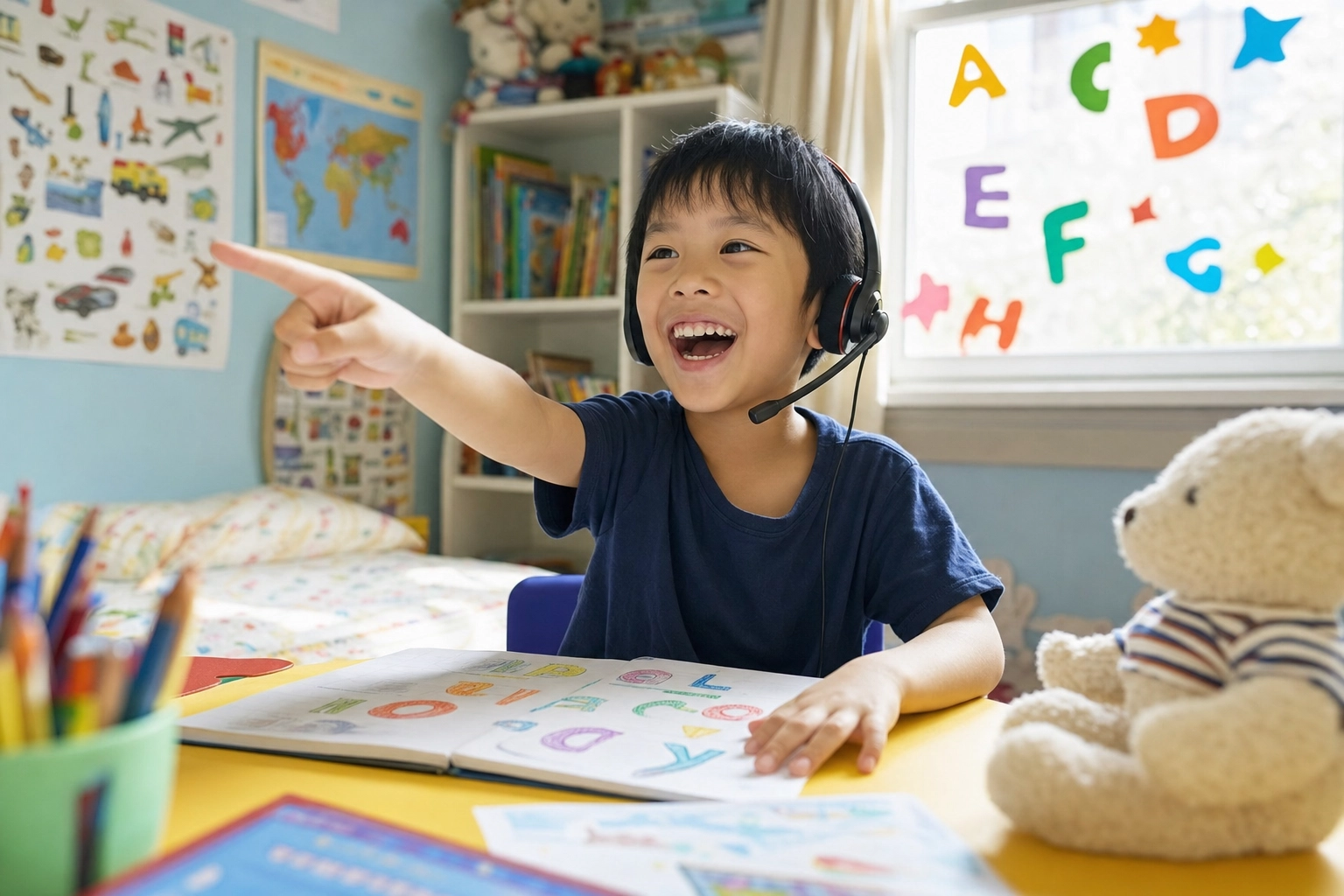
Cambly Kids is a separate product within the same parent company, launched in 2018 specifically for ages 4 to 15. It's worth covering because parent reviews skew significantly more positive than adult Cambly reviews, and the service has real differences:
- Curriculum is more structured. Adult Cambly is largely free-form conversation. Cambly Kids includes Phonics, Beginning English, lesson plans, games, and visual workbooks designed for young learners.
- Tutor pay is slightly higher. A bit more than the adult side. Some tutors also report Cambly Kids feels more rewarding (fewer ratings dramas, more consistent bookings).
- All lessons are 30 minutes. No 15-min option, which is appropriate for kids' attention spans.
- Parent dashboards. You can review lesson recordings, see progress notes, and message tutors.
Parent feedback on Trustpilot and various review aggregators is genuinely warm. A common pattern: parents report their child went from speaking only colors and numbers to expressing themselves comfortably within a handful of lessons. The visual interface, songs, and game elements seem to do their job for engaging young learners.
The same caveat applies, though: the underlying tutoring model is the same. No teaching credentials required. Quality varies. The Supertutor filter matters even more for kids — find a great tutor your child clicks with and stay with them rather than rotating randomly.
If you're a parent comparing Cambly Kids to alternatives like VIPKid (defunct in most markets), Lingumi, or Novakid, Cambly Kids' main selling point is the 24/7 availability — you can have a lesson at 7 a.m. before school or at 7 p.m. after dinner without time-zone matching. The main downside is the price: at full Private+ rates, a few lessons a week adds up quickly for a child who may or may not stay engaged.
Real Cambly Reviews: What Trustpilot, Reddit, and Quora Actually Say

I read hundreds of reviews specifically from people who paid Cambly as students (not tutors complaining about pay). Here's the honest pattern across platforms:
The positive themes from students:
- "My confidence improved more than my grammar." This is the most consistent positive review. Cambly genuinely helps people feel less afraid to speak.
- "I found one tutor I love and book her weekly." The platform works best when you stop rotating and build a relationship with one or two good tutors.
- "Easier than I expected." The video chat interface is simple. Tutors are generally patient with technical hiccups.
- "Cambly Kids was great for my child." Parent reviews are notably more positive than adult Cambly reviews.
- "Instant access is amazing when it works." The on-demand magic is real when you're not picky about who you talk to.
The negative themes from students:
- "Too expensive for what I got." The most common complaint, especially from students who burned out before using their paid minutes.
- "I felt like I wasted lessons figuring out which tutors were good." The lack of a real trial period bites everyone.
- "My tutor just chatted with me — there was no actual teaching." This is the no-credential model showing through.
- "They auto-renewed me and refunds are a nightmare." Cambly's refund policies are tight. Cancel before the renewal date, not after.
- "IELTS prep materials are useless." Reddit IELTS tutors agree.
- "The platform was always changing." A lot of students report UI updates breaking their workflow.
The aggregate Trustpilot rating of around 2.1/5 is real, but it's weighted by tutor complaints about pay and account management. Read it as: "Cambly has real systemic issues, but individual student outcomes can still be positive if you pick the right plan, find the right tutor, and use it the right way."
In other words: Cambly is not a scam. It's a legitimate product. It just suits a narrower range of students than its marketing suggests, and the cost-to-quality ratio is more friction-y than the homepage implies.
Cambly vs the AI Alternatives in 2026

When Cambly launched in 2012, AI conversation simply wasn't a viable alternative — chatbots were stilted, voice synthesis was robotic, and nothing felt like a real conversation. That changed in 2024-2025. AI voice models now hold genuinely natural conversations, correct mistakes, adapt to your level, and remember your previous sessions. Recent Cambridge research on conversational AI in language learning backs up what students are already finding in practice: AI tutors can deliver high-quality speaking practice when used appropriately.
For the specific job of "high-volume English speaking practice," AI is now extremely competitive with Cambly on several dimensions:
| Factor | Cambly (Private+) | Practice Me (AI) |
|---|---|---|
| Monthly cost | Higher — scales up with more lessons | Lower — one flat price, unlimited |
| Speaking time per month | 2–4 hours | Unlimited |
| Wait time per session | Find tutor, book, log in | Open app, start talking |
| Judgment factor | Real human, real reactions | Zero — AI doesn't judge |
| Accent options | Native US/UK/CAN/AUS/IRL/NZ | American + British |
| Cross-session memory | Depends on rebooking same tutor | Always-on (AI remembers) |
| Cultural authenticity | High — real humans | Limited — AI generates |
| Best for | Cultural exchange, polished practice | High-rep practice, anxiety-free |
The honest comparison isn't "AI replaces Cambly." It's "AI does some things Cambly can't, and Cambly does some things AI can't."
What AI does meaningfully better:
- Speaking volume. Cambly's most committed students get maybe 4 hours of practice per month. With AI you can do 4 hours in a week, comfortably.
- Judgment-free reps. If you stumble on a sentence in front of a Cambly tutor, you feel it. With AI you just restart and nothing emotional happens.
- Cost-per-hour of practice. Unlimited practice for one flat monthly price vs. a premium hourly rate for Cambly.
- Always-on availability. No tutor calendar to navigate. No "the good ones are booked." You open the app at 5 a.m. or midnight and it's there.
What Cambly still does better:
- The human moment. A real teacher's surprised laugh when you nail a hard pronunciation. A genuine connection with someone from another country. AI can't fake that experience.
- Unpredictable conversation. Humans go off-topic, share random stories, ask weird questions. AI tends toward the structured.
- Cultural depth. A Scottish tutor will use idioms that aren't in the AI's training distribution.
- Accountability. A scheduled lesson with a human is harder to skip than an app you can ignore.
For most students, the answer isn't "Cambly or AI." It's "AI for daily practice volume, Cambly Pro for a weekly human anchor." This 80/20 split — daily AI reps plus 1-2 human lessons per week — is what most language coaches recommend for accelerating fluency without burning through a big monthly budget.
Practice Me: The Judgment-Free Cambly Alternative
If you've read this far and you're thinking "I want to speak English, I just don't want the price tag, the camera, or the strangers," that's exactly the gap Practice Me was built to fill.
Practice Me is an AI-powered English speaking practice app. You have real-time voice conversations with AI tutors named Sarah, Oliver, and Marcus — each with distinct personalities and teaching styles. You choose between American and British native accents. The tutor remembers what you talked about last session, automatically saves new vocabulary from your conversations, and tracks your speaking time and progress over weeks.
Key things to know:
- Pricing: a low monthly subscription, or a discounted annual plan that brings the effective weekly cost down to about the price of a coffee. 3-day free trial, cancel anytime.
- Format: Real voice conversations, not text chat. You talk, the AI talks back in natural speech.
- Platforms: iOS (iPhone, iPad) and Android, with one account syncing across both.
- What it does well: Unlimited practice time, zero judgment, instant availability, accent practice, vocabulary auto-capture, practice for English job interviews, and everyday spoken English practice.
- What it doesn't do: It's not a human. It won't share what it's like to grow up in Sydney. It doesn't give you that "real person reacted to me" feedback loop. We don't pretend otherwise.
Practice Me works best as either (a) a complete alternative to Cambly for students who specifically don't want human tutors, or (b) a daily volume booster used alongside one or two Cambly Pro lessons per week. Either way, the math is dramatically friendlier to your budget. You can see current plans on our Practice Me pricing page, or compare it against more options in our deep-dive on the best AI English tutor apps.
Is Cambly Worth It in 2026? The Honest Verdict

This Cambly review wouldn't be complete without a clear yes/no answer — but the yes/no depends entirely on which student you are. Here's the framework:
Cambly is worth it for you if:
- You're at B1 or above and want spontaneous conversation practice with native speakers
- You're comfortable on camera with people you've never met
- You can commit to an ongoing monthly cost consistently for at least 3 months
- You're not preparing for a specific standardized test
- You're prepared to "shop" through 4-6 tutors in month one to find your regulars
- You want exposure to cultural and accent variety that AI can't fully replicate
Cambly is probably not worth it for you if:
- You're a complete beginner who can't yet sustain a basic conversation
- You're seriously preparing for IELTS, TOEFL, or another credentialed test
- You need grammar drills, writing feedback, or reading practice
- You have significant camera anxiety or speaking anxiety
- Your honest budget is tight
- You want to practice daily for high volume (Cambly's price scales badly)
- You learn best from structured curriculum and lesson plans
The hybrid approach a lot of students benefit from:
- Practice daily with an AI app like Practice Me for unlimited speaking volume and confidence-building
- Book one Cambly Pro lesson per week for the human element, cultural exchange, and accountability
- If you're test-prepping, replace the Cambly Pro lesson with a Preply or italki professional teacher who specializes in your specific test
This hybrid is what most modern language coaches recommend — and it caps your monthly cost well below Cambly alone, pairing one affordable AI subscription with a single weekly Cambly Pro lesson. You get more total practice time and more variety in your tutoring experience.
If you want to dig deeper into the full landscape of options, our guide to the best Cambly alternatives in 2026 covers seven specific apps and services with pricing breakdowns. For students interested in self-directed AI practice, you might also like our walkthrough on using ChatGPT for English practice.
Frequently Asked Questions
Is Cambly worth it in 2026?
Cambly is worth it if you're an intermediate to advanced English learner (B1-C1) who wants spontaneous conversation practice with native speakers and can budget for an ongoing monthly cost. It's not worth it for complete beginners, test prep (IELTS, TOEFL), grammar work, or students with significant speaking anxiety. The honest pattern across hundreds of reviews: students who stick with Cambly for 3+ months and find a regular tutor are mostly happy; students who churn through random tutors at the cheapest plan tend to regret it.
How much does Cambly really cost per month?
In 2026, Cambly sells three plan tiers — Small Groups (the cheapest), Private+ (the mid-range one-on-one plan), and Pro (the premium vetted-tutor plan). The lowest advertised prices reflect promotional rates for 1 lesson per week on yearly billing. Real-world costs climb for committed students: more lessons per week and monthly billing push the monthly total up significantly, with Pro at higher frequencies being the priciest. Promo codes routinely knock 20-30% off the headline price during sign-up.
Are Cambly tutors qualified teachers?
No, not by default. Cambly does not require tutors to have a teaching degree, TEFL certificate, or any prior teaching experience. Tutors only need to be native English speakers from the US, UK, Canada, Australia, Ireland, or New Zealand. Some Cambly tutors are credentialed teachers moonlighting, but most are simply native speakers earning little more than minimum wage for conversation. The "Supertutor" label and "Pro tutor" tier identify higher-rated teachers, and these are who you should filter for if you want experienced instruction.
Is Cambly good for beginners?
Not really. Most experienced Cambly tutors and Reddit's r/Cambly consensus agree that complete beginners (A1 level) struggle on the platform because Cambly tutors aren't trained to scaffold beginners through structured lessons. Without enough shared vocabulary, lessons stall in awkward silences. Beginners typically get more value from a structured app or course until they can sustain a basic conversation, then graduate to Cambly once they're at A2-B1.
Can you prepare for IELTS or TOEFL on Cambly?
Technically yes — Cambly has IELTS prep courses and tutors who tag themselves as IELTS specialists. Practically, no, this is not the best use of your money. Working IELTS tutors on r/Cambly openly describe the platform's IELTS prep slides as outdated. For a serious test prep investment, hire a credentialed IELTS or TOEFL teacher on Preply or italki who specializes in your specific test. Use Cambly Pro tutors for general fluency practice between dedicated prep sessions, or check our Duolingo English Test speaking prep for a more affordable test-specific approach.
What's the difference between Cambly and Cambly Kids?
Cambly is the adult-focused product (18+, or 21+ for Small Groups) — mostly free-form conversation with native speakers. Cambly Kids is a separate product for ages 4-15 with more structured curriculum (Phonics, Beginning English), age-appropriate tutors, and visual lesson plans. Parent reviews of Cambly Kids skew significantly more positive than adult Cambly reviews. Same parent company, same tutor pay model, same low credentialing bar — but the kids' side has more lesson structure built in.
Does Cambly have a free trial?
No, Cambly does not offer a true free trial. There's a low-cost trial lesson that gives you 30 minutes with one tutor. After that you have to subscribe to a paid plan. This is a meaningful disadvantage compared to italki and Preply, which let you book discounted trial lessons with individual tutors before committing. The lack of a real trial means you'll likely spend your first month "shopping" through paid lessons to find tutors you want to rebook.
Can you cancel a Cambly subscription anytime?
You can cancel future renewals at any time, but Cambly does not refund the unused portion of your current billing cycle. If you signed up for an annual plan and want out after two months, you've paid for the full year. Set a calendar reminder to cancel before your renewal date if you're on monthly billing — Cambly auto-renews. Trustpilot is full of complaints from students who forgot, got charged, and struggled to get refunds.
Is Cambly better than AI English apps like Practice Me?
It depends on what you need. Cambly is better for cultural exchange, unpredictable real-human conversation, and the accountability of a scheduled lesson. AI apps like Practice Me are better for high-volume daily practice, zero-judgment reps, anxiety-free speaking, and dramatically lower cost (one flat unlimited subscription vs a much higher monthly spend for limited Cambly lessons). Most modern language coaches recommend combining both: AI for daily volume, one human lesson per week for the human element. They serve different jobs in a learner's routine.
What is the cheapest Cambly plan?
The cheapest paid Cambly plan in 2026 is Small Groups, at a low promotional monthly rate (a bit higher at the regular rate). This buys you one 30-minute group lesson per week with a tutor plus 1-2 other students. It's adults only (21+). You share speaking time with other students, so your actual minutes of speaking practice per week are limited. For genuinely cheap unlimited speaking practice, AI alternatives tend to deliver more practice time per dollar, but they don't give you the human-and-peer-exchange experience that makes Small Groups appealing to some students.