Duolingo taught you words. No one taught you to speak.
PracticeMe: real voice conversations with an AI tutor, 24/7.
Duolingo English Test Speaking Questions & Practice [2026]
![Duolingo English Test Speaking Questions & Practice [2026]](https://cdn.babyseo.ai/images/practiceme.app/duolingo-english-test-speaking-questions/duolingo-english-test-speaking-practice-hero.webp)
Duolingo English Test speaking questions look simple on paper — describe a photo, talk about a topic, answer a few interview-style prompts. But those ten total minutes of speaking shape your Conversation and Production subscores, which together account for half of your overall DET result. The pressure isn't the topic. It's the format: one recording attempt per question, no replay, no pause, and the newest 2026 task type asks you to hold a real-time conversation with an AI interviewer.
This guide focuses on what most resources skip: the actual question formats, model answers at the 130+ level, and a practice plan you can finish in two weeks. If you want a deeper list of speaking themes, our Duolingo English Test speaking topics guide covers 35 topic areas with sample answers — pair it with this one for full coverage.
Quick Summary: The 2026 Duolingo English Test speaking questions split into three main task types: Read, Then Speak (90-second extended response), Interactive Speaking (six rapid 35-second answers with an AI character), and Speaking Sample (1–3 minutes recorded for universities). This guide gives you 30+ practice questions with model answers, the six scoring criteria the AI evaluates, and a 14-day prep plan.
The 2026 DET Speaking Format at a Glance
The Duolingo English Test is a 60-minute, computer-adaptive English proficiency exam accepted by more than 5,700 universities worldwide. Speaking tasks are scattered throughout the test, and they feed into two of your eight subscores: Conversation (Speaking + Listening) and Production (Speaking + Writing).
In 2025, Duolingo retired the "Listen, Then Speak" task. The 2026 update introduced Interactive Speaking as a replacement — a multi-question conversation with an animated AI character. If you're using study materials from 2024 or earlier, they're outdated.
Here's the current 2026 lineup of the three core Duolingo English Test speaking questions this guide covers:
| Task | Prep Time | Speaking Time | Frequency | What It Measures |
|---|---|---|---|---|
| Read, Then Speak | 20 seconds | 30–90 seconds | 1 per test | Extended structured response, Production subscore |
| Interactive Speaking | None (live) | 35 seconds × 6–8 turns | 1 set per test | Real-time conversation, Conversation subscore |
| Speaking Sample | 30 seconds | 60–180 seconds | 1 per test | Sustained speech (recorded for universities) |
You'll also encounter shorter speaking tasks like Speak About the Photo (describe an image for up to 90 seconds) during the adaptive section. Those follow similar rules to Read, Then Speak — same timing, same scoring criteria — so the strategies in this guide carry over.
The full speaking section accounts for roughly 10 minutes of actual talking, but it's the most variable part of the test in terms of scores. According to Duolingo's own published data, the average overall DET score in 2024–2025 was 110.59. Most undergraduate programs accept 90–110, competitive graduate programs want 115–130, and top schools expect 130+.
How DET Speaking Is Scored: 6 Criteria the AI Looks For
The DET uses AI scoring trained on thousands of human-rated samples. For every speaking response, the system evaluates six things:
1. Content — Did you actually answer the question? Did you address every sub-prompt? Off-topic responses or memorized scripts get flagged automatically.
2. Discourse Coherence — Is your response organized? Clear introduction, logical body, brief conclusion. Ideas should connect with words like because, however, for example, as a result.
3. Grammar — This is two things in one. Accuracy (correct subject-verb agreement, tenses, articles) and complexity (mixing simple, compound, and complex sentences). Speaking only in simple present tense caps your score.
4. Lexis (Vocabulary) — Again, two dimensions: sophistication (using precise, topic-appropriate words) and diversity (avoiding repetition). "I find gardening tranquil and rewarding" scores higher than "Gardening is nice."
5. Fluency — Do you speak at a steady, natural pace with minimal pauses and few filler words? Long silences hurt more than small grammar mistakes.
6. Pronunciation — Can the listener understand you? Word stress, sentence intonation, and clear individual sounds matter. You don't need a "perfect" American or British accent — intelligibility is what's measured.
A 130+ response uses varied sentence structures, precise vocabulary, addresses every part of the prompt, and maintains a clear organizational thread for the full speaking time. A 100-level response tends to use simple grammar, repeat the same words, and stop early with frequent pauses.
If filler words trip you up, our guide to English filler words explains which ones make you sound more fluent (yes, some help) and which ones to cut.

Read, Then Speak: 12 Practice Questions and Model Answers
Read, Then Speak is usually the first extended speaking question you'll see on test day, and it's where many test-takers panic. The format itself is straightforward — the difficulty comes from organizing 90 seconds of coherent speech with only 20 seconds to plan.
How the question works
You'll see a written prompt on screen with a main topic and three to four sub-prompts. The sub-prompts stay visible while you speak. Example structure:
Talk about your favorite restaurant. - Where is it located? - What kind of food does it serve? - How often do you go there? - Why is it your favorite?
You get 20 seconds to read and prepare, then 30 to 90 seconds to respond. You should aim for the full 90 seconds. The AI rewards endurance — stopping at 45 seconds caps your fluency and content scores even if your English is otherwise good. There's only one recording attempt, and you can't replay or restart.
The 90-second framework
In the 20 seconds of prep time, don't write a script — there's no time, and the AI sometimes flags overly written-sounding responses. Instead, plan a structure:
- Seconds 0–15: Hook + restate the topic with a direct answer
- Seconds 15–60: Address each sub-prompt with a specific example
- Seconds 60–85: Add depth — a comparison, a counterpoint, or a deeper personal reason
- Seconds 85–90: Brief wrap-up or forward-looking statement
This rhythm hits all the scoring criteria: content (every sub-prompt covered), coherence (clear structure), and fluency (sustained for the full duration).

12 Read, Then Speak practice questions
Use these Duolingo English Test speaking questions for timed practice. Set a timer for 20 seconds of prep, then 90 seconds of speaking, and record yourself. Don't memorize answers — work on hitting the structure.
1. A meaningful gift Talk about a gift you gave someone that was meaningful. Who did you give it to? What was the gift? Why was it special? How did the person react?
2. A career goal Describe a career goal you have for the next five years. What is the goal? Why did you choose it? What steps will you take? What might be the biggest obstacle?
3. A problem in your hometown Talk about a problem in your hometown. What is the problem? Who does it affect? What causes it? What could be done to fix it?
4. Online vs. in-person learning Compare studying online with studying in a classroom. What are the advantages of each? Which do you prefer? Why?
5. A piece of technology you can't live without Describe a piece of technology that has become essential to you. What is it? When did you start using it? How does it help you? What would your life look like without it?
6. A time you helped someone Talk about a time you helped someone in need. Who did you help? What was the situation? What did you do? How did you feel afterward?
7. A book or movie that changed your perspective Describe a book, movie, or show that changed how you think about something. What was it about? What perspective did it change? Would you recommend it?
8. The role of social media Discuss the role of social media in modern life. How has it changed communication? What are the positives? What are the drawbacks? Should it be regulated?
9. A skill you taught yourself Talk about a skill you learned on your own. What is the skill? Why did you want to learn it? How did you go about learning? How has it benefited you?
10. Living in a city vs. the countryside Compare life in a city with life in the countryside. What are the benefits of each? What are the challenges? Which would you choose if you had to pick?
11. An environmental issue Describe an environmental issue you care about. What is the issue? Why is it important? What individuals can do? What governments should do?
12. A tradition in your country Talk about a tradition or custom in your country. What happens during this tradition? Who participates? Why is it meaningful? Do younger generations still observe it?
Model answer (Read, Then Speak)
Here's a 130+ level response to question 1 — A meaningful gift. Annotated for timing.
"One of the most meaningful gifts I've ever given was a handwritten cookbook I made for my mother on her sixtieth birthday. (Hook + topic restated, ~10 sec) My mother had spent decades cooking for our family, but most of her recipes existed only in her head, so I sat with her over six weekends and wrote down forty-two of her dishes — each with a short story about when she first cooked it. (Specific detail addressing 'what was the gift', ~25 sec) I gave it to her at a small family dinner, and the moment she opened it, she stopped speaking and just held it for almost a full minute. (How she reacted, ~15 sec) What made it special wasn't the cookbook itself — it was the realization that I had finally taken the time to honor something she had been doing quietly for years. (Deeper meaning, ~20 sec) Now my younger cousins use it too, and I think it's become a small piece of family history that will outlast both of us. (Forward-looking close, ~15 sec)"
Notice the moves: a specific number (forty-two recipes), a sensory detail (held it for a full minute), advanced vocabulary (honor, outlast), and complex sentences mixed with simpler ones. This response covers all four sub-prompts and runs about 85 seconds — well within the safe zone.
Common Read, Then Speak mistakes
- Stopping at 45–60 seconds. Even with perfect grammar, this caps your score because the AI can't evaluate sustained fluency.
- Skipping a sub-prompt. If the prompt has four parts and you cover three, your content score takes a hit. Glance at the screen while speaking — the prompt stays visible.
- Reading from notes. The DET's eye-tracking flags this. Plan in your head, then look at the camera.
- Over-rehearsed openings. Phrases like "I'm going to talk about a gift that I gave to my mother who is very dear to me" sound memorized. Be direct.
Speaking Sample: Your Video Interview to Universities
The Speaking Sample appears in the final 10 minutes of the test. Here's the part most test-takers underestimate: this section isn't scored by the AI, but the video recording is sent to every university that receives your scores. Admissions teams watch it. Some programs use it as part of their evaluation, especially for borderline cases.
Treat this like a 90-second admissions interview. Your number score might be set, but the impression you leave on the human reviewing your application is still in play.
How the question works
You get 30 seconds to prepare, then 60 to 180 seconds to speak. Aim for at least 90 seconds — anything shorter feels rushed or underdeveloped to a reviewer. The prompt is a single open-ended question, and there are no sub-prompts to anchor your structure.
Speaking Sample prompts fall into three flavors:
- Explanatory — describe something in detail (a hobby, a place, a tradition)
- Informative — teach the listener about a topic (technology, education, an event)
- Argumentative — share an opinion with reasons (a debate, a preference, a recommendation)
Your job is to act as if the person watching knows nothing about the topic. Explain it fully, give specific examples, and reach a clear conclusion.
Strategy: Hook → Body → Conclusion
With 90+ seconds and no guiding sub-prompts, structure matters more here than in any other speaking task.
- Hook (10–15 sec): Open with a specific detail, a strong opinion, or a brief anecdote. Avoid "I'm going to talk about..."
- Body (60–90 sec): Two to three supporting points with concrete examples. Use signal words: first, another reason, for instance, what's more.
- Conclusion (10–20 sec): Tie it back to your hook or zoom out to a broader implication.
10 Speaking Sample practice questions
These are the most commonly recurring Duolingo English Test speaking questions in the Speaking Sample category. Practice each on video, not just audio.
1. Talk about a hobby or activity you enjoy in your free time. How did you get started? Why do you keep doing it?
2. Describe a place you've visited that had a strong impact on you. What made the experience memorable?
3. Discuss the role of education in shaping society. What should be the primary focus of education?
4. Talk about a person who inspires you. What qualities make them inspirational? How have they influenced you?
5. Describe an environmental issue that concerns you. What can individuals and governments do to address it?
6. Discuss a cultural tradition from your country. What is its significance? How is it celebrated?
7. Describe a piece of technology that has improved your life. How has it changed your daily routine?
8. Talk about a goal you want to achieve in the next five years. Why is it important to you? What steps will you take?
9. Imagine a friend asks you whether to study abroad or stay in their home country. What would you advise them and why?
10. Discuss whether you think social media has had a positive or negative effect on young people. Give specific reasons.
Model answer (Speaking Sample)
Here's a 130+ level response to question 1 — A hobby you enjoy.
"About three years ago, I picked up bouldering — that's indoor rock climbing without ropes — and it has genuinely changed how I think about problem-solving. (Hook with specific detail and unexpected angle)
I started by accident. A friend dragged me to a climbing gym on a rainy Saturday, and I expected to hate it because I was afraid of heights. But within an hour, I realized bouldering isn't really about the height — it's about reading the wall. Every climb is a puzzle. You look at the holds, plan a sequence of moves, and then commit to it physically. If you fail, you fall onto a thick mat and try again. (First supporting block — what it is, why it surprised me)
What keeps me coming back is the mental side. In my regular life, I often overthink problems and freeze. On the wall, you can't overthink — you have to move. Over the past three years, I've noticed that this physical decisiveness has started showing up in other areas, like how I approach difficult conversations at work or finishing projects I would've procrastinated on before. (Second supporting block — deeper reason)
The community is the third thing. Climbers are some of the most generous people I've met. Strangers will literally cheer when you finish a route they couldn't. (Third supporting block — social aspect)
I've gotten reasonably good — I'm projecting V5s now, which is intermediate level — but honestly, the grade matters less than the fact that for two hours twice a week, I'm fully present. That's rare." (Conclusion ties back to opening idea)
This response runs about 130 seconds, uses idiomatic phrases (projecting V5s, fully present), explains technical terms naturally, and ends with a memorable closer. The personality comes through, which matters when humans review the recording.
Speaking Sample tips most guides miss
- Wear what you'd wear to a Zoom interview. A clean shirt, decent lighting, eye contact with the camera. The video goes to admissions officers, not just an AI.
- Smile briefly when you start. It changes the timbre of your voice and signals confidence.
- Don't apologize on camera. If you stumble, keep going. Admissions readers know you're not a native speaker — they care about how you recover.
- Use the full 30 seconds of prep. Pick a specific angle. "A hobby" is too broad; "bouldering as problem-solving" is a thesis.
Interactive Speaking: The 2026 AI Conversation Format
Interactive Speaking is the question type that's reshaping how people prepare for the DET. It's also the one that most resembles a real conversation — which is exactly why it parallels what you'd practice with an AI tutor like our practice English speaking with AI approach.

How the question works
An animated AI character introduces a topic, then asks you a series of questions. You'll get 6 questions across 2 topics in a typical set (some test-takers report 8 in extended versions). The format is designed to simulate a real classroom or interview conversation:
- The AI asks a question — you hear it once, with no replay.
- You have 35 seconds to respond.
- After three questions on the first topic, the AI says something like "Thanks for that. Now I'd like to change topics..." and pivots to a new subject.
- You can't prepare. You can't pause. You start speaking when the recording light turns on.
This is the only DET speaking task that scores into the Conversation subscore (Speaking + Listening combined), because the AI evaluates whether you actually understood the prompt before responding.
Why it's the hardest section to prep for
In Read, Then Speak and Speaking Sample, you can over-prepare topic banks and rehearse structures. With Interactive Speaking, the rules change:
- No prep time. Whatever framework you have, it has to be reflexive.
- Single listen. If you mishear a key word, your answer might be off-topic.
- Topic pivots. You can't rely on memorized vocabulary for one subject — the second topic could be anything.
- 35 seconds is short. That's roughly 70–90 spoken words, so every sentence has to earn its place.
The good news: you can train this. It's a skill of responding under pressure to a voice that's actually talking to you, and the more reps you put in with a real-time AI conversation partner, the more natural it becomes. This is the closest match to what Practice Me's voice tutors simulate — the same modality, same back-and-forth, same need to respond without scripts.
The 35-Second Framework
Use this four-beat structure for every Interactive Speaking response:
- Acknowledge / Restate (3–5 sec) — A short opener that buys you a second to think while sounding natural. Examples: "That's a great question." / "Hmm, well, in my experience..." / "Actually, I think..."
- Direct answer (5–8 sec) — State your position or main idea immediately. Don't bury it.
- One specific example or reason (15–20 sec) — This is where the real content lives. Use a concrete detail, a number, a personal experience, or a clear comparison.
- Brief close (3–5 sec) — A short summarizing or forward-looking sentence so you don't trail off.
Avoid trying to make multiple points in 35 seconds. One claim, one example, one close — that's enough.
Duolingo taught you words. No one taught you to speak.
PracticeMe: real voice conversations with an AI tutor, 24/7.
12 Interactive Speaking Practice Sets with Model Answers
Each set below mirrors the actual test: 3 questions on Topic 1, then a pivot, then 3 questions on Topic 2. Practice answering each in 35 seconds.
Set 1 — Topics: Hobbies → Public Transportation
Q1. I'd like to ask you about hobbies. Could you tell me about a hobby you enjoy?
Q2. That sounds interesting. What's the hardest part of that hobby for someone just starting out?
Q3. I see. How has this hobby influenced other parts of your life?
"Thanks for talking about hobbies. Now I'd like to ask you about public transportation."
Q4. Describe what public transportation is like in your city.
Q5. How could public transportation in your city be improved?
Q6. Why might some people prefer driving over taking public transportation?
Model answer to Q1 (~33 sec):
"Well, one hobby I really enjoy is photography, especially street photography in busy markets. I find it fascinating because every frame captures a small story — a vendor laughing, a child running, the steam from a food stall. I've been doing it for about two years now, and it's taught me to slow down and actually notice things I'd normally walk past. So yeah, it's a quiet hobby, but it's surprisingly absorbing."
Set 2 — Topics: Changing Habits → Rainy Weather
Q1. Describe something you do every morning. Q2. How might new technology help people change their daily habits? Q3. How do other people influence the habits we adopt?
"Now let's change topics and talk about rainy weather."
Q4. What do people typically do when it rains? Q5. Why do some people love rainy weather while others dislike it? Q6. How can heavy rain affect transportation in a city?
Set 3 — Topics: Education → Travel
Q1. Describe a subject you enjoyed studying in school. Q2. How has online learning changed education in the last few years? Q3. What skills should schools teach that they currently don't?
"Thanks. Now I'd like to ask about travel."
Q4. Tell me about a place you've traveled to recently. Q5. How does travel change a person's perspective? Q6. What's one thing you'd recommend a first-time traveler do?
Set 4 — Topics: Food → Environment
Q1. Describe a meal you really enjoy. Q2. Why is food often connected to culture? Q3. How have eating habits changed in your country?
"Thanks. Let's move on to the environment."
Q4. What's an environmental problem you've noticed in your area? Q5. How can individuals reduce their environmental impact? Q6. Should governments require companies to use less plastic? Why or why not?
Set 5 — Topics: Work → Free Time
Q1. Describe a job you'd like to have in the future. Q2. What makes someone a good coworker? Q3. Should employees be able to work remotely? Why?
"Now let's talk about free time."
Q4. How do you usually spend your weekends? Q5. Why is it important to have time away from work? Q6. What's an activity you'd recommend to someone who feels stressed?
Set 6 — Topics: Geography → Devices
Q1. Describe a place near where you live that you enjoy. Q2. How does the geography of a region affect daily life there? Q3. What's a place you'd like to visit and why?
"Thanks. Let's switch topics to devices."
Q4. When would someone choose a laptop over a smartphone? Q5. How have mobile phones changed the way people communicate? Q6. Should children be allowed to use smartphones at school?
Set 7 — Topics: Friends → Social Media
Q1. Tell me about a close friend. Q2. What qualities matter most in a friendship? Q3. How do friendships change as people get older?
"Thanks. Now let's talk about social media."
Q4. Which social media platform do you use most often? Q5. How has social media changed the way people stay in touch? Q6. Should there be age limits for social media use?
Set 8 — Topics: Sports → Health
Q1. Describe a sport that's popular in your country. Q2. Why do people enjoy watching sports? Q3. Should physical education be required in schools?
"Now let's talk about health."
Q4. What does staying healthy mean to you? Q5. How do daily habits affect long-term health? Q6. Why might it be hard for someone to stick to a healthy routine?
Set 9 — Topics: Music → Memory
Q1. What kind of music do you enjoy listening to? Q2. How does music affect a person's mood? Q3. Should music be taught in every school? Why?
"Thanks. Let's change topics to memories."
Q4. Describe a memory from your childhood that stands out. Q5. Why do certain memories stay with us longer than others? Q6. How do photos or videos shape the memories we keep?
Set 10 — Topics: Cities → Reading
Q1. Describe the city or town you live in. Q2. What makes a city a good place to live? Q3. How might cities change over the next 20 years?
"Now let's talk about reading."
Q4. What kind of books do you enjoy reading? Q5. Why do some people stop reading after they finish school? Q6. Should children be encouraged to read paper books instead of digital ones?
Set 11 — Topics: Money → Time
Q1. How do most young people in your country earn their first money? Q2. Why is it useful to learn about saving from a young age? Q3. Should schools teach personal finance? Why?
"Thanks. Let's switch to time management."
Q4. How do you usually plan your week? Q5. What's the hardest part about managing time well? Q6. Why do some people work better under deadlines?
Set 12 — Topics: Job Interviews → Stress
Q1. Describe how someone should prepare for a job interview. Q2. What kinds of questions are common in interviews? Q3. How can someone make a strong first impression?
"Now let's talk about stress."
Q4. What causes stress for many people today? Q5. How can someone manage stress in a healthy way? Q6. Should employers do more to help reduce employee stress?
Model answer to a topic-pivot question (~34 sec)
For Q4 of Set 1 — Describe what public transportation is like in your city.
"So in my city, public transportation is honestly a mixed bag. We have a metro system that's really efficient — clean, fast, and runs every five minutes during rush hour — but it doesn't reach the suburbs yet. The bus network covers more areas, but it gets stuck in traffic, especially in the evenings. So most people end up combining the two: bus to the metro, metro into the center. It works, but it could definitely be smoother."
This response demonstrates the key Interactive Speaking moves: an opener ("So in my city..."), a clear thesis ("a mixed bag"), specific details ("every five minutes during rush hour"), a real-world observation ("bus to the metro, metro into the center"), and a closing evaluation ("It works, but...").
Why Practice Me practice mirrors Interactive Speaking
This is worth saying directly: the Interactive Speaking format is essentially a 35-second-per-turn voice conversation with an AI character. That's the same modality our app is built on. When you practice with Practice Me Pro, you're talking to AI tutors (Sarah, Oliver, Marcus) who ask follow-up questions, change topics, and respond in real time — exactly like the DET's interviewer, except without a timer and with the option to review and try again.
You don't get that from reading sample answers in a study guide. The skill DET measures — thinking out loud in English under time pressure — only develops when you actually do it, repeatedly. Daily 15-minute conversations build the reflex. We've covered this in our daily English speaking practice routine.
Common Interactive Speaking mistakes
- Long pauses at the start. If you stay silent for 6+ seconds, you've lost a fifth of your time. Use a filler opener.
- Trying to make multiple points. 35 seconds = one claim, one example, one close.
- Failing to adapt to the topic pivot. Some test-takers keep returning to vocabulary from Topic 1 even after the AI moves on.
- Memorized closers. "In conclusion, this is very important to me" sounds canned in 35 seconds. End with something specific to the answer.
- Asking the AI to repeat. You can't. There's no replay button.
The 2-Week DET Speaking Preparation Plan
Two weeks is enough time to move your Speaking subscore by 10–15 points if you practice deliberately. The plan below assumes 45 minutes of speaking practice per day. Adjust the schedule, but don't skip the recording-and-review steps — listening to yourself is where most of the improvement happens.
Week 1: Format mastery and idea banks
Day 1 — Diagnostic + format study (45 min)
- Take the official Duolingo practice test on the Duolingo English Test website. Note your estimated subscores.
- Read through this guide and the DET speaking topics article end to end.
- Identify your weakest task type from the practice test.
Day 2 — Read, Then Speak basics (45 min)
- Practice the 90-second framework with 4 of the Duolingo English Test speaking questions from the list above.
- Record each response. Listen back and write down 3 things to fix tomorrow.
Day 3 — Read, Then Speak refinement (45 min)
- Repeat 4 different questions, applying yesterday's fixes.
- Time yourself strictly. Stop at 90 seconds even mid-sentence.
Day 4 — Speaking Sample basics (45 min)
- Practice 3 Speaking Sample prompts using the Hook → Body → Conclusion structure.
- Record on video, not just audio. Watch your own delivery.
Day 5 — Vocabulary expansion (45 min)
- Review your recordings from days 2–4. Note every time you used "very," "good," "nice," "important," "many."
- Build a list of 20 stronger replacements (remarkable, substantial, considerable, profoundly, a wide range of). Apply them tomorrow.
- Our guide on building English vocabulary through conversations has more.
Day 6 — Interactive Speaking introduction (45 min)
- Read the 35-Second Framework section above three times.
- Practice 2 full sets (12 questions total) from the Interactive Speaking sets above.
- Use a tool that asks questions out loud — this could be Practice Me's voice tutors, or even a friend reading the prompts to you, then starting a 35-second timer.
Day 7 — Mini mock + review (45 min)
- Do 1 Read, Then Speak + 1 Speaking Sample + 1 full Interactive Speaking set, all in one sitting, with no breaks.
- Score yourself against the six criteria from earlier in this guide.
Week 2: Pressure simulation and refinement
Day 8 — Pronunciation tune-up (45 min)
- Pick 3 sounds you struggle with (most non-native speakers — TH, R/L, V/W, vowels). Practice them in isolation, then in the words you used in last week's recordings.
- Our pronunciation practice for beginners covers the highest-impact sounds.
Day 9 — Interactive Speaking under pressure (45 min)
- Do 3 full sets back-to-back with no break. This builds the reflex of pivoting between topics.
- Have a partner or AI tool ask questions verbally so you're listening, not reading.
Day 10 — Speaking Sample for video (45 min)
- Set up the same lighting and angle you'll use on test day.
- Record 3 Speaking Sample answers. Watch them as if you were an admissions officer.
- Adjust posture, smile, and eye contact accordingly.
Day 11 — Read, Then Speak full simulation (45 min)
- Time yourself precisely: 20 seconds prep, then exactly 90 seconds of speaking.
- Do 5 questions in a row. Don't stop between them.
- Review which sub-prompts you forgot to address.
Day 12 — Full mock test (60–75 min)
- Take a full Duolingo practice test with no interruptions. Treat it like the real exam.
- Compare your subscores to Day 1. The Speaking subscore should have moved.
Day 13 — Targeted weakness work (45 min)
- Whatever the mock test exposed (fluency, vocabulary diversity, sub-prompt coverage) — drill that one thing.
- If it's fluency, do a shadowing practice session: listen to a fluent speaker and copy them sentence by sentence.
Day 14 — Light review and rest (30 min)
- Re-read this guide quickly. Skim the framework reminders.
- Do one Interactive Speaking set just to keep the muscle warm.
- Sleep early. The DET demands focus, not last-minute cramming.
Common Mistakes That Tank Your DET Speaking Score
Across all three task types, a handful of mistakes show up over and over in low-scoring responses to Duolingo English Test speaking questions. Avoid these and you'll instantly move into the 110+ range.
Memorizing scripted answers. The DET's AI compares your responses against a database of common templated openings. If your "introduction" sounds exactly like 1,000 other test-takers, you may be flagged for off-topic content.
Speaking too fast to fit more in. Fluency isn't speed — it's natural pacing. Rushing creates pronunciation errors and makes you sound nervous.
Stopping too early. This is the single most preventable mistake. If you stop at 50 seconds when 90 are available, your fluency score is automatically lower because you didn't demonstrate sustained speaking. If you run out of ideas, just keep developing the last one with more detail.
Ignoring sub-prompts. Glance at the screen. If there are four questions in the prompt, address all four — even briefly.
Reading from notes off-camera. The DET uses eye-tracking. Repeated downward glances flag you for using outside materials.
Mumbling or speaking too quietly. The microphone needs a clear signal. Speak as if explaining something to a friend across a table.
Same vocabulary on repeat. Using "very" eight times in 90 seconds caps your lexis score. So does saying "I think" before every sentence.
Excessive filler words. A few natural "um"s or "well"s are fine and even helpful — they're how native speakers think. But if every sentence starts with "uh," your fluency score drops.
Treating the Speaking Sample as throwaway. Universities watch this. Some programs use it to differentiate between borderline applicants.
Not adapting to the topic pivot in Interactive Speaking. If the AI moves from "hobbies" to "transportation" and you keep mentioning your hobby, you're off-topic.
If anxiety is making any of these worse for you, our guide on overcoming the fear of speaking English covers practical de-escalation techniques used before high-stakes English moments.
DET Speaking vs IELTS, TOEFL, PTE: How They Differ
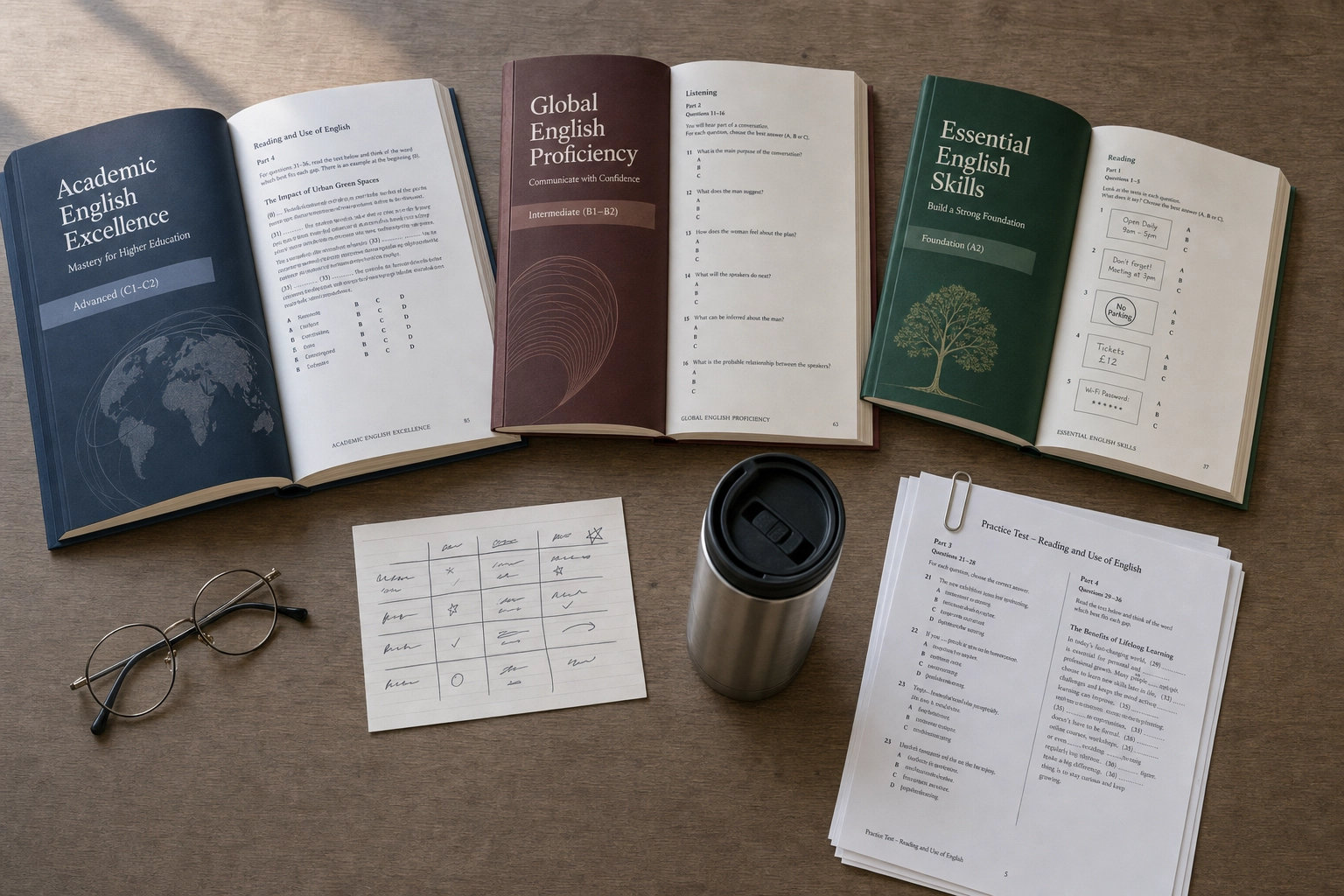
If you're choosing between English proficiency tests, the Speaking section design varies more than you'd think.
| Test | Format | Length | Examiner | Notable Feature |
|---|---|---|---|---|
| DET Speaking | AI-evaluated tasks scattered through 60-min test | ~10 min total speaking | AI only | Includes new Interactive Speaking conversation |
| IELTS Speaking | 3-part live interview | 11–14 min | Trained human examiner | Most natural conversational format |
| TOEFL Speaking | 4 recorded tasks (independent + integrated) | ~17 min | AI + human raters | Integrates listening/reading with speaking |
| PTE Speaking | Recorded tasks integrated with other skills | ~30–35 min | AI only | Speaking and writing scored together |
The DET's Interactive Speaking is the closest any test comes to TOEFL's integrated speaking style, but with the added twist of conversational unpredictability. If you're prepping for multiple tests, the speaking skills overlap heavily — practice for one usually helps the others.
Our specialized guides cover each: TOEFL speaking practice, IELTS speaking practice, and PTE speaking practice. For broader fluency work, 50+ English conversation practice topics gives you cross-test material to learn from.
Frequently Asked Questions
How many speaking questions are on the Duolingo English Test?
You'll typically encounter one Read, Then Speak question, one Speak About the Photo question, one Interactive Speaking set (6–8 questions across 2 topics), and one Speaking Sample question. That's roughly 10–11 separate speaking turns total, adding up to about 10 minutes of actual talking spread throughout the 60-minute exam.
How long should my answer be for each Duolingo English Test speaking question?
Aim for the upper limit of each timer. For Read, Then Speak, target the full 90 seconds. For Speaking Sample, aim for 90+ seconds (the maximum is 180). For Interactive Speaking, use the full 35 seconds per question. Stopping short caps your fluency score even if your English is otherwise strong.
Can I redo a Duolingo speaking question if I make a mistake?
No. Every speaking response gets exactly one recording attempt. There's no pause button, no replay, and no second chance. This is why timed practice with single-take recordings is the most useful preparation — it builds the reflex of recovering inside an answer rather than restarting.
Does my accent affect my Duolingo English Test speaking score?
Not directly. The DET's pronunciation criterion measures intelligibility, not native-likeness. A clear Indian, Spanish, Chinese, or Brazilian accent scores as well as a native one as long as the AI can understand individual sounds, word stress, and intonation. What lowers your score is unclear pronunciation of specific phonemes or unusual word stress patterns.
Can I prepare for Interactive Speaking topics in advance?
You can prepare idea banks and the 35-second framework, but you can't memorize answers. The topics are drawn from a broad pool — hobbies, transportation, education, environment, work, technology, food, social issues — and the specific questions vary every time. The most reliable preparation is regular real-time conversation practice, which builds the reflex of generating answers spontaneously.
What's considered a good DET Speaking subscore?
The average DET overall score is about 110. For Speaking specifically, 115 is solid for most undergraduate programs, 125 is competitive for graduate admissions, and 135+ puts you in the range that top universities expect. Aim higher than your overall target — many programs look at the lowest subscore as a minimum threshold.
Should I use advanced vocabulary or stick to words I know well?
Use a mix. The DET's lexis criterion rewards both sophistication (using precise, topic-appropriate words) and diversity (avoiding repetition). Don't force "esoteric" terms you'd never use naturally — that often misfires. Aim for one or two upgraded words per response: substantial instead of big, prioritize instead of put first, demonstrate instead of show.
What should I do if I freeze and can't think of an answer?
Use a stalling phrase that sounds natural: "That's an interesting question, let me think for a moment..." or "Hmm, well, in my experience..." These give you 3–5 seconds without leaving silence. Then commit to any answer — even a partial or imperfect response scores higher than no response. The AI rewards continuous speech.
How soon should I start speaking after the preparation timer ends?
Within 1–2 seconds. Long delays at the start of a recording reduce your speaking time and signal hesitation to the AI. Have your opening sentence ready before the timer finishes. For Interactive Speaking, start your response as soon as the recording light turns on.
Is it okay to have an introduction and conclusion in my answer?
Yes — for Read, Then Speak and Speaking Sample, a brief introduction (10–15 seconds) and conclusion (10–15 seconds) actually help your discourse coherence score. For Interactive Speaking's 35-second answers, keep both very short: a 3-second opener like "Yeah, well..." and a 3-second closer like "...so that's the main thing for me." The middle of any response is where the bulk of your content should live.
Build DET Speaking Skills Through Real AI Conversations
If you take one thing from this guide on Duolingo English Test speaking questions, it's this: the Interactive Speaking format isn't a passive listening test or a memorized speech — it's a real conversation with an AI that asks follow-up questions and pivots topics. The only way to genuinely prepare is to practice that exact modality.
Practice Me was built for this. Our AI tutors hold real-time voice conversations with you in American or British English, ask follow-up questions, change subjects mid-conversation, and adapt to your level. There's no scheduling, no judgment, and no time limit on how often you can practice — which is exactly the kind of repetition the DET rewards.
Daily 15-minute sessions over the two-week prep plan above, paired with the timed practice from this guide, are enough to move most test-takers from a 105-level Speaking subscore to 120+. Whether your goal is undergraduate admission, graduate programs, or proving English proficiency for work, the speaking skills transfer directly. You can also explore how to introduce yourself in English — useful for both Interactive Speaking openers and the Speaking Sample.
If you're testing in the next two weeks, start practicing tonight. Pick one Read, Then Speak question and one Interactive Speaking set from this guide, hit record, and don't stop until the timer ends. That single recording will tell you more about where you actually stand than any practice test estimate.