Duolingo taught you words. No one taught you to speak.
PracticeMe: real voice conversations with an AI tutor, 24/7.
PTE Speaking Practice: Tasks, Tips & Sample Answers
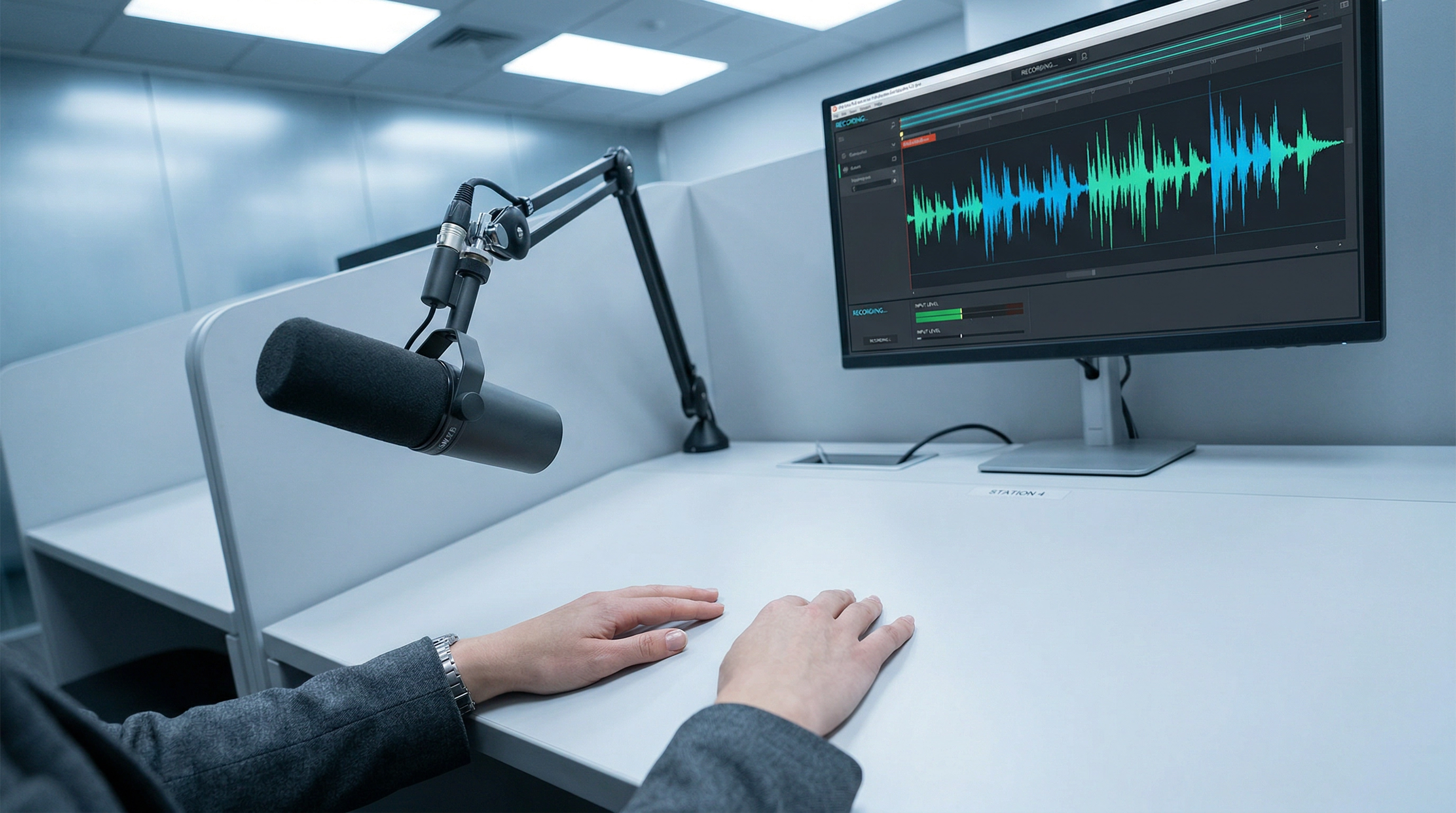
PTE speaking practice looks nothing like IELTS or TOEFL preparation. The PTE Academic speaking test is scored entirely by AI — no human examiner, no face-to-face interview, no small talk. You speak into a microphone, a computer evaluates your response, and you get results within 48 hours.
That difference changes everything about how you should prepare. This PTE speaking practice guide breaks down every task type in the current 2026 format, with sample questions, model answers, scoring criteria, common mistakes, and a practical 8-week study plan to get you test-ready.
Quick Summary: The 2026 PTE speaking test includes 7 task types — 5 original plus 2 new ones added in August 2025 (Respond to a Situation and Summarize Group Discussion). Each task is scored by AI on content, oral fluency, and pronunciation. PTE's computer-based format makes AI conversation practice an ideal preparation method.
What the PTE Academic Speaking Test Actually Measures
PTE Academic combines Speaking and Writing into one section lasting approximately 54–67 minutes. Within that block, you'll face 7 distinct speaking task types — each testing different aspects of your English ability.
Here's what makes PTE speaking practice uniquely valuable: integrated scoring. A single task can feed scores into multiple skill categories simultaneously. Read Aloud, for example, affects both your Speaking and Reading scores. Repeat Sentence impacts Speaking and Listening. This means your PTE speaking preparation directly lifts your overall PTE Academic result.
The 2026 format uses a hybrid AI + human oversight scoring model. AI handles the bulk of scoring, but human reviewers audit specific responses to ensure accuracy. Importantly, the AI now penalizes memorized templates and rewards natural, spontaneous speech — a significant shift from earlier PTE versions.
The 7 PTE speaking tasks, in test order:
| # | Task Type | Prep Time | Response Time | Skills Scored |
|---|---|---|---|---|
| 1 | Read Aloud | 30–40 seconds | 30 seconds | Speaking + Reading |
| 2 | Repeat Sentence | None | 15 seconds | Speaking + Listening |
| 3 | Describe Image | 25 seconds | 40 seconds | Speaking |
| 4 | Re-tell Lecture | 10 seconds | 40 seconds | Speaking + Listening |
| 5 | Answer Short Question | None | 10 seconds | Speaking + Listening |
| 6 | Respond to a Situation | 10 seconds | 40 seconds | Speaking |
| 7 | Summarize Group Discussion | 10 seconds | 120 seconds | Speaking + Listening |
PTE Speaking Practice: All 7 Task Types with Sample Answers
Let's walk through each PTE speaking task with exactly what you'll see on test day, how to approach the question, and what a strong answer sounds like.
1. Read Aloud
Format: A paragraph of academic text (60–70 words) appears on screen. You get 30–40 seconds to read it silently, then 30 seconds to read it aloud into the microphone.
Scored on: Content, Oral Fluency, Pronunciation
Sample text:
"Climate change has become one of the most pressing issues of the 21st century, with rising global temperatures leading to more extreme weather events, melting polar ice caps, and significant changes in biodiversity across every continent."
How to approach this question:
During your preparation seconds, silently scan for difficult words and mentally group the text into phrases. Don't read word by word — read in meaningful chunks.
For example: "Climate change has become / one of the most pressing issues / of the 21st century, / with rising global temperatures / leading to more extreme weather events, / melting polar ice caps, / and significant changes in biodiversity / across every continent."
Key Read Aloud practice tips:
- Stress content words (nouns, verbs, adjectives) — not every word equally
- Maintain a steady, natural pace. Rushing hurts your oral fluency score; dragging eats your seconds
- If you mispronounce a word, keep going. Backtracking damages your fluency score more than one mispronunciation
- Finish before the progress bar ends — incomplete responses lose content marks
- Practice English pronunciation fundamentals to build confidence with tricky academic vocabulary
2. Repeat Sentence
Format: You hear a sentence once (3–9 seconds long). No audio replay. You must immediately repeat it as accurately as possible.
Scored on: Content, Oral Fluency, Pronunciation
This is one of the highest-weight tasks in the entire PTE exam — it contributes heavily to both Speaking and Listening scores. Effective repeat sentence practice is crucial for your overall PTE result.
Sample sentences for practice:
- "The university library will be closed for renovations during the summer break."
- "Students who submit their assignments late will receive a reduced grade."
- "The research findings suggest a strong correlation between diet and cognitive function."
How to approach this question:
Don't try to memorize word-for-word. Instead, listen for meaning. If you understand what the sentence is saying, you'll naturally recall most of the words when you repeat them.
Break it into chunks mentally: "The university library / will be closed / for renovations / during the summer break."
Key Repeat Sentence practice tips:
- Start speaking immediately after the audio ends — even a 2-second pause hurts your fluency
- If you miss a word, substitute a similar one rather than leaving a gap of silence
- Match the pace and intonation of the original audio recording
- Train your ear-to-mouth coordination with regular speaking practice activities that involve active listening and immediate response
3. Describe Image
Format: A graph, chart, map, diagram, or picture appears on screen. You get 25 seconds to study the image, then 40 seconds to describe it verbally.
Scored on: Content, Oral Fluency, Pronunciation
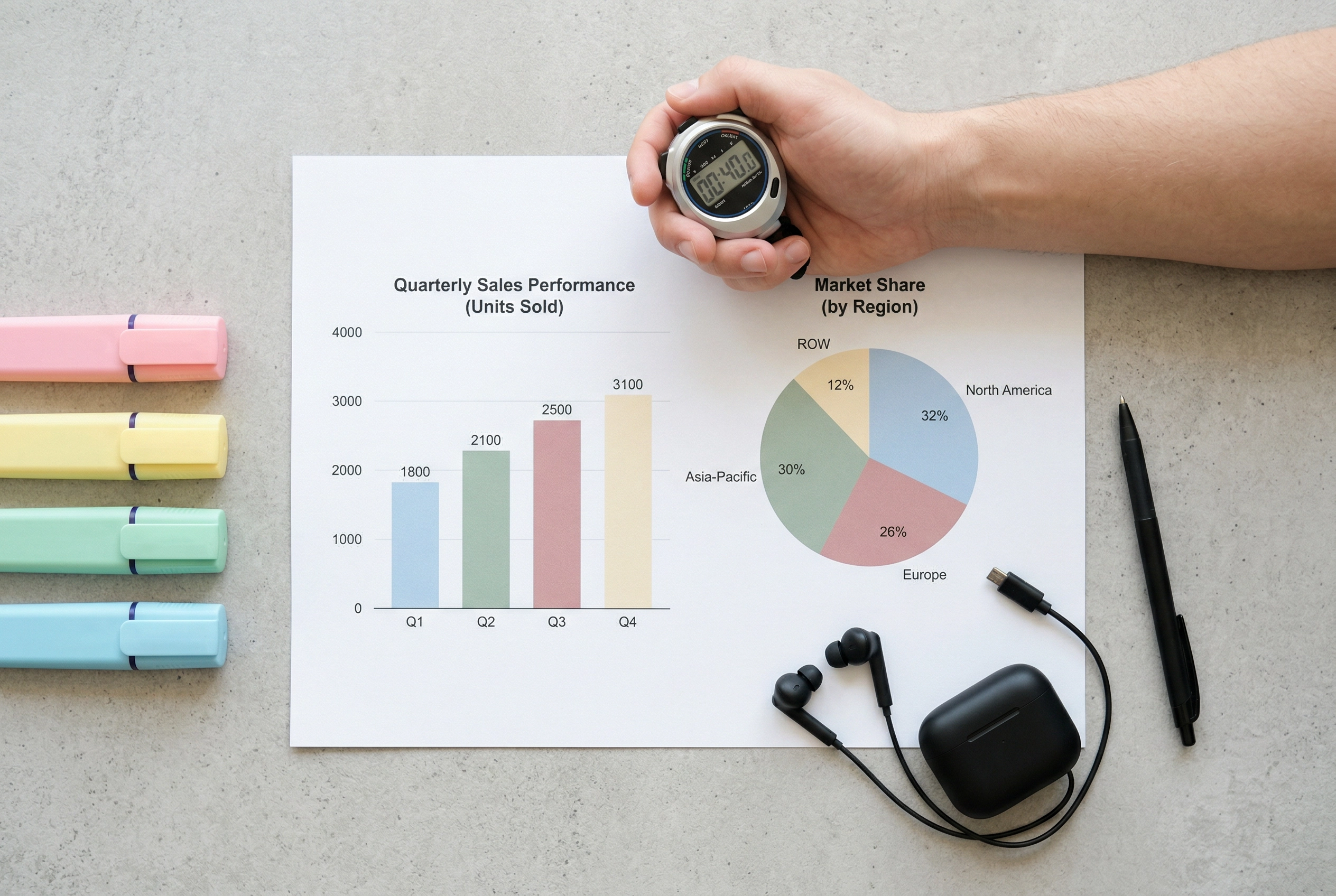
Sample approach — bar chart showing "University Enrollment by Department, 2020–2025":
"This bar chart illustrates university enrollment across five departments from 2020 to 2025. The most notable feature is that Business Studies had the highest enrollment throughout the period, reaching approximately 3,500 students by 2025. Engineering showed the strongest growth, more than doubling from around 800 in 2020 to nearly 2,000. In contrast, enrollment in the Arts department declined slightly over the same period. Overall, the data suggests a clear trend toward professional and technical disciplines."
The Describe Image answer formula:
- Overview: "This [image type] shows..."
- Key detail #1: The most striking feature
- Key detail #2: A comparison or trend
- Key detail #3: An exception or contrast
- Conclusion: "Overall, we can see that..."
Key Describe Image practice tips:
- Don't describe every single data point — prioritize the most important trends
- Use comparative language: "higher than," "the largest increase," "in contrast"
- Keep speaking for the full 40 seconds. Stopping early costs you content marks
- If the image is complex, start speaking before you've fully analyzed it — add details as you go
4. Re-tell Lecture
Format: You listen to a short academic lecture (up to 90 seconds). An image related to the topic may appear on screen. After the audio ends, you get 10 seconds to prepare and 40 seconds to re-tell the main points.
Scored on: Content, Oral Fluency, Pronunciation
How to approach this question:
Take notes while listening to the lecture. Use your erasable notepad to jot down keywords only — don't try to write full sentences. Focus on:
- The main topic or argument
- 2–3 supporting points or examples
- Any conclusion or recommendation the speaker makes
Model answer structure:
"The lecture discussed [main topic]. The speaker explained that [point 1]. Additionally, [point 2] was highlighted as an important factor. The speaker also mentioned [point 3]. In conclusion, the key takeaway was that [summary]."
Key Re-tell Lecture practice tips:
- Start your response within 1–2 seconds of the beep — silence hurts your fluency score
- Cover breadth over depth — don't repeat the same point using different words
- Use linking words naturally: "furthermore," "however," "as a result"
- The image (if present) often contains clues about the lecture's main topic — glance at it during your prep seconds
5. Answer Short Question
Format: You hear a brief question and must answer in one or two words. You have about 10 seconds to respond.
Scored on: Content only (vocabulary knowledge)
Sample questions and answers for practice:
- "What do we call a doctor who specializes in children's health?" → Pediatrician
- "What is the process by which plants make food using sunlight?" → Photosynthesis
- "What device is used to measure temperature?" → Thermometer
- "What do we call a period of ten years?" → Decade
- "What is the opposite of 'ancient'?" → Modern
Key Answer Short Question practice tips:
- This question type tests vocabulary breadth, not speaking ability
- Answer immediately — long pauses or rambling answers get zero marks
- If you don't know the answer, say your best guess rather than staying silent
- Build your academic vocabulary through daily conversation practice — regular English conversations naturally expand the word bank you can draw from
6. Respond to a Situation (New in 2026)
Format: You read and hear a description of a real-world academic or professional scenario. After the prompt, you get 10 seconds to prepare and 40 seconds to respond with what you would say in that situation.
Scored on: Content, Oral Fluency, Pronunciation

This task was added in August 2025 and tests something the original PTE format didn't: pragmatic communication — choosing the right tone, register, and approach for a specific context.
Sample scenario question:
You're a student who received a much lower grade than expected on an important assignment. You believe there may have been a grading error. You decide to speak with your professor about it. What do you say?
Model answer:
"Professor, thank you for taking the time to see me. I wanted to discuss my grade on the recent assignment. I was surprised by the result, as I felt I addressed all the key requirements. I'm wondering if there might have been an oversight, or if you could help me understand where I fell short. I'd really appreciate any specific feedback so I can improve in future assignments."
Notice the tone: polite, professional, and specific — not aggressive or vague. That's exactly what the AI is scoring for in this question type.
Key Respond to a Situation practice tips:
- Address all parts of the situation described in the prompt
- Use appropriate register (formal for professors, collaborative for team scenarios)
- Avoid slang or filler words like "gonna" or "um, like..."
- Practice with AI conversation partners who can role-play different scenarios — this is where practicing English speaking with AI directly simulates the PTE speaking test experience
Duolingo taught you words. No one taught you to speak.
PracticeMe: real voice conversations with an AI tutor, 24/7.
7. Summarize Group Discussion (New in 2026)
Format: You listen to a recording of 3 people discussing a topic (about 60–90 seconds of audio). After the recording ends, you get 10 seconds to prepare and 2 full minutes (120 seconds) to summarize the discussion.
Scored on: Content, Oral Fluency, Pronunciation
This is the longest PTE speaking task and was also added in August 2025. The AI evaluates whether you can synthesize multiple viewpoints — not just list what each speaker said.
Note-taking strategy:
On your erasable notepad, create three columns: S1, S2, S3 (for each speaker). During the audio, jot down 2–3 keywords per speaker. After the audio ends, quickly identify:
- Where speakers agreed
- Where they disagreed
- What conclusion or consensus emerged
Model answer structure:
"The discussion focused on [topic]. The first speaker argued that [point], emphasizing [detail]. The second speaker disagreed, suggesting that [alternative view]. Meanwhile, the third speaker proposed a middle ground, noting that [mediating point]. Ultimately, the group seemed to agree that [consensus]. The key takeaway from the discussion was [summary]."
Key Summarize Group Discussion practice tips:
- You have 120 seconds — use them. Aim for at least 90 seconds of sustained speaking
- Attribute points to specific speakers ("The first speaker," "Speaker 2")
- Don't just list opinions — describe relationships between them (agreement, disagreement, compromise)
- Memorized templates are flagged by the 2026 AI. Practice summarizing real podcast discussions or news debates instead
How PTE Speaking Is Scored (2026 Criteria)
Every PTE speaking task (except Answer Short Question) is evaluated on three scoring criteria:
Content (what you said) Did your answer cover the required information? For Read Aloud, did you read all the words? For Describe Image, did you mention the key data points? For Respond to a Situation, did you address the prompt appropriately?
Oral Fluency (how smoothly you said it) This measures the flow of your speech — natural rhythm, appropriate pausing, and consistent pace. The AI detects hesitations, false starts, and unnatural pauses. Long silences (3+ seconds) are heavily penalized.
Pronunciation (how clearly you said it) The AI evaluates vowel and consonant accuracy, word stress, and sentence intonation. Crucially, it does not penalize accents — whether you speak with an Indian, Chinese, Arabic, or Spanish-influenced accent is fine, as long as individual sounds are clear and stress patterns are correct.
The 2026 PTE scoring system uses a 10–90 scale, where small improvements in fluency and pronunciation create significant score jumps. Most speaking tasks also use partial marking — getting 70% of the content correct still earns partial credit on your answer.
Here's what different PTE score ranges mean:
| PTE Score | Level | Typical Requirements |
|---|---|---|
| 76–84 | Very Good | Australian PR pathways, competitive university programs |
| 65–75 | Good | Most university admissions, many skilled migration visas |
| 50–64 | Competent | Some university programs, student visas with conditions |
| 36–49 | Limited | Basic communication. Significant preparation needed |
PTE Speaking vs IELTS Speaking vs TOEFL Speaking
Choosing between PTE, IELTS, and TOEFL often comes down to how you handle the speaking section. Here's a direct comparison to help you decide which test suits your preparation style:
| Feature | PTE Academic | IELTS Academic | TOEFL iBT (2026) |
|---|---|---|---|
| Format | Speak into microphone; computer-based | Face-to-face interview with human examiner | Speak into microphone; computer-based |
| Scoring method | AI scoring (+ human oversight) | Human examiner only | AI + human rater |
| Speaking duration | ~30 min (within Speaking & Writing block) | 11–14 minutes | ~16 minutes |
| Number of task types | 7 distinct question types | 3 parts (Introduction, Cue Card, Discussion) | 2 tasks (Listen & Repeat, Interview) |
| Scoring scale | 10–90 | Bands 0–9 | 0–30 (section score) |
| Results turnaround | ~48 hours | 3–13 days | 4–8 days |
| Equivalent "good" score | 65–72 | Band 7.0 | ~94 |
| Best suited for | Australian/UK immigration, tech-comfortable test-takers | UK/AU universities, those preferring human interaction | US/Canada universities |
The key insight for PTE speaking practice: PTE is the only major English proficiency test where speaking is assessed entirely by AI (with human oversight). If you regularly practice English speaking with AI conversation partners, you're already training in a format that mirrors the actual PTE test. Practice Me's AI tutors provide exactly this — a computer-based speaking experience where you respond naturally to an AI, building the exact oral fluency and pronunciation skills that PTE speaking practice demands.
Already considering other tests? Compare strategies with our IELTS Speaking practice guide and TOEFL Speaking practice guide.
5 Common Mistakes That Kill Your PTE Speaking Score
After analyzing PTE test-taker feedback, these are the speaking mistakes that cost the most points:
1. Robotic, monotone delivery The 2026 AI specifically penalizes "rhythmic monotony." If you read like a machine — same pace, same tone, no emphasis — your fluency score drops. Vary your intonation. Stress important words. Sound like you're explaining something to a real person, not reciting a prepared text. To develop more natural speaking patterns, practice speaking English fluently and confidently in low-pressure conversations first.
2. Long pauses and hesitations (3+ seconds) Any silence longer than 3 seconds is flagged by the AI as a fluency problem. If you lose your train of thought, use recovery strategies: repeat your last phrase slightly differently, or bridge with "and additionally" while you gather your next point. Never leave dead air.
3. Using memorized templates verbatim The 2026 hybrid scoring model detects template-based responses and may flag them for human review. Templates used to work in older PTE versions — they no longer guarantee high scores. Instead, learn answer frameworks (like the Describe Image formula) but fill them with unique, spontaneous content for each question.
4. Not finishing before your seconds run out An incomplete response means an incomplete score. For each speaking task with a time limit (Describe Image at 40 seconds, Re-tell Lecture at 40 seconds, Respond to a Situation at 40 seconds), aim to wrap up your final sentence 3–5 seconds before the timer ends. Practice with a stopwatch.
5. Speaking before the microphone activates The recording starts after a beep. Speaking before the beep means your first words aren't captured by the system. Wait for the beep, then start immediately — zero delay. Practice this timing until it becomes automatic.
8-Week PTE Speaking Practice Plan
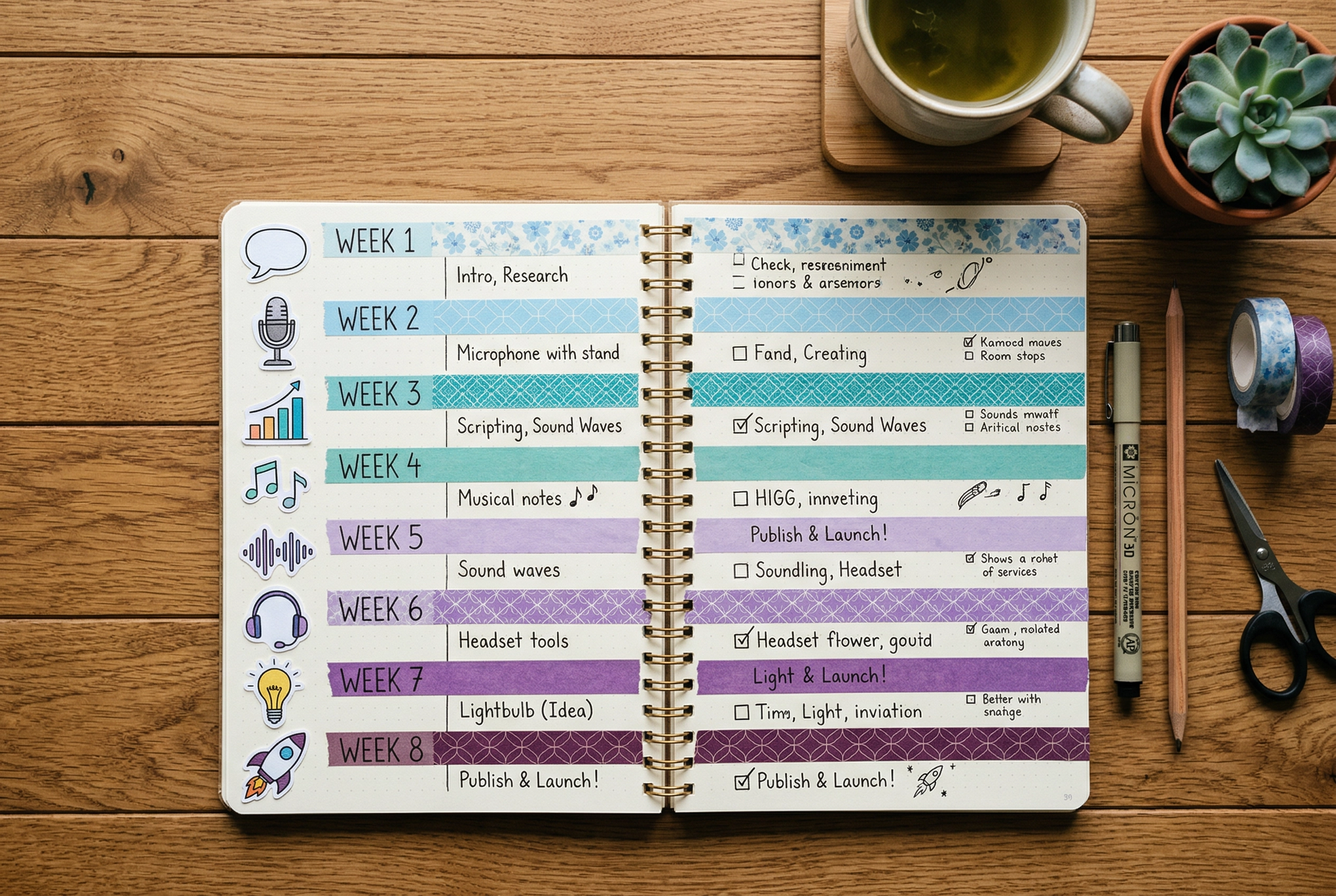
This PTE speaking practice plan assumes 30–45 minutes of daily practice. Adjust based on your current level and target score.
Weeks 1–2: Build the Foundation
- Daily: 10 minutes of Read Aloud practice (read news articles aloud, focusing on chunking and steady pacing)
- Daily: 10 minutes of Repeat Sentence drills (use academic podcasts — pause after each sentence and repeat what you heard)
- Daily: 15 minutes of free conversation with an AI English tutor to build baseline oral fluency
- Goal: Establish a natural speaking rhythm without long pauses
Weeks 3–4: Add Visual and Audio Tasks
- Daily: 5 minutes of Read Aloud (maintain your foundation practice)
- Daily: 5 minutes of Repeat Sentence (maintain)
- Daily: 10 minutes of Describe Image practice (find charts and graphs online, describe them aloud within 40 seconds)
- Daily: 10 minutes of Re-tell Lecture practice (listen to 1-minute TED-Ed clips, then summarize the key points aloud in 40 seconds)
- Goal: Get comfortable describing visual data and summarizing audio content under timed pressure
Weeks 5–6: Master the New 2026 Question Types
- Daily: Maintain 10 minutes on Read Aloud + Repeat Sentence
- Daily: 10 minutes of Respond to a Situation practice (create workplace and academic scenarios, then answer aloud in 40 seconds)
- Daily: 10 minutes of Summarize Group Discussion practice (listen to podcast discussions with multiple speakers and practice summarizing in 120 seconds)
- Daily: 10 minutes of AI conversation focused on topic-switching and sustained speaking
- Goal: Build pragmatic communication skills and the ability to synthesize multiple viewpoints
Weeks 7–8: Test Simulation and Refinement
- 3x per week: Full PTE speaking section mock tests under timed conditions
- Daily: 15 minutes targeting your weakest task type with focused practice
- Daily: 15 minutes of general English speaking practice to maintain overall fluency
- Record yourself and review — identify patterns in hesitations, pronunciation errors, or incomplete answers
- Goal: Score within 5 points of your target on practice tests consistently
Throughout all 8 weeks: Supplement with Practice Me's AI conversation practice. Since PTE speaking is AI-evaluated, getting comfortable talking to an AI — responding naturally, maintaining flow, and thinking on your feet — directly transfers to test-day performance. View pricing options to get started.
Frequently Asked Questions
How long is the PTE speaking section?
PTE doesn't have a standalone speaking section. Speaking tasks are combined with Writing in a single block lasting approximately 54–67 minutes total. The speaking tasks themselves take roughly 30 minutes within that block. You'll move through all 7 speaking question types consecutively before transitioning to writing tasks.
What is a good PTE speaking score?
It depends on your goal. For most Australian university admissions, a score of 58–64 (equivalent to IELTS 6.5) is sufficient. For Australian Permanent Residency through skilled migration, you'll typically need 65–79 depending on your visa subclass. Competitive programs and PR pathways often require 79+ (equivalent to IELTS 8.0). Always check your specific institution or immigration authority's requirements.
Is PTE speaking harder than IELTS speaking?
Different, not necessarily harder. PTE speaking practice involves more task variety (7 question types vs. 3 IELTS parts) and tighter time limits measured in seconds, but you never face a human examiner — which many test-takers find less stressful. IELTS speaking allows natural conversation flow and the ability to ask for clarification. If you're comfortable with technology and prefer objective AI scoring, PTE may feel easier. Read our full IELTS Speaking practice breakdown for a deeper comparison.
Can I use templates in PTE speaking 2026?
Use answer frameworks, not word-for-word templates. The 2026 hybrid AI scoring model can detect memorized template language and may flag responses for human review, resulting in lower scores. Learn structural approaches (like the Describe Image formula: overview → key detail → trend → conclusion) but fill each answer with original observations about the specific question or prompt.
How many times can I take the PTE?
There's no lifetime limit on PTE Academic attempts. You can retake the test as soon as 5 calendar days after your previous attempt. Results are valid for 2 years from the test date. Given the flexible scheduling and fast results, many test-takers use their first attempt as a diagnostic to identify weak areas before focused PTE speaking preparation.
Does my accent affect my PTE speaking score?
No. The PTE AI is trained to understand a wide range of accents, including Indian, Chinese, Arabic, Spanish, and many others. What matters is the clarity of individual sounds — correct vowel and consonant pronunciation, appropriate word stress, and natural sentence intonation. Your accent is part of your identity; PTE doesn't penalize it. For pronunciation practice tips, focus on the specific sounds that differ most between your native language and English.
How soon can I get PTE results?
Typically within 48 hours of completing the test, often sooner. This is one of PTE Academic's biggest advantages over IELTS (which takes 3–13 days) and TOEFL (4–8 days for results). Your scores are sent electronically to your chosen institutions, and you can send results to unlimited recipients for free within the first 48 hours.