Duolingo taught you words. No one taught you to speak.
PracticeMe: real voice conversations with an AI tutor, 24/7.
How to Improve English Speaking Skills by Yourself
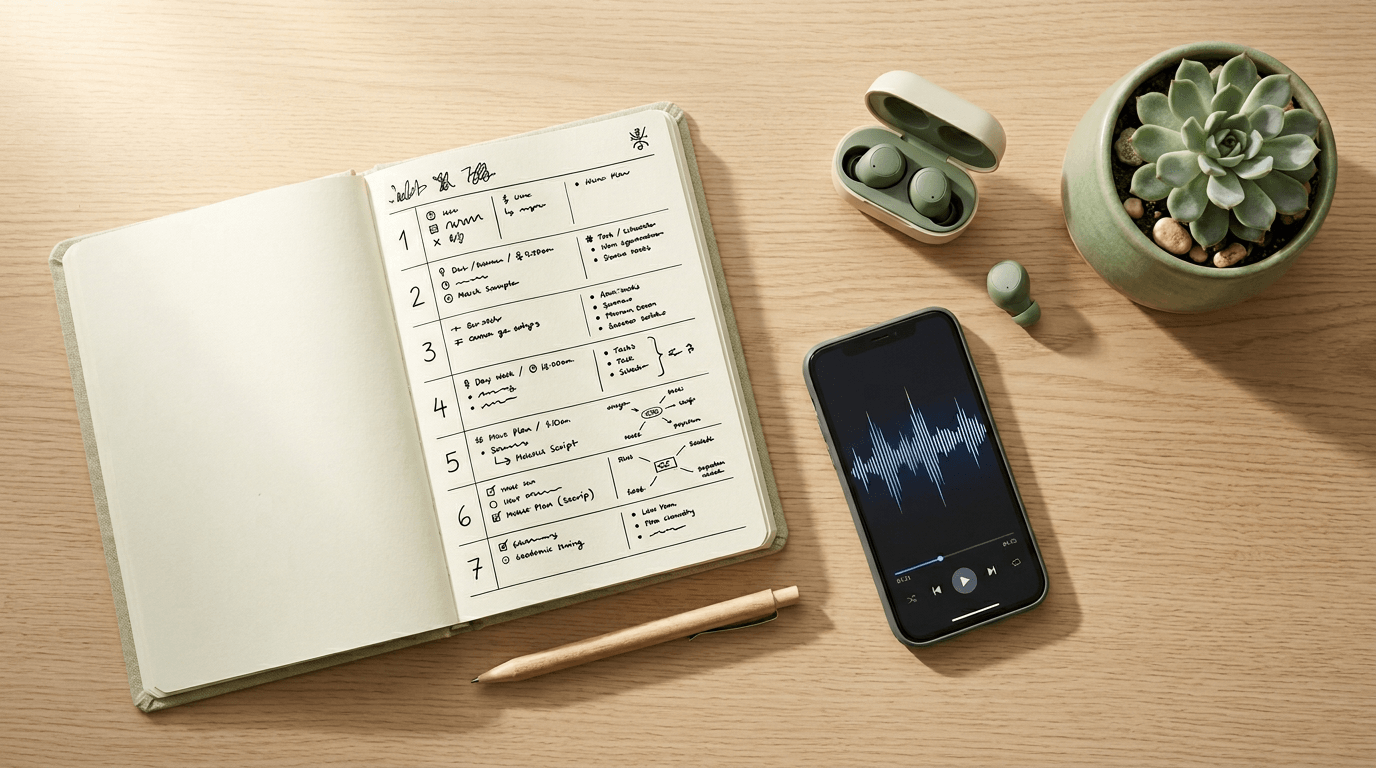
Wondering how to improve your English speaking skills by yourself — without a teacher, a classroom, or even a native conversation partner? You're not alone. It's one of the most common questions English learners ask, and the answer is simpler than most people think.
The problem is, most advice online gives you a list of random tips. Talk to yourself in the mirror. Watch movies with English subtitles. Read books out loud. Listen to music in English. Those techniques can help you practice, but without a system tying them together, people rarely see real improvement in how they speak.
This guide takes a different approach. Instead of tips, it gives you a complete system to improve your English speaking skills by yourself — with self-assessment tools, structured goals, a weekly practice curriculum, and a full 30-day challenge you can start today.
Quick Summary: To improve your English speaking skills by yourself, you need a structured system — not random tips. This guide walks you through self-assessment, SMART goal setting, building a weekly practice curriculum, tracking progress with real metrics, and completing a 30-day speaking challenge. Follow this step-by-step framework, and you'll see measurable improvement in your fluency, pronunciation, and confidence — even without a conversation partner or teacher.
Why Most People Fail When They Try to Improve English Speaking Alone
Here's a pattern you might recognize: you decide to improve your English. You talk to yourself for three days. You shadow a podcast for a week. Then life gets busy and you forget about it.
The problem isn't motivation or talent. It's that most people approach English speaking practice like a hobby instead of a project. They collect tips and techniques without building them into a structured learning system.
There's a critical difference between practicing and improving:
- Practicing is doing the same comfortable exercises over and over
- Improving is deliberately targeting your weaknesses, measuring your progress, and adjusting your approach based on what you find
A runner who jogs the same easy route every day is practicing. A runner who tracks time, varies routes, does interval training, and adjusts weekly is improving.
This guide turns your English speaking from random practice into systematic improvement:
- Assess — find out exactly where your speaking level is today
- Set goals — define what improvement looks like for you
- Build a curriculum — create your weekly practice schedule
- Follow the 30-day challenge — execute with daily tasks and exercises
- Track progress — measure what matters
- Stay motivated — build systems that help you keep going
Step 1: Assess Your Current English Speaking Level
You can't improve what you haven't measured. Before you start any practice routine, you need a clear picture of where your speaking skills are right now.
Most language learners skip this step because it feels uncomfortable. Recording your own voice speaking English can feel awkward — especially when you listen back and hear your mistakes. But this baseline recording is the most important thing you'll do. It makes everything else work.
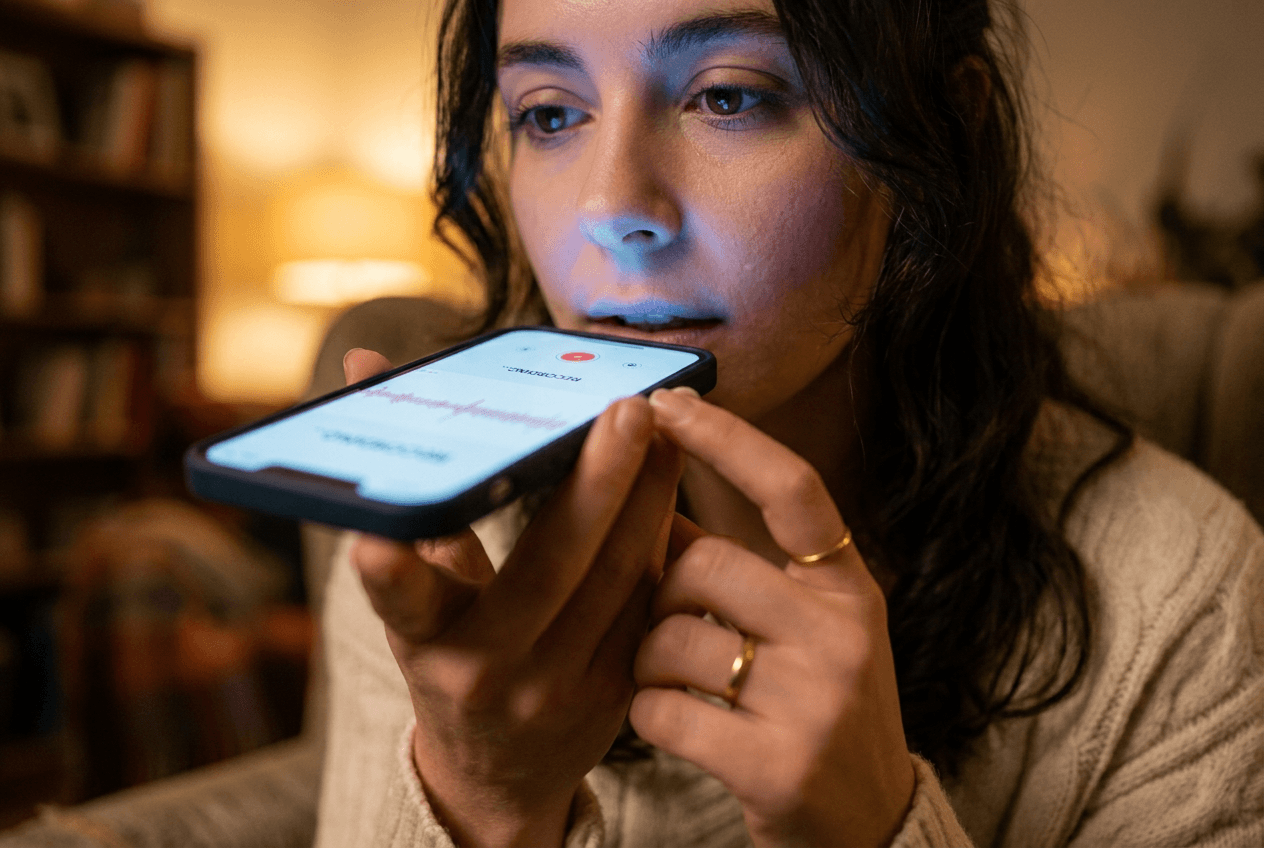
Here's how to do your self-assessment:
Record a 2-minute baseline speech. Pick any topic you can talk about (your daily routine, your job, your last vacation). Open your phone's voice recorder and speak for 2 full minutes in English. Don't prepare or rehearse — just talk naturally, the way you would in a real conversation with someone.
Listen back and rate yourself across four skill areas:
| Skill Area | What to Listen For | Your Rating (1-10) |
|---|---|---|
| Pronunciation | Do your words sound clear? Can a native English speaker understand you easily? | ___ |
| Fluency | Do you speak smoothly, or do you have long pauses and hesitations between sentences? | ___ |
| Vocabulary Range | Do you use varied words and phrases, or do you repeat the same basic ones? | ___ |
| Grammar Accuracy | Are your sentences structured correctly? Do your verb tenses make sense? | ___ |
For a more formal benchmark, the Common European Framework of Reference (CEFR) describes speaking levels from A1 (beginner) through C2 (mastery). The British Council also offers a free English level test to help you find where you stand.
Identify your top 2-3 weak areas. Be specific. Don't say "my speaking is bad." Write something like "I pause for 3-4 seconds when I can't find the right word" or "I always use present tense even when talking about the past."
Keep this recording. In 30 days, you'll record the same speech and compare the two. The difference will surprise you.
Step 2: Set SMART Goals to Improve Your English Speaking
"I want to improve my English" is not a goal — it's a wish. And wishes don't help you speak better.
Real improvement requires specific, measurable goals. The SMART framework — Specific, Measurable, Achievable, Relevant, Time-bound — works perfectly for language learning:
Bad goal: "Improve my English speaking" SMART goal: "Hold a 3-minute conversation about my work without pausing for more than 2 seconds, by April 10"
Bad goal: "Learn more vocabulary" SMART goal: "Learn and use 5 new English phrases per week in conversation practice for the next 4 weeks"
Bad goal: "Sound more natural" SMART goal: "Improve my pronunciation of 'th' and 'r' sounds by practicing shadowing exercises 10 minutes daily for 30 days"
How to find the right goals based on your self-assessment:
- If pronunciation scored lowest: Set a goal around specific sounds, word stress, or native intonation
- If fluency scored lowest: Set a goal around speaking duration without pauses, or words per minute
- If vocabulary scored lowest: Set a goal around learning and using new words in conversations weekly — our guide on building vocabulary through conversations can help
- If grammar scored lowest: Set a goal around correctly using one grammar structure (past tense, conditionals, articles) in spoken English
Write down 2-3 SMART goals. Put them somewhere visible. They'll drive every practice session for the next month.
Step 3: Build Your Weekly English Speaking Curriculum
Random practice produces random results. A structured weekly schedule ensures you work on all aspects of spoken English systematically — and that structure is what separates people who actually improve their English speaking skills by themselves from those who stay stuck.
The key principle: alternate between input (listening, reading) and output (speaking, recording). Your brain needs both. Input gives you raw material — pronunciation models, new vocabulary, native sentence patterns. Output forces you to produce language out loud, which is where real fluency develops.
Here's how much time you need: 20-30 minutes per day is enough to see real improvement in 30 days. Research on the spacing effect shows you learn more from daily 20-minute sessions than from one long weekend study session.

Sample Weekly Schedule
Monday — Pronunciation Focus Pick 5-10 words you struggle to pronounce. Find the correct pronunciation online (search "how to pronounce [word]" for native audio). Practice saying each word 10 times, then use them in full sentences. Spend 5 minutes on shadowing — listen to a native English speaker and repeat what they say, matching their rhythm, accent, and intonation.
Tuesday — Vocabulary Building Learn 5 new phrases related to a topic you care about (work, travel, daily life). Don't just memorize — practice saying each phrase in 3 different sentences out loud. Write them down so you can find and review them later.
Wednesday — Conversation Practice This is the most important day. Actually speak English for 15-20 minutes. You can practice English speaking alone by narrating your activities, or have a real voice conversation with an AI English tutor that responds naturally and adapts to your level. Practice Me lets you have phone call-like conversations with AI tutors 24/7, which solves the biggest problem when learning English at home: having nobody to talk to.
Thursday — Listening Comprehension Listen to a podcast, watch a video, or stream a show in English. Don't passively listen — take notes. Write down 3 new words or phrases. Notice how native speakers transition between ideas and stress certain words. Try repeating key phrases to build your own speaking rhythm.
Friday — Read Aloud + Record Pick a short English article (200-300 words). Read it aloud, focusing on clear pronunciation and natural intonation. Then record yourself. Listen back and compare your voice to how a native speaker would say the same words.
Weekend — Review + Free Practice Review vocabulary from the week. Have another conversation session using new words. Record a 1-minute speech on any topic to track weekly progress.
For more on structuring daily sessions, see our daily English speaking practice guide.
The 30-Day English Speaking Challenge
Theory is nice. But improvement comes from doing the work. Here's a structured 30-day challenge that takes you from baseline to measurable progress.

Duolingo taught you words. No one taught you to speak.
PracticeMe: real voice conversations with an AI tutor, 24/7.
Week 1: Build the Foundation (Days 1–7)
Establish your starting point and build the daily habit of speaking English.
| Day | Task (20-30 min) |
|---|---|
| Day 1 | Record your 2-minute baseline speech. Save it — you'll compare it later. |
| Day 2 | Complete the self-assessment grid. Rate pronunciation, fluency, vocabulary, grammar. |
| Day 3 | Write 2-3 SMART goals based on your weakest areas. |
| Day 4 | First shadowing session: find a 1-minute native audio clip and repeat along 3 times. |
| Day 5 | First conversation practice. Talk about yourself for 5 minutes (alone or with an AI tutor). |
| Day 6 | Learn 5 new English phrases. Use each in a sentence out loud. |
| Day 7 | Record a 1-minute speech on the same topic as Day 1. Compare both recordings. |
Week 1 Milestone: Baseline recorded, goals set, daily speaking habit established.
Week 2: Expand Your Range (Days 8–14)
Push outside your comfortable topics. This is where you find your voice in English.
| Day | Task (20-30 min) |
|---|---|
| Day 8 | Conversation on an unfamiliar topic (science, politics, health). |
| Day 9 | Shadowing with faster native audio. Keep up without pausing. |
| Day 10 | Learn 5 new phrases in your weakest area. Use them in conversation. |
| Day 11 | Read an English article aloud. Record. Focus on word stress and intonation. |
| Day 12 | 10-minute English conversation. Speak in 3-4 sentence chunks. |
| Day 13 | Pronunciation drill: practice your 3 hardest sounds, 20 reps each. |
| Day 14 | Record a 2-minute speech on a new topic. Compare to Day 1. |
Week 2 Milestone: Speaking about new topics. Conversations are longer and more natural.
Week 3: Push Through Plateaus (Days 15–21)
Most people quit in Week 3. Expect it to feel harder — that means you're growing.
| Day | Task (25-30 min) |
|---|---|
| Day 15 | Explain something complex in English (your job, a hobby, a process). Record. |
| Day 16 | Shadow a 2-minute clip. Match the native speaker's natural rhythm. |
| Day 17 | Express opinions in English. Practice agreeing and disagreeing. |
| Day 18 | Vocabulary review: use ALL new phrases from Weeks 1-2 in conversation. |
| Day 19 | Timed: speak for 3 minutes straight on a random topic. No long pauses. |
| Day 20 | Read aloud from a challenging English text. Focus on fluent delivery. |
| Day 21 | Record a 2-minute speech. Listen for improvements in your weak areas. |
Week 3 Milestone: You can talk about complex topics. Speaking stamina increased. New vocabulary flowing naturally.
Week 4: Measure Your Growth (Days 22–30)
See how far you've come and plan what's next.
| Day | Task (25-30 min) |
|---|---|
| Day 22 | Longest conversation yet: 15+ minutes of speaking English. |
| Day 23 | Shadow the same Day 4 clip. Notice how much smoother it feels. |
| Day 24 | Teach something in English. Explain a concept as if helping someone learn. |
| Day 25 | Vocabulary inventory: list every new word and phrase from this month. |
| Day 26 | Pronunciation check: record the same difficult words from Week 1. Compare. |
| Day 27 | Free conversation for 10 minutes. Notice how much easier it is than Day 1. |
| Day 28 | Re-take the self-assessment grid. Compare to Day 2. |
| Day 29 | Record your final 2-minute speech on the SAME topic as Day 1. |
| Day 30 | Listen to Day 1 and Day 29 back-to-back. Write down every improvement. Celebrate. |
Week 4 Milestone: Concrete evidence of improvement. Sustainable daily habit built. Clear direction for Month 2.
How to Track Your English Speaking Progress

Track these five metrics weekly — no complicated spreadsheets needed:
- Speaking time — Total minutes speaking English this week. Increase by 10% each week.
- New vocabulary — Words and phrases you learned and used while speaking.
- Confidence rating — 1-10 scale: how comfortable speaking English feels this week.
- Fluency check — Count pauses longer than 2 seconds in your weekly recording.
- Pronunciation wins — Specific words, sounds, or accent patterns that improved.
A simple journal works fine. Write a 2-minute review each Sunday.
Technology can help too: Practice Me automatically tracks speaking time, vocabulary growth, and improvement trends. The app saves new words from conversations without extra effort — a built-in tracker while you practice. See our pricing page for plan details.
Most motivating metric? Comparing recordings over time. Listen to Day 1 after two weeks. You'll hear improvements you can't notice day-to-day. This single habit keeps more self-study learners motivated than anything else.
Staying Motivated When You're Learning English by Yourself

Solo language learning has one disadvantage: nobody's watching. No class, no teacher, no classmates. That freedom also makes it easy to quit.
Build motivation into your system rather than relying on willpower:
Make progress visible. Mark each practice day on a calendar. After a week, you won't want to break the streak. Motivation follows action — not the other way around.
Use the "Day 1 recording" trick. When motivation dips, listen to your first recording. Hearing how much your speaking has improved is the most powerful reminder that the work pays off.
Reward milestones. Finished Week 1? Treat yourself. Completed 30 days? Celebrate. Small rewards tied to achievements keep your brain engaged with learning.
Remove the anxiety barrier. If fear of speaking a foreign language is holding you back, address it directly. AI tutors remove judgment — stumble over words, make mistakes, try again without anyone watching. Research in Frontiers in Education confirms AI chatbots reduce language anxiety by creating low-pressure environments where people feel comfortable experimenting with new vocabulary and sentences. Many learners find AI practice builds speaking confidence faster than talking with native speakers.
Connect practice to real life. Tie English practice to something you care about — job interviews, travel planning, understanding your favorite podcasts. When improvement has a purpose, you'll find time to practice every day.

For a long-term plan beyond this 30-day challenge, read our guide to becoming fluent in English — it covers what to expect at each stage and how to sustain improvement over months.
Frequently Asked Questions
How long does it take to improve your English speaking skills by yourself?
With 20-30 minutes of daily practice, most people notice improvement within 2-4 weeks. You'll hear differences in recordings after 7-10 days. Significant fluency gains — comfortable 10+ minute conversations — take 2-3 months. Consistency matters more than total hours: 20 minutes daily beats 3 hours on weekends.
Can I learn to speak English fluently without a teacher?
Yes. Conversational fluency is achievable through self-study, especially combining listening with regular speaking practice using AI tools. A teacher helps with advanced grammar and cultural nuance, but for building core speaking confidence, a structured self-study system works well. Find an approach that keeps you talking regularly.
How many hours a day should I practice English speaking at home?
Twenty to thirty minutes of active speaking practice daily is more effective than hours of passive study. Research shows shorter, frequent sessions build language skills faster than long, irregular ones. Start with 20 minutes and increase as it becomes comfortable.
What's the fastest way to improve English pronunciation by yourself?
Shadowing. Listen to a native English speaker and repeat in real-time, matching rhythm, intonation, accent, and sounds. Do 5-10 minutes daily with the same speaker to internalize patterns. Record yourself and compare to the original to track progress.
Is an AI tutor as effective as a real conversation partner?
For building confidence and fluency, AI practice is extremely effective — and sometimes better for beginners. Without judgment, you speak more freely and take risks with new vocabulary. Practice Me's AI tutors feel like a real phone call with multiple personalities and American and British accents, making it a powerful core tool for self-study English speaking practice.