Duolingo taught you words. No one taught you to speak.
PracticeMe: real voice conversations with an AI tutor, 24/7.
Best SmallTalk2Me Alternatives for Speaking Practice [2026]
![Best SmallTalk2Me Alternatives for Speaking Practice [2026]](https://cdn.babyseo.ai/images/practiceme.app/smalltalk2me/smalltalk2me-alternatives-natural-conversation-practice.webp)
If you're hunting for a SmallTalk2Me alternative, you already know what the original does well. The 15-minute CEFR speaking test is genuinely impressive — over 2.5 million learners across 125 countries trust SmallTalk2Me for instant proficiency scores. The IELTS simulator gives you a band estimate before the real exam. The mock interview practice surfaces specific weaknesses you'd never notice on your own.
But here's the thing: an assessment is not a treatment. Once you know your CEFR level is B1+, that you fumble past tense in interviews, or that your pronunciation slips on /θ/ sounds — you still need somewhere to actually practice. And that's where most learners hit a wall.
If you're searching for a SmallTalk2Me alternative because you're tired of being graded and ready to be heard, you want something that feels less like a language lab and more like calling a friend who happens to be a patient English tutor. This guide compares the five best options for 2026 — each solving a different problem SmallTalk2Me doesn't. For a broader landscape, our roundup of the best AI English tutor apps covers options beyond this list too.
Quick Summary: The best SmallTalk2Me alternative depends on what you actually want next. Practice Me offers natural voice conversations with personality-driven AI tutors and accent selection — ideal once you're done assessing and ready to practice. ELSA Speak targets pronunciation specifically. Gliglish is the strongest free option. Fluently suits working professionals. Loora focuses on confidence-building chat. Five apps, five different problems solved.
Why People Look for a SmallTalk2Me Alternative
SmallTalk2Me has earned its reputation. The 95% CEFR accuracy claim is well-supported, the half-level scoring (B1, B1+, B2, B2+) is more granular than most tests, and the 35+ speech metrics in each report are diagnostic gold. For HR teams testing candidates or learners benchmarking IELTS readiness, it's a serious tool.
But the same design choices that make it excellent for assessment limit its usefulness for daily practice. Here are the most common reasons learners look for a SmallTalk2Me alternative:
Assessment-first, conversation-second. The core experience is built around evaluation. You speak, the AI scores you, you read a report. Even the practice modes follow a structured "respond to a prompt → get feedback" loop. That's perfect for a test environment. It's exhausting as a daily learning habit. Real fluency gets built in messy, unscripted conversations — not graded responses.
No tutor personality. Most modern English apps let you pick a tutor character whose style fits how you like to learn. SmallTalk2Me has a single, voice-neutral AI assessor. There's no Sarah who's patient with beginners, no Marcus who pushes you on business vocabulary, no Oliver who specializes in formal British English. You get a competent examiner — not a conversation partner you look forward to talking to.
No accent selection. This is a real gap. Learners preparing for jobs in London, Sydney, or New York often need to train their ear for a specific accent. SmallTalk2Me doesn't offer that choice. You get one voice model, take it or leave it.
Pricing opacity. The free experience centers on the level test. Beyond that, paid plans require a subscription, with a separate one-time per-test option, but full pricing varies by region and isn't always transparent on the homepage. That's fine for a one-shot assessment. It's frustrating when you're trying to commit to daily practice.
Tougher for absolute beginners. Reviews consistently mention that SmallTalk2Me expects you to already form basic English sentences. If you're at A1-A2 still building the courage to say "Hello, my name is…", the prompts feel intimidating before you've even started.
The judgment problem persists. Even users who love SmallTalk2Me cite "no judgment" as a top benefit — which tells you that anxiety about being judged is real, even with an AI. A scoring-focused interface can subtly reinforce that pressure. A conversation-focused interface can dissolve it.
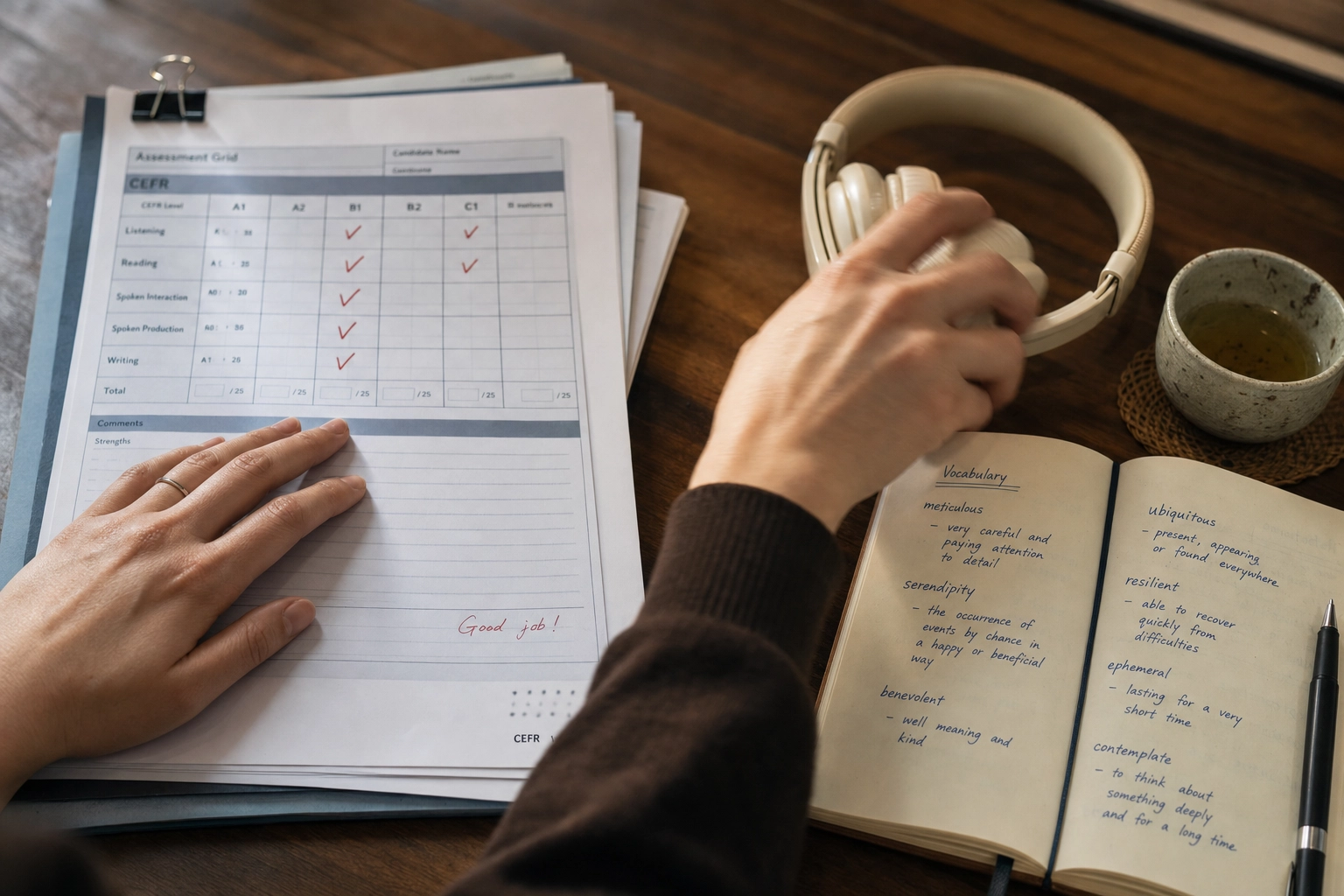
5 Best SmallTalk2Me Alternatives for English Speaking Practice in 2026
I evaluated each SmallTalk2Me alternative on four things: how natural the conversation feels, the quality of feedback you actually get, fair pricing, and whether the app does something SmallTalk2Me genuinely doesn't.
1. Practice Me — Best for Natural Conversation With Personality-Driven Tutors
What it is: An AI English speaking app built around real-time voice conversations that feel like phone calls with a tutor friend.
How it differs from SmallTalk2Me: Where SmallTalk2Me hands you prompts and grades your responses, Practice Me drops you into a free-flowing conversation. You talk about your weekend, your job stress, your travel plans — and the AI responds, asks follow-ups, and adapts to your level. There's no scoring rubric in the foreground. There's just a conversation.
Key features:
- Three AI tutor personalities — Sarah, Oliver, and Marcus each handle different conversation styles. Some learners prefer warm encouragement; others want a tutor who challenges them with harder vocabulary and follow-up questions.
- American and British accent options — Pick the accent model you want to practice with. This alone fills the gap SmallTalk2Me leaves wide open.
- Automatic vocabulary saving — New words from your conversations are captured and saved, so you build vocabulary through conversations instead of memorizing isolated word lists.
- Real-time progress tracking — See your speaking time, vocabulary growth, and improvement trends over weeks and months.
- Specialized topic modes — Everyday conversations, academic English, job interviews, travel and culture, storytelling.
- 24/7 judgment-free practice — Talk at 3 AM if you want. No appointments, no embarrassment, no waiting.
Pricing: Practice Me Pro is a monthly subscription, with the annual plan up to 44% off for a lower effective monthly rate. iOS users get a 3-day free trial; the pricing page has current details.
Best for: Learners who already know roughly where they stand and want to actually practice — especially anyone who feels anxious or self-conscious speaking English with real people. The judgment-free environment lets you stumble, restart, and laugh at your mistakes without anyone judging.
Limitations: Doesn't issue formal certifications or CEFR scores like SmallTalk2Me does.
2. ELSA Speak — Best for Pronunciation-Focused Training
What it is: An AI English coach with phoneme-level pronunciation analysis trained on data from non-native speakers.
How it differs from SmallTalk2Me: SmallTalk2Me measures pronunciation as one of many metrics. ELSA Speak makes it the entire point. You get sound-by-sound feedback showing exactly which vowels and consonants are off, with visual mouth-position guidance.
Key features:
- Speech recognition trained on common L1 speaker patterns (Spanish, Vietnamese, Korean, Japanese, Indian, etc.)
- Detailed pronunciation scoring at the phoneme level
- 50M+ downloads with 25M+ active learners
- Industry-specific modules (business, hospitality, IT, customer service)
- Tailored lesson plans that adapt to your weak spots
- Available on iOS, Android, and Web
Pricing: ELSA Pro is a monthly subscription; ELSA Premium with conversation features costs a bit more. Annual discounts are common.
Best for: Learners who already have decent grammar and vocabulary but get held back by pronunciation. Especially useful if your accent makes you hard to understand at work and you want surgical feedback on individual sounds.
Limitations: The core experience is drill-based — listen, repeat, get scored — which feels similar to SmallTalk2Me's prompt-and-evaluate loop. Conversations exist but feel scripted. Heavy bias toward standard American pronunciation, which some users with British or Australian accents find frustrating. If you're considering this SmallTalk2Me alternative because you want less drilling, ELSA may not solve that problem. For a deeper comparison, see our ELSA Speak alternatives guide.
3. Gliglish — Best Free SmallTalk2Me Alternative
What it is: A browser-based AI language teacher with a genuinely usable free tier and support for 30+ languages.
How it differs from SmallTalk2Me: Gliglish is the only app on this list with a free tier you can actually live on (10 minutes a day, no credit card required). It's also the only one with a clear "I'm a beginner, slow down" mode — adjustable speech speed that meets you where your ear is.
Key features:
- Free tier: 10 minutes/day with conversations capped at 50 messages
- US, UK, and Australian English options
- Adjustable speaking speed, useful for early learners
- Real-time grammar correction and pronunciation feedback
- Roleplay scenarios from job interviews to first dates
- Used in academic research with positive results (validated by university studies)
Pricing: Free tier permanently available. Gliglish Plus is a paid subscription, cheaper on the annual plan than month-to-month.
Best for: Students, learners on tight budgets, anyone curious about AI conversation practice who doesn't want to commit to a paid subscription yet. Also great as a "second app" alongside something more specialized.
Limitations: The free tier hits its daily cap quickly — 10 minutes evaporates fast once you're warmed up. The paid plan is actually pricier than Practice Me's annual rate. As a 30+ language platform, it's not English-specialized, so feedback can feel less precise than English-only apps. UX is less polished than well-funded competitors.
4. Fluently — Best for Holistic Evaluation and Professional English
What it is: An AI English coach built for working professionals who already speak English daily but want to sound more polished on calls.
How it differs from SmallTalk2Me: SmallTalk2Me evaluates you in a test environment with set prompts. Fluently evaluates how you actually use English — including, optionally, on real Zoom and Teams meetings via its call analyzer. The feedback covers pronunciation, grammar, vocabulary, and fluency together rather than as separate scores.
Key features:
- Holistic 360° evaluation across pronunciation, grammar, vocabulary, and fluency
- Optional call analyzer that connects to actual work meetings
- Personalized improvement plans based on your real speech patterns
- Real-time corrections during AI tutor sessions
- 30-day refund guarantee on web subscriptions
- Marketing themselves as "20x cheaper than a human English coach"
- Available on iOS, Android, and Web
Pricing: A monthly subscription on the pricier end, with discounts on multi-month packages. The call analyzer adds extra cost beyond the standard subscription.
Best for: Non-native professionals who use English in meetings, presentations, and client calls — and want feedback grounded in their actual work language, not generic textbook scenarios. If interview prep is a priority, our English interview practice resources cover that specific use case.
Limitations: Not built for absolute beginners — the app assumes you can already hold a basic conversation. The paywall appears early in onboarding, which catches some users off guard. It's the most expensive option here. Less useful if you don't have regular English-speaking work meetings to analyze.
Duolingo taught you words. No one taught you to speak.
PracticeMe: real voice conversations with an AI tutor, 24/7.
5. Loora — Best for Confidence Building Through Open Conversation
What it is: An AI English coach designed around open-ended conversations on whatever topic you bring to it, with a strong focus on confidence and judgment-free practice.
How it differs from SmallTalk2Me: Loora skips the structured assessment loop entirely. You just start talking — about your favorite show, a problem at work, a recipe you're trying — and the AI responds and corrects you in real time. The vibe is more "supportive conversation partner" than "examiner."
Key features:
- Open conversation on any topic you choose
- Real-time pronunciation, grammar, and phrasing feedback
- Roleplay scenarios for specific situations (negotiations, networking, small talk)
- Judgment-free environment built around emotional comfort
- B2B/L&D admin dashboards for corporate learning teams
- Available on iOS, Android, and Web
Pricing: Three billing cycles — monthly, quarterly, or annual, with the longer commitments bringing the effective monthly rate down.
Best for: Intermediate learners who already have decent English skills but freeze up in real conversations. If your problem is anxiety more than ability, Loora's confidence-first approach can help.
Limitations: Single tutor personality — there's no equivalent of choosing between Sarah, Oliver, and Marcus. No American/British accent selection. Some users on Reddit report short or generic responses on more advanced topics, and pronunciation recognition can misfire. The Android app has limited subscription options (no monthly plan in some regions).
SmallTalk2Me Alternatives Compared at a Glance
| App | Best For | Free Tier | Tutor Personalities | Accent Selection | Platforms | Vocabulary Tracking |
|---|---|---|---|---|---|---|
| SmallTalk2Me | CEFR scoring & IELTS prep | Free level test | No | No | Web (mobile-friendly) | Vocabulary Booster module |
| Practice Me | Natural conversation practice | 3-day trial (iOS) | 3 (Sarah, Oliver, Marcus) | Yes (American & British) | iOS, iPad, Web | Auto-saved from conversations |
| ELSA Speak | Pronunciation drilling | Limited daily access | No | American (mostly) | iOS, Android, Web | Per-lesson vocabulary |
| Gliglish | Free conversation practice | 10 min/day, free | No | Yes (US, UK, AU) | Web, mobile | Limited |
| Fluently | Working professionals | Limited preview | No | Limited | iOS, Android, Web | Yes |
| Loora | Confidence building | Trial (region-dependent) | No (single tutor) | No | iOS, Android, Web | Yes |
A few patterns jump out from this table. Practice Me is the only SmallTalk2Me alternative on the list combining tutor personality variety, accent selection, and automatic vocabulary capture in one place. SmallTalk2Me wins clearly on assessment depth — but loses on every "daily practice" feature that builds long-term fluency. Gliglish is the obvious choice if budget is the deciding factor. Fluently solves a narrower but valuable problem. ELSA and Loora both offer focused alternatives if your specific bottleneck is pronunciation or confidence.

SmallTalk2Me vs. Practice Me: Assessment vs. Conversation
This is the comparison most people searching for a SmallTalk2Me alternative actually care about. So let's go deeper.
The fundamental difference is what each app is for.
SmallTalk2Me answers the question: "Where am I now?" It's a diagnostic. You speak for 15 minutes, the AI returns a CEFR level and a 35-metric breakdown showing exactly which sub-skills are dragging you down. That's incredibly useful — once. Maybe twice a year. The same way a blood test is useful, but you don't take a blood test every morning.
Practice Me answers the question: "How do I get better through actual practice?" It's a daily habit. You open the app, pick Sarah or Marcus or Oliver, choose American or British accent, and have a 10-minute conversation about whatever's on your mind. Over months, your speaking time accumulates, your vocabulary grows, your fluency trends move up — without you ever staring at a score.
A diagnosis isn't a treatment. Most learners don't fail because they don't know their CEFR level. They fail because they don't get enough actual reps speaking English. That's the gap Practice Me is built for. If you're looking for guidance on how to use AI for this kind of practice effectively, our guide on how to practice English speaking with AI walks through what works and what doesn't.
A real comparison: imagine your goal is a job interview at an international company in three months. SmallTalk2Me will tell you you're a B2 with weak past tense usage, hesitation patterns, and some pronunciation drift on /v/ sounds. Practice Me will give you 60 actual mock interview conversations between now and the interview, with a tutor playing different interviewer styles in your target accent — automatically saving the new vocabulary and idioms you encounter along the way.
You probably need both. The honest hybrid recommendation: take SmallTalk2Me's free CEFR test once a quarter to benchmark progress, and use Practice Me daily to actually move that needle. For a structured approach to building daily reps, our guide on building a daily English speaking routine lays out a 15-minute template that works.

How to Choose the Right SmallTalk2Me Alternative
The right SmallTalk2Me alternative depends entirely on what you're trying to do.
If you primarily need IELTS or CEFR scoring: Honestly, stay with SmallTalk2Me for the assessment piece. Nothing else on this list does it as thoroughly. Layer a conversation app on top for daily reps.
If you want natural daily conversation practice: Practice Me. The combination of tutor personalities, accent choice, and automatic vocabulary saving is built specifically for the "I'm done being graded, I want to actually talk" crowd. If you're also evaluating human-tutor options, our Cambly alternatives guide compares AI apps against live tutors.
If pronunciation is your bottleneck: ELSA Speak. The phoneme-level analysis is the most precise on the market.
If your budget is zero: Start with Gliglish's free 10 minutes per day. It's also worth exploring free English speaking apps more broadly to see what's available.
If you're a working professional: Fluently. The call analyzer feature alone justifies the price if you're in English-language meetings every week.
If anxiety is your main barrier: Loora's confidence-first design works well, though Practice Me's three-tutor variety is also strong here. If overcoming the fear of speaking English is the core challenge, the judgment-free design of both apps matters more than feature lists.
If you're an absolute beginner: Be cautious with SmallTalk2Me — the test prompts assume basic English already. Practice Me's tutors adapt to your level from your first message. Gliglish's adjustable speed is also helpful at A1-A2.
A common winning strategy is hybrid: use SmallTalk2Me free quarterly to benchmark, run daily practice through Practice Me or Loora, and add ELSA when you spot a specific pronunciation issue worth drilling.

Frequently Asked Questions
Is SmallTalk2Me actually free?
Partially. The 15-minute CEFR speaking test is free and so is some limited practice. Full courses, IELTS simulators, and unlimited practice require a paid subscription, with a separate one-time per-test option for people who just want a single assessment. Pricing varies by region.
What is the best SmallTalk2Me alternative for IELTS prep?
For pure IELTS speaking simulation, SmallTalk2Me is genuinely strong — its IELTS-specific simulator with band score estimation is hard to match. But for the underlying speaking confidence and fluency that IELTS measures, Practice Me works well as a daily companion. A common approach is to use SmallTalk2Me's IELTS simulator weekly to track your band, and Practice Me daily to actually build the conversational fluency that improves the score. Learners preparing for TOEFL speaking practice can use the same hybrid approach.
Which SmallTalk2Me alternative has the best free option?
Gliglish has the most generous free tier — 10 minutes of AI conversation per day, no credit card required, in 30+ languages. Practice Me offers a 3-day free trial on iOS but no permanent free tier. ChatGPT's Voice Mode is also free in the basic tier and works as informal English practice, though it's not built for language learning specifically. Our ChatGPT for English practice guide covers that approach in detail.
Can I use Practice Me instead of SmallTalk2Me for English assessment?
Not for formal CEFR certification — Practice Me doesn't issue CEFR scores or certificates you can attach to a LinkedIn profile or visa application. It does track speaking time, vocabulary growth, and improvement trends so you can see progress over time. If you specifically need a CEFR or IELTS band score, use SmallTalk2Me for that test, then practice daily with Practice Me to actually move your level.
Does SmallTalk2Me have an accent selection feature?
No. SmallTalk2Me uses a single voice model without American or British accent options. If accent practice matters to you — for a specific job, university, or country — Practice Me, ELSA Speak, and Gliglish all offer accent selection. Practice Me lets you switch between American and British tutors mid-app, which is useful if you're targeting a specific market.
What is the cheapest SmallTalk2Me alternative?
Gliglish is the cheapest, free for 10 minutes a day. Among paid plans, Practice Me's annual plan and Loora's yearly plan both land at the low end on an effective monthly basis. ELSA Pro sits a little higher. SmallTalk2Me's own subscription is in similar territory to Loora and below ELSA. The "cheapest" answer also depends on how much you'll actually use it — a paid app you use daily is cheaper per session than a free app you abandon.
Start Speaking English Confidently Today
SmallTalk2Me earned its 2.5 million users for good reason. It's a serious assessment tool with genuinely impressive CEFR accuracy. But assessment is only one phase of learning a language — and it's the phase most learners least need to repeat.
What you probably need next is reps. Lots of them. In the language you actually use day to day, with a tutor who feels less like a grading rubric and more like a person on the other end of a phone. With the freedom to make mistakes, restart sentences, laugh at yourself, and gradually stop translating in your head.
That's what Practice Me is built for. Three AI tutors who feel different from each other. Real-time American or British conversations. Vocabulary that captures itself while you talk. Progress tracking that shows you the slow, real arc of getting better. And a 3-day free trial on iOS so you can hear the difference before committing.
Take SmallTalk2Me's CEFR test once. Then come actually practice. Your future English-speaking self will be the one in the meeting, the interview, the conversation with the in-laws — and they won't care what your B2+ score was. They'll care that you spent the last 90 days actually talking.