Duolingo taught you words. No one taught you to speak.
PracticeMe: real voice conversations with an AI tutor, 24/7.
Best Free English Speaking Apps in 2026 [Tested]
![Best Free English Speaking Apps in 2026 [Tested]](https://cdn.babyseo.ai/images/practiceme.app/best-free-english-speaking-apps/best-free-english-speaking-apps-hero.png)
Searching for the best app to learn English speaking fluently free? I tested 8 of them — AI tutors, language exchange communities, gamified apps, and YouTube channels — so you don't have to waste time on ones that won't actually help you speak. Some are genuinely free. Others hide their best English speaking features behind expensive paywalls. Here's what I found after putting each one through real-time conversation practice, pronunciation drills, and fluency-building exercises.
Quick Summary: For the best free AI conversation experience, start with Practice Me's iOS trial — it's the most natural English speaking practice app available but becomes paid after the trial. For completely free options, combine ChatGPT Voice (flexible AI conversations) with HelloTalk (real human partners) and YouTube channels (pronunciation modeling). Gliglish offers solid free daily speaking practice at 10 minutes per day with no signup. Duolingo is great for vocabulary learning but weak on actual speaking and fluency.
What's the Best App to Learn English Speaking Fluently Free?
The short answer: there's no single perfect free app. Each tool excels at something different — some focus on pronunciation feedback, others on conversation practice with native speakers, and others on structured language learning. The comparison table below breaks down exactly what's free, what's paid, and what kind of speaking practice each app actually provides so you can pick the right features for your goals.
| App | What's Free | Speaking Method | Platform | Best For |
|---|---|---|---|---|
| Practice Me | iOS trial (time-limited) | AI voice conversations | iOS, Web | Highest-quality AI conversation |
| ChatGPT Voice | Limited voice mode | Open-ended AI chat | iOS, Android, Web | Flexible scenario practice |
| Gliglish | 10 min/day, no signup | AI roleplay | Web | Quick daily speaking habit |
| HelloTalk | Full chat + Voice Rooms | Human language exchange | iOS, Android | Real native speaker practice |
| Duolingo | Courses with ads | Sentence repetition | iOS, Android, Web | Vocabulary + gamification |
| Tandem | 1-on-1 matching | Human language exchange | iOS, Android | Serious language partners |
| YouTube | Everything | Watch + repeat | Web, apps | Pronunciation modeling |
| SmallTalk2Me | 15-min CEFR test | AI assessment | Web | Know your current level |
1. Practice Me — Best AI English Conversation Quality (Free Trial)
What's free: Full-access trial on iOS (iPhone and iPad). All features unlocked during the trial — AI tutors, American and British accents, vocabulary tracking, speaking progress — everything.
What's paid: After the trial, an affordable subscription unlocks full access, with the yearly plan working out cheapest per week. See full details on the Practice Me pricing page.
Practice Me is purpose-built for one thing: real-time English speaking conversations with AI tutors. You pick a tutor personality — Sarah, Oliver, or Marcus — choose between American and British accents, and start talking. No scripts. No multiple-choice quizzes. Just actual conversation that develops your speaking fluency naturally.
What sets it apart from every other app on this list is how natural the conversations feel. The AI adapts to your English level, gently corrects grammar mistakes mid-conversation, and keeps the dialogue flowing like you're talking to a patient friend. If you want to practice English speaking with AI in a way that actually feels like real conversation, this is the gold standard among language learning apps.
Every word you encounter gets automatically saved to your vocabulary tracker — similar to the approach we describe in our guide on building English vocabulary through conversations. Your progress dashboard shows speaking time, vocabulary growth, and improvement trends — real data you can use to track your fluency development.
The honest catch: The free trial is time-limited, available through the App Store or Google Play. After the trial ends, it's a paid subscription.
Best for: Learners who want the most realistic AI English speaking experience and are willing to pay for premium features after trying it free.

2. ChatGPT Voice — Most Versatile Free English Speaking Tool
What's free: Voice mode on the free tier with daily usage limits. Full Advanced Voice Mode requires a paid ChatGPT Plus subscription.

ChatGPT wasn't designed as a language learning app, but its Voice Mode has become one of the most powerful free tools for English speaking practice in 2026. The flexibility is unmatched — you can simulate a job interview in English, practice ordering at a restaurant, debate politics, or role-play any real-life scenario.
The key to making it work for pronunciation and fluency: you need to set it up yourself with good prompts. Start with something like "I want to practice a job interview for a marketing position. Ask me questions one at a time. After each answer, give me feedback on my grammar and suggest a more natural way to phrase one thing." Without specific instructions, ChatGPT will just chat casually without correcting your speaking. MakeUseOf's experiment with targeted voice prompts showed real improvement in just one week of consistent practice.
Pros: Available on iOS, Android, and web. Supports any speaking topic or scenario. Free tier gives you a taste of conversational AI practice for language learning.
Cons: No vocabulary tracking, no progress reports, no pronunciation scoring features. It won't proactively correct your grammar unless you tell it to. The free tier has usage caps that can interrupt longer speaking practice sessions.
Best for: Tech-savvy learners who enjoy customizing their English speaking practice and don't need built-in progress tracking features.
3. Gliglish — Best Free Daily English Speaking Practice (No Signup)
What's free: 10 minutes of daily speaking practice and 50 text messages per conversation. No account required to start.
Gliglish removes every barrier to practicing English speaking. Open the website, click "Start Speaking," and you're in a voice conversation with an AI teacher. No email. No password. No credit card. You're practicing pronunciation and fluency within 30 seconds.
The AI offers roleplay scenarios — ordering food, making phone calls, job interviews — with real-time grammar corrections and adjustable speech speed. If the AI talks too fast, slow it down. If you want a challenge, speed it up. It supports over 30 languages, but we're focused on its English speaking features here.
The 10-minute daily limit is actually enough to build a daily English speaking practice routine if you stay consistent. Research shows that 15–20 minutes of focused daily practice can help you move up one CEFR level in 3–6 months, and even 10 focused minutes of speaking beats sporadic hour-long study sessions.
The drawback: Conversations can feel repetitive after a few weeks, progress tracking is minimal, and the AI doesn't deeply adapt to your specific weaknesses over time. Think of it as a solid warm-up tool for building speaking confidence, not a complete fluency solution.
Best for: Casual learners who want zero commitment and a quick daily English speaking habit for free.

4. HelloTalk — Best Free Human English Conversation Partner
What's free: One language to learn, text/voice messaging with native speakers, Voice Rooms for group listening and speaking, community wall for posting and getting corrections, basic translation tools.
HelloTalk is the largest language exchange community on the planet, with over 50 million users worldwide. The premise is simple: you help someone learn your native language, and they help you practice English speaking in return.
The standout free feature is Voice Rooms — live group audio conversations where native English speakers host discussions on specific topics. You can listen to real spoken English first and jump in when you feel ready. It's like a free, low-pressure conversation club available any time of day, helping you improve both listening and speaking skills simultaneously.
The community correction feature is genuinely useful for learning natural English. Post something on your feed, and native speakers will correct your grammar and suggest more natural phrasing. It's real feedback from real people, completely free.
The reality check: Your experience depends entirely on who you match with. Some language partners are dedicated and patient. Others disappear after one conversation. Some users report receiving inappropriate messages, though HelloTalk has moderation tools. And unlike AI apps, you can't practice speaking at 2 AM unless your partner happens to be awake.
If you want to overcome the fear of speaking English, the Voice Rooms are an excellent low-stakes entry point — you can listen to conversations before you speak a single word.
Best for: Social learners who enjoy genuine cultural exchange and don't mind the unpredictability of human conversation partners.

5. Duolingo — Best Free Gamified English Learning Foundation
What's free: All language courses, basic lessons with speaking exercises, streaks, leaderboards, "Explain My Answer" feature (made free in January 2026). Ads between lessons and a 5-mistake heart limit.
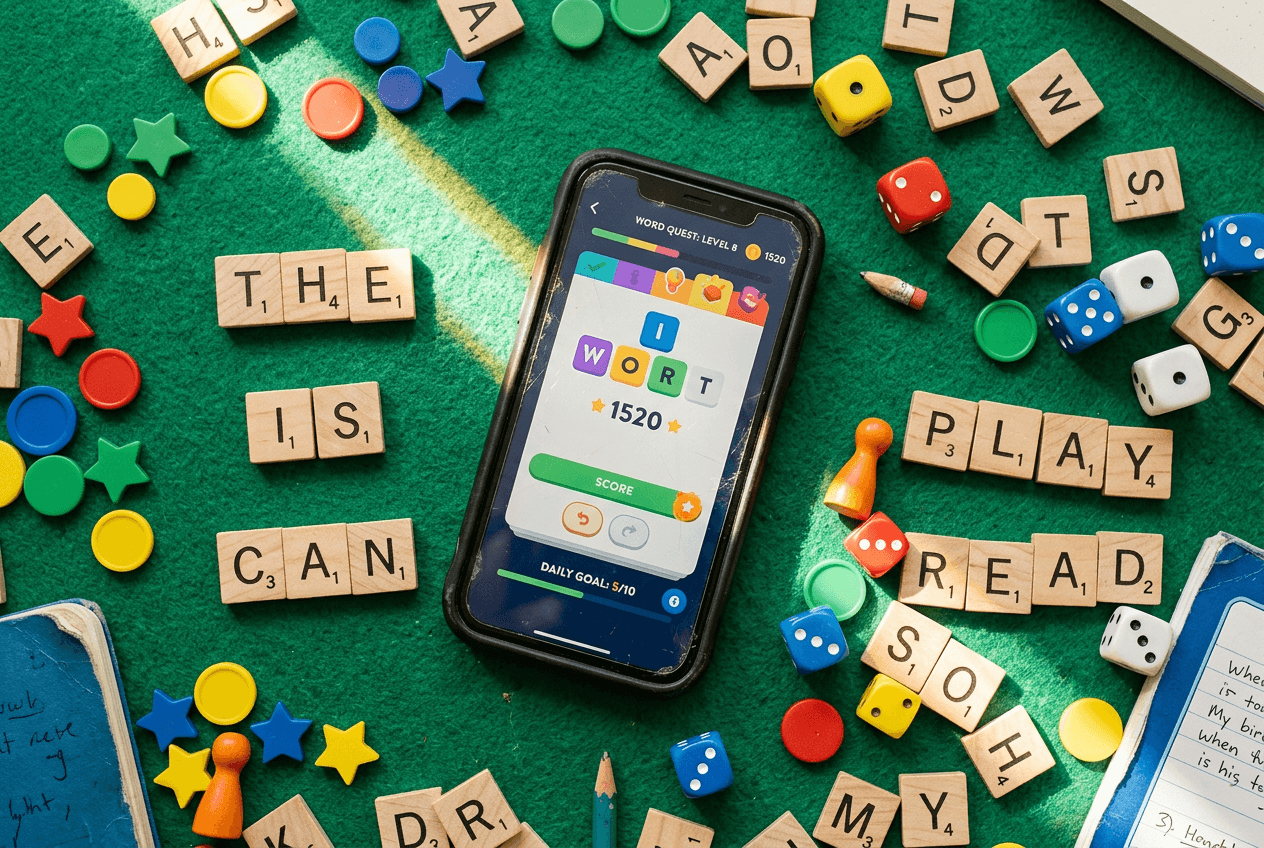
Duolingo is the world's most popular language learning app for a reason — 50 million people use it every day, and the gamification genuinely keeps you coming back for more practice. The streaks, XP points, and leaderboards make learning English vocabulary feel like a game.
Here's the problem for speaking fluency: Duolingo's free speaking exercises are mostly sentence repetition. You listen to a phrase and repeat it back. That's basic pronunciation drilling, not real conversation practice. You're not forming your own sentences, responding to unexpected questions, or thinking on your feet — which is exactly what building English speaking fluency requires.
The features that do simulate real conversation — Roleplay with AI characters and Video Call with Lily — require Duolingo Max, its priciest tier. That's a significant paywall for the speaking features that matter most.
Duolingo's own research shows that learners typically reach A2 speaking proficiency (basic conversational level) after completing beginner courses. For fluency beyond that, you need to supplement with actual speaking conversation practice. For more options, check our guides on Duolingo alternatives for speaking and free Duolingo alternatives that focus on speaking.
Best for: Absolute beginners building English vocabulary, grammar basics, and sentence structure. Pair it with a dedicated speaking practice app for real fluency.
Duolingo taught you words. No one taught you to speak.
PracticeMe: real voice conversations with an AI tutor, 24/7.
6. Tandem — Best Free 1-on-1 Language Exchange for Speaking
What's free: Profile matching with native speakers, text/voice/video calls, correction tools, unlimited languages. Profile approval process required.

Tandem takes a curated approach to language exchange. Unlike HelloTalk's open social network, Tandem reviews every profile application to keep the community focused on genuine language learning. The matching algorithm pairs you based on shared interests — if you're into programming and economics, it'll find you a native English speaker with similar hobbies who wants to practice your language.
The free voice and video calls with real native speakers are as close to immersion as you can get without traveling to an English-speaking country. It's real conversation, real accents, real slang — exactly the kind of practice that builds natural speaking confidence and fluency.
The trade-off: You need to teach your language in return. If you speak Spanish, you'll spend half your time helping your partner and half practicing English. That's fair, but it cuts your English speaking practice time in half. Scheduling also depends on your partner's availability and motivation.
Best for: Learners with a valuable native language to exchange who want consistent 1-on-1 English conversation practice for free.
7. YouTube English Channels — Best 100% Free Passive Learning
What's free: Everything. No account or app download required to watch.
YouTube is the most underrated free English learning resource. Channels like BBC Learning English, Rachel's English, Speak English with Vanessa, and VOA Learning English offer thousands of hours of structured content — pronunciation guides, conversation examples, slow-speed news, grammar lessons, and cultural context.
Rachel's English has excellent "repeat after me" exercises for pronunciation practice. BBC Learning English publishes bite-sized daily lessons covering vocabulary, grammar, and listening skills. VOA Learning English speaks at reduced speed, perfect if native speakers feel too fast for your current level. For a deeper dive into pronunciation tools, see our review of the best English pronunciation apps.
The critical limitation: YouTube is entirely one-directional. You can hear how English should sound, but you can't practice speaking back and get feedback on your pronunciation or fluency. It's listening and vocabulary practice, not active speaking practice.
Use it as a complement, not a replacement. Watch a 10-minute YouTube lesson to learn a phrase, then immediately practice using it in conversation with an AI app or a language exchange partner.
If you want to improve English speaking by yourself, combining YouTube pronunciation modeling with active speaking practice is one of the most effective free approaches. We cover more solo techniques in our ESL speaking practice activities guide.
Best for: Self-motivated learners who want unlimited free content for listening comprehension, pronunciation modeling, and cultural context.

8. SmallTalk2Me — Best Free English Speaking Assessment
What's free: A 15-minute AI-powered speaking assessment that gives you your CEFR level (A1 to C2) with detailed feedback on fluency, pronunciation, grammar, and vocabulary usage.
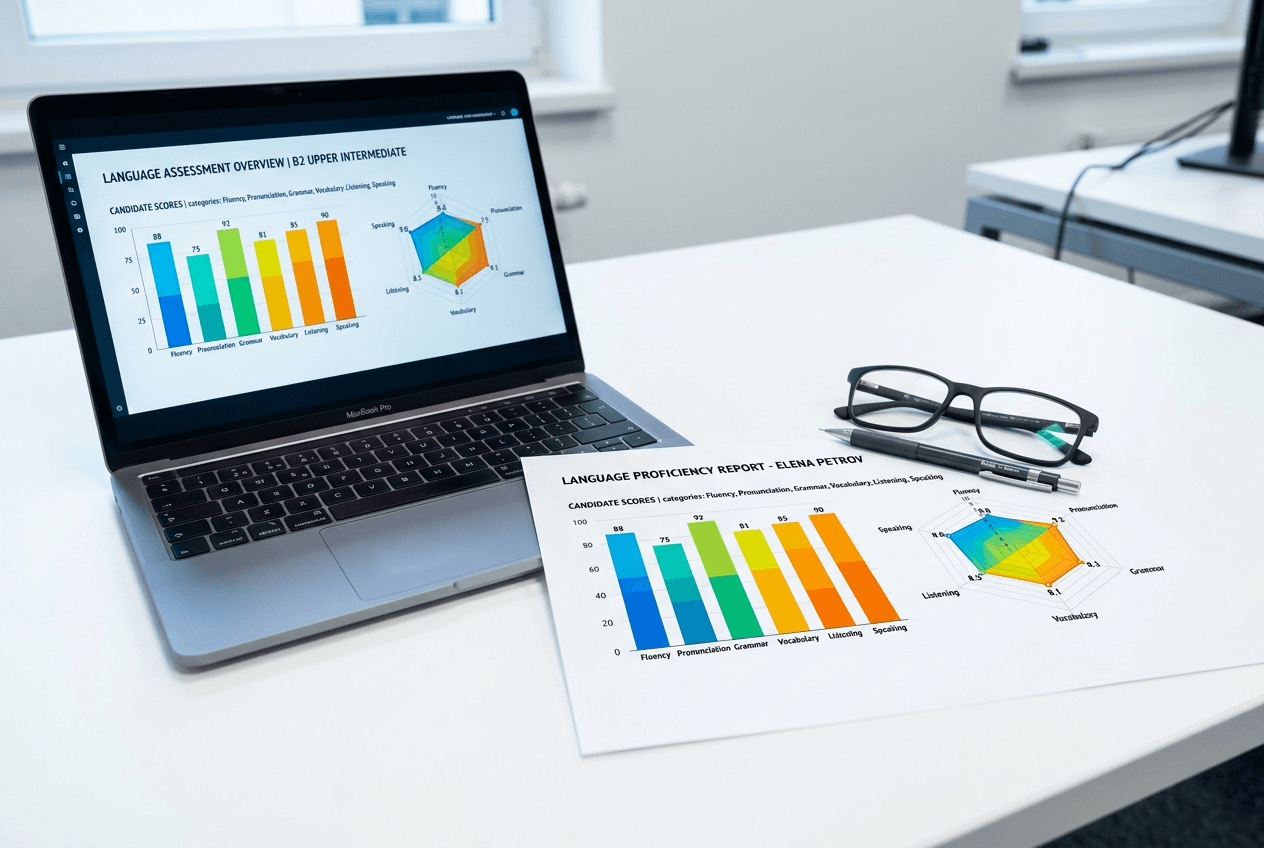
Before picking any practice app, it helps to know where your English speaking level actually stands. SmallTalk2Me's free CEFR assessment claims 95% accuracy — higher than the 80–85% typical of human language assessors. Over 2.5 million learners across 125 countries have used it.
You speak for 15 minutes, and the AI generates a detailed report breaking down 35+ speech metrics including fluency, pronunciation accuracy, grammar complexity, and vocabulary range. It's the most thorough free English speaking assessment available — like getting a diagnostic test before choosing your treatment plan.
The limitation: SmallTalk2Me is primarily an assessment tool, not a daily conversation practice app. The free tier gives you a clear picture of your speaking level, but building real fluency requires a different tool. Paid plans unlock IELTS speaking simulators, mock job interviews, and extended practice modes.
Best for: Anyone who wants to know their exact English speaking level before committing to a practice method. Take the free assessment first, then choose your app.

How to Choose the Right Free English Speaking App
There's no single best app to learn English speaking fluently free — the smartest approach combines different tools for different aspects of language learning:
If you're on a tight budget:
- Take SmallTalk2Me's free CEFR test to know your current speaking level
- Use Gliglish for 10 minutes of daily AI English speaking practice
- Join HelloTalk Voice Rooms for free group conversation exposure with native speakers
- Watch YouTube channels to model pronunciation and learn new vocabulary
If you're serious about fluency fast:
- Start with Practice Me's free trial to experience high-quality AI conversation practice
- Use ChatGPT Voice for flexible speaking scenario practice between sessions
- Read our guide on how to become fluent in English for a complete learning roadmap
If you're a complete beginner:
- Build English vocabulary basics with Duolingo for 2–4 weeks
- Transition to Gliglish or Practice Me for actual conversation practice that builds speaking confidence
- Check out our list of best AI English tutor apps for more options at every price point
The key insight from testing all 8 apps: active speaking practice beats passive learning every time. A 2025 classroom study found that students using AI speaking practice apps showed 75% improvement in overall speaking scores over just 8 weeks. Ten minutes of actual English conversation develops fluency faster than an hour of vocabulary flashcards. Whatever tools you pick, prioritize the ones that make you talk.

Frequently Asked Questions
Can I really learn English speaking fluency from free apps alone?
You can make significant progress, but reaching full fluency with only free apps is challenging. Free tools are excellent for building habits and getting daily speaking practice, but they come with trade-offs — usage limits, no progress tracking, or reliance on unreliable human partners. Free apps can absolutely get you started and steadily improve your English speaking skills, especially when you combine multiple tools. For a structured approach, see our guide on how to speak English fluently and confidently.
What is the best completely free English speaking app?
For AI speaking practice, Gliglish gives you 10 free minutes daily with no signup — the easiest way to start. For speaking with real humans, HelloTalk's Voice Rooms and language exchange features are the strongest free option. For the most flexible free AI conversation, ChatGPT Voice Mode works on any topic or scenario. The "best" depends on whether you want AI consistency or authentic human conversation.
How many minutes per day should I practice speaking English?
Research suggests 15–20 minutes of focused daily speaking practice is enough to see measurable improvement in pronunciation and fluency. Consistency matters more than duration — practicing English speaking 10 minutes every day beats a 2-hour session once a week. Build a daily speaking practice routine you can stick with and track your progress over weeks, not days.
Is AI speaking practice as good as talking to real people?
It's different, not better or worse. AI gives you 24/7 availability, zero judgment, and infinite patience — which is why learners who struggle with speaking anxiety often prefer AI apps for building confidence. Real humans give you authentic reactions, cultural nuance, natural slang, and the unpredictability of genuine conversation. The ideal approach for developing English fluency uses both: AI for daily speaking reps and confidence building, humans for real-world readiness. If anxiety is a barrier, learn how to overcome the fear of speaking English.
Can I use these apps if I'm a complete beginner?
Yes, but start strategically. Beginners should build basic English vocabulary and grammar first (Duolingo is excellent for this learning stage), then move to speaking practice apps once they know enough words to form simple sentences. Practice Me and Gliglish both adapt to your level, making them suitable for English speaking practice at any proficiency. HelloTalk's text-first approach lets you practice at your own pace before jumping into voice conversations. For a step-by-step approach, see our guide on practicing English speaking alone.