Duolingo taught you words. No one taught you to speak.
PracticeMe: real voice conversations with an AI tutor, 24/7.
50 British English Idioms Americans Don't Use
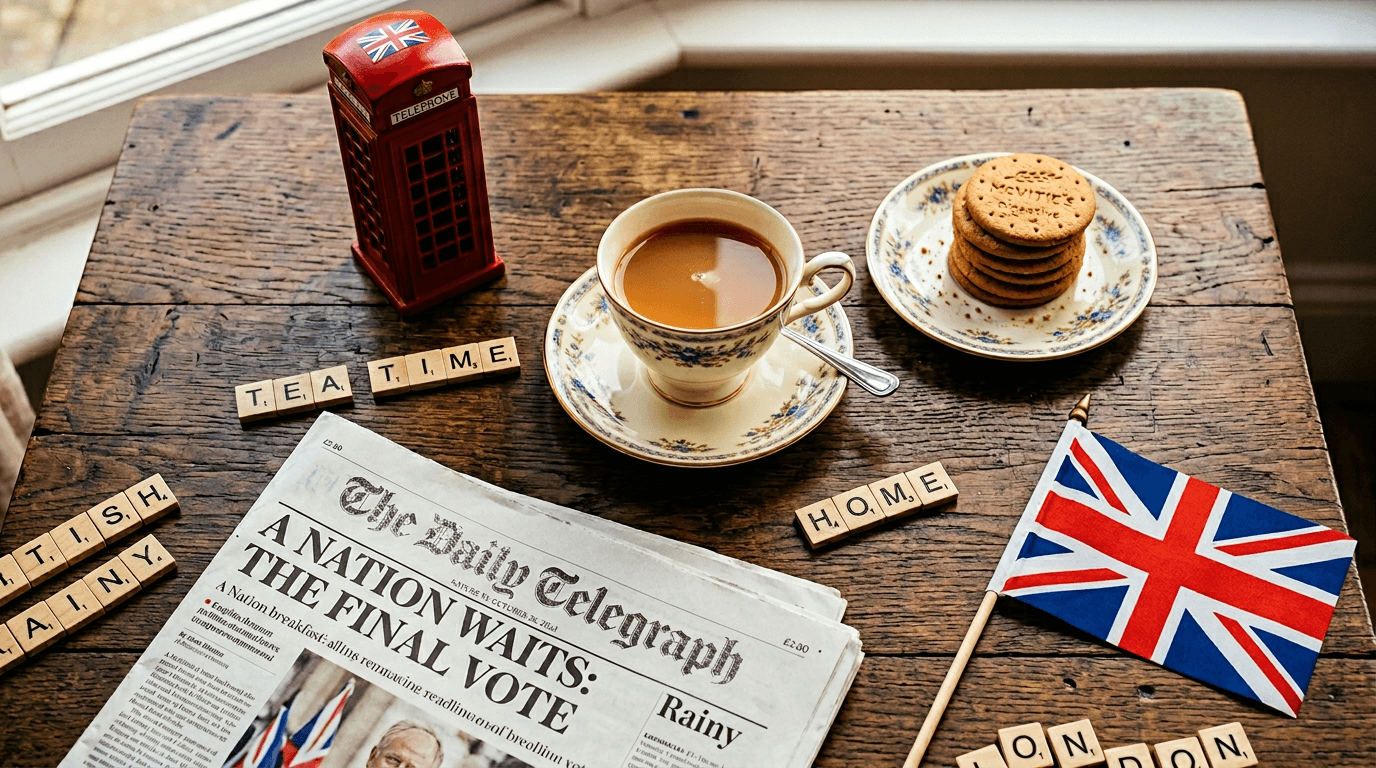
British and American English are technically the same language — until someone in London tells you they're "chuffed to bits" about a "bog standard" meal that "went down a treat," and you realize you don't understand a single word.
British English idioms are a world of their own. Shaped by centuries of tea culture, unpredictable weather, Cockney rhyming slang, and a national love of understatement, these expressions can leave American English speakers completely bewildered. Whether you're learning English or just fascinated by how British people speak, these idioms reveal something wonderful about British life and culture.
This guide breaks down 50 of the most distinctly British idioms and phrases — the ones Americans rarely (or never) use — organized into five everyday categories so you can actually remember them.
Quick Summary: This guide covers 50 British English idioms organized into 5 categories: everyday life, food & drink, weather & nature, workplace & money, and emotions. Each idiom includes its meaning, an example in context, the American English equivalent, and a Britishness Rating showing how exclusively British it is. Quiz sections throughout let you test yourself before reading the answers.
How to Use This Guide to British English Idioms
Every idiom below includes four things:
- Meaning — what it actually means in plain English
- In context — a natural example sentence showing how British people use it in daily life
- American equivalent — how an American would say the same thing
- Britishness Rating — how exclusively British the idiom is, on a scale of 🇬🇧 to 🇬🇧🇬🇧🇬🇧🇬🇧🇬🇧
Here's the rating scale:
| Rating | What It Means |
|---|---|
| 🇬🇧🇬🇧🇬🇧🇬🇧🇬🇧 | Pure British — Americans will be completely lost |
| 🇬🇧🇬🇧🇬🇧🇬🇧 | Very British — Americans might have heard something like it |
| 🇬🇧🇬🇧🇬🇧 | British-origin — Americans may recognize it but rarely use it |
If you're learning a British accent, pairing pronunciation work with these UK English idioms will make you sound genuinely British — not just someone doing an impression.
Everyday Life & Social Situations
These are the British slang idioms you'll hear in pubs, on the street, and in casual social life. Master these and you'll actually understand what people are saying in London.
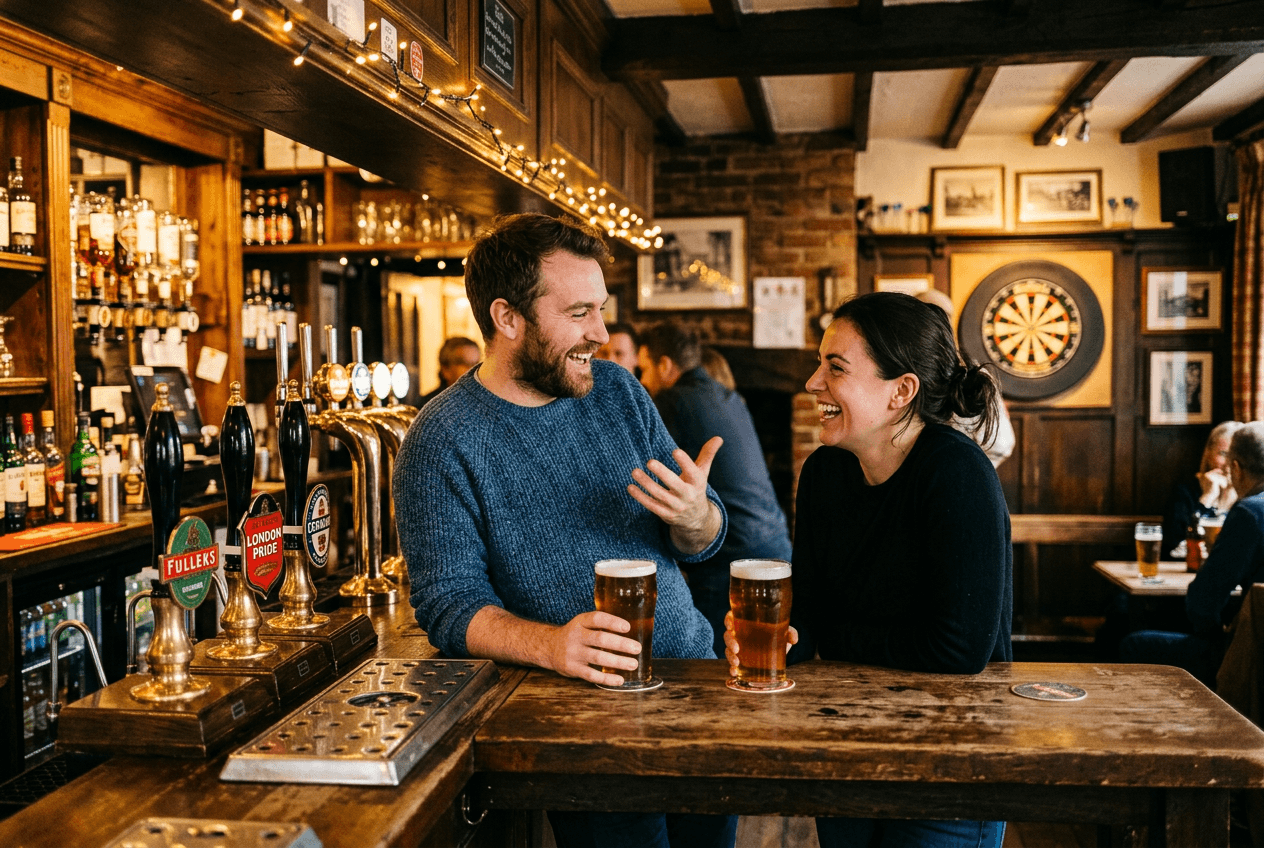
1. Bob's your uncle 🇬🇧🇬🇧🇬🇧🇬🇧🇬🇧
Meaning: "And there you have it!" — used after explaining something simple.
In context: "Just plug it in, press the button, and Bob's your uncle — it works."
American equivalent: "And there you go" or "Voilà"
2. Taking the mickey 🇬🇧🇬🇧🇬🇧🇬🇧🇬🇧
Meaning: Making fun of someone, teasing, or mocking them.
In context: "Are you taking the mickey? There's no way that actually happened."
American equivalent: "Messing with you" or "pulling your leg"
3. Have a chinwag 🇬🇧🇬🇧🇬🇧🇬🇧🇬🇧
Meaning: Have a long, gossipy chat with someone.
In context: "I bumped into Sarah at Tesco and we had a proper chinwag for twenty minutes."
American equivalent: "Shoot the breeze" or "have a gab"
4. You alright? 🇬🇧🇬🇧🇬🇧🇬🇧
Meaning: A casual greeting — not an actual inquiry about your wellbeing.
In context: Someone walks past you at work: "You alright?" You: "Yeah, you?"
American equivalent: "Hey, how's it going?"
⚠️ Cultural trap: If you respond with a genuine explanation of how you're actually feeling, you'll get very confused looks. This is just how British people say "hello" — something many English learners discover the hard way.
5. Spend a penny 🇬🇧🇬🇧🇬🇧🇬🇧
Meaning: Go to the bathroom. Comes from the old coin-operated public toilet locks in Britain that cost one penny.
In context: "Excuse me for a moment — I need to spend a penny."
American equivalent: "Use the restroom" or "hit the bathroom"
6. Have a butcher's 🇬🇧🇬🇧🇬🇧🇬🇧🇬🇧
Meaning: Have a look. From Cockney rhyming slang: "butcher's hook" = "look."
In context: "That's a lovely watch — give us a butcher's!"
American equivalent: "Let me take a look" or "Let me see"
7. Give me a bell 🇬🇧🇬🇧🇬🇧🇬🇧
Meaning: Call me on the phone.
In context: "Give me a bell when you get to the station and I'll come pick you up."
American equivalent: "Give me a call" or "Hit me up"
8. Pop round 🇬🇧🇬🇧🇬🇧🇬🇧
Meaning: Visit someone casually, usually at their home.
In context: "I'll pop round after work — want me to bring anything?"
American equivalent: "Swing by" or "stop by"
9. Bagsy 🇬🇧🇬🇧🇬🇧🇬🇧🇬🇧
Meaning: Claim something before anyone else does. The British "shotgun."
In context: "Bagsy the front seat!" (said while running toward the car)
American equivalent: "Dibs!" or "Shotgun!"
10. Bog standard 🇬🇧🇬🇧🇬🇧🇬🇧
Meaning: Completely ordinary, plain, nothing special.
In context: "It's just a bog standard laptop — nothing fancy."
American equivalent: "Run-of-the-mill" or "basic"
🧠 Quiz Yourself: Everyday British Idioms
Before reading the answers, can you guess what these mean?
Q1: Your British friend says "I'll pop round at six." What are they doing?
Reveal answer
They're coming to visit you at 6 o'clock.Q2: Someone says "Have a butcher's at this!" What do they want you to do?
Reveal answer
They want you to look at something. (Butcher's hook = look, in Cockney rhyming slang.)Q3: "That hotel was bog standard." Was it good or bad?
Reveal answer
Neither — it was perfectly ordinary. Nothing special, nothing terrible.Food & Drink British Idioms
British people love food metaphors. Tea, chips, pies, sandwiches, pears — if you can eat it, there's probably a British idiom built around it. These English idioms UK speakers use daily reflect the nation's deep relationship with comfort food and pub life.
11. Full of beans 🇬🇧🇬🇧🇬🇧🇬🇧
Meaning: Very lively, energetic, and enthusiastic.
In context: "The kids were full of beans this morning — couldn't get them to sit still."
American equivalent: "Full of energy" or "bouncing off the walls"
12. Not my cup of tea 🇬🇧🇬🇧🇬🇧
Meaning: Not to my taste or liking. A classic British understatement for disliking something.
In context: "Horror films? Not my cup of tea, really."
American equivalent: "Not my thing" or "not for me"
13. Cheap as chips 🇬🇧🇬🇧🇬🇧🇬🇧🇬🇧
Meaning: Very inexpensive. "Chips" here means British fries — a traditionally affordable food.
In context: "Five quid for a haircut? Cheap as chips, that."
American equivalent: "Dirt cheap" or "a steal"
14. Gone pear-shaped 🇬🇧🇬🇧🇬🇧🇬🇧🇬🇧
Meaning: Gone completely wrong. Reportedly originated in RAF slang when pilots failed to make circular loops — the shapes went pear-shaped instead.
In context: "The project was going fine until Friday, then it all went pear-shaped."
American equivalent: "Gone sideways" or "gone south"
15. Telling porkies 🇬🇧🇬🇧🇬🇧🇬🇧🇬🇧
Meaning: Telling lies. Another Cockney rhyming slang gem: "pork pies" = "lies."
In context: "He said he was at the gym? He's telling porkies — I saw him at the pub."
American equivalent: "Lying" or "fibbing"
16. Easy peasy lemon squeezy 🇬🇧🇬🇧🇬🇧🇬🇧
Meaning: Very, very easy. Often used by children, but adults say it too (usually with a grin).
In context: "How was the exam?" "Easy peasy lemon squeezy."
American equivalent: "Piece of cake" or "No sweat"
17. Cream crackered 🇬🇧🇬🇧🇬🇧🇬🇧🇬🇧
Meaning: Completely exhausted. Cockney rhyming slang: "cream crackered" = "knackered" (tired).
In context: "I've been on my feet all day. I'm absolutely cream crackered."
American equivalent: "Beat" or "wiped out"
18. Storm in a teacup 🇬🇧🇬🇧🇬🇧🇬🇧
Meaning: A big fuss over something trivial.
In context: "They're arguing about whose turn it is to buy biscuits. It's a storm in a teacup."
American equivalent: "Making a mountain out of a molehill" or "tempest in a teapot"
19. Went down a treat 🇬🇧🇬🇧🇬🇧🇬🇧🇬🇧
Meaning: Was very well received; everyone enjoyed it.
In context: "I made lasagne for dinner and it went down a treat."
American equivalent: "Was a big hit" or "went over really well"
20. A few sandwiches short of a picnic 🇬🇧🇬🇧🇬🇧🇬🇧
Meaning: Not very bright, or lacking common sense.
In context: "Bless him, he's a few sandwiches short of a picnic."
American equivalent: "Not the sharpest tool in the shed" or "a few fries short of a Happy Meal"
🧠 Quiz Yourself: Food & Drink Idioms
Q4: Your colleague says the presentation "went down a treat." Should you be happy?
Reveal answer
Yes! It means the presentation was well-received and everyone enjoyed it.Q5: Someone describes a restaurant as "cheap as chips." Is that a compliment?
Reveal answer
Usually yes — it means it's very affordable. British people love a bargain.Q6: "Don't listen to Dave — he's telling porkies." What's Dave doing?
Reveal answer
Dave is lying. Pork pies = lies in Cockney rhyming slang.Weather & Nature British English Idioms
Britain's obsession with weather isn't just something people say — it's woven deep into the English language. Animals, plants, and meteorological misery all show up in these distinctly British idioms and phrases.

21. Brass monkeys 🇬🇧🇬🇧🇬🇧🇬🇧🇬🇧
Meaning: Extremely cold. Short for a longer, more colorful expression not suitable for print.
In context: "Don't forget your coat — it's brass monkeys out there."
American equivalent: "Freezing" or "cold as heck"
22. Right as rain 🇬🇧🇬🇧🇬🇧
Meaning: Perfectly fine, in good health or good order.
In context: "Don't worry about me. I'll be right as rain by tomorrow."
American equivalent: "Good as new" or "perfectly fine"
23. Chucking it down 🇬🇧🇬🇧🇬🇧🇬🇧🇬🇧
Meaning: Raining very heavily.
In context: "We were going to walk, but it's absolutely chucking it down."
American equivalent: "Pouring" or "coming down in buckets"
24. Donkey's years 🇬🇧🇬🇧🇬🇧🇬🇧🇬🇧
Meaning: A very long time. Likely a play on "donkey's ears" — which are, well, long.
In context: "I haven't seen her in donkey's years."
American equivalent: "Ages" or "forever"
25. Parky 🇬🇧🇬🇧🇬🇧🇬🇧🇬🇧
Meaning: Chilly or cold outside. Used specifically about outdoor temperatures.
In context: "It's a bit parky this morning — grab a jacket."
American equivalent: "Nippy" or "chilly"
26. The bee's knees 🇬🇧🇬🇧🇬🇧🇬🇧
Meaning: Something excellent, the best of its kind.
In context: "This new café is the bee's knees."
American equivalent: "The best thing ever" or "top-notch"
27. Happy as Larry 🇬🇧🇬🇧🇬🇧🇬🇧🇬🇧
Meaning: Extremely happy. Nobody knows who Larry is, but he's apparently always content.
In context: "Give him a cup of tea and a biscuit and he's happy as Larry."
American equivalent: "Happy as a clam"
28. A damp squib 🇬🇧🇬🇧🇬🇧🇬🇧🇬🇧
Meaning: Something expected to be exciting that turns out disappointing. A "squib" is a small firework — a damp one won't go off.
In context: "The New Year's Eve party was a bit of a damp squib, to be honest."
American equivalent: "A letdown" or "a bust"
29. A dog's dinner 🇬🇧🇬🇧🇬🇧🇬🇧🇬🇧
Meaning: A complete mess or something done very badly.
In context: "He tried to fix the shelf and made an absolute dog's dinner of it."
American equivalent: "A total mess" or "a disaster"
30. Keen as mustard 🇬🇧🇬🇧🇬🇧🇬🇧
Meaning: Extremely enthusiastic and eager.
In context: "The new intern is keen as mustard — first one in every morning."
American equivalent: "Eager beaver" or "super enthusiastic"
Duolingo taught you words. No one taught you to speak.
PracticeMe: real voice conversations with an AI tutor, 24/7.
🧠 Quiz Yourself: Weather & Nature Idioms
Q7: "It's brass monkeys today." What's the weather like?
Reveal answer
It's bitterly cold outside.Q8: Someone says an event was "a damp squib." Was it good?
Reveal answer
No — it was disappointing, like a firework that fizzled out.Q9: "I haven't been there in donkey's years." How long has it been?
Reveal answer
A very long time — possibly years or even decades.Workplace & Money
British work life has its own vocabulary. From dodgy repairs to strategic laziness, these British idioms capture how people in the UK talk about the daily grind and the money that comes with it.

31. Bodge job 🇬🇧🇬🇧🇬🇧🇬🇧🇬🇧
Meaning: A repair or task done hastily and poorly, likely to fall apart soon.
In context: "The plumber did a right bodge job — the tap's still leaking."
American equivalent: "A hack job" or "a shoddy fix"
32. Skive off 🇬🇧🇬🇧🇬🇧🇬🇧🇬🇧
Meaning: Avoid work or responsibilities by sneaking away. Derived from the French word esquiver, meaning "to slink away."
In context: "Tom skived off work to watch the football."
American equivalent: "Play hooky" or "ditch"
33. Cost a bomb 🇬🇧🇬🇧🇬🇧🇬🇧
Meaning: Very expensive.
In context: "Those concert tickets cost a bomb."
American equivalent: "Cost a fortune" or "cost an arm and a leg"
34. Quids in 🇬🇧🇬🇧🇬🇧🇬🇧🇬🇧
Meaning: In a position to profit or benefit greatly. "Quid" is British slang for pound (£).
In context: "If the deal goes through, we'll be quids in."
American equivalent: "Sitting pretty" or "making bank"
35. On the dole 🇬🇧🇬🇧🇬🇧🇬🇧🇬🇧
Meaning: Receiving unemployment benefits from the government.
In context: "He's been on the dole since the factory closed."
American equivalent: "On unemployment" or "collecting benefits"
36. Pull a blinder 🇬🇧🇬🇧🇬🇧🇬🇧🇬🇧
Meaning: Achieve something impressive, often unexpectedly.
In context: "Did you see that goal? He pulled an absolute blinder!"
American equivalent: "Knocked it out of the park" or "nailed it"
37. Throw a spanner in the works 🇬🇧🇬🇧🇬🇧🇬🇧
Meaning: Disrupt a plan or cause problems. British people say "spanner" where Americans say "wrench."
In context: "Everything was going smoothly until the rain threw a spanner in the works."
American equivalent: "Throw a wrench in the works"
38. Swings and roundabouts 🇬🇧🇬🇧🇬🇧🇬🇧🇬🇧
Meaning: The advantages and disadvantages balance each other out — what you gain in one area, you lose in another.
In context: "The new job pays more but the commute is longer. Swings and roundabouts, really."
American equivalent: "Give and take" or "six of one, half a dozen of the other"
39. Jobsworth 🇬🇧🇬🇧🇬🇧🇬🇧🇬🇧
Meaning: A person who rigidly follows rules and refuses to bend them, even when common sense says otherwise. From the phrase "it's more than my job's worth" to make an exception.
In context: "The security guard wouldn't let me in two minutes early. What a jobsworth."
American equivalent: "Stickler" or "bureaucrat" (but neither captures it perfectly)
40. Get the sack 🇬🇧🇬🇧🇬🇧🇬🇧
Meaning: Get fired from your job. Possibly from when tradesmen carried their tools in a sack — being given your sack back meant your services were no longer needed.
In context: "He was always late and eventually got the sack."
American equivalent: "Got fired" or "got canned"
Emotions & Reactions
This is where British English idioms really shine. British people have a gift for expressing emotions with maximum color and minimum fuss — or maximum drama, depending on which word they reach for.

41. Chuffed to bits 🇬🇧🇬🇧🇬🇧🇬🇧🇬🇧
Meaning: Extremely pleased and proud.
In context: "She passed her driving test first time — chuffed to bits!"
American equivalent: "Thrilled" or "stoked"
42. Gutted 🇬🇧🇬🇧🇬🇧🇬🇧🇬🇧
Meaning: Devastated, deeply disappointed.
In context: "I was gutted when they cancelled the concert."
American equivalent: "Devastated" or "crushed"
43. Gobsmacked 🇬🇧🇬🇧🇬🇧🇬🇧🇬🇧
Meaning: Utterly astonished, speechless with shock. "Gob" is British slang for mouth — your mouth has been "smacked" open in disbelief.
In context: "I was absolutely gobsmacked when they announced the winner."
American equivalent: "Flabbergasted" or "jaw-on-the-floor shocked"
44. Knackered 🇬🇧🇬🇧🇬🇧🇬🇧🇬🇧
Meaning: Completely exhausted, totally worn out.
In context: "I just ran ten kilometres. I'm absolutely knackered."
American equivalent: "Beat" or "wiped out"
45. Miffed 🇬🇧🇬🇧🇬🇧🇬🇧
Meaning: Slightly annoyed or irritated — classic British understatement for being genuinely bothered about something.
In context: "She was a bit miffed that nobody told her about the meeting."
American equivalent: "Ticked off" or "annoyed"
46. Lost the plot 🇬🇧🇬🇧🇬🇧🇬🇧
Meaning: Gone crazy, become irrational, or lost composure entirely.
In context: "He started yelling at the self-checkout machine. He's completely lost the plot."
American equivalent: "Lost it" or "gone off the deep end"
47. Throw a wobbly 🇬🇧🇬🇧🇬🇧🇬🇧🇬🇧
Meaning: Have a tantrum or emotional outburst.
In context: "The toddler threw a wobbly when we left the playground."
American equivalent: "Throw a fit" or "have a meltdown"
48. Codswallop 🇬🇧🇬🇧🇬🇧🇬🇧🇬🇧
Meaning: Complete nonsense or rubbish. The word's origin is debated — it may derive from "cod" (imitation) and "wallop" (beer), suggesting the kind of rubbish people talk when they're drunk.
In context: "He said he could run a four-minute mile? What a load of codswallop."
American equivalent: "Baloney" or "total BS"
49. Naff 🇬🇧🇬🇧🇬🇧🇬🇧🇬🇧
Meaning: Unfashionable, tacky, or lacking style.
In context: "Those shoes are a bit naff, don't you think?"
American equivalent: "Lame" or "cheesy"
50. Bits and bobs 🇬🇧🇬🇧🇬🇧🇬🇧
Meaning: Various small things, miscellaneous items.
In context: "I need to pick up a few bits and bobs from the shops."
American equivalent: "Odds and ends" or "this and that"
🧠 Quiz Yourself: The Final Round
Q10: Your British friend says they're "chuffed to bits." Should you be worried?
Reveal answer
Not at all — they're extremely happy and proud!Q11: Someone calls your idea "codswallop." How should you feel?
Reveal answer
Insulted — they just said it's complete nonsense.Q12: "She threw a wobbly at the airport." What happened?
Reveal answer
She had an emotional outburst or tantrum at the airport.British vs. American: Same Meaning, Different English Idioms
Some ideas get expressed on both sides of the Atlantic — just with completely different words. Here are the most interesting pairs that show how British and American English diverge in everyday life:
| British English 🇬🇧 | American English 🇺🇸 | Meaning |
|---|---|---|
| Touch wood | Knock on wood | Ward off bad luck |
| Blow your own trumpet | Toot your own horn | Brag about yourself |
| Throw a spanner in the works | Throw a wrench in the works | Disrupt plans |
| Put in your tuppence | Put in your two cents | Offer your opinion |
| Couldn't be arsed | Can't be bothered | Too lazy to do something |
| Nil | Zero/Zilch | Nothing (especially in sports scores) |
| Straight away | Right away | Immediately |
| Chat up | Hit on | Flirt with someone |
And here's one that causes genuine confusion: "To table something" means to bring it up for discussion in British English, but to postpone or set it aside in American English. Literally opposite meanings. If your British boss says "Let's table that idea," they want to talk about it right now — not shelve it.
Understanding these differences is exactly why building vocabulary through conversation matters so much for English learners. Reading British idioms in a list is useful. Hearing them spoken naturally — and practicing using them yourself in real life — is how they actually stick.
How to Actually Learn These British Idioms and Phrases
Reading a list of 50 British English idioms is a solid start. Actually being able to use them in conversation? That takes practice. Here's how to make these idioms part of your active vocabulary:

Pick 3 idioms per week. Don't try to memorize all 50 at once. Choose three each week and focus on using them in real conversations or writing. By the end of four months, you'll have mastered them all.
Practice them out loud. British idioms sound different when you say them versus when you read them. With Practice Me, you can practice using these idioms in real-time voice conversations with Oliver, the AI tutor who speaks with a British accent. Try dropping a new idiom into your session — Oliver will understand it and respond naturally, giving you authentic speaking practice.
Watch British TV. Shows like Taskmaster, The Great British Bake Off, Peep Show, and Friday Night Dinner are packed with these expressions. Listen for them — you'll be amazed how many you spot once you know what to look for.
Read British news. BBC News, The Guardian, and The Times all use British idioms in their reporting. Seeing idioms used in real contexts builds the kind of recognition that helps you use them naturally.
Make idioms part of your daily English speaking practice. Set a mini-goal: use one new British idiom in every practice session. Even if it feels awkward at first, this is exactly how fluency develops. As you explore more English conversation practice topics, British idioms will start coming naturally.
The key difference between knowing an idiom and owning it is using it in real-time speech. If you're improving your English speaking by yourself, idioms are one of the fastest ways to sound natural rather than textbook-perfect. Pair this with work on complex English words and you'll notice a real difference in how fluent you sound to native British English speakers.
Frequently Asked Questions
What is the most common British English idiom?
"Not my cup of tea" is probably the most widely recognized British idiom globally. In everyday British conversation, though, expressions like "taking the mickey," "chuffed," and "knackered" come up constantly. The most commonly used British English idioms tend to be emotion-based — British people express feelings through idiom more than almost any other way.
Why are British and American idioms so different?
British and American English diverged over 400 years of separate development. British idioms tend to draw from maritime history, weather, tea culture, and Cockney rhyming slang. American idioms lean more on baseball, frontier life, and business culture. The result: two versions of English that share grammar but express the same ideas with completely different imagery and word choices.
Can using British idioms help me sound more fluent?
Absolutely. Idioms are one of the biggest markers of natural, fluent speech. When a non-native speaker uses idioms correctly and in the right context, native speakers notice immediately. It signals that you understand the culture, not just the vocabulary. Pair idiom learning with regular voice practice — something you can do with Practice Me's AI tutors — and you'll see a significant improvement in how natural your English sounds.
How many idioms does a typical British person use daily?
Research from Lancaster University's corpus linguistics department suggests native English speakers use roughly 4–6 idioms per 1,000 words in casual speech. In a typical day of conversation, that could mean 20–40 idiomatic expressions used without even thinking about it. Most British people don't realize how idiom-heavy their everyday life speech actually is.
Should I learn British or American English idioms?
It depends on your goals. If you're planning to live, work, or study in the UK, British idioms are essential to understanding everyday life. If your focus is the US, American ones make more sense. Honestly, learning both makes you a more versatile English speaker. Start with whichever dialect you'll use most, then expand from there. Our guide on how to speak English fluently and confidently can help you set your focus. You might also want to compare the difference between learning a British accent and learning an American accent.