Duolingo taught you words. No one taught you to speak.
PracticeMe: real voice conversations with an AI tutor, 24/7.
English for Healthcare Workers: Phrases & Practice

English for healthcare workers isn't a nice-to-have — it's the difference between a patient who recovers and one who doesn't. You already know the medicine. You can read a chart, calculate a dosage, and recognize the signs of sepsis before most people finish Googling their symptoms.
But when you need to explain a medical procedure to a nervous patient, give a rapid handoff report, or call a code — in English — that's where things get stressful for many healthcare professionals. If you're looking for help to learn and practice medical English, you're in the right place.
Quick Summary: English for healthcare workers goes beyond basic vocabulary. This guide covers the exact English phrases, essential medical vocabulary, and communication frameworks healthcare professionals need to find confidence in five critical scenarios — plus a 14-day practice plan to help students and working professionals build their English speaking skills fast.

If you're a nurse from the Philippines, a doctor from India, a caregiver from Nigeria, or a medical professional from anywhere working in an English-speaking hospital — this page will help you find the language skills you need. Nearly 19% of all U.S. healthcare workers are foreign-born, and that number keeps climbing. Your clinical skills brought you here. Clear English will help you thrive in your medical career.
Why English for Healthcare Workers Is a Patient Safety Issue
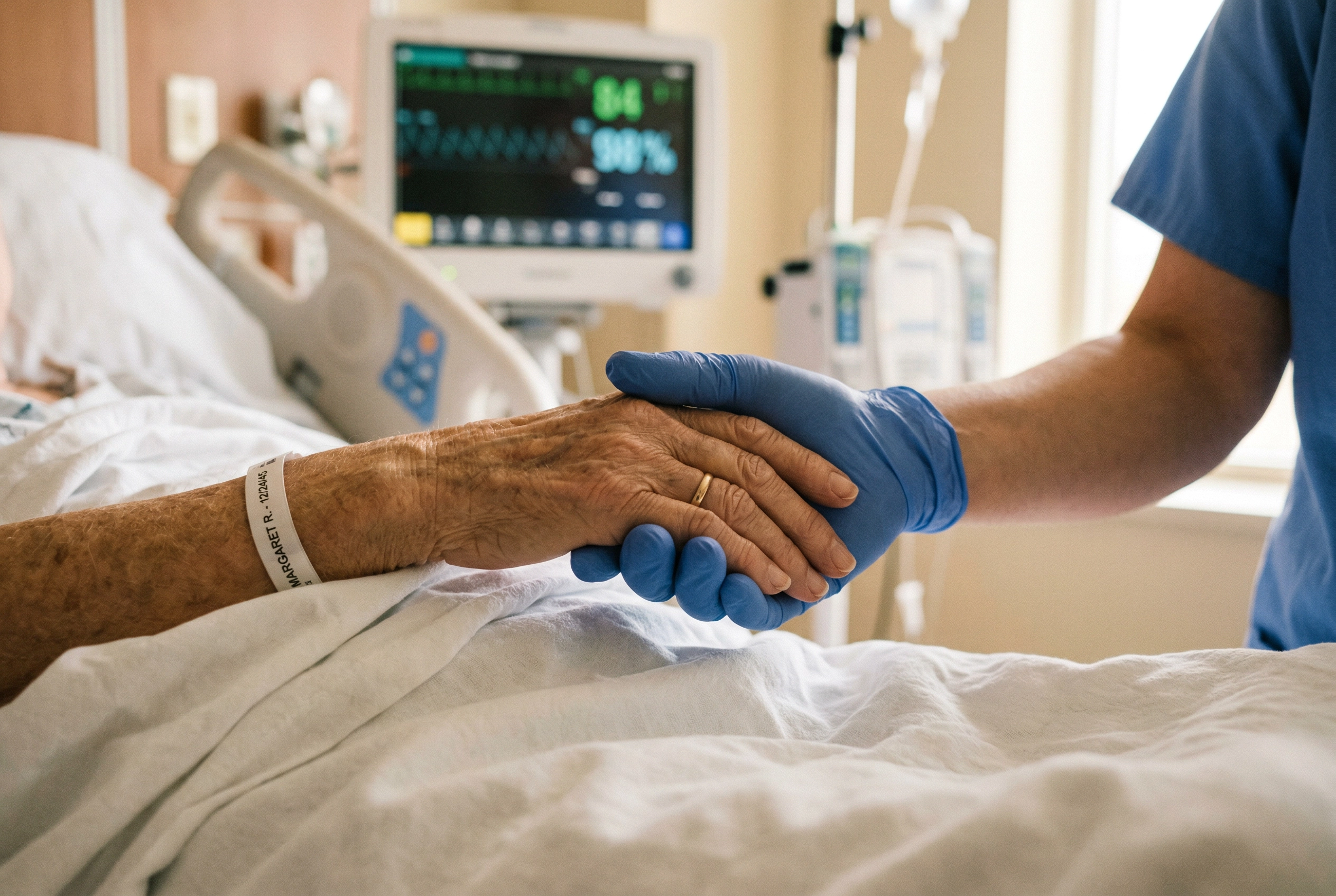
Healthcare isn't a field where "close enough" works. A misheard dosage, unclear medical information, or a fumbled handoff report can mean the difference between recovery and harm. English for healthcare professionals is ultimately about patient safety.
The numbers paint a stark picture:
- 59% of serious adverse events reported to the Joint Commission trace back to communication errors
- Patients with limited English proficiency suffer physical harm in 49.1% of adverse events, compared to 29.5% for English-speaking patients
- A 2024 meta-analysis of 46 studies found that 1 in 10 patient safety incidents in hospitals stems from poor communication
This isn't about speaking perfect, accent-free English. No one expects that. It's about being understood clearly in high-pressure moments — and understanding the medical information patients and colleagues share with you.
The good news? Healthcare English vocabulary and skills are learnable. The phrases are specific, the scenarios are predictable, and with the right practice, students of medical English can find their footing fast. Whether you're looking for help with emergency vocabulary or learning handoff skills, this guide covers what you need to know.
5 High-Stakes Scenarios for English for Healthcare Workers
These are the moments that matter most. Each scenario includes the exact English phrases healthcare professionals can learn, rehearse, and use on the job — the kind of language skills that help nurses, doctors, and medical students communicate with confidence in any healthcare setting.
1. Patient Intake and History-Taking
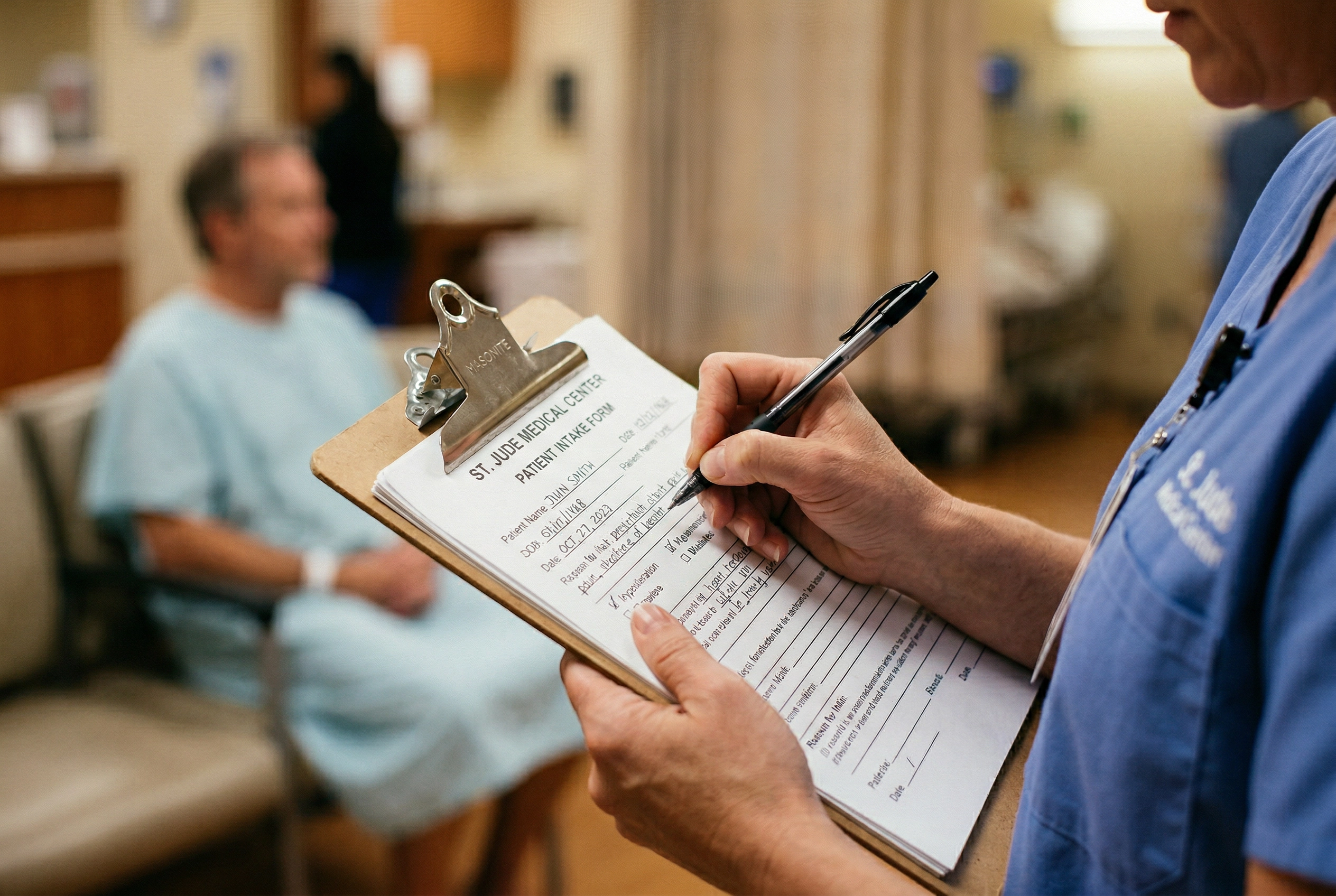
This is often your first interaction with a patient. You're gathering critical medical information while also building trust. Getting it right sets the tone for all the care and communication that follows.
Essential English phrases for patient intake:
- "Hi, I'm [name], and I'll be your nurse today. Can you tell me what brought you in?"
- "Can you describe your symptoms? When did they start?"
- "On a scale of 1 to 10, with 10 being the worst pain you've ever felt, how would you rate your pain right now?"
- "Are you currently taking any medications? Including anything over-the-counter?"
- "Do you have any allergies — to medications, food, or latex?"
- "Has anyone in your family had heart disease, diabetes, or cancer?"
Pro tip: If a patient uses a word you don't recognize, don't guess. Say: "I want to make sure I understand correctly. Can you tell me more about what you mean by [word]?" That's not weakness — it's good clinical practice. You'll find that patients appreciate when healthcare workers take extra care to understand their information accurately.
If you need help with the basics of patient-facing introductions, our guide on how to introduce yourself in English covers the fundamentals that every healthcare professional and nursing student should learn.
2. Explaining Medical Procedures and Getting Consent
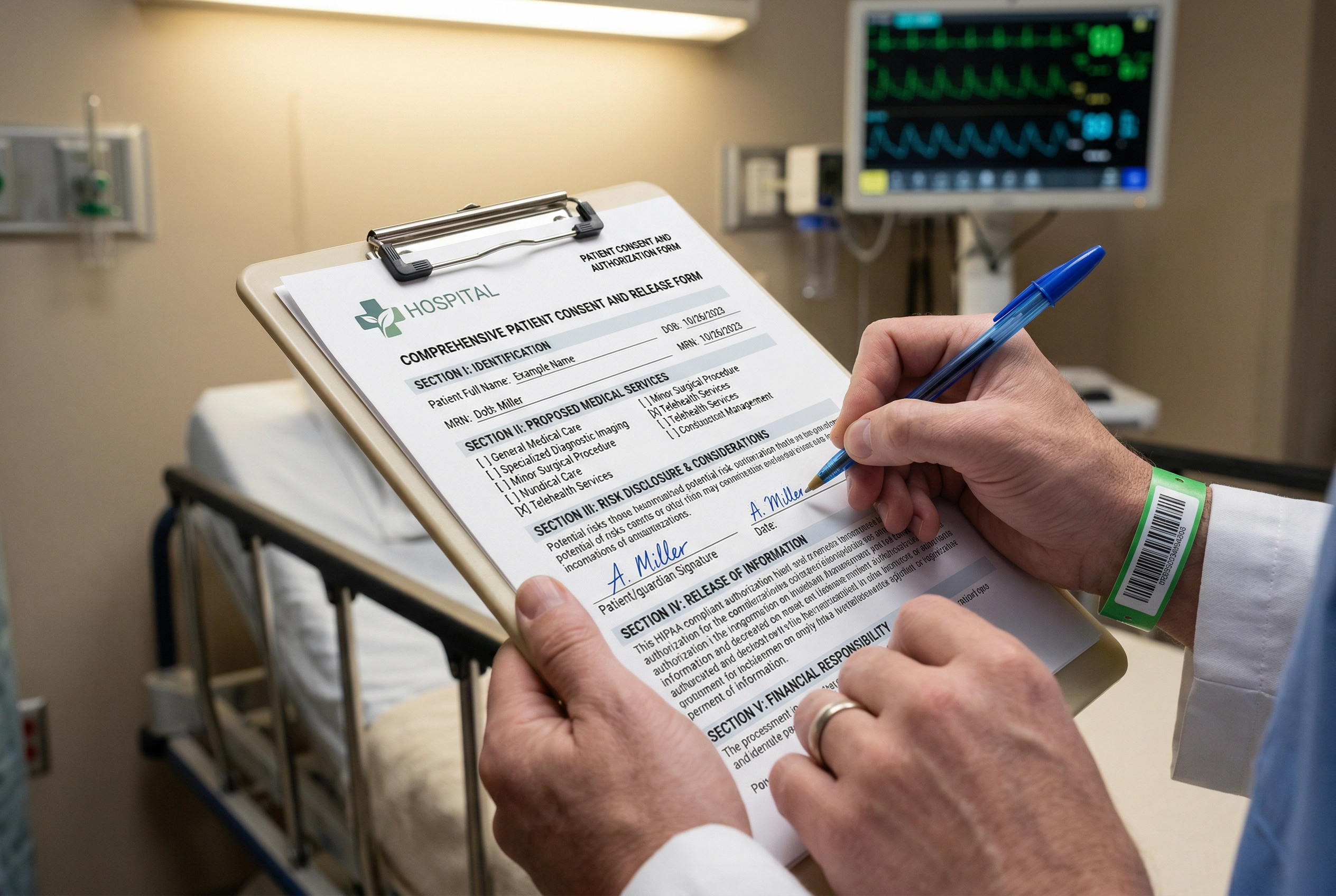
Patients need to understand what's about to happen to their body. If they don't have clear information, you haven't truly gotten informed consent — and you risk both legal issues and patient anxiety. This is where strong English language skills make a real difference in healthcare work.
Essential English phrases for medical procedures:
- "I'm going to draw some blood from your arm. You'll feel a small pinch."
- "We need to run a CT scan. You'll lie on a table that moves through a large machine. It's painless, but the machine is noisy."
- "This medication may cause drowsiness and nausea. These side effects usually pass within a few hours."
- "Do you have any questions before we begin?"
- "I need your verbal consent to proceed. Do you understand what we've discussed and agree to the procedure?"
Key language skill for healthcare professionals: Replace medical jargon with plain English when speaking with patients. Say "blood thinner" instead of "anticoagulant." Say "swelling" instead of "edema." Save the technical medical terms for your colleagues and clinical documentation. Many students in medical English training find this "translation" skill is the most valuable thing they learn.
3. Emergency Communication

In emergencies, you have seconds — not minutes. Your English needs to be short, loud, and crystal clear. There's no time to find the right words or search your memory for medical terms.
Essential English phrases for emergencies:
- "I need a crash cart in Room 302 — now."
- "The patient is unresponsive. No pulse. Starting CPR."
- "We need to intubate. Set up for a size 7.5 ET tube."
- "Blood pressure is dropping — 80 over 50 and falling."
- "Suspected anaphylaxis. Administer 0.3 mg epinephrine IM, stat."
Practice tip: Emergency phrases need to be automatic. You shouldn't be translating in your head during a code. Students and healthcare professionals should rehearse these English phrases out loud until they feel as natural as breathing — because that's exactly the kind of situation where clear language skills save lives. This is where English speaking for nurses becomes truly critical.
4. Handoff Reports Using SBAR
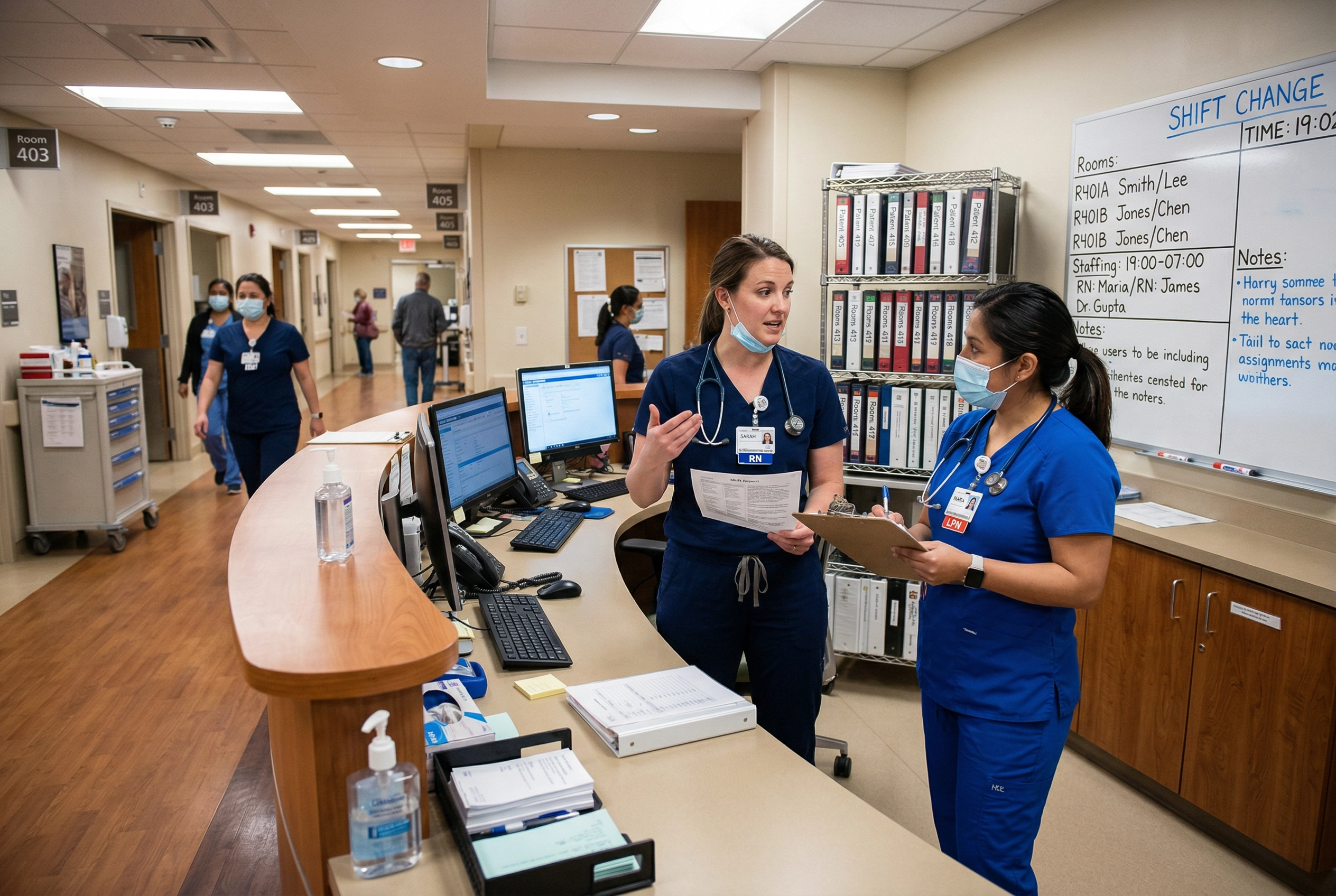
The SBAR framework is the gold standard for healthcare communication in English-speaking hospitals. If you learn this one structure, you'll find yourself sounding organized and competent in every handoff — a critical English language skill for any healthcare professional, especially in nursing.
SBAR stands for:
| Letter | Meaning | What to say |
|---|---|---|
| S | Situation | State the patient's name and the current issue |
| B | Background | Relevant medical history and context |
| A | Assessment | Your clinical judgment of what's happening |
| R | Recommendation | What you think should happen next |
Example SBAR handoff in English:
"This is Maria, the night nurse on 4 West. I'm calling about Mr. Johnson in Room 412.
Situation: His blood pressure has dropped to 85 over 55 in the last hour, and he's reporting dizziness.
Background: He's a 68-year-old admitted for pneumonia. He's on IV antibiotics and was stable on my last check at midnight.
Assessment: I believe he may be developing sepsis. His temperature is 38.9, heart rate is 112.
Recommendation: I think we should order stat labs — CBC, lactate, blood cultures — and consider a fluid bolus. Would you like to come assess him?"
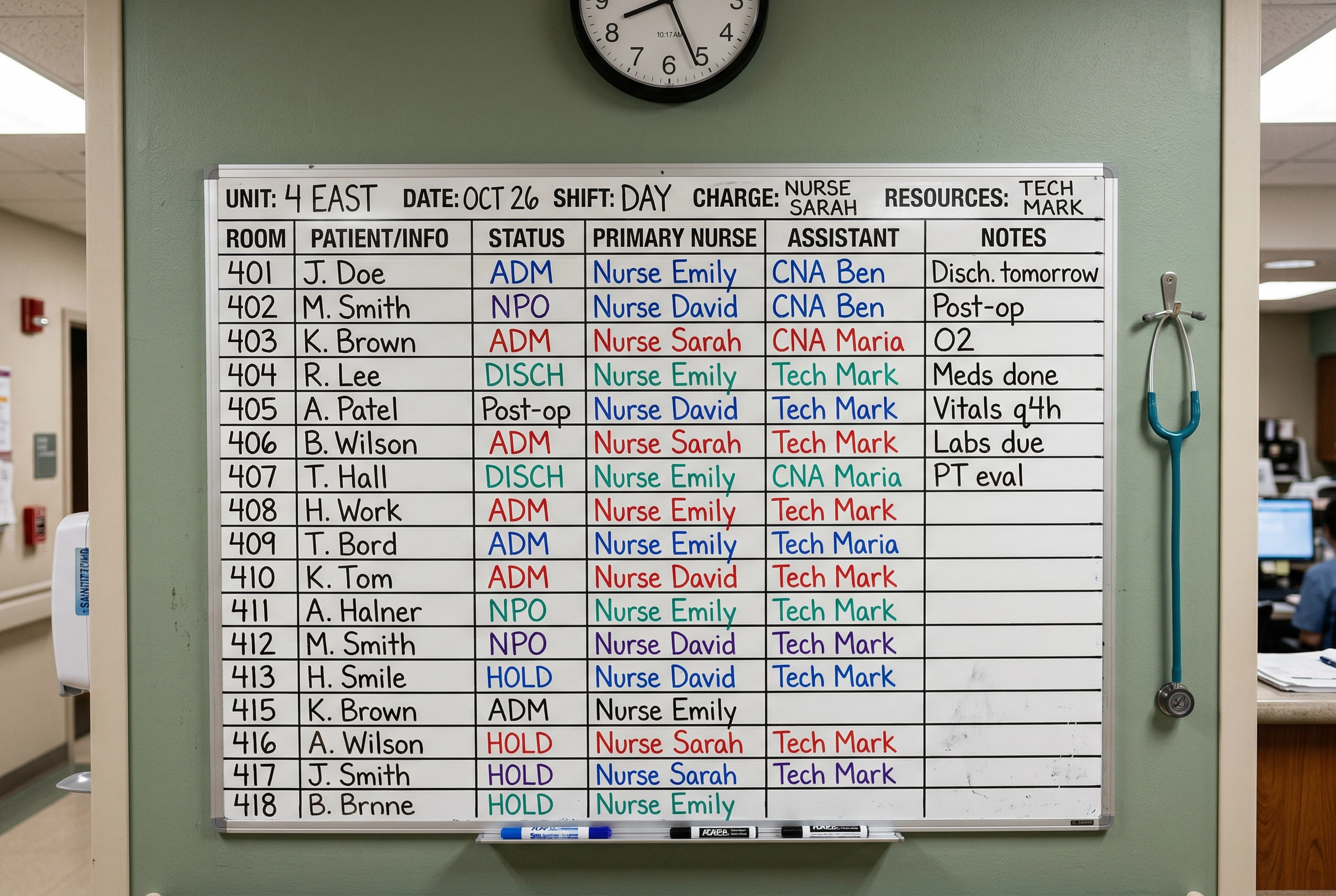
Practice delivering SBAR reports out loud. The structure stays the same — you just change the medical information each time. Once the framework is second nature, your confidence during real handoffs will skyrocket. Healthcare workers who learn and practice this English communication skill find it transforms their professional performance overnight.
5. Patient Education and Discharge Instructions

The last conversation you have with a patient might be the most important. If they misunderstand their discharge information, they may end up right back in the hospital — and that's a failure of communication, not medicine.
Essential English phrases for discharge:
- "Take this medication twice daily — once in the morning and once before bed — with food."
- "If you experience any of the following, call us or go to the emergency room: fever above 101, excessive bleeding, or chest pain."
- "Your follow-up appointment is on [date]. It's important that you keep this appointment so we can check your progress."
- "Let me make sure we're on the same page. Can you tell me back what I just explained?"
That last phrase — the teach-back method — is one of the most effective tools in patient education. It confirms understanding without being condescending. It helps both you and the patient find clarity in the health information shared. Medical English students and healthcare professionals should practice this technique regularly.
Duolingo taught you words. No one taught you to speak.
PracticeMe: real voice conversations with an AI tutor, 24/7.
Essential Healthcare English Vocabulary by Department

Knowing these medical terms isn't enough. You need to be able to say them clearly and quickly in English. Here's a quick-reference list of healthcare English vocabulary organized by department — essential for nursing students, medical professionals, and anyone looking to learn medical English for work.
Emergency Room
Key medical terms: triage, stabilize, trauma, intubate, defibrillator, laceration, hemorrhage, anaphylaxis, fracture, contusion, resuscitate, ventilator
Commonly mispronounced: de-FIB-ri-lay-tor (not "defibulator"), an-a-fi-LAK-sis (not "anaphylakis"), LAH-seh-RAY-shun
Nursing and General Care
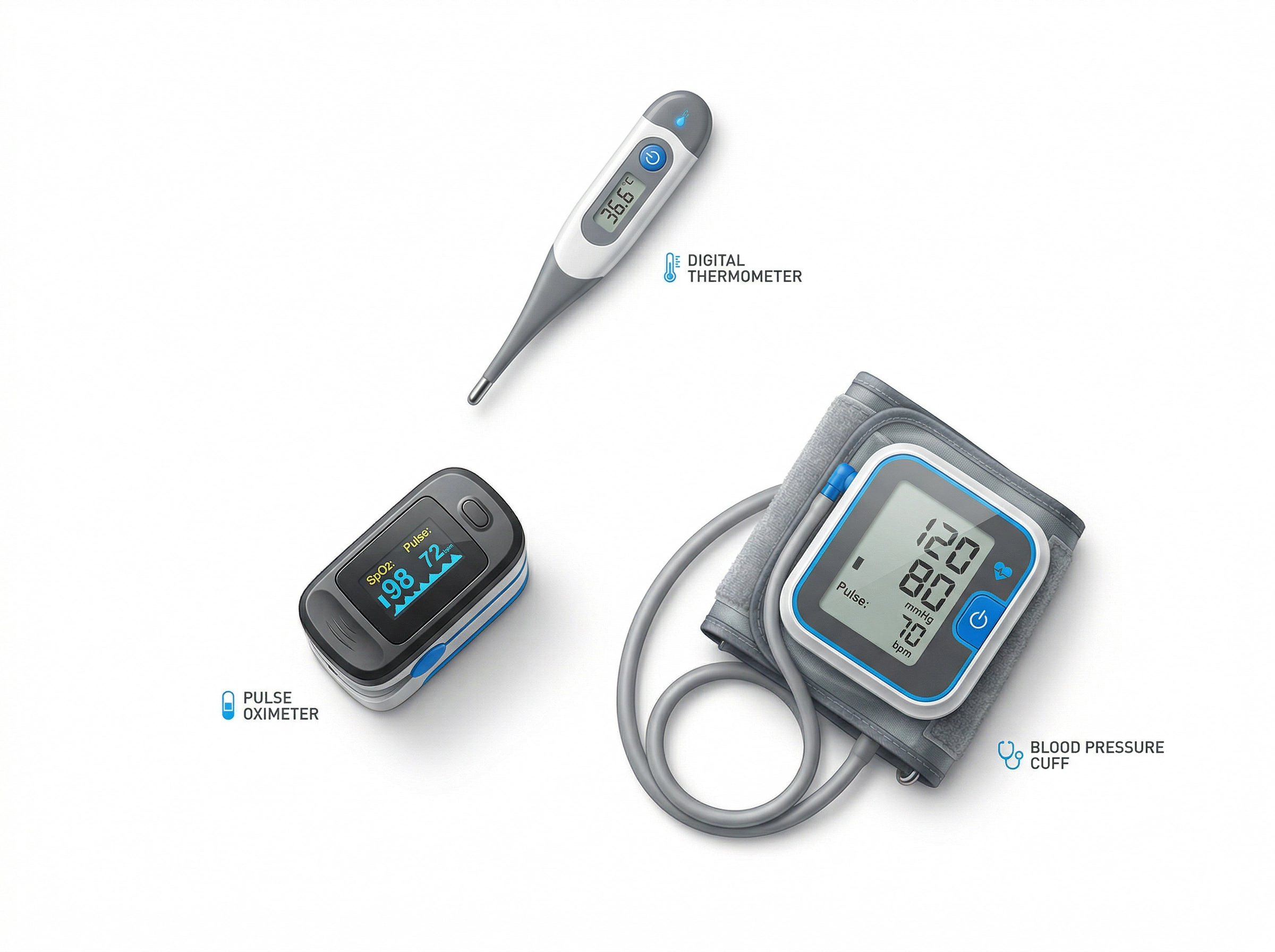
Key medical terms: vital signs, blood pressure (BP), pulse, respiration rate, IV drip, catheter, wound care, ambulation, edema, intake and output (I&O), bed sore (pressure ulcer), NPO (nothing by mouth)
Commonly mispronounced: KATH-eh-ter (not "catheder"), eh-DEE-mah (not "edema" with a hard 'e')
Pharmacy and Medication
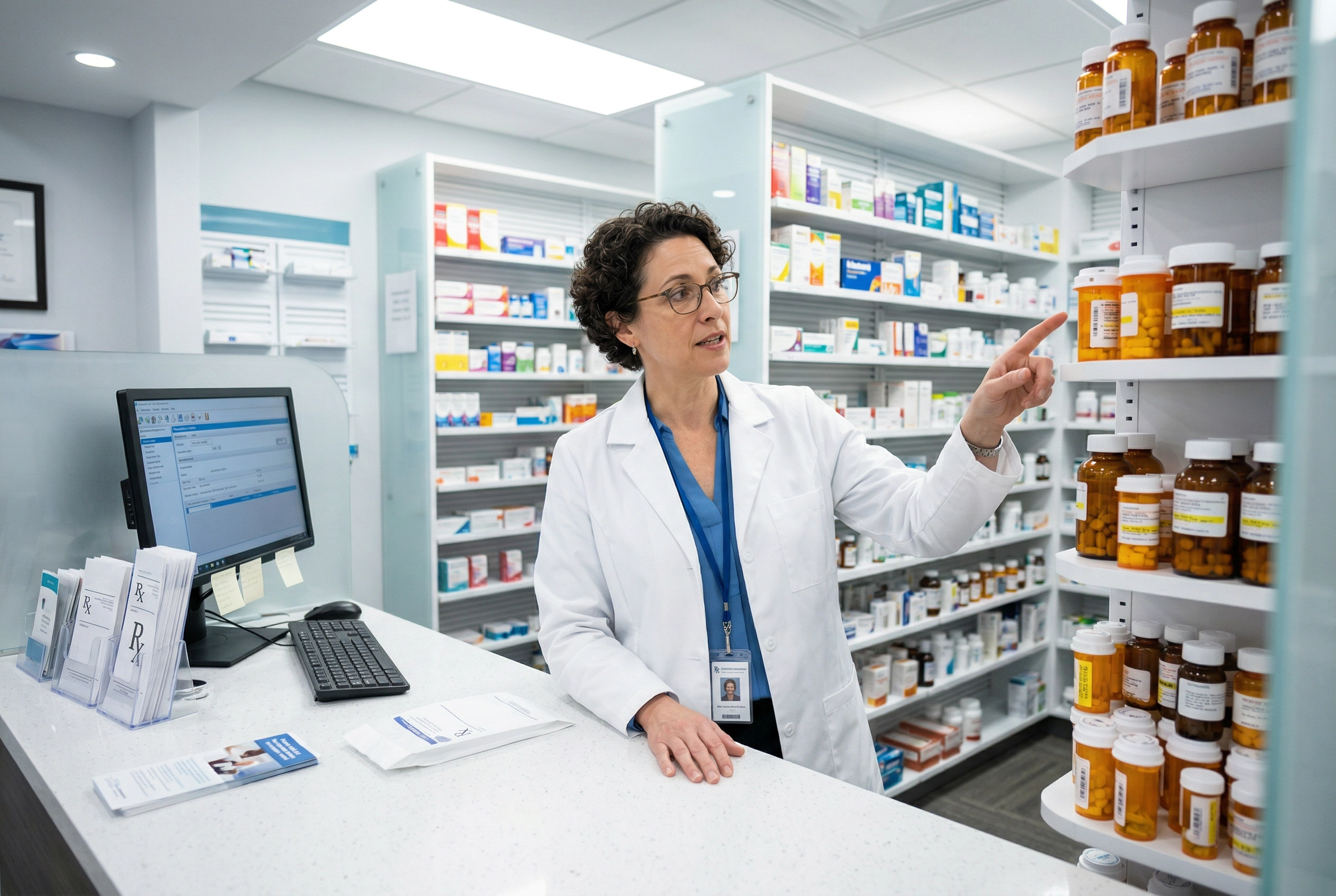
Key medical terms: dosage, contraindication, side effect, adverse reaction, over-the-counter (OTC), prescription (Rx), refill, drug interaction, administer, sublingual, intravenous (IV), intramuscular (IM)
Commonly mispronounced: con-tra-in-di-KAY-shun, sub-LING-gwal
Administration and Documentation
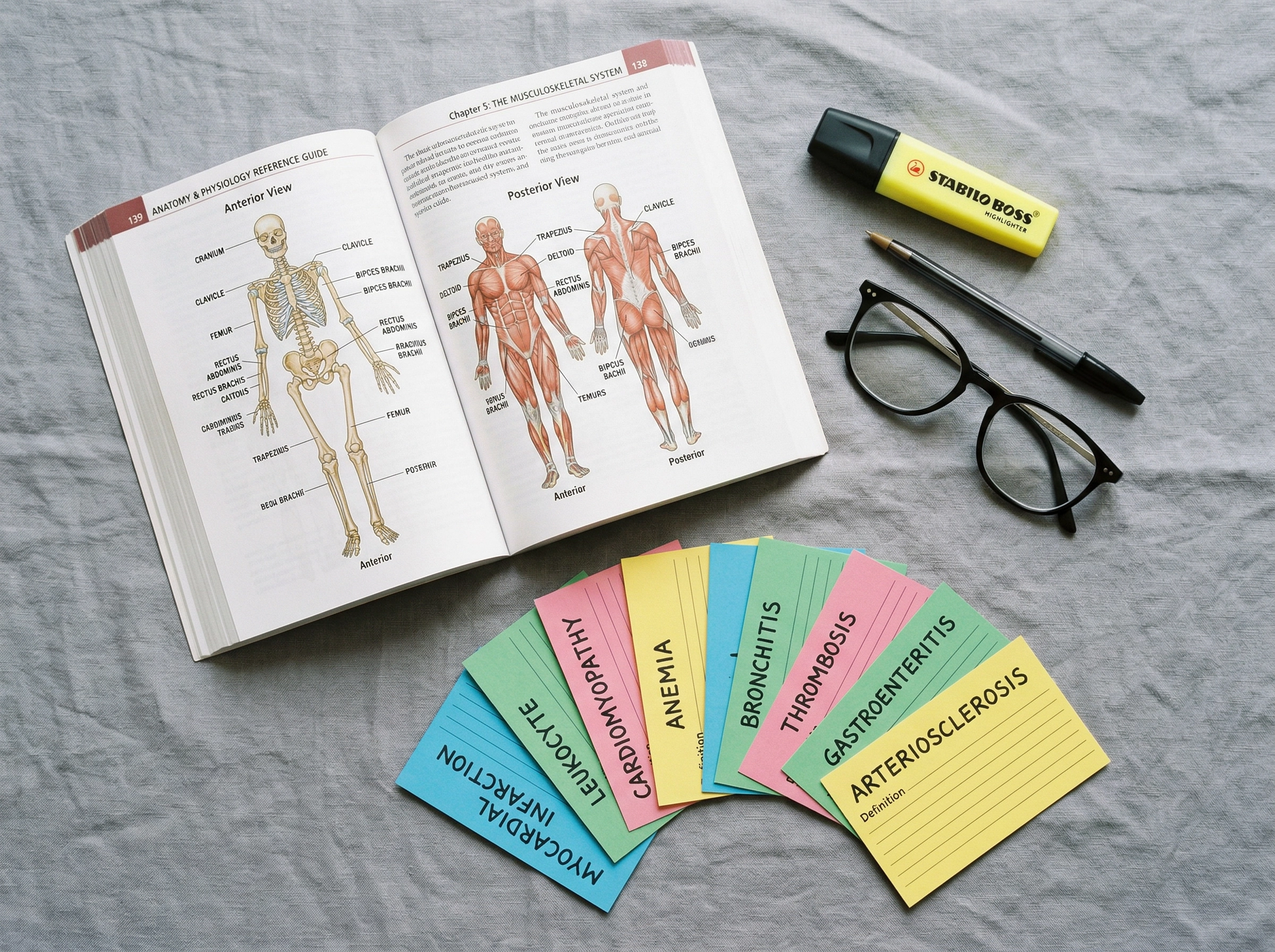
Key terms: admission, discharge, referral, prior authorization, insurance verification, chief complaint, HIPAA, chart/charting, EMR (electronic medical record), co-pay, deductible
Building healthcare English vocabulary works best when students find these medical terms in real conversations, not just textbooks or online courses. Learn more about building vocabulary through conversations — it's faster than flashcards and helps you develop the speaking skills healthcare professionals need.
Cultural Competency: The Hidden English Language Skill for Healthcare Workers

Language is more than words. Healthcare communication in the U.S., UK, Canada, and Australia follows cultural norms that may differ sharply from what you're used to. Understanding these cultural expectations will help healthcare workers find their footing faster and provide better patient care.
Patient autonomy is paramount. In English-speaking healthcare, patients have the final say about their medical treatment. Even if you believe a specific treatment is best, you must explain options and respect the patient's decision — even if they refuse care. Phrases like "It's your decision, but I want you to have all the information" are essential language skills for any healthcare professional.
Direct communication is expected. In some cultures, being indirect shows respect. In English-speaking hospitals, directness saves lives. If a patient is deteriorating, say so. If you disagree with a medical treatment plan, speak up using professional language: "I have a concern about this approach. Can we discuss it?"
Small talk matters more than you think. Bedside manner in English-speaking healthcare includes brief, warm exchanges: "How are you feeling this morning?", "Did you sleep okay?", "Is there anything I can get you?" These aren't meaningless pleasantries — they help patients find comfort and build trust with their healthcare team.
Sensitive topics require careful language. Discussions about pain management, mental health, end-of-life care, and body functions require both clinical accuracy and emotional sensitivity in English. Learn phrases like: "I know this is difficult to talk about, but..." and "You're in a safe space here."
If speaking English in professional situations makes you anxious, you're not alone. Many healthcare professionals and students struggle with this, and there are proven strategies to overcome the fear of speaking English that apply directly to medical and clinical settings.
Your 14-Day Healthcare English Practice Plan
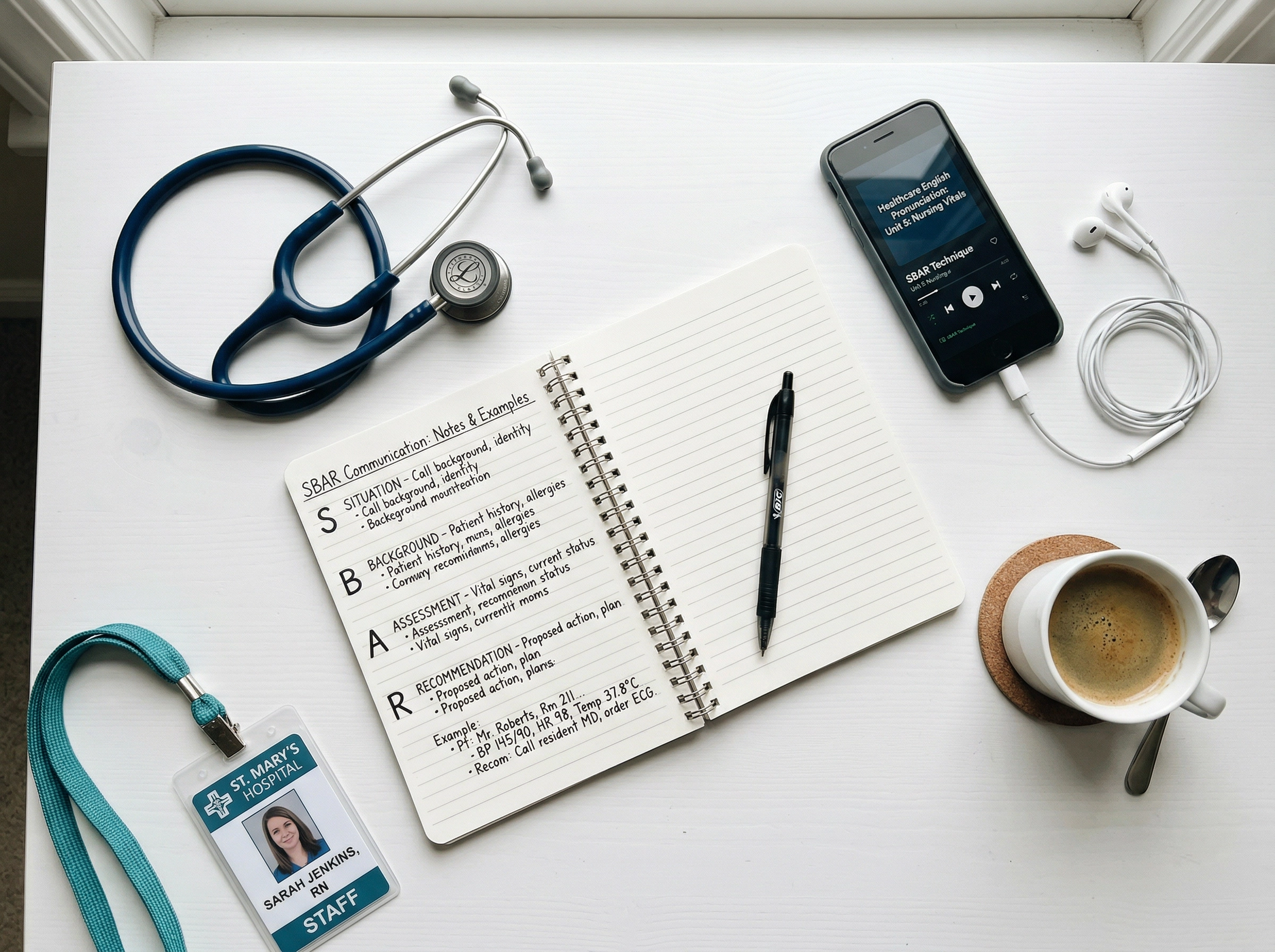
This training plan assumes 20–30 minutes of daily practice. Combine studying the medical English phrases above with real-time voice practice for the best results. Whether you're a nursing student or a working healthcare professional, you'll find this schedule helps build practical English communication skills fast.
Week 1: English Language Foundations for Healthcare Workers
| Day | Focus | Practice Activity |
|---|---|---|
| 1 | Patient greetings & introductions | Practice introducing yourself as a healthcare worker in 5 different ways |
| 2 | Symptom questions | Rehearse asking about symptoms, pain levels, and allergies out loud |
| 3 | Medication vocabulary | Study pharmacy terms and practice explaining dosages verbally |
| 4 | Vital signs reporting | Practice stating vital signs clearly: "BP is 120 over 80, pulse 72, respiration 16" |
| 5 | Explaining simple procedures | Describe a blood draw and a CT scan in plain English |
| 6 | ER vocabulary | Study emergency medical terms and practice pronunciation |
| 7 | Review & conversation practice | Have a full mock patient intake conversation with an AI tutor |
Week 2: Advanced Medical English Scenarios
| Day | Focus | Practice Activity |
|---|---|---|
| 8 | SBAR structure | Write and deliver 3 different SBAR reports out loud |
| 9 | Emergency phrases | Practice emergency calls — focus on speed and clarity |
| 10 | Discharge instructions | Explain post-surgery care information verbally, including teach-back |
| 11 | Cultural communication | Practice small talk, empathy phrases, and sensitive topic language |
| 12 | Phone communication | Rehearse calling a physician with a patient concern using SBAR |
| 13 | Full shift simulation | Combine all scenarios into one 30-minute English conversation practice |
| 14 | Assessment & next steps | Record yourself delivering an SBAR report. Listen back. Note improvements. |

Want help with a structured approach to daily English practice? Our daily English speaking practice routine will help you build the training habit that transforms your language skills.
How English for Healthcare Workers Improves With AI Practice
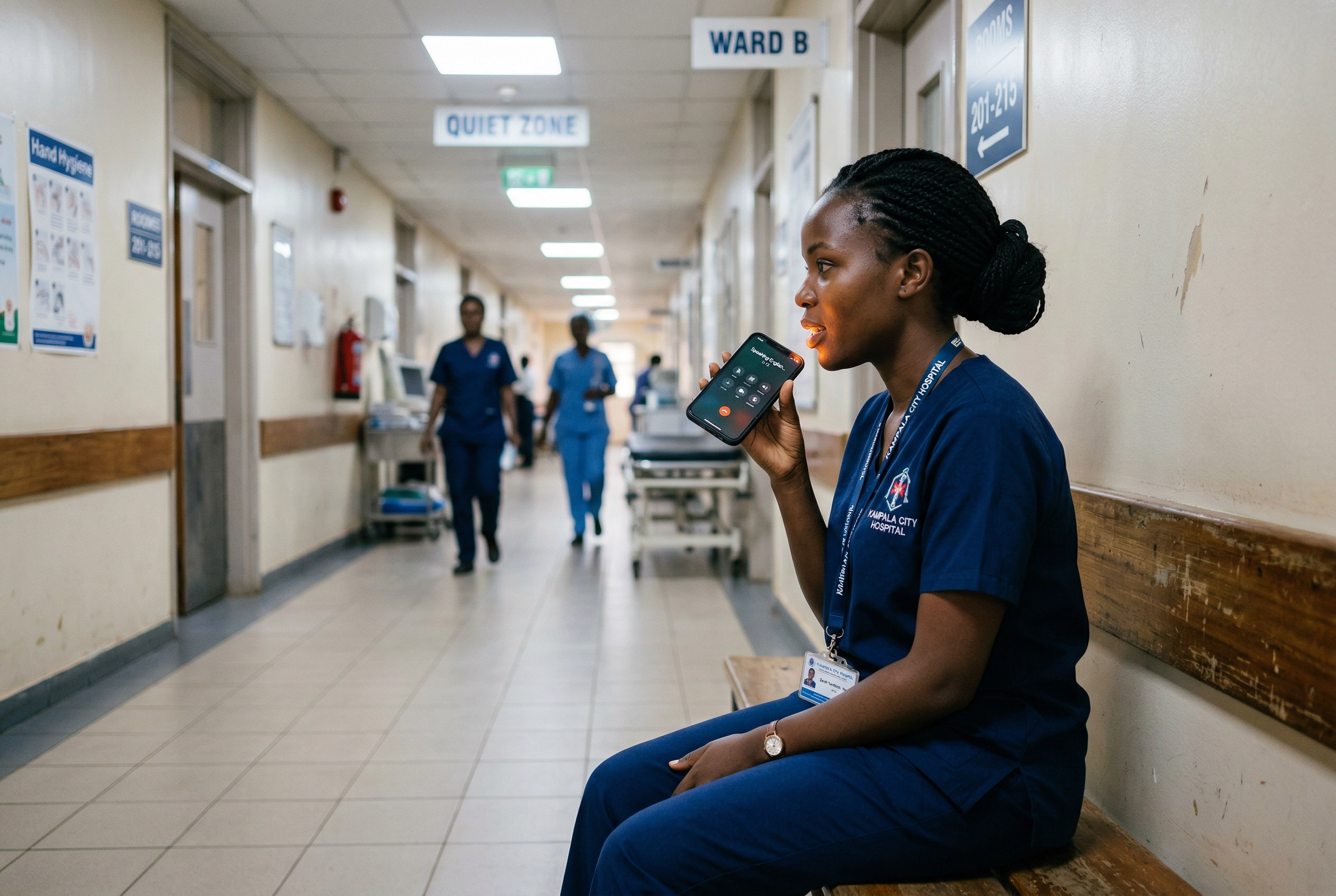
Here's the reality: reading medical English phrases on a page helps build your knowledge, but saying them out loud under pressure is completely different. To truly learn healthcare English, you need to speak it — and you need help finding opportunities to practice regularly.
That's why voice practice matters for healthcare professionals. And that's where Practice Me comes in.

Practice Me lets healthcare workers have real-time voice conversations with AI tutors who adapt to your English level. For medical professionals and nursing students looking to find effective language training, this means you can:
- Rehearse patient conversations — practice intake questions, explain medical procedures, and give discharge information without the fear of making a real mistake
- Practice SBAR handoff reports — the AI tutor can help you deliver structured reports while building the English language and communication skills hospitals expect
- Build emergency communication speed — practice until critical English phrases come automatically, without mental translation
- Choose your accent — select American or British English depending on where you work or plan to work
- Practice 24/7 — before a shift, after a shift, or during a break. No scheduling, no judgment, no embarrassment
- Track your vocabulary growth — medical terms you use in conversations are saved automatically so you can find and review them later

The biggest advantage for medical English students and healthcare professionals? You can make mistakes safely. In a real hospital, a fumbled phrase can have consequences. With an AI tutor, it's just practice — and every mistake helps you learn and improve your skills.
If you're new to English speaking practice, start with the foundations and work up to healthcare scenarios. If you're already comfortable with general English and need professional-level medical English skills for your healthcare career, explore our business English speaking practice for workplace communication.
Ready to find out how Practice Me can help improve your English for healthcare workers? See Practice Me pricing and begin your free trial today.
Frequently Asked Questions
How can I improve my medical English quickly?
Focus on the 80/20 rule: learn the English phrases you'll use most often first. Patient intake, vital signs reporting, and SBAR handoffs cover the majority of verbal communication in healthcare work. Practice these out loud daily — not just by reading. Voice practice with an AI tutor can help accelerate your progress because students and healthcare professionals get real-time English speaking experience without the pressure of a real clinical setting. Many healthcare workers find they can build functional medical English skills in just two weeks of dedicated practice.
What English level do I need to work in healthcare?
Most English-speaking countries require B2 or higher on the CEFR scale for healthcare positions. In practice, you need strong listening skills to understand patients with various accents, the ability to speak clearly under time pressure, and a solid medical vocabulary. Students preparing for healthcare careers should learn about tests like the OET (Occupational English Test), which is specifically designed for medical and nursing professionals and is accepted in the UK, Australia, New Zealand, and Ireland.
How do I practice English handoff reports?
Master the SBAR framework first: Situation, Background, Assessment, Recommendation. Write out three sample reports for different patient scenarios, then practice delivering them out loud until you can do it without notes. Using Practice Me, students and healthcare professionals can find help rehearsing SBAR reports with an AI tutor, getting real English speaking practice with the exact structure and language skills that hospitals expect.
Is AI conversation practice effective for healthcare English?
Yes — and it fills a gap that textbooks and online courses can't. English for healthcare workers is largely a speaking skill. You need to produce medical language quickly and accurately under stress. AI conversation practice lets students and working healthcare professionals rehearse real clinical scenarios hundreds of times without risk. It builds the kind of automatic, fluent English responses that only come from repetition and real-time practice. For healthcare workers preparing for English job interviews, it's also excellent preparation for demonstrating your medical English skills to potential employers.