Duolingo taught you words. No one taught you to speak.
PracticeMe: real voice conversations with an AI tutor, 24/7.
10 English Role Play Scenarios for Speaking Practice

You know the words. You've studied the grammar. But the moment a real conversation starts — at the hotel desk, in the doctor's office, at a job interview — your mind goes blank. Sound familiar?
English role play scenarios are the fastest fix for that gap between knowing English and speaking it. They put you inside a real situation, with real pressure, but in a setting where mistakes cost nothing.
Quick Summary: English role play scenarios are short, structured conversations that simulate real-life situations — ordering food, checking into hotels, job interviews, and more. Practicing them out loud (alone, with a partner, or with an AI tutor) builds the muscle memory you need to speak confidently when it actually matters. Below are 10 detailed scenarios with full dialogues, vocabulary, and the most common mistakes English learners make.
This guide gives you 10 ready-to-use English role play scenarios, each with the situation setup, key vocabulary, a model dialogue, common mistakes to avoid, and extension questions to push your fluency further. Whether you're an ESL student practicing alone, an English teacher looking for a lesson resource, or a self-learner working with an AI conversation partner, these scenarios cover the situations you'll actually face in English-speaking life.
Why Role Play Works for English Speaking Practice
Most English learners study correctly but practice incorrectly. They read textbook dialogues silently, memorize vocabulary lists, and watch videos — all valuable, all passive. The problem is that fluency lives in your mouth, not your eyes.
A good English role play forces three things to happen at once:
- Activation. Vocabulary you've seen on the page becomes vocabulary you can pull out under pressure. This is what teachers call "active recall," and it's the only way passive language knowledge becomes spoken English.
- Sequencing. Real conversations have an order — greeting, request, clarification, confirmation, close. Role play teaches your brain that sequence so you don't freeze halfway through.
- Repair. When you mess up (and you will), you practice fixing it mid-sentence. That's a skill native speakers use constantly without realizing it, and ESL students almost never train.
The judgment-free element matters too. Research on speaking anxiety consistently shows that learners who rehearse scenarios in low-stakes settings hesitate less and recover faster in real interactions. You can read more about overcoming the fear of speaking English — but the short version is: rehearsal works.

How to Use These Role Play Scenarios (Solo or with an AI Partner)
You don't need a classroom or a study buddy to do role play. Here are three ways to practice every English role play scenario below:
1. Solo practice (both roles). Read the situation, then say both sides of the dialogue out loud. Switching between roles forces you to think from two perspectives. It feels strange at first — do it anyway.
2. With an AI tutor. This is where modern English practice gets interesting. AI conversation partners like the tutors inside Practice Me can take on any role in these scenarios — server, hotel clerk, interviewer, doctor, friend — and respond naturally to whatever you say. They don't follow a script, so the conversation can go anywhere. If you mumble or use the wrong word, they handle it the way a real person would. And they're available at 2 a.m. when nobody else is.
3. With a human partner. A study buddy, language exchange partner, or tutor can add unpredictability. The downside: scheduling, plus the social pressure that often makes anxious learners freeze. If you want classic pair practice activities, our guide on ESL speaking practice has 15 of them.
A few practice rules that help every English role play lesson work better:
- Read the scenario once. Then close it. Don't read aloud from the dialogue — that's reading practice, not speaking practice.
- Say it standing up. Your voice projects differently. It also matches how you'd speak in the real situation.
- Don't pause to translate. If you don't know a word, talk around it. That's what fluent speakers do constantly. Want to train this skill specifically? See our guide on how to stop translating and speak English naturally.
- Repeat each scenario at least three times. First pass: get through it. Second pass: smooth it out. Third pass: add detail and variation.
Now, the scenarios.

1. Ordering at a Restaurant (Beginner)
The situation: You've just sat down at a casual restaurant. You haven't decided what to eat. The server walks over with a friendly smile and a notepad.
Key vocabulary and phrases for this English role play:
- I'd like… / Could I have… (polite ways to order — never "I want")
- What do you recommend? / What's popular? (asking for help)
- I'm allergic to… / Does it have…? (dietary needs)
- On the side (separate from the main dish)
- Rare / medium-rare / medium / medium-well / well-done (steak doneness)
- Could we get the check, please? (US) / the bill, please? (UK)
- Separate checks (each person pays their own)
Model dialogue:
Server: Hi there, welcome in! Can I start you off with something to drink?
You: Hi — could I just get a water for now? I haven't decided yet.
Server: No problem, take your time. I'll bring that right out.
(A few minutes later)
Server: All set? What can I get for you?
You: Yeah, I have a question first. What do you recommend? I'm pretty hungry but I don't eat pork.
Server: Oh, our grilled chicken sandwich is really popular, and the salmon plate is great if you want something lighter.
You: I'll go with the salmon, please. Could I get the salad on the side instead of fries?
Server: Absolutely. Anything else?
You: That's it for now, thanks.
Common mistakes to avoid:
- Saying "I want" instead of "I'd like." "I want a burger" is grammatically correct but sounds rude in English — like a child demanding something. Native speakers almost always soften requests with I'd like, Could I have, or I'll take.
- Using the wrong steak terms. "Cooked" is not a doneness level. The scale is rare → medium-rare → medium → medium-well → well-done.
- Asking for "the bill" in the US. It's "the check" in American restaurants. "Bill" is correct in British English but will sound slightly off in New York.
- Saying "menu" as a verb. You don't "menu" something — you order it. "Can I menu the chicken?" is a common L1-translation error.
Extension questions to push further:
- The server brings you the wrong dish. How do you politely send it back?
- You realize halfway through the meal you forgot your wallet. What do you say?
- Your friend wants to split the bill. How do you ask the server for separate checks?
If you work in a restaurant or bar yourself, the vocabulary in this scenario doubles as your daily-job English. Practice it both ways — as the customer and as the server.

2. Checking In at a Hotel (Beginner-Intermediate)
The situation: You arrive at a hotel after a long flight. There's a small line at the front desk. When it's your turn, you need to check in, ask about Wi-Fi, and confirm checkout time — without holding up the people behind you.
Key vocabulary and phrases for this English role play:
- I have a reservation under [name].
- Confirmation number
- Check-in / check-out time
- Late checkout (asking to leave later than the standard time)
- Amenities (gym, pool, breakfast — things included)
- Complimentary (free, included)
- Key card (the small card that opens your room)
- Could you spell that for me? (when you don't catch a name or number)
Model dialogue:
Clerk: Good evening, welcome to The Park Hotel. Are you checking in?
You: Yes, I have a reservation under Martinez.
Clerk: Let me find that. M-A-R-T-I-N-E-Z?
You: That's right.
Clerk: Perfect. I have you in a king room for three nights. Could I see a photo ID and a credit card for incidentals?
You: Sure, here you go. Quick question — what's the Wi-Fi situation, and is breakfast included?
Clerk: Wi-Fi is complimentary; the password is on the back of your key card. Breakfast is in the dining room from 6:30 to 10. It's twelve dollars, but you can add it to your room.
You: Got it. And one more thing — would it be possible to get a late checkout? My flight isn't until 4 p.m.
Clerk: I can put a request in for noon. We won't confirm until that morning, but I'll make a note.
You: That works, thank you.
Common mistakes to avoid:
- "I have reservation." Articles trip up many ESL learners. It's a reservation. Always.
- Confusing "borrow" and "rent." You rent a room from a hotel; you borrow something from a friend without paying. Saying "I'd like to borrow a room" sounds wrong.
- Not confirming checkout time. Many travelers assume it's noon globally. It varies. Always confirm.
- Pronouncing "suite" like "suit." Suite (a fancy room) sounds like "sweet" — not "soot." If you're unsure, the Cambridge Dictionary entry for "suite" has the audio.
Extension questions to push further:
- Your room isn't ready yet but you want to drop off your bags. What do you say?
- The clerk says they don't have your reservation. How do you handle it?
- You want to extend your stay by one more night. How do you ask?

3. The Job Interview (Advanced)
The situation: You've made it to the final round of interviews for a job you really want. The hiring manager asks the classic opener, follows up with a behavioral question, and then asks if you have any questions for them.
Key vocabulary and phrases for this English role play:
- Tell me about yourself (the standard opener — don't recite your résumé)
- Walk me through… (describe a process or experience step by step)
- Strengths / weaknesses / accomplishments
- Transferable skills
- Results-driven / collaborative / detail-oriented (interview adjectives)
- Salary expectations
- On-boarding (the process of starting a new job)
- STAR method — Situation, Task, Action, Result
Model dialogue:
Interviewer: Thanks for coming in. So, tell me a little about yourself.
You: Sure. I'm a marketing analyst with about five years of experience, mostly in e-commerce. My current role focuses on customer retention — I run the email and lifecycle program for a mid-sized brand. What drew me to this position is the chance to work on acquisition as well, which is where I want to grow next.
Interviewer: Great. Can you walk me through a time you turned a struggling project around?
You: Yeah, last year our re-engagement campaign was underperforming — the open rate had dropped to about 8%. (Situation) My manager asked me to figure out why and fix it. (Task) I ran a small audit, segmented the list by activity, and rebuilt the subject lines using urgency-based language. (Action) Within two months, opens were back to 22% and revenue from the program doubled. (Result)
Interviewer: Nice. Do you have any questions for us?
You: I do, actually. How would you describe the team's biggest challenge in the next six months — the thing whoever takes this role needs to solve first?
Common mistakes to avoid:
- Saying "I'm fine" to "Tell me about yourself." This is the most common interview mistake among non-native English speakers. The interviewer wants a 60–90 second professional summary, not a wellness update.
- Memorizing answers word-for-word. Memorized answers sound robotic and break down the moment the interviewer follows up. Memorize structure (like STAR), not script.
- Avoiding the weakness question. "I work too hard" is a cliché interviewers groan at. Pick a real weakness and pair it with what you're doing about it.
- Not preparing your own questions. When you say "no, I'm good," interviewers hear "I'm not that interested." Always have two or three real questions ready.
- Speaking too fast under pressure. This is universal. Slow down. Pause before answering. Pauses make you sound thoughtful, not unprepared.
Extension questions to push further:
- The interviewer asks about a time you failed. How do you answer without making it look bad?
- They ask your salary expectations and you don't want to give a number first. How do you deflect politely?
- You don't understand a question. How do you ask for clarification without sounding lost?
For deep, role-specific interview practice, our guide on American English conversation practice covers the natural phrasing that interviewers expect to hear.

4. The Doctor's Appointment (Intermediate)
The situation: You've had a persistent cough for two weeks and you're finally seeing a doctor. You need to describe symptoms accurately, answer follow-up questions, and understand the treatment plan.
Key vocabulary and phrases for this English role play:
- Symptoms (what you're experiencing)
- Sharp / dull / throbbing / aching pain (different pain types)
- On a scale of 1 to 10 (rating pain intensity)
- Prescription / over-the-counter / dosage
- Side effects
- Follow-up appointment
- Primary care / specialist / referral
- I've been feeling… / It started about…
Model dialogue:
Doctor: What brings you in today?
You: I've had a cough for about two weeks. It started as just a tickle, but now it wakes me up at night. I'm also pretty tired, and I had a low fever for the first few days.
Doctor: Any chest pain or shortness of breath?
You: A little tightness when I cough hard, but no real pain. I haven't been short of breath.
Doctor: On a scale of 1 to 10, how bad is the cough at its worst?
You: Maybe a 6 at night. During the day it's more like a 3.
Doctor: Okay. I'd like to listen to your lungs and run a quick test. Based on what you're describing, this could be bronchitis, but I want to rule out anything else. If it's bacterial, I'll prescribe antibiotics — five days, twice a day with food.
You: Got it. Are there any side effects I should watch out for?
Doctor: Stomach upset is the main one. If you get a rash or have trouble breathing, stop the medication and call us right away.
Common mistakes to avoid:
- "I have pain my head." Missing prepositions are the most common ESL error. Always in my head, on my arm, in my stomach.
- Using "sick" for everything. "Sick" is vague. Doctors prefer specifics: nauseous, dizzy, achy, congested, fatigued, lightheaded.
- Saying "my head pains me." This is a literal translation from several languages and sounds odd in English. Just say "I have a headache" or "my head hurts."
- Not asking about side effects or dosage. The doctor expects you to ask. Silence here can lead to real problems.
- Confusing "prescribe" and "prescription." Prescribe is the verb (the doctor prescribes); prescription is the noun (you fill a prescription).
Extension questions to push further:
- The doctor wants to refer you to a specialist. How do you ask about cost and timing?
- You don't agree with the diagnosis. How do you ask for a second opinion politely?
- You need to refill a prescription by phone. What do you say?
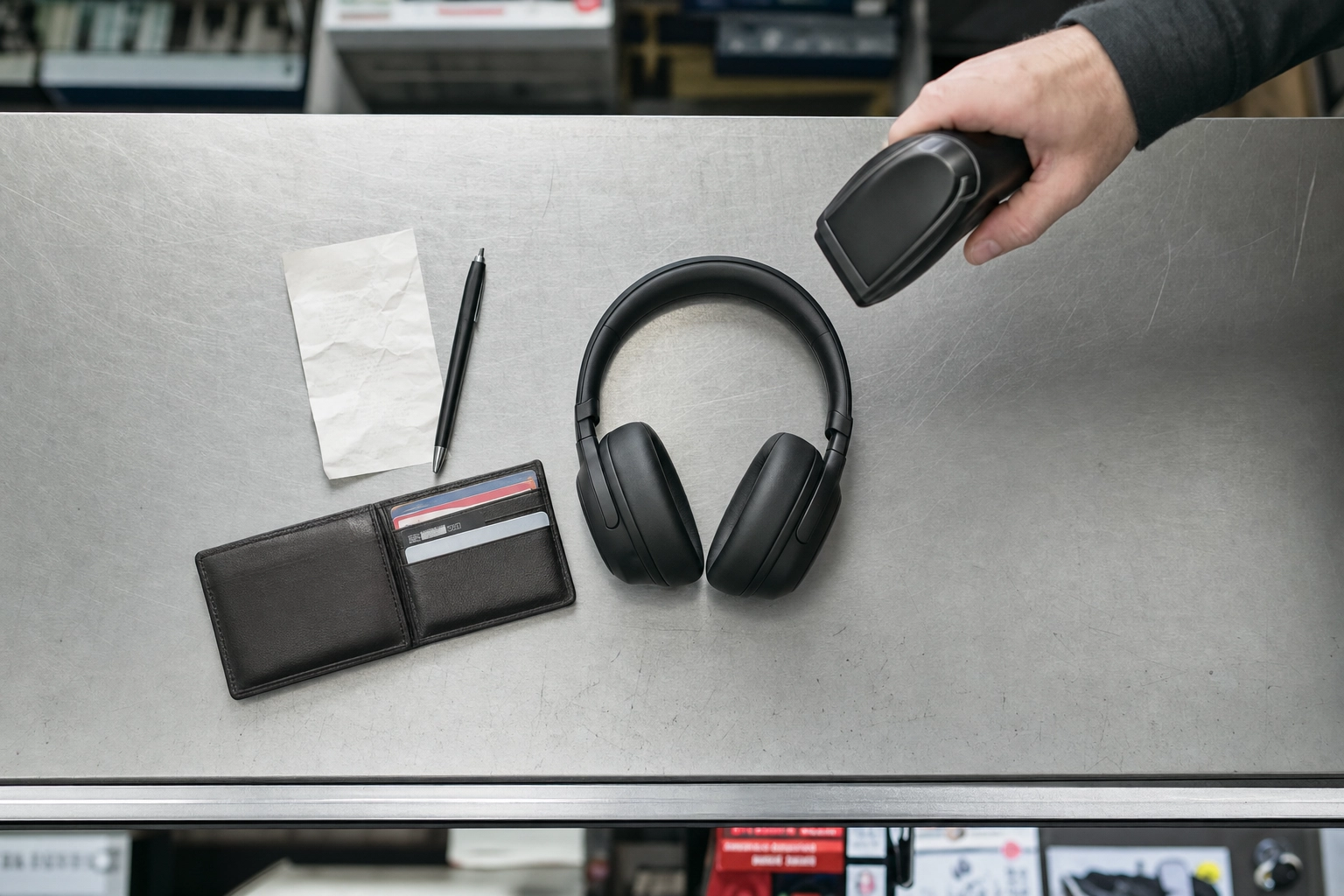
5. Returning an Item at a Store (Intermediate)
The situation: Two weeks ago you bought a pair of headphones. One side has stopped working. You don't have the original packaging, and you're not sure if you're past the return window. The cashier is busy and not in a great mood.
Key vocabulary and phrases for this English role play:
- Return / refund / exchange / store credit
- Receipt / proof of purchase
- Defective (broken from the start)
- Return policy
- Original packaging
- Manager / supervisor
- Within the return window
- I'd like to return / exchange this…
Model dialogue:
You: Hi, I'd like to return these headphones — they stopped working on one side.
Cashier: Do you have your receipt?
You: I do, here you go. I bought them about two weeks ago.
Cashier: And the original packaging?
You: I'm sorry, I don't have the box anymore. But the headphones are defective — they're not just used.
Cashier: Our policy is 30 days with original packaging for a full refund. Without the box, I can do a store credit, or an exchange for the same model.
You: I'd actually prefer the exchange if you have them in stock. Same model is fine.
Cashier: Let me check… yes, we have one. I'll just need to ring up the swap. Give me one minute.
Common mistakes to avoid:
- Over-apologizing. "I'm so sorry to bother you, sorry, sorry, sorry…" is a sign you're nervous, not polite. State your case calmly. One sorry is plenty.
- "I want my money." Direct translation from many languages, but in English it sounds aggressive. Use "I'd like a refund, please."
- Mixing up "exchange" and "change." Change means modify; exchange means swap. "Can I change these headphones?" sounds like you want to alter them.
- Not knowing the return policy first. Walk in knowing the basics: how many days, original packaging requirement, refund vs. credit. It changes the whole conversation.
- Getting flustered when refused. A "no" isn't always final. Politely ask if a supervisor can help, or if there's any flexibility given the defect.
Extension questions to push further:
- You're past the 30-day window but the item was defective from day one. How do you make your case?
- The cashier says you can only get store credit but you want a refund. How do you escalate to a manager politely?
- You bought it online but want to return it in-store. What do you say?

Duolingo taught you words. No one taught you to speak.
PracticeMe: real voice conversations with an AI tutor, 24/7.
6. Asking for Directions (Beginner)
The situation: You're in an unfamiliar neighborhood looking for a specific café. Your phone battery just died. You see a friendly-looking person at a bus stop.
Key vocabulary and phrases for this English role play:
- Excuse me, could you help me? (the polite opener)
- I'm trying to get to… / I'm looking for…
- Block, intersection, traffic light, roundabout
- On your right / on your left
- Across from / next to / between / around the corner from
- Two blocks down / three streets up
- Landmark (a recognizable building or feature)
- Could you say that one more time? (asking to repeat)
Model dialogue:
You: Excuse me, sorry to bother you. Could you help me with directions?
Stranger: Sure, what are you looking for?
You: I'm trying to find a café called Blue Bottle. I think it's around here somewhere?
Stranger: Oh yeah, it's about three blocks that way. Go straight on this street, past the traffic light, and take a left at the second intersection. It's on your right, across from a pharmacy.
You: Sorry, could you say that one more time? Three blocks straight, then…
Stranger: Left at the second intersection. Right after a small park.
You: Got it — left after the park, on the right across from the pharmacy. Thanks so much, you're a lifesaver.
Common mistakes to avoid:
- "Go left" vs. "Turn left." Both work, but with subtle difference. Turn left implies you're at a corner; go left implies a general direction. Native speakers say take a left very often — that's the most natural option.
- Skipping the polite opener. "Where is the café?" sounds rude when you stop a stranger. Always lead with Excuse me, could you…
- Not asking to repeat. If you didn't catch it, don't pretend. "Sorry, could you say that one more time?" is completely normal.
- Mixing up prepositions. Across from (opposite side), next to (right beside), between (in the middle of two things). These are easy to swap by accident.
- Using "where is" too directly. "Where is Blue Bottle?" works but feels abrupt. "Could you tell me how to get to Blue Bottle?" sounds more natural and polite.
Extension questions to push further:
- You ask if it's walkable and the person says it's far. How do you ask about transit options?
- The directions are too complicated to remember. How do you ask them to write it down or repeat the key turns?
- You realize partway there that you took a wrong turn. How do you ask the next person for help?

7. Phone Call to Schedule an Appointment (Intermediate)
The situation: You need a haircut before a wedding next week. You're calling a salon you've never been to. You can't see the person's face, you can't see anything they're writing down, and they sound rushed. Phone English is hard mode.
Key vocabulary and phrases for this English role play:
- I'd like to schedule an appointment.
- Available slot / opening / time slot
- Reschedule / cancel
- Walk-in (no appointment, first-come basis)
- On hold (waiting during the call)
- Voicemail (recorded message)
- Could you spell that? / Let me spell that for you
- I'll just confirm: [details]…
Model dialogue:
Receptionist: Hello, Beverly Hair Studio, this is Tara.
You: Hi Tara, I'd like to schedule a haircut for sometime this week if possible.
Receptionist: Sure, who would you like to book with?
You: Honestly, I don't have a preference — whoever has the earliest opening.
Receptionist: Let me check… I have Wednesday at 2 with Maria, or Friday morning at 10 with Daniel.
You: Friday at 10 sounds great.
Receptionist: Perfect. Can I get your name and a phone number?
You: Yes — it's David Chen, C-H-E-N. Phone is 415-555-0192.
Receptionist: Got it. Just to confirm: David Chen, Friday at 10 a.m. with Daniel for a haircut. We'll send a text reminder the day before.
You: Sounds good. Quick question — what's the cancellation policy if something comes up?
Receptionist: Free if you cancel 24 hours before; after that there's a $20 fee.
You: Got it. Thanks, Tara!
Common mistakes to avoid:
- Trying to keep up at any cost. Phone English is harder because there's no body language. If you don't catch something, say so. "Sorry, you cut out — could you repeat that?" is what native speakers say all the time.
- Not spelling out names and numbers. Always spell unusual names. Always say phone numbers slowly: four-one-five, five-five-five… (pause between groups).
- Confusing AM/PM. "Friday at 10" is ambiguous. Say "Friday at 10 a.m." Confirm it back at the end.
- Forgetting to confirm. A good caller always restates the appointment at the end: "Just to confirm, that's [day], [time], with [person]." This catches every misunderstanding.
- Hanging up too quickly. Always close with a small "Thanks, have a good one" or "Thanks, talk soon." It feels minor but matters.
Extension questions to push further:
- You're put on hold for several minutes. What do you say when they come back?
- You need to reschedule the day before. How do you handle it without sounding flaky?
- You get voicemail. How do you leave a clear message they can act on?
For more dialogue patterns specific to formal phone English, you might enjoy our English filler words and conversation connectors guide — those small words like well, actually, so are what make phone speech sound natural.

8. Networking at a Professional Event (Advanced)
The situation: You're at the happy hour after a tech conference. You don't know anyone. There's a person standing alone near the bar holding a name badge that suggests they work in your field. You want to introduce yourself, have a real conversation, and exchange contact info — without being awkward.
Key vocabulary and phrases for this English role play:
- What do you do? (the standard opening question)
- I'm in [industry/field].
- What brings you here?
- We have a mutual connection / I think we know some of the same people.
- I'd love to keep in touch.
- Could I grab your contact / connect on LinkedIn?
- Let me not keep you / I'll let you mingle (polite exit)
Model dialogue:
You: Hey, mind if I join you over here? It's pretty packed.
Stranger: Yeah, of course. I just escaped the panel discussion.
You: Same. I'm Priya — I'm a product manager at a fintech startup in Berlin.
Stranger: Nice to meet you, I'm Sam. I do PM stuff too, but on the consumer side. Travel apps.
You: Oh interesting — what brings you to this conference?
Stranger: Honestly, I came for the hiring panel tomorrow. We're growing the team.
You: Got it. Are you guys in Berlin too, or…?
Stranger: Amsterdam, but we have a remote-friendly setup.
You: Cool. Look, I won't keep you all night — would it be okay if we connected on LinkedIn? I'd love to follow what you're building.
Stranger: For sure, let me grab my phone.
Common mistakes to avoid:
- Asking job questions too soon. "What do you do?" is fine after a brief warm-up — but leading with "Are you hiring?" in the first 30 seconds reads as transactional. A few seconds of small talk first matters a lot.
- Long monologues about yourself. Native networkers tend to give two-sentence intros and ask a question back. If your answer to "What do you do?" runs 60 seconds, you've lost them. Want to nail this part? Read how to introduce yourself in English.
- Awkward exits. This is the hardest part of networking. "It was great meeting you — I'm going to grab another drink, let's keep in touch" is your safe escape line. Use it.
- Over-formal language with peers. At a conference, "Pleased to make your acquaintance" sounds weird. "Nice to meet you" or "Hey, I'm…" is what people actually say.
- Not following up. The conversation isn't the networking. The follow-up message 24 hours later is the networking.
Extension questions to push further:
- You realize you've already met this person at an event last year. How do you handle the awkward "do they remember me?" moment?
- Someone is dominating the conversation. How do you politely include other people standing nearby?
- You want to mention you're job-hunting without sounding desperate. What do you say?

9. Resolving a Complaint with Customer Service (Advanced)
The situation: Your home internet has been out for three days. You've called twice already and been promised a fix that never happened. This is your third call. You're frustrated, but the agent on the line didn't cause the problem — and being aggressive will hurt, not help, your case.
Key vocabulary and phrases for this English role play:
- I'd like to file a complaint.
- This has been ongoing for…
- Unacceptable (strong but professional)
- I'd like to escalate this to a supervisor.
- Compensation / credit on my account
- Could you make a written record of this call?
- What's the next step?
- I'm being patient, but…
Model dialogue:
Agent: Thanks for calling, this is Marcus, how can I help?
You: Hi Marcus. I want to start by saying I know this isn't your fault personally, but I've been without internet for three days. This is my third call about the same issue. I need to know what's actually going to happen now.
Agent: I'm really sorry to hear that. Let me pull up your account.
You: Thank you. While you're looking, I want to flag two things: first, the previous two technicians said someone would come out within 24 hours, and no one has. Second, I work from home, so this is affecting my income.
Agent: I understand. I see the previous tickets here. I can schedule an emergency dispatch for tomorrow morning between 8 and 10. I can also apply a credit to your account for the days of service you've lost.
You: I appreciate that. To be clear: if no one shows up tomorrow, I'd like to escalate this to a supervisor. Could you make a written note of that on the account?
Agent: Absolutely. I'm adding that note now. You'll also get a confirmation email with the appointment window.
You: Great, thank you. Could you read me the email address you have on file so I know it's right?
Common mistakes to avoid:
- Yelling at the agent. They didn't cause the problem and they have the power to help you. Aggressive tone makes them dig in. Calm, firm, specific tone gets results.
- Vague complaints. "It's not working" is useless. "My internet has been out since Saturday at 3 p.m." gives them something to work with.
- Not stating what you want. Many ESL students describe the problem and stop. Always say what outcome you want: a refund, a callback, a credit, a technician.
- Accepting the first offer. Agents often have a higher tier of compensation they can offer if you politely push. "I appreciate that — is there anything else you can do given that this is the third call?" often gets results.
- Forgetting to ask for a written record. If you might need to escalate or dispute, asking "Could you make a note of this on the account?" protects you.
Extension questions to push further:
- The agent says there's nothing they can do. How do you ask for a supervisor without sounding rude?
- You want compensation but you don't want to name a number first. How do you handle that?
- You realize the agent is following a script and not really listening. How do you reset the conversation?
This is one of the most stress-inducing scenarios for English learners — high emotion, fast English, real consequences. Practicing it in low-stakes settings (like with an AI tutor that can play a difficult agent) before you have to do it for real is genuinely worth your time.

10. Casual Catch-Up with a Friend (Intermediate)
The situation: You bump into a friend you haven't seen in six months. You're both at a coffee shop with twenty minutes to spare. You want to catch up properly — not just exchange "I'm fine, you?" small talk.
Key vocabulary and phrases for this English role play:
- No way! / Get out! (genuine surprise — friendly)
- It's been forever / It's been ages.
- What's new? / What have you been up to?
- Fill me in.
- Same old, same old. (nothing new)
- Life's been a lot lately.
- We should grab coffee / get together / hang out.
- Are you free [day]? (making concrete plans)
Model dialogue:
You: Wait — Jamie?! No way!
Jamie: Oh my god, hi! It's been forever.
You: I know, like six months? What are you doing here, are you back in town?
Jamie: Just for the weekend, visiting my parents. What about you, what's new?
You: Honestly? A lot. I started a new job in February — same field, but smaller company. I love it. How about you, how's the move been?
Jamie: Good, mostly. Lisbon is amazing. The job stuff has been a learning curve, but I'm settling in. Listen, I have like half an hour before I need to head out — do you have time to actually catch up?
You: Yeah, let me grab a coffee. Get me up to speed on everything.
Common mistakes to avoid:
- Using formal language with friends. "How do you do?" with a friend sounds bizarre. Use casual phrasing: Hey, how's it going? What's new?
- Translating idioms literally. Phrases like life's been a lot or same old don't translate well from other languages. Learn the common American/British casual phrases as fixed chunks. Our American English conversation practice and build vocabulary through conversations guides have more.
- Long monologue answers. When a friend asks "what's new?" the right length is 3–4 sentences max, then you ask back. Going on for 5 minutes signals you're not really interested in them.
- Not reciprocating. If they ask you a question, ask one back. "Good — you?" is fine but lazy. Better: "Good — how about you, how's your mom doing?"
- Skipping concrete plans. "We should hang out sometime" without setting a day is the universal sign you don't actually plan to. Always pin a day: "Are you around next Saturday?"
Extension questions to push further:
- Your friend mentions a hard topic (a breakup, a job loss). How do you respond with empathy without making it awkward?
- You realize you forgot something important about their life (their pet's name, where they moved). How do you recover gracefully?
- You need to leave but want to make sure you reconnect soon. What do you say?

How to Get the Most from These English Role Play Scenarios
Reading these role play scenarios will not make you fluent. Doing them will. Here's how to turn the page above into actual speaking practice:
- Say it out loud, every time. Whisper it if you must. Just don't think it silently and call that practice.
- Record yourself. Once per scenario, record the dialogue on your phone. Listen back. You'll hear pronunciation issues, hesitations, and filler words you didn't notice in real time. It's uncomfortable. It works.
- Add a twist on every replay. First pass: do the scenario as written. Second pass: have something go wrong (the server brings the wrong dish, the hotel has no record of your reservation, the doctor's diagnosis surprises you). Real life is full of twists. Train for it.
- Use an AI partner for unpredictability. This is where AI tutors genuinely help. The Practice Me tutors — Sarah, Oliver, and Marcus — can each take any role in these English role play scenarios and respond naturally to whatever you say. You can practice ordering at a restaurant in a relaxed American voice with Sarah, or do a tough job interview in a crisp British accent with Oliver. Because the tutors aren't reading from a script, the conversation never goes the same way twice. That's exactly what real life is like.
- Track your new vocabulary. Every English lesson session should leave you with 3–5 new words or phrases you didn't fully own before. Write them down. Use them next session.
- Mix solo and AI practice. Solo gives you space to fail without anyone hearing. AI gives you the unpredictability and pressure that solo can't simulate. Both matter. For a deeper look at solo techniques, see how to practice English speaking alone at home and practice English speaking with AI.
The goal isn't to memorize a perfect script. It's to build the reflex — the muscle that makes the right phrase show up automatically when you need it. That reflex is built by repetition, with variation, out loud. There's no shortcut.

English Role Play Scenarios for Different Levels
Not every English role play lesson works for every learner. Here's how to pick scenarios that match where you are right now:
Beginner-friendly:
- Ordering at a restaurant
- Asking for directions
- Hotel check-in (the basics)
These English role play scenarios use predictable vocabulary, short turns, and limited tenses. They're the entry point for anyone who can produce simple sentences. Build confidence here before moving on.
Intermediate (most ESL students start here):
- Doctor's appointment
- Returning an item at a store
- Phone call to schedule an appointment
- Casual catch-up with a friend
These scenarios add unexpected vocabulary, conditional structures (if it's bacterial…), and the need to clarify or repair when something goes wrong. Most working-level English speakers benefit from drilling these repeatedly.
Advanced:
- Job interview
- Networking at a professional event
- Resolving a complaint with customer service
The advanced English role play scenarios add stakes, emotional control, and register-shifting. The vocabulary isn't necessarily harder — but the situations require you to listen carefully, respond strategically, and pivot mid-conversation. These are the scenarios most worth practicing if your goal is professional English fluency. Want more topic-based practice ideas across levels? Browse our 50+ English conversation practice topics.
Frequently Asked Questions
Can I do English role play scenarios by myself?
Yes — and many ESL students actually prefer solo practice. You can play both roles, switch sides, and try each English role play scenario several times without anyone watching. The catch is that solo practice can feel artificial and you don't get any pushback. Pairing solo practice with an AI conversation partner (which can take the other role and respond naturally) gives you the best of both. For more solo techniques, see our guide on practicing English speaking alone.
What's the best level to start English role play scenarios?
Anywhere above absolute beginner. If you can produce simple sentences in English (present tense, basic questions, polite phrases), you're ready. Start with the beginner scenarios above — restaurant ordering and asking for directions are the easiest entry points. Don't skip them just because they look simple; the goal is fluency at speed, not vocabulary difficulty. Once those feel automatic, move to the intermediate ones, then advanced.
How long should a role play practice session be?
15–25 minutes is the sweet spot. Long enough to repeat one scenario 3–4 times with variations, short enough that your brain stays sharp. Many learners benefit more from 20 minutes daily than 2 hours once a week. For a structured approach, see our guide on daily English speaking practice.
Should I practice role plays with AI or a human partner?
Both, if you can. AI is better for: unlimited repetition, no judgment, 24/7 availability, infinite patience, and trying scenarios you'd be embarrassed to do with a real person (the awkward complaint, the messy job interview). Human partners are better for: spontaneous topic shifts, real cultural nuance, and the social pressure that mirrors real life. The truth is most ESL students need both, and most learners only have access to AI on demand. Start there.
How do I make English role play scenarios harder over time?
Three ways. First, add complications — the server doesn't speak clearly, the hotel loses your reservation, the interviewer asks an unusual question. Second, switch the role you play — be the server instead of the customer, the doctor instead of the patient. This forces you to use vocabulary from the other side of the conversation. Third, change the emotional register — do the same English role play scenario casually, then formally, then while frustrated. Same words, totally different language.
Do I need to memorize role play dialogues?
No — and you shouldn't try. Memorized dialogues sound robotic and fall apart the second the conversation deviates. Memorize patterns instead: the shape of a polite request, the order of an interview answer (STAR method), the rhythm of a phone call confirmation. Patterns flex; scripts break.
Are these English role play scenarios useful for ESL teachers too?
Absolutely. Each scenario can be split into pair work for ESL classroom use — one student plays the customer/patient/candidate, the other plays the server/doctor/interviewer. The vocabulary lists make great pre-lesson handouts, the model dialogues work as listening practice, and the common-mistakes section saves teachers hours of correcting the same errors. For solo learners, the same materials work as self-study scripts.
If these role plays sparked something — the realization that you almost know what to say in these situations but freeze when it counts — then your next step isn't more textbook study. It's reps. Practice these English role play scenarios out loud, today, with whatever partner you can get. Practice Me's AI tutors can play every role in every scenario above, in either American or British English, with unlimited conversations on the Pro plan. Whatever tool you use, the rule is the same: speak it out loud, and do it again tomorrow.