Duolingo taught you words. No one taught you to speak.
PracticeMe: real voice conversations with an AI tutor, 24/7.
How to Practice English Speaking Online Free [2026]
![How to Practice English Speaking Online Free [2026]](https://cdn.babyseo.ai/images/practiceme.app/learn-english-speaking-online-free/free-english-speaking-practice-online-tools.webp)
Looking for free English speaking practice you can do online? You're not alone — and your options in 2026 are better than ever. Between AI conversation tools, language exchange communities, Discord servers with 400,000+ members, and free lessons from the BBC and Voice of America, there are dozens of genuinely free ways to practice English speaking online today.
The real challenge isn't finding resources. It's knowing which English speaking practice online free methods actually help you improve your spoken English (and which waste your time).
I tested and researched 15 methods across four categories: AI tools, language exchange platforms, self-practice techniques, and professional educational resources. Here's what genuinely works for English conversation practice free of charge, what's truly free vs. limited, and how to combine these methods for real progress in your speaking skills.
Quick Summary: The most effective free English speaking practice online combines AI conversation tools (ChatGPT Voice, Gliglish) for daily speaking reps, language exchange platforms (HelloTalk, Discord) for real human interaction, and self-practice techniques (shadowing, reading aloud) for pronunciation improvement. No single free method covers everything — but the right combination rivals paid lessons. Aim for 15–20 minutes of active speaking practice daily.
Why Free English Speaking Practice Actually Works in 2026
Three years ago, your options for free English speaking practice online were limited: find a language partner, talk to yourself, or hope your local library hosted a conversation club. The AI revolution changed everything.
Today, you can have a real-time voice conversation in English — for free — without scheduling, traveling, or finding a willing partner. That alone eliminates the biggest barrier English learners face: not having anyone to talk to.
Research supports what learners are discovering firsthand. A 2025 classroom study found that students using AI speaking practice tools showed a 75% improvement in overall speaking scores over just eight weeks. And language acquisition research consistently shows that 15–20 minutes of focused daily speaking practice can help you move up one CEFR level in 3–6 months.
The methods below are organized from highest-interaction (AI conversations and human partners) to lowest-interaction (self-practice and broadcast resources). Start with the ones that match your comfort level, then gradually expand your skills. If you're looking for app-specific comparisons, check out our guide to the best free English speaking apps.
AI Conversation Tools (Practice Speaking English Online Free)
AI conversation tools give you what was impossible five years ago: an endlessly patient English speaking partner available 24/7. These are the closest you'll get to real conversation practice without another human — and they're remarkably effective for building spoken English skills.
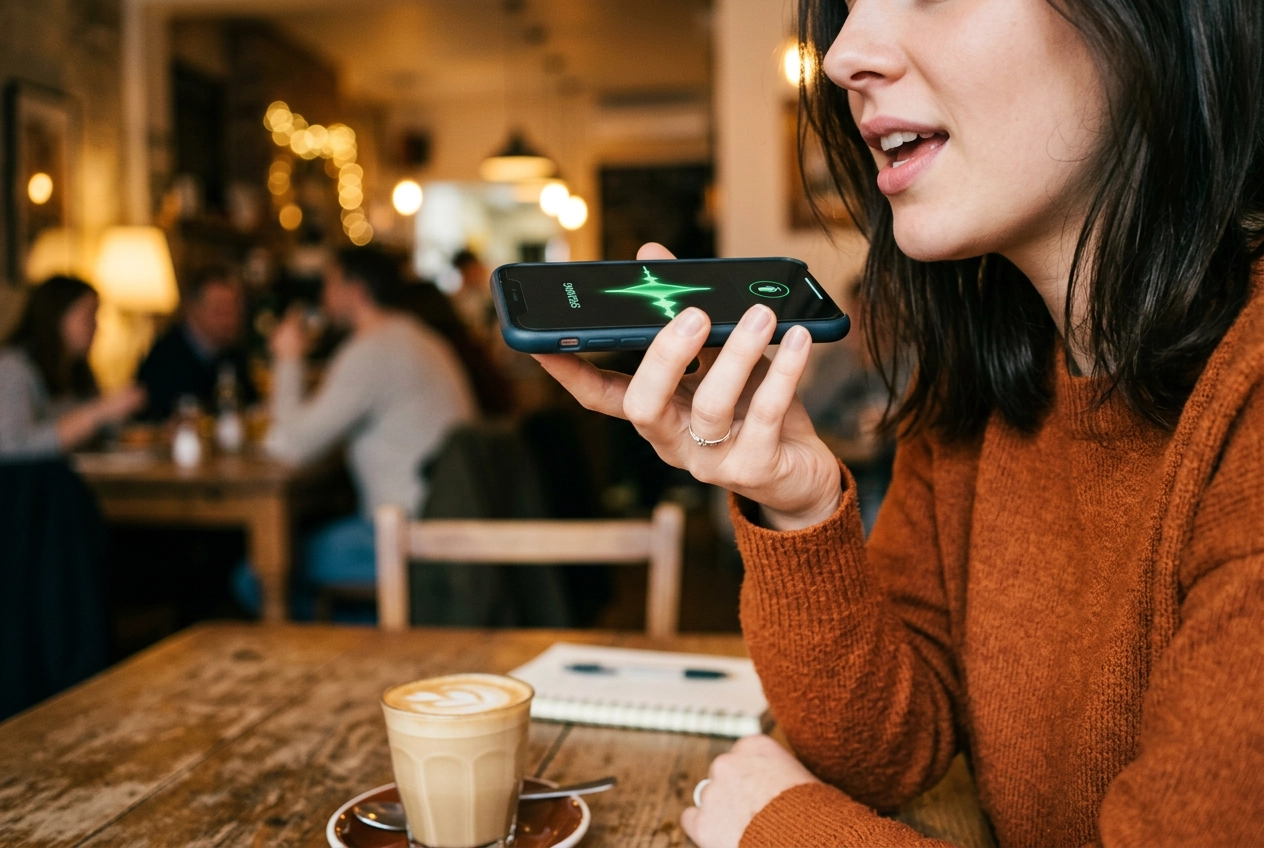
ChatGPT Voice Mode
What's free: Voice Mode on the free ChatGPT tier, with daily usage limits. Full Advanced Voice Mode requires the paid ChatGPT Plus subscription.
How to use it for English practice: ChatGPT wasn't designed as a language learning app, but its Voice Mode has become one of the most powerful free tools for English conversation practice. The key is giving it specific instructions.
Start with a prompt like: "I want to practice English conversation. I'm an intermediate learner. Ask me questions about my daily routine one at a time. After each answer, tell me if I made any grammar mistakes and suggest a more natural way to phrase one thing."
Without clear instructions, ChatGPT will just chat casually without correcting your English — which is fine for fluency but won't help you fix errors or learn new vocabulary.
The honest limitations: No pronunciation scoring, no vocabulary tracking, no progress reports. The free tier has usage caps that can interrupt longer speaking practice sessions. And you need to be comfortable crafting your own prompts — it's a general-purpose tool, not a structured English learning experience with lessons.
Best for: Tech-savvy learners who enjoy customizing their free English speaking practice and don't need built-in progress tracking.
Gliglish
What's free: 10 minutes of daily voice conversation practice and 50 text messages per session. No account required to start — one of the easiest ways to practice English speaking online free.
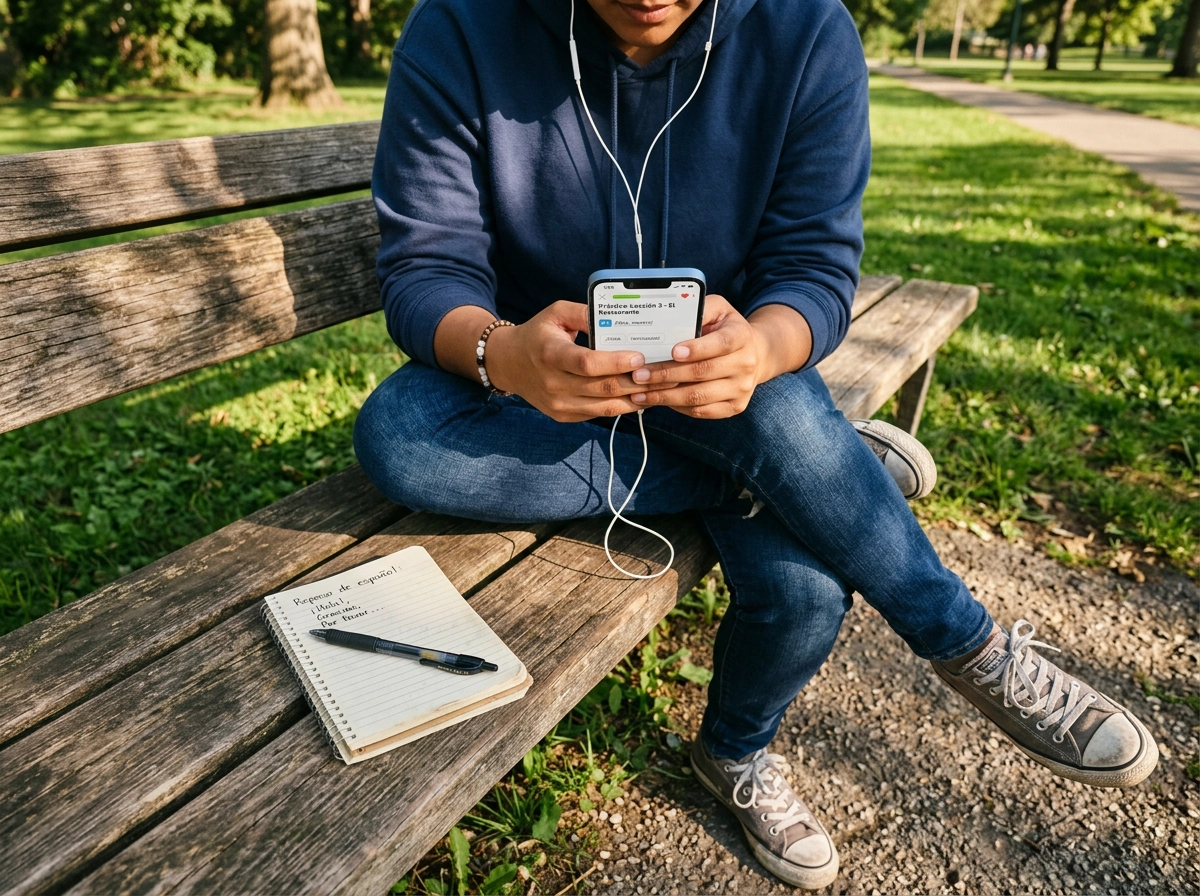
How to access it: Open gliglish.com, click "Start Speaking," and you're in a voice conversation within 30 seconds. No email. No password. No credit card.
Gliglish offers roleplay scenarios — ordering food, making phone calls, job interviews — with real-time grammar corrections during your spoken English lessons. You can adjust the AI's speaking speed to match your level, which is useful for beginners and a feature even some paid tools lack.
Ten minutes may not sound like much, but consistency matters more than duration for language learning. If you use Gliglish every single day, that's 70 minutes of active speaking practice per week — entirely free.
The honest limitations: Conversations can feel repetitive after a few weeks. Progress tracking is minimal. The AI doesn't deeply adapt to your specific weaknesses over time.
Best for: Learners who want zero-commitment daily free English speaking practice with no signup friction.
Practice Me (iOS and Android Free Trial)
What's free: A full-access trial on iOS (iPhone and iPad) and Android. Every feature unlocked during the trial — AI tutor personalities, American and British accents, automatic vocabulary saving, progress tracking. All the premium English conversation lessons and features, free during your trial.
Practice Me is purpose-built for real-time English voice conversations with AI tutors. You pick a tutor personality — Sarah, Oliver, or Marcus — choose your accent preference, and start talking. No scripts, no multiple-choice questions. The conversations feel genuinely natural because the AI adapts to your English level in real time.
What separates it from general AI tools: every word you encounter gets automatically saved to your vocabulary tracker, and your dashboard shows speaking time, vocabulary growth, and improvement trends. For learners interested in building English vocabulary through conversations, this automatic tracking helps you learn new words naturally while practicing speaking skills.
The honest limitations: The trial is time-limited. After the trial, it moves to an affordable subscription, with the yearly plan offering the best value.
Best for: Learners who want the most realistic AI English speaking practice and are willing to try before committing.
Language Exchange Platforms (Free English Conversation Practice with Real People)
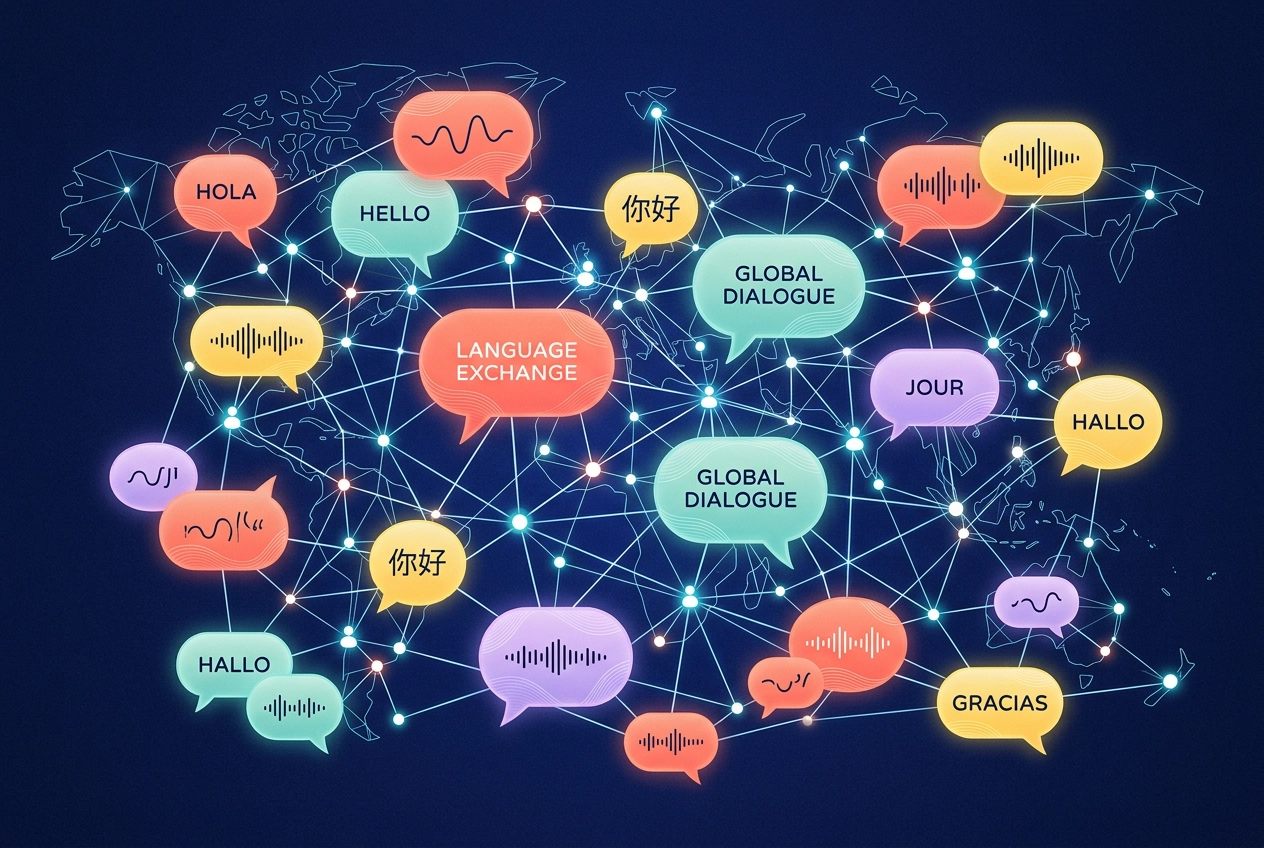
AI is impressive, but it's not human. Language exchange platforms connect you with real native English speakers who want to learn your language. The model is simple: you help them practice your native language, they help you improve your spoken English. Completely free.
HelloTalk
What's free: One language to learn, text and voice messaging with native speakers, Voice Rooms (live group audio conversations), community wall for posting and getting corrections, basic translation tools.
HelloTalk is the largest language exchange community on the planet, with over 50 million users. The standout free feature is Voice Rooms — live group audio conversations where native English speakers host discussions on specific topics. You can listen first and jump in when you're ready. It's a low-pressure speaking club available any time of day for free English conversation practice.
The community correction feature is genuinely useful for improving your English grammar and vocabulary. Post something on your feed, and native speakers will correct your grammar and suggest more natural phrasing — real feedback from real people, completely free.
The honest limitations: Your experience depends entirely on who you match with. Some language partners are dedicated; others disappear after one conversation. Time zones matter — you can't practice speaking at 2 AM unless your partner is awake. If speaking anxiety holds you back, Voice Rooms are a great starting point — read our guide on how to overcome the fear of speaking English for more strategies.
Best for: Social learners who enjoy cultural exchange and don't mind the unpredictability of human conversation partners for their English practice.
Tandem
What's free: Language partner matching based on shared interests and learning goals, text messaging, voice calls, and video calls — solid tools for English speaking practice online free with native speakers.
Tandem operates similarly to HelloTalk but positions itself as more curated and serious about language learning. The verification system helps filter out users who aren't genuinely interested in language exchange. You can filter partners by native language, interests, and location — making it easier to find someone who helps you improve your pronunciation and fluency.
The honest limitations: Smaller user base than HelloTalk, which means fewer potential conversation partners in some language pairs. Voice and video calls are free, though — which is what matters for speaking skills development.
Best for: Committed learners who want consistent, serious language exchange partners rather than casual chats.
Discord English Learning Servers
What's free: Everything. 24/7 voice channels, organized group practice sessions, daily English lessons, book clubs, and conversation rooms. Zero cost, ever.

Discord might be the most underrated free English speaking practice resource available. Major English learning servers — like English Speaking Practice (100,000+ members) and English Academy (300,000+ members) — offer structured daily events with voice channels where you can join conversations at any time.
How to get started: Download Discord (free on all platforms), search for "English learning" or "English speaking practice" on Disboard.org, and join a server. Most have welcome channels explaining the rules and event schedules.
What makes Discord unique: the group dynamic. Unlike 1-on-1 language exchange, you're practicing English in group conversations — closer to real-world speaking situations like meetings, social gatherings, and classroom discussions. You also get exposed to different accents and proficiency levels, which builds listening comprehension alongside speaking skills.
The honest limitations: Quality depends on the server. Some are well-moderated with scheduled lessons; others are chaotic. Voice channels can be intimidating for beginners.
Best for: Learners who want unlimited free group English speaking practice and thrive in community environments.
Self-Practice Techniques (No App Required)
Sometimes the best tools for improving your English speaking skills cost nothing and need no internet connection. These research-backed techniques work anywhere, anytime — and they're especially useful if you want to practice English speaking alone without relying on technology. For more structured solo exercises, check out our ESL speaking practice activities guide.
Shadowing with YouTube and Podcasts
What it is: You listen to a native English speaker and speak simultaneously — not after them, but at the same time. You "shadow" their voice, matching their rhythm, word stress, and intonation in real time. It's one of the most effective ways to improve your pronunciation for free.

Why it works: A 2025 systematic review of 44 studies found that shadowing consistently improves pronunciation and fluency among second-language learners. Research at the National Taiwan University showed it specifically improved intonation, fluency, word pronunciation, and overall spoken English skills.
How to do it:
- Pick a YouTube video or podcast with clear spoken English (TED Talks, BBC Learning English, or VOA Learning English work well)
- Listen to a 30-second segment once to understand it
- Play it again and speak along in real time — match the speaker's pace, tone, and rhythm
- Repeat the same segment 3–4 times. You'll hear improvement with each pass
Best for: Improving pronunciation, rhythm, and natural English intonation. This is one of the most effective ways to improve English speaking by yourself.
Duolingo taught you words. No one taught you to speak.
PracticeMe: real voice conversations with an AI tutor, 24/7.
Voice Recording and Self-Review
What it is: Record yourself speaking English on your phone, listen back, identify one issue, and re-record. Free English speaking practice in its purest form.
Your brain auto-corrects your own speech in real time — which means you literally can't hear many of your own pronunciation mistakes while you're making them. A recording removes that bias. Pronunciation errors, filler words ("um," "uh," "like"), and unnatural pauses become suddenly obvious when you listen back.
How to do it:
- Pick a question: "What did you do last weekend?" or "Describe your hometown"
- Record a 60-second answer without stopping
- Listen back and identify one specific thing to improve
- Re-record with that single correction
- Repeat — aim for one improvement per practice session
This method works best when combined with shadowing. Shadow a native English speaker, then record yourself saying the same passage without the audio and compare.
Best for: Pinpointing specific pronunciation errors and reducing filler words as you learn to speak English more naturally.
Reading Aloud
What it is: Read English text out loud, focusing on pronunciation, rhythm, and expression — a simple but effective way to practice English speaking free with any written content.
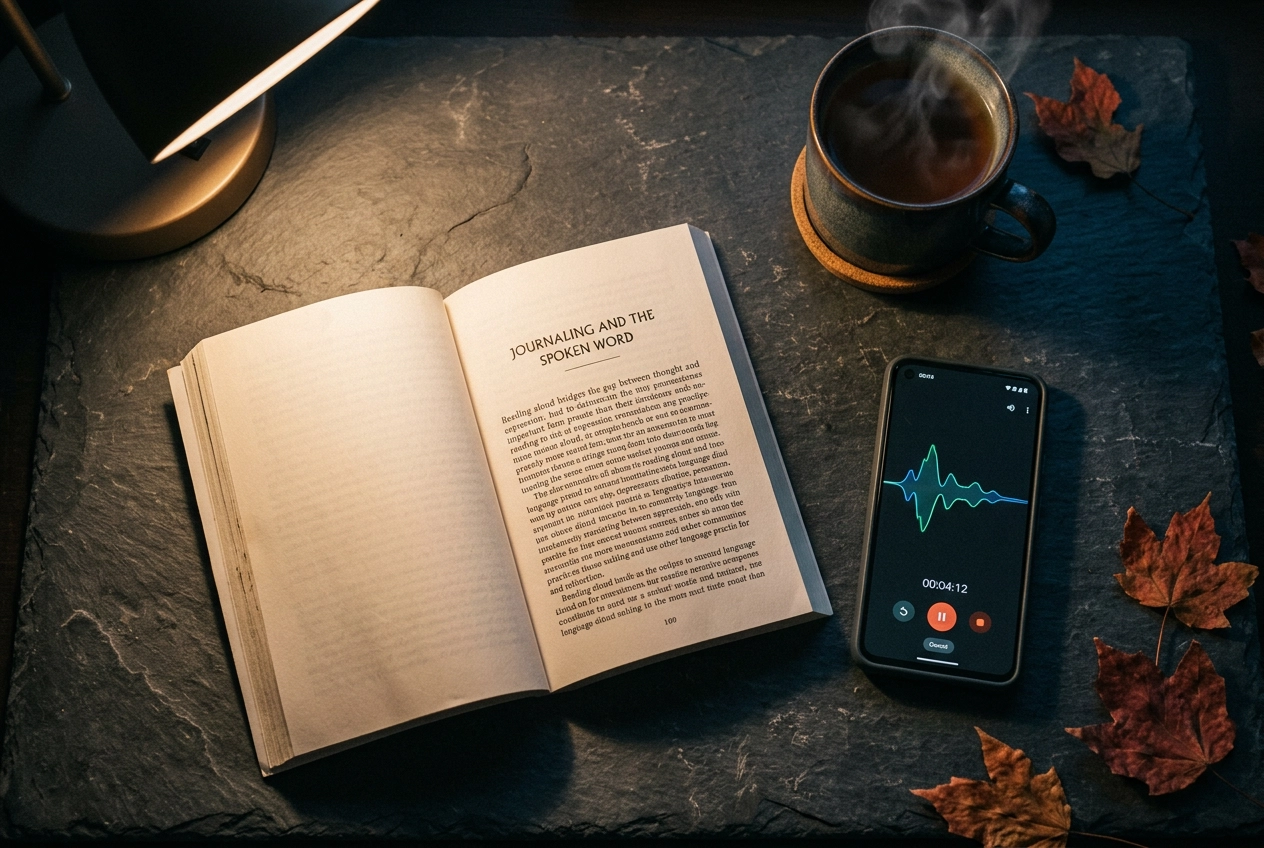
Many English learners have a large passive vocabulary (words you recognize when reading) but a much smaller active one (words you can produce smoothly in speech). Reading aloud forces your mouth to physically form words you'd otherwise only process silently — turning knowledge into active speaking skills.
What to read for speaking practice:
- News articles (BBC News, Reuters) for formal English
- Fiction dialogue for natural, conversational patterns
- Song lyrics for rhythm and connected speech
Start with material slightly below your reading level so you can focus on how you sound rather than what the words mean. Read each passage three times: slowly, at normal speed, then with natural expression.
Best for: Building mouth muscle memory for English sounds and bridging the gap between vocabulary knowledge and spoken fluency.
Free Educational Resources (Professional English Lessons)
These resources are produced by professional media organizations and government-funded educational bodies. They're 100% free, high-quality, and designed specifically for English learners. While they're primarily listening and learning tools, they provide excellent material for active speaking practice through shadowing and read-aloud exercises.
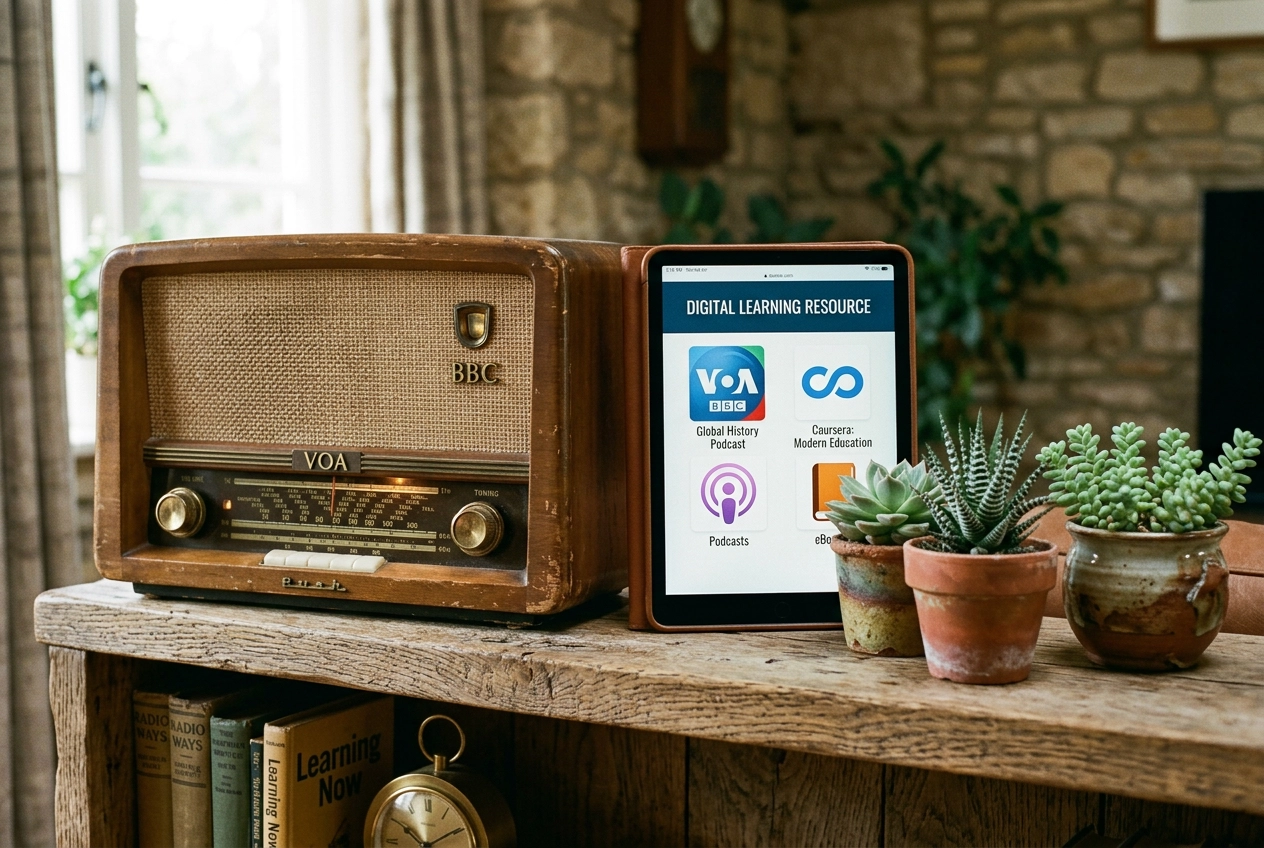
VOA Learning English
What's free: Everything — slow-speed broadcasts, structured lessons, videos, podcasts, and interactive exercises. All content at learningenglish.voanews.com.
Voice of America has been producing English lessons for learners since 1959. Their signature feature: news broadcasts spoken at roughly two-thirds normal speed with simplified vocabulary. Perfect for shadowing practice at beginner and lower-intermediate levels.
Content is organized by level and topic, including daily news stories you can shadow to improve pronunciation, discussion prompts you can answer aloud, and vocabulary lessons tied to current events.
Best for: Beginners and lower-intermediate learners who want structured American English lessons for listening and speaking practice.
BBC Learning English
What's free: Conversation podcasts, video lessons, grammar guides, pronunciation videos, and weekly updated content at bbc.co.uk/learningenglish.
The standout resource for free English speaking practice: the "Learning English Conversations" podcast series, updated weekly through 2026. Each 2–3 minute episode covers a real conversational phrase or expression in British English, with natural dialogue examples. Perfect length for shadowing exercises.
BBC Learning English also offers pronunciation-focused video lessons, grammar quick guides, and level-appropriate content from elementary to upper-intermediate — all free.
Best for: Intermediate learners who want natural British English exposure and excellent pronunciation modeling material.
British Council LearnEnglish
What's free: CEFR-leveled activities from A1 (elementary) to B2 (upper-intermediate), monthly community events, free workshops, live Q&A sessions, and speech recording features at learnenglish.britishcouncil.org.
This is the most structured free resource for English learning on this list. Activities are organized by level and skill type (speaking, listening, reading, writing), so you can follow a progression that builds on itself — closer to a structured curriculum than any other free option.
The monthly community events, including live workshops and Q&As with English teachers, provide real interaction and speaking practice opportunities at zero cost. These function as free spoken English lessons led by qualified instructors.
Best for: Learners who want curriculum-like progression and structured lessons organized by proficiency level.
How to Combine These Free Methods for Real Progress
No single free method covers every aspect of learning English speaking. AI tools build fluency through conversation. Language exchange gives you authentic human interaction. Self-practice refines pronunciation skills. Educational resources provide quality input and structured lessons.
Here's a practical daily routine that combines free English speaking practice methods — 30 minutes total, entirely free:
Morning (10 minutes): Shadowing practice with a BBC Learning English podcast or VOA broadcast. Three repetitions of a 30-second clip to improve pronunciation and rhythm.
Afternoon (10 minutes): AI conversation practice with Gliglish (or ChatGPT Voice). Pick a topic and speak freely to build fluency and learn new vocabulary.
Evening (10 minutes): Join a Discord voice channel or HelloTalk Voice Room. Listen for 5 minutes, then participate for 5. Practice your English speaking skills with real people.
Weekly bonus: Record yourself answering a question in English. Listen back. Compare to last week's recording. Track your improvement.
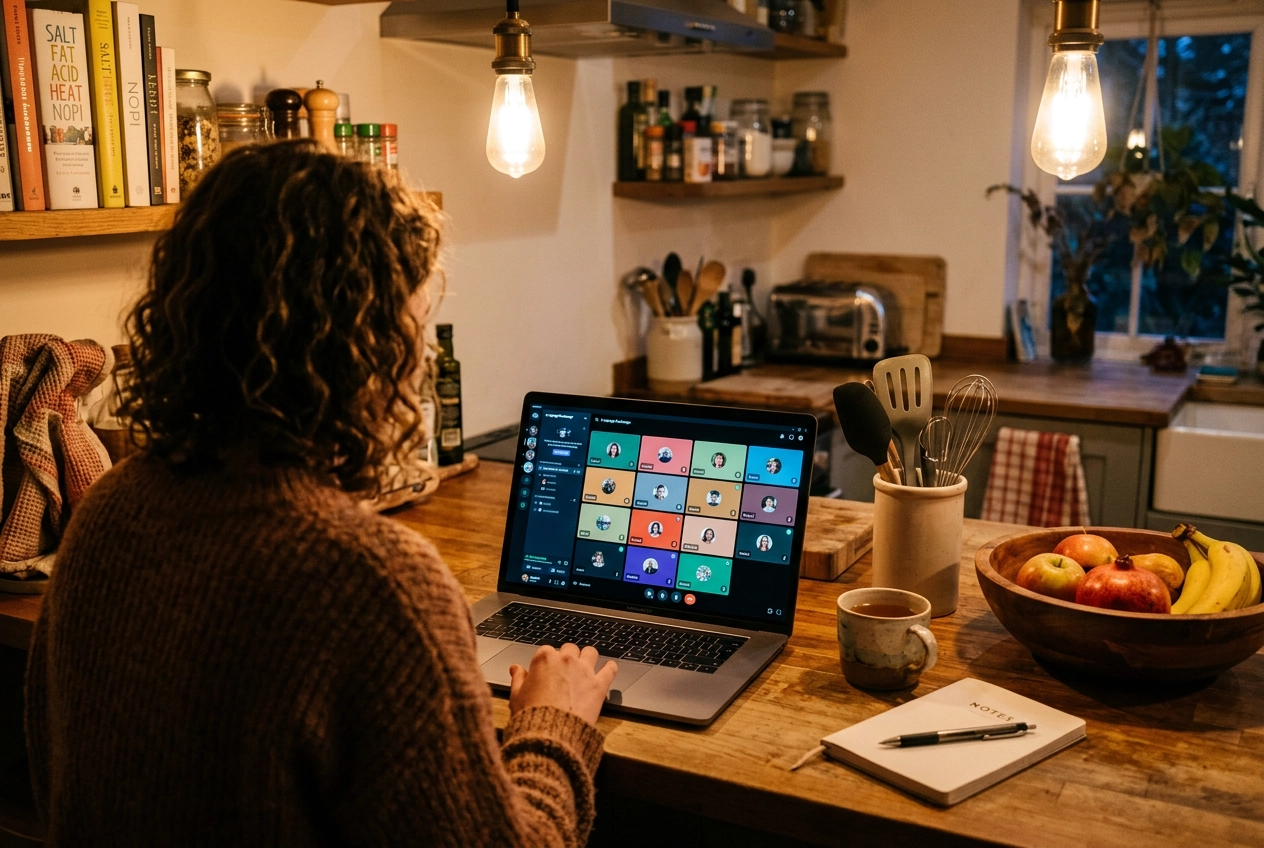
This routine hits every pillar of speaking development: input (shadowing), output (AI conversation), interaction (community practice), and self-assessment (recording). If you want a more detailed breakdown, check out our daily English speaking practice routine guide.
The most important principle: consistency beats intensity. Ten minutes of English speaking practice every day builds more fluency than two hours once a week. Pick the free methods you'll actually stick with, and build from there.
Want to explore AI conversation practice in more depth? Our guide on how to practice English speaking with AI covers strategies, prompts, and techniques for getting the most out of AI tools. Need English conversation practice topics for your sessions? We've compiled 50+ ideas by level. And if you're ready to speak English fluently and confidently, our 10 evidence-based tips can accelerate your learning.
Frequently Asked Questions
Can I really improve my English speaking without paying for a tutor?
Yes — and research backs this up. A 2025 classroom study showed 75% improvement in speaking scores among students using AI speaking tools over eight weeks, without any human tutor. The key is active practice (speaking English out loud) rather than passive study (reading textbooks). Free AI tools, language exchange partners, and self-practice techniques provide the active English speaking practice that builds fluency. A paid tutor adds accountability and expert feedback, but they're not the only path to improvement.
How many hours of free English speaking practice do I need per day?
You don't need hours — you need minutes. Language acquisition research shows that 15–20 minutes of focused daily practice is more effective than longer, infrequent sessions. The emphasis is on daily and focused: actually speaking English out loud, not just listening or reading. Even 10 minutes of genuine conversation practice daily adds up to over 60 hours per year — enough to see meaningful improvement in your speaking skills.
What's the fastest free method to improve English fluency?
AI conversation practice produces the fastest results because it gives you unlimited speaking opportunities with immediate interaction. A 2025 study found that learners using audio-only speaking practice improved spontaneous speech fluency 40% faster than those using screen-based tools. For the fastest free improvement, combine daily AI conversation practice (ChatGPT Voice or Gliglish) with shadowing exercises for pronunciation refinement.
Are AI conversation tools better than human language exchange partners?
They serve different purposes, and ideally you use both. AI tools excel at: daily consistency (available 24/7), practicing specific scenarios repeatedly, and building confidence without judgment — ideal for free English speaking practice on your schedule. Human partners are better for: authentic cultural exchange, unpredictable conversation flow, understanding accents and slang, and developing real-world social skills in English. AI builds your speaking foundation; human practice tests your skills in real conditions.
Which free resources are best for complete beginners?
Start with VOA Learning English for slow-speed listening input and structured beginner lessons, then add reading aloud from simple texts to build pronunciation basics. Once you can form basic sentences, move to Gliglish (adjust the AI's speaking speed to slow) or HelloTalk (find patient language exchange partners). The British Council LearnEnglish platform offers structured A1-level activities that guide you step by step. Avoid jumping into Discord voice channels or unstructured AI conversations until you can form basic sentences — free English speaking practice is most effective when you're ready for it.