Duolingo taught you words. No one taught you to speak.
PracticeMe: real voice conversations with an AI tutor, 24/7.
Learn English for Korean Speakers: Practice Guide

English for Korean speakers is unlike English for any other learner group. Korean and English share no common ancestor, no overlapping sound system, and almost no grammar. You studied English for a decade in school. You can read English fine. You can probably write a passable email in English. But when someone asks a simple question out loud, your mouth freezes — and the words that finally come out don't sound like the ones in your head.
This is the most common story in the Korean English learning journey, and it has nothing to do with intelligence or effort. Korean and English sit on opposite sides of almost every sound, rhythm, and grammar rule that matters for speaking. This guide for Korean speakers learning English walks through every one of those collision points — the exact sounds, the grammar transfer patterns, a list of 25 hard English words for Korean speakers, and a two-week practice plan built around them. Knowing where the two languages clash is the difference between another year of silent study and real English fluency for Koreans.
Quick Summary: English for Korean speakers has six specific pronunciation issues — R/L, F/P, V/B, TH, stress-timed rhythm, and final consonant clusters — plus grammar transfer from Korean's SOV structure and missing articles. Target these directly with minimal-pair drills and daily voice conversation, and your English speaking improves faster than years of textbook study.
English for Korean Speakers: Why the Two Languages Feel So Different
Korean (한국어) and English are not in the same language family. They share no common ancestor, so there's no friendly overlap to lean on — the way a Spanish speaker can rely on shared Latin roots when learning Italian, or the partial way Japanese speakers learning English encounter a similar-but-not-identical phonology challenge.
The raw inventory tells the story. Standard Korean uses roughly 10 vowel sounds and 14 consonants. American English uses 15 vowels (more if you count diphthongs) and 24 consonants. Several English sounds — /f/, /v/, /θ/, /ð/, /z/ — simply don't exist in the Korean language. Your mouth has never been trained to produce them.
Rhythm is worse. English is a stress-timed language: stressed syllables are longer & louder, unstressed syllables compress down to a tiny "uh" sound (the schwa /ə/). Korean is closer to syllable-timed — each syllable gets roughly equal weight. Speaking English with Korean rhythm sounds robotic to native ears, even when every individual word is correct.
Then there's syntax. Korean is Subject-Object-Verb (나는 사과를 먹어요 — literally "I apple eat"). English is Subject-Verb-Object ("I eat an apple"). The Korean language has no articles (a, an, the), optional plural markers, and drops the subject freely. Every one of those habits transfers into English speaking if you don't actively break it.
The good news: these problems are specific, limited, and fixable. This guide walks through every one of them with the exact mouth position, a minimal pair drill, a curated word list, and a 14-day plan that turns passive English into spoken English for Korean learners at any level.
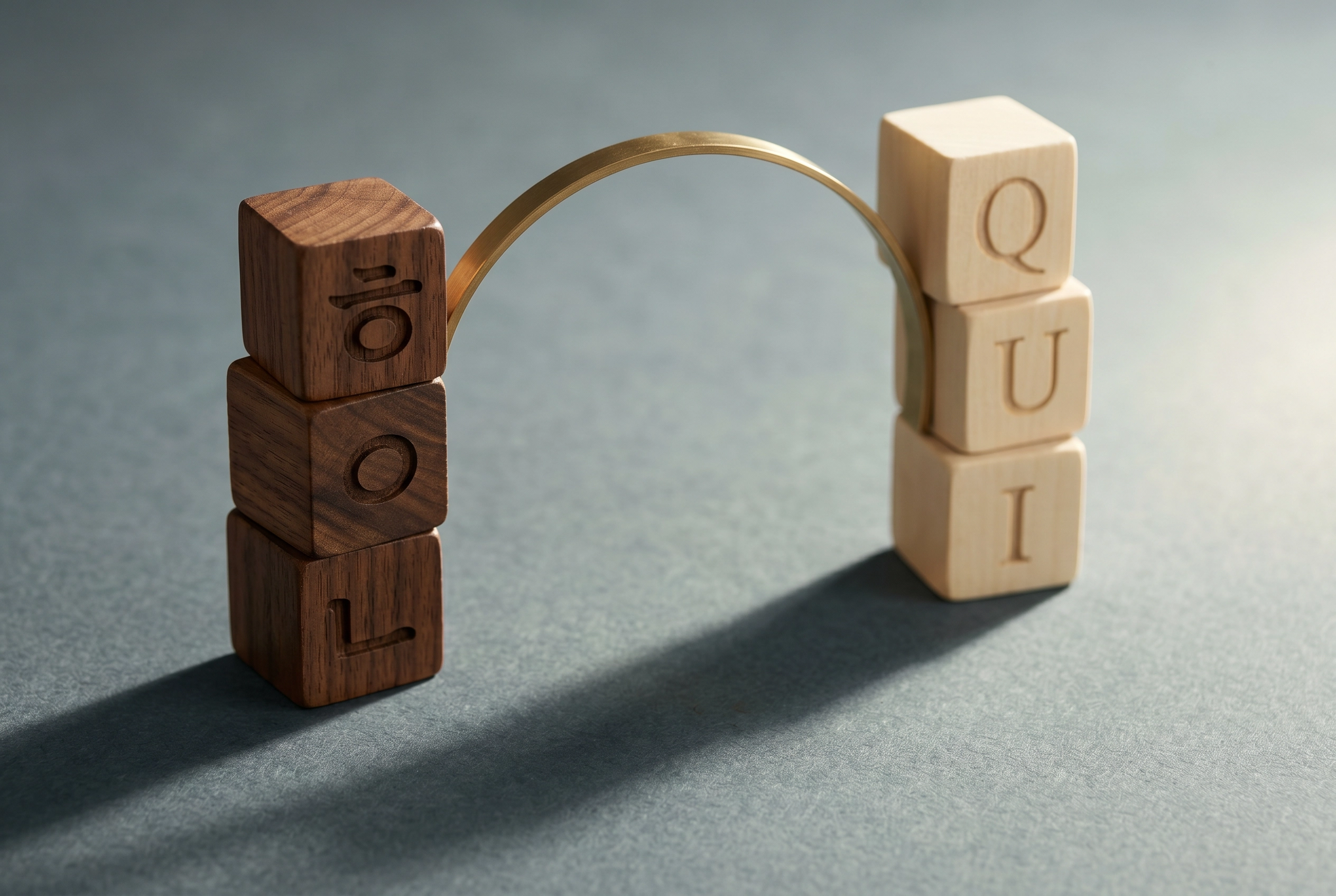
6 English Pronunciation Challenges for Korean Speakers
These six issues account for the majority of English pronunciation problems Korean speakers bring to the language. Each one has a mechanical fix — a specific thing your tongue, teeth, or lips need to do. None of them require natural talent. They require correct practice with feedback.
R vs L: One Letter in Korean, Two in English
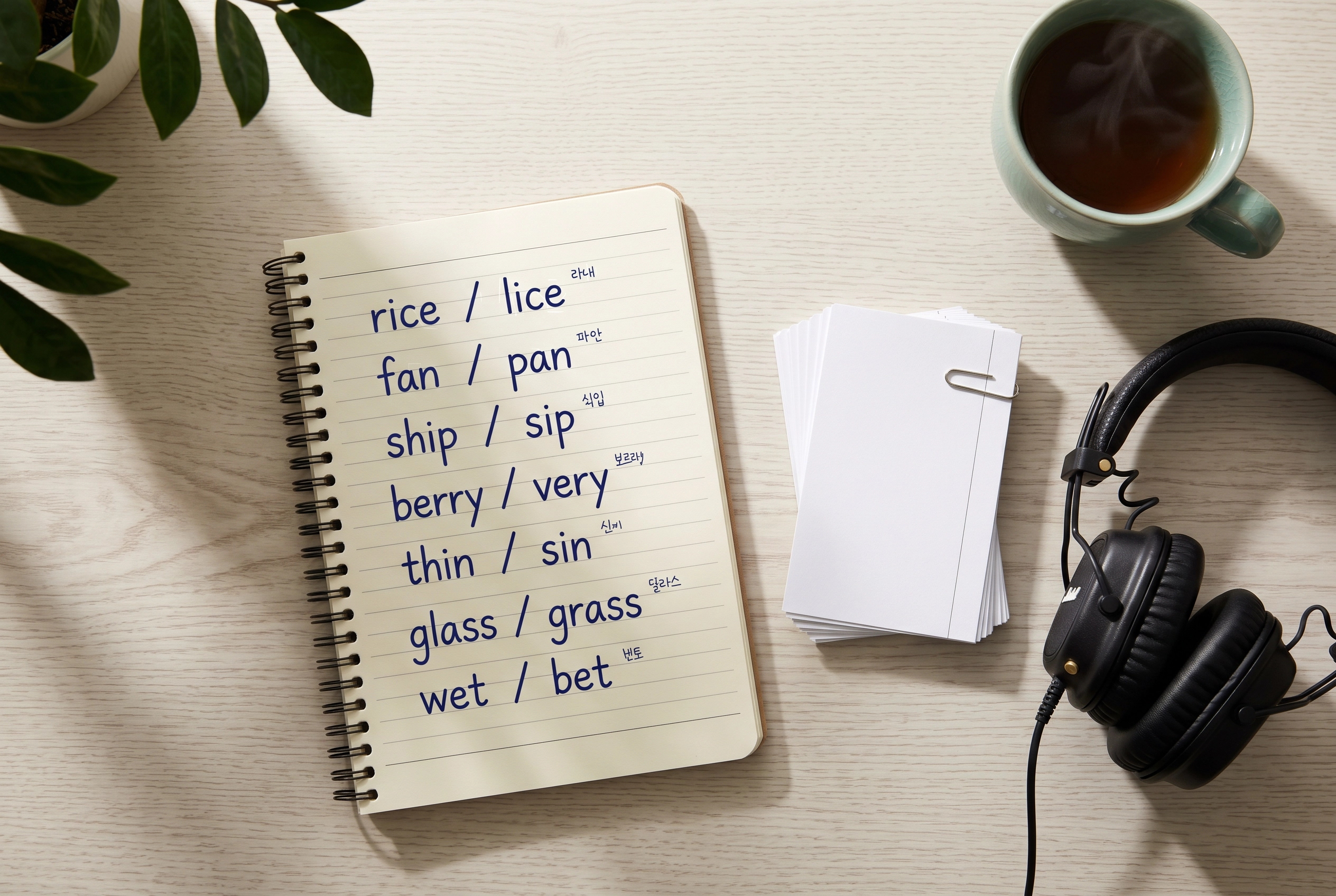
Korean has a single letter — ㄹ — that behaves like both English /r/ & /l/ depending on its position. Between vowels, it sounds like a tap (closer to English /r/). At the start of a syllable or when doubled (ㄹㄹ), it sounds more like /l/. Because it's one letter in the Korean language, your brain hears it as one sound. This R & L confusion is the single most studied pronunciation challenge in English for Korean speakers research.
English treats /r/ & /l/ as two completely different phonemes. Mixing them up changes meaning:
- rice /raɪs/ vs lice /laɪs/
- right /raɪt/ vs light /laɪt/
- red /rɛd/ vs led /lɛd/
- collect /kəˈlɛkt/ vs correct /kəˈrɛkt/
- pray /preɪ/ vs play /pleɪ/
The mechanical fix:
- English /r/ — Curl your tongue tip up and back toward the roof of your mouth, but don't touch. Round your lips slightly. The sound is a growl with no contact.
- English /l/ — Press your tongue tip firmly against the ridge behind your upper front teeth (the alveolar ridge). There's clear contact. Keep it pressed as you voice the sound.
The mirror test: watch your tongue. For /r/, you should see no contact. For /l/, you should see the tongue touching. If both look the same, you're still using Korean ㄹ.
F vs P: The Sound Korean Doesn't Have
The Korean language has no /f/. When Korean speakers encounter "fan," the brain reaches for the closest sound — aspirated ㅍ (a strong /p/). The result: "fan" becomes "pan," "coffee" becomes "coppy," "file" becomes "pile."
The pairs to drill:
- fan /fæn/ vs pan /pæn/
- file /faɪl/ vs pile /paɪl/
- fine /faɪn/ vs pine /paɪn/
- coffee /ˈkɔfi/ — watch the double consonant
The mechanical fix:
Rest your upper teeth lightly on your lower lip. Blow air out. No voice, no vocal cord vibration — just steady airflow through the small gap. Put your hand in front of your mouth: you should feel a continuous stream of air for /f/. For /p/, your lips close completely and release a puff. These are physically different motions. If you can feel air on your hand, you're making /f/.
V vs B: Voice It, Don't Close It
/v/ is /f/'s voiced partner. Korean has no /v/, so it gets replaced with ㅂ (b). "Vote" becomes "bote," "very" becomes "berry," "vet" becomes "bet." For Korean speakers, English V pronunciation is one of the most forgiving wins — once you learn the motion, it's consistent across every word.
Drill pairs:
- vet /vɛt/ vs bet /bɛt/
- very /ˈvɛri/ vs berry /ˈbɛri/
- vote /voʊt/ vs boat /boʊt/
- van /væn/ vs ban /bæn/
The mechanical fix:
Same mouth position as /f/ — upper teeth on lower lip — but add your voice. Put your hand on your throat. For /v/, you should feel vibration (the vocal cords buzzing). For /b/, your lips close completely before opening; no continuous airflow, just a release.
Think of it this way: /v/ is a steady buzz through a narrow gap. /b/ is an explosion from closed lips. They require completely different mouth choreography.
TH Sounds (/θ/ & /ð/): Tongue Between Teeth
English has two TH sounds. Korean has neither. Interestingly, this is a gap Korean speakers share with Japanese, French, and many other languages that don't use dental fricatives — which is why the TH sound is consistently listed among the top English pronunciation challenges for Korean speakers and learners from related language backgrounds.
- Voiceless /θ/ as in think, three, thanks. Korean speakers substitute /s/ → "sree."
- Voiced /ð/ as in this, that, brother. Korean speakers substitute /d/ → "dis," "dat," "bruder."
The mechanical fix:
Stick the tip of your tongue between your upper and lower front teeth. You should see a small piece of your tongue in a mirror. Then:
- For /θ/ (voiceless), blow air — no voice
- For /ð/ (voiced), make the sound while vibrating your vocal cords

High-frequency words to drill:
- Voiceless: three, think, thing, thanks, through, tooth, mouth, breath, healthy
- Voiced: this, that, these, those, they, them, there, mother, father, brother, weather, rather
The biggest free win for Korean speakers: "thank you" said correctly instead of "sank you" immediately signals careful English.
Word Stress: Syllable-Timed vs Stress-Timed Rhythm
This one is invisible to most Korean learners — which is why it's the biggest marker of a Korean accent in English even for advanced speakers.
The Korean language treats every syllable with near-equal weight & duration. English doesn't. Every English word has one primary stressed syllable that is longer, louder, and higher in pitch. Every unstressed syllable compresses, usually to the schwa sound /ə/ (a neutral "uh").
Watch what happens to the same root word:
- PHO-to-graph (stress on syllable 1)
- pho-TO-gra-pher (stress on syllable 2)
- pho-to-GRAPH-ic (stress on syllable 3)
The stressed syllable isn't just louder — it's longer. The unstressed vowels reduce heavily. "Photographer" is closer to /fəˈtɑgrəfər/ — three of those four vowels become schwa.
Stress can also change meaning:
- PRE-sent (noun, a gift) vs pre-SENT (verb, to give)
- RE-cord (noun) vs re-CORD (verb)
- OB-ject (noun, a thing) vs ob-JECT (verb, to disagree)
The mechanical fix: When you learn a new English word, learn its stress at the same time. Exaggerate the stressed syllable — clap or tap when you hit it. Korean speakers almost always under-stress, so over-correcting lands you in the right place.

Final Consonant Clusters: Kill the Extra Vowels
Korean syllables are short — at most consonant-vowel-consonant (CVC). Only a handful of final consonants are even allowed, and they're unreleased.
English allows brutal consonant stacks. Onsets up to three consonants (strength, sprint), codas up to four (sixths, texts). Korean speakers deal with this by adding vowels between consonants — a process called epenthesis:
- desk → "de-seu-keu"
- text → "te-keu-seu-teu"
- strength → "seu-teu-leng-seu"
- script → "seu-keu-lip-teu"
The extra vowels make your English sound noticeably non-native and can confuse listeners.
The mechanical fix: Say the consonants as a single motion, with no vowels between them. Your tongue moves from position to position without releasing air through a vowel. Practice slowly at first, then speed up:
- s-k (sky, school, scream)
- s-p (speak, spring, split)
- s-t-r (street, strong, strength)
- k-s-t (text, next, mixed)
- n-d-z (hands, finds, friends)
While you're at it: English voiced final consonants need to stay voiced. Bag should end with a /g/, not a /k/. Lab ends with /b/, not /p/. Have ends with /v/, not /p/. Release the consonant with your voice still on.
For free drill material that works for learners of any language background, our guide on English pronunciation practice for beginners and the full hardest English words to pronounce resource cover similar sounds across Spanish, Japanese, French, and other language groups.
25 Difficult English Words for Korean Speakers (With IPA)
Every word in this list of English words for Korean speakers is a trap that catches learners daily. For each one: the word, the IPA transcription, what Korean speakers commonly say instead, and the specific fix.
| # | Word | IPA | What Korean Speakers Often Say | Fix |
|---|---|---|---|---|
| 1 | right | /raɪt/ | "light" | Curl tongue back, no contact for R |
| 2 | light | /laɪt/ | Blurs with "right" | Tongue tip TOUCHES gum ridge |
| 3 | rural | /ˈrʊrəl/ | "lulul" or "lural" | Alternate R (no contact) & L (contact) |
| 4 | three | /θriː/ | "free" or "sree" | Tongue between teeth, blow air, then R |
| 5 | thanks | /θæŋks/ | "sanks" or "thenks" | TH + open /æ/ + voiceless cluster |
| 6 | brother | /ˈbrʌðər/ | "bruder" | Voiced TH — tongue between teeth with voice |
| 7 | fan | /fæn/ | "pan" | Teeth on lip, blow air, no voice |
| 8 | coffee | /ˈkɔfi/ | "coppy" | F sound, not P; final EE not short I |
| 9 | vet | /vɛt/ | "bet" | Teeth on lip + VOICE (buzz) |
| 10 | very | /ˈvɛri/ | "berry" | V not B, R not L |
| 11 | vote | /voʊt/ | "bot" | V + diphthong /oʊ/ (oh-oo) |
| 12 | zoo | /zuː/ | "joo" or "soo" | Tongue near teeth, buzz |
| 13 | peas | /piːz/ | "piss" | Long EE + voiced Z at end |
| 14 | sheep | /ʃiːp/ | "ship" | Long /iː/ — spread lips wide |
| 15 | ship | /ʃɪp/ | Blurs with "sheep" | Short /ɪ/ — relaxed, shorter |
| 16 | cat | /kæt/ | "ket" | Open mouth wider for /æ/ |
| 17 | bag | /bæɡ/ | "beg" or "back" | /æ/ vowel + voiced final G |
| 18 | world | /wɜːrld/ | "wolud" or "wol" | W + central /ɜːr/ + L cluster |
| 19 | girl | /ɡɜːrl/ | "gul" | Hold the ER sound, then L |
| 20 | work | /wɜːrk/ | "walk" | Central /ɜːr/, not rounded /ɔː/ |
| 21 | wood | /wʊd/ | "ood" (W drops) | Round lips firmly for W |
| 22 | school | /skuːl/ | "seu-kul" | No vowel between S & K |
| 23 | strength | /strɛŋθ/ | "seu-teu-leng" | STR as one motion + final TH |
| 24 | sixth | /sɪksθ/ | "siks" | KS + TH at the end — slow it down |
| 25 | pronunciation | /prəˌnʌnsiˈeɪʃən/ | Equal stress on all syllables | Stress the 4th syllable: pro-nun-ci-A-tion |
Drill ten English words a day for three days. Then record yourself saying all 25 and listen back. Most Korean speakers make measurable progress within a week. For free drill variety, rotate in English tongue twisters — they force rapid articulation of exactly the sound pairs Korean speakers struggle with.
Duolingo taught you words. No one taught you to speak.
PracticeMe: real voice conversations with an AI tutor, 24/7.
Grammar Interference: What Your Korean Brain Wants to Do in English
Pronunciation is visible. Grammar transfer is invisible — it happens in the split-second between thinking in Korean and translating to English. These are the four grammar patterns that leak from Korean into English most often.
Articles (a, an, the) — Korean Has None
The Korean language simply doesn't have articles. Context & particles carry the information that English forces into a, an, and the. So Korean learners of English tend to either skip articles entirely or guess. Articles are consistently the #1 grammar mistake Korean speakers make in written & spoken English.
Three rules that cover 90% of cases:
-
Use "a/an" for any singular countable noun when you mention it for the first time or when any one of its kind works.
- ✗ "I bought book yesterday."
- ✓ "I bought a book yesterday."
-
Use "the" when both you and the listener know which specific one you mean.
- ✗ "I went to store."
- ✓ "I went to the store." (we both know which store)
-
Use "the" for things that are unique.
- "the sun," "the president," "the internet"
Drill by forcing yourself to include an article with every singular noun for a week. Over-including articles sounds slightly off; missing them sounds clearly non-native.
Word Order — From SOV to SVO
Korean puts the verb at the end. Always. English refuses to. This is the single biggest syntactic shift for Korean speakers learning English — and it's a shared challenge with Japanese learners, since Japanese is also SOV.
- Korean: 나는 어제 친구를 만났어요 → literally "I yesterday friend-object met"
- English: "I met a friend yesterday" — verb in the middle, object after
The mistake most Korean speakers catch themselves making is verb-last thinking on complex sentences:
- ✗ "I, because I was tired, early went home."
- ✓ "I went home early because I was tired."
The English verb sits between subject & object. Conjunctions, relative clauses, & adverbial phrases don't change that. When you feel a sentence building in your head with the verb at the end, stop and rebuild it with verb-second.
Plural Markers — English Forces the -s
The Korean language can mark plurals with 들 (deul), but usually doesn't need to — context handles it. English is strict: countable nouns must show singular or plural form.
- ✗ "I have three book."
- ✓ "I have three books."
- ✗ "She has many friend in Seoul."
- ✓ "She has many friends in Seoul."
Watch out for three categories:
- Countable nouns (book, friend, question, idea) — take -s or -es
- Uncountable nouns (water, information, advice, furniture) — never take -s
- Irregular plurals (child → children, man → men, foot → feet, person → people)
"Informations" and "advices" are two of the most common mistakes Korean speakers make — both words are uncountable in English.
Relative Clauses — Reverse the Modifier Order
Korean puts relative clauses before the noun they modify. English puts them after, usually with who/which/that.
Korean order: 어제 만난 사람 → literally "yesterday met" + "person" English order: the person who I met yesterday
You can feel the difference in sentences like:
- ✗ "The yesterday I bought book is interesting." (Korean word order)
- ✓ "The book that I bought yesterday is interesting."
The modifier comes after the noun in English, almost always with a relative pronoun (who for people, which for things, that for both). Start noticing relative clauses in English you read — they sit after the noun almost every time.
Speak vs Practice Me: Why English-Only Beats Multilingual Service
If you've shopped for an English speaking app in Korea, you've seen Speak everywhere. The company closed a $78 million Series C led by Accel in December 2024, and its early strategy was explicitly to treat the Korean market as a "sandbox" — in the words of its investor, one of the most competitive language-learning markets in the world. Speak's Korean ads are unavoidable.

Here's the catch. As Speak has scaled, it has expanded its service to six languages: English, Korean, Spanish, Japanese, French, & Italian. That's a big business win — it's also a problem for Korean speakers who only care about English. Product attention, engineering hours, & content design all get split across six language pairs. A lesson that works reasonably well for a Japanese speaker learning English is not a lesson designed around your R/L problem, your F/P substitution, your epenthesis habit as a Korean speaker.
Practice Me took the opposite bet: English only. Every tutor, every conversation topic, every piece of progress tracking is built for one goal — getting Korean speakers comfortable speaking English out loud.
What that looks like in practice:
- Real-time voice conversations that feel like phone calls, not scripted exercises. You speak, the AI tutor answers, you respond. No multiple-choice interruptions.
- Three tutor personalities — Sarah, Oliver, and Marcus — each with different styles & specializations. If one tutor's pace doesn't match yours, switch.
- American or British accent selection. Korean English learners typically train American (the hagwon standard), but British is available if you're studying in the UK or working with British colleagues.
- Automatic vocabulary saving so every new English word you hear & use is logged without you stopping the conversation.
- 24/7 availability — important for Korean learners whose schedules include 야근 (late-night work) & early morning commutes.
A few things Practice Me deliberately doesn't do, so you know: no text chat (voice is the entire product), no live human tutors, no grammar drill exercises. If you want a workbook, this isn't it. If you want to talk until speaking English stops feeling scary, this is exactly it.
For a deeper comparison of conversation-focused apps, see our guide on practicing English speaking with AI. If you're choosing between apps and human tutors, read how to improve English speaking as a non-native speaker.
Your 14-Day Korean-to-English Speaking Plan
Two weeks won't make any Korean speaker fluent in English. It will train six foundational sounds, fix the biggest grammar leaks, and get you used to speaking English daily — which is the actual gap most Korean learners have.
Plan rules:
- 20–30 minutes per day, no skipping
- Every session ends with live speaking, not just drills
- Record yourself on Day 1 & Day 14 — the difference will surprise you
Week 1: Sound Foundations
| Day | Focus | Drill (10 min) | Speaking (10–20 min) |
|---|---|---|---|
| 1 | R vs L | Rice/lice, right/light, red/led — 5 pairs × 10 reps | Practice Me: food & restaurant topic |
| 2 | F vs P | Fan/pan, file/pile, coffee, fine/pine | Practice Me: travel topic |
| 3 | V vs B | Vet/bet, very/berry, vote/boat, van/ban | Practice Me: hobbies conversation |
| 4 | TH sounds | Three/free, thanks, this/dis, brother | Practice Me: tell a childhood story |
| 5 | Long vs short I | Sheep/ship, leave/live, seat/sit | Practice Me: describe your week |
| 6 | Central vowel ER | Work, girl, world, first, bird | Practice Me: job interview roleplay |
| 7 | Review | Re-drill your weakest pair | Practice Me: 20-min free conversation |
Week 2: Structure, Rhythm, & Fluency
| Day | Focus | Drill (10 min) | Speaking (10–20 min) |
|---|---|---|---|
| 8 | Consonant clusters | Desk, text, strength, next, script | Practice Me: academic/study topic |
| 9 | Word stress | PREsent vs preSENT, PHOto vs phoTOG | Practice Me: professional conversation |
| 10 | Sentence rhythm | Content vs function word stress | Practice Me: storytelling with Oliver |
| 11 | Articles a/an/the | Write and read 20 sentences forcing articles | Practice Me: shopping conversation |
| 12 | SVO + plurals | 15 SVO sentences + force plural -s | Practice Me: everyday conversation |
| 13 | Relative clauses | "The person who..." / "The thing that..." × 10 | Practice Me: opinion/discussion topic |
| 14 | Final test | Re-record Day 1 passage | Practice Me: 30-min free conversation |
Pair this plan with a daily English speaking practice routine if you want to extend it past two weeks. Three pieces of advice from what works for Korean learners specifically:
- Record everything. Korean learners who refuse to record themselves plateau. The ear learns faster than the mouth, and hearing your own mistakes is the fastest feedback loop.
- Exaggerate at first. Korean speakers under-stress, under-aspirate, & swallow final consonants. When you over-correct toward the English version, you usually land in the right zone. The natural-sounding version comes later.
- Don't translate. At beginner level, translation is unavoidable. After Day 7, start forcing yourself to respond in English without a Korean detour. More on this in our guide on how to stop translating and speak English naturally.
If you're preparing for TOEFL speaking specifically, our TOEFL speaking practice topics covers the task format in detail.
Frequently Asked Questions About English for Korean Speakers
Why is R & L so hard for Korean speakers?
Korean uses one letter — ㄹ — that maps to both English /r/ & /l/ depending on its position in a word. Between vowels, it behaves like a tap (closer to /r/). At the start of a syllable or doubled as ㄹㄹ, it behaves like /l/. Because it's one letter with one name in the Korean language, Korean speakers often perceive /r/ & /l/ as the same sound. Training your ear to hear the difference with minimal-pair drills (rice/lice, right/light) has to come before your mouth can reliably produce the difference.
How long does it take for a Korean speaker to become fluent in English?
The US Foreign Service Institute ranks Korean as a Category IV language (hardest for English speakers), & the reverse path from Korean to English is similarly long — most Korean learners need 2,000+ hours of focused study to reach professional English fluency. But speaking fluency depends almost entirely on speaking practice hours, not reading or grammar study. Korean speakers who add 20–30 minutes of daily conversation for 6–12 months typically see dramatic English speaking gains, even if their grammar knowledge was already strong.
Should Korean speakers learn American or British English?
American English dominates Korean schools, Korean business environments, & most Korean English media, so American is the default for most learners. British English is the better choice if you're studying in the UK, working with British colleagues, or planning to move to a Commonwealth country. The two accents share 90%+ of sounds — the main differences are a few vowels, the R sound (American rhotic, British non-rhotic), & some vocabulary. Practice Me lets you switch between American & British accents in any tutor, so Korean speakers can train whichever matches their goals. For accent-specific training, see our guide to the best app to learn American accent.
What's the best app service for Korean speakers to practice English conversation?
Speak is the most visible option in Korea thanks to heavy marketing, but it now covers six languages (English, Korean, Spanish, Japanese, French, Italian) & focuses on structured lessons & scripted role-plays. For unscripted English conversation practice, Practice Me is built around free voice conversation with AI tutors, available on iOS & Android with a 3-day free trial via the App Store or Google Play. Other options include ELSA Speak (pronunciation-focused), Cambly (human tutors, much more expensive), & italki (human tutors, scheduling required). If you mostly need speaking reps with immediate feedback & no scheduling, an AI voice service will give Korean speakers far more English practice hours per dollar than human tutors.
How do I stop translating from Korean in my head when speaking English?
Translation is natural at beginner levels — your brain has no other route. The habit breaks when you build chunks: short English phrases stored as whole units rather than assembled word by word in real time. Practicing common English sentence patterns ("Can you…", "I'd like to…", "What do you think about…") until they're automatic is the fastest route. Daily speaking forces the brain to skip the Korean step because translation is simply too slow in real conversation. We go deeper on this in our guide on how to stop translating and speak English naturally.
Start Speaking English Confidently
Ten years of Korean school English taught you to read & write. Two weeks of targeted speaking practice can teach your mouth to actually produce the sounds — & your brain to stop hiding behind translation.
Korean speakers learning English don't need a perfect accent. You don't need to memorize more vocabulary. You need reps in real spoken English, with immediate feedback, in an environment where making mistakes doesn't cost face.
That's the core of what Practice Me was built for: judgment-free voice conversations with AI tutors who adapt to your level, available any time you have 20 minutes free. Pick your tutor (Sarah, Oliver, or Marcus), pick American or British English, and start talking. No scheduling, no 선생님 (teacher) to disappoint, no classroom pressure.
Unlimited conversations are included in Practice Me Pro. If you're still nervous about speaking, our guide on how to overcome the fear of speaking English is a good starting point. When you're ready to learn English for Korean speakers the right way, download Practice Me & start your first conversation today.
화이팅! (You've got this.)