Duolingo taught you words. No one taught you to speak.
PracticeMe: real voice conversations with an AI tutor, 24/7.
50 English Tongue Twisters for Pronunciation Practice

English tongue twisters aren't just silly phrases kids say on the playground. They're real pronunciation training tools — the same ones actors, news anchors, and speech therapists use to sharpen their diction before going live. For English learners, tongue twisters are one of the fastest ways to train your mouth to handle sounds that don't exist in your native language.
Quick Summary: English tongue twisters build muscle memory in your mouth, training you to switch between difficult sounds faster and more accurately. Below you'll find 50 tongue twisters in English organized by difficulty level and target sound — from beginner-friendly S/SH pairs to MIT-certified "impossible" ones. Start slow, build speed, and practice 5–10 minutes daily for noticeable improvement.
Why English Tongue Twisters Actually Improve Your Pronunciation
Here's what happens when you stumble over "she sells seashells": your brain is sending signals to your tongue, lips, and jaw to switch rapidly between similar sounds. When those muscles aren't trained for those specific movements, you trip up.
That's exactly why tongue twisters work. They're reps for your mouth.
Repeating tongue twisters builds muscle memory faster than regular speech practice. Your mouth learns specific sound combinations through repetition — the same way your fingers learn guitar chords or your legs learn a dance step.
In 2013, researchers at MIT found that the phrase "pad kid poured curd pulled cod" was so difficult that test subjects either couldn't repeat it or stopped speaking entirely. Psychologist Stefanie Shattuck-Hufnagel's study showed that certain sound combinations create a kind of "traffic jam" between your brain and mouth — and tongue twisters train you to clear that jam.
For English learners specifically, tongue twisters help you:
- Isolate problem sounds — If you struggle with TH, R/L, or S/SH, targeted twisters force practice on those exact sounds
- Build speed and fluency — Slow, deliberate practice leads to faster, more natural speech over time
- Improve your accent — Whether you're working on an American accent or a British accent, twisters train the specific mouth movements each accent demands

How to Practice English Tongue Twisters (the Right Way)
Most people just try to say tongue twisters fast. That's the wrong approach — especially if English isn't your first language. Here's how to actually get results:
- Read it slowly first. Understand every word and sound before attempting to say it.
- Break it into chunks. Say "She sells / seashells / by the seashore" — not the whole phrase at once.
- Focus on clarity, not speed. If each sound isn't crisp, slow down.
- Repeat 5 times in a row. This is where muscle memory builds. Once through won't change anything.
- Gradually increase speed. Only go faster when you can say it cleanly at your current pace.
- Record yourself. Listen back — you'll catch mistakes you can't hear in real time.
- Practice daily. Even 5–10 minutes as part of a daily English speaking practice routine makes a measurable difference.
The biggest limitation of solo practice? No feedback. You might think your TH sounds perfect while actually saying a D sound. Practicing English speaking with AI solves this — you get real-time responses to your pronunciation without the awkwardness of stumbling in front of another person.
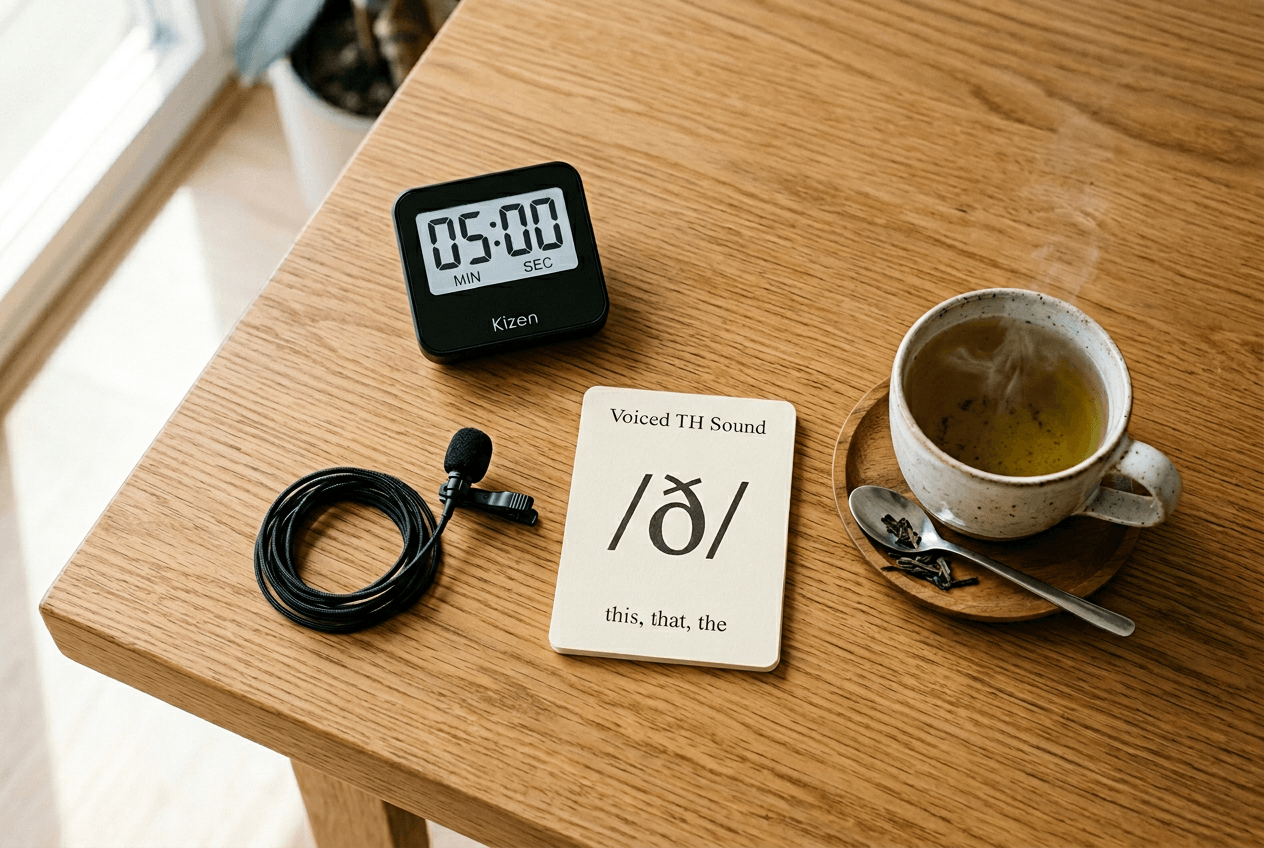
Now, let's get to the 50 English tongue twisters. They're organized by difficulty level, and within each level, grouped by the sound they target.

Beginner English Tongue Twisters (1–15)
These are your warm-ups. They use common sounds and shorter phrases. If you're starting fresh with English pronunciation practice as a beginner, start here.
S and SH Sounds
The /s/ and /ʃ/ (SH) distinction trips up speakers from many language backgrounds. For the S sound, your tongue tip sits near the ridge behind your upper teeth. For SH, pull your tongue slightly back and widen it.
1. She sells seashells by the seashore. The classic. Focus on cleanly switching between "she" (SH) and "sells" (S).
2. I saw Susie sitting in a shoeshine shop. Rapid alternation between S and SH sounds within a natural sentence.
3. She sees cheese. Three words. Saying it five times fast is surprisingly tricky.
4. So, this is the sushi chef. Listen for the difference between "so" (S), "sushi" (S then SH), and "chef" (SH).
5. Six slippery snails slid slowly seaward. Pure S practice — especially useful if you tend to add a vowel before S-clusters, a common pattern for Spanish speakers learning hard English words.
🎯 Challenge: Say each one five times without stumbling. Then try all five back-to-back in one breath.

P and B Sounds
P and B are both made with your lips, but P has a burst of air (aspiration) that B lacks. Hold your hand in front of your mouth — you should feel a puff on P sounds but not on B.
6. Peter Piper picked a peck of pickled peppers. The king of P-sound twisters. The full version adds: "A peck of pickled peppers Peter Piper picked. If Peter Piper picked a peck of pickled peppers, where's the peck of pickled peppers Peter Piper picked?"
7. Betty Botter bought some butter, but she said the butter's bitter. A B-sound workout. The extended version: "If I put it in my batter, it will make my batter bitter. But a bit of better butter will make my batter better."
8. A big black bear sat on a big black rug. Simple B practice with satisfying alliteration.
9. A big black bug bit a big black bear. Similar to #8 but adds the B/G combination at the end.
10. Blue bluebird blinks brightly. The BL consonant cluster plus the BR cluster. Say it three times fast.
🎯 Challenge: Say the full Peter Piper verse (all four lines) without pausing. Then try it faster.

W, F, and Simple Consonant Sounds
These sounds seem straightforward, but they're genuinely difficult for speakers of languages that lack the English W or F sound — including many East Asian and some European languages.
11. Fuzzy Wuzzy was a bear. Fuzzy Wuzzy had no hair. Fuzzy Wuzzy wasn't fuzzy, was he? The F/W and Z combination in a fun rhythm. Fuzzy Wuzzy is a classic — and it's trickier than it sounds.
12. Four fine fresh fish for you. F-sound alliteration with the FR cluster thrown in.
13. Wayne went to Wales to watch walruses. Pure W practice — lips rounded, back of tongue raised.
14. Fresh fried fish, fish fresh fried. A reversal pattern that tests your FR cluster in both directions.
15. Willie's really weary. W and R together. This three-word phrase is harder than it looks.
🎯 Challenge: Can you say Fuzzy Wuzzy three times without mixing up "fuzzy" and "wuzzy"?
Intermediate English Tongue Twisters (16–35)
Time to level up. These twisters are longer, use trickier sound combinations, and demand more from your mouth. They target the sounds that ESL learners across almost every language background find hardest.
TH Sounds (Voiced and Voiceless)
English has two TH sounds that don't exist in most other languages:
- Voiceless TH (/θ/ as in "think," "three") — tongue tip between your teeth, air flowing over it
- Voiced TH (/ð/ as in "this," "that") — same position, but your vocal cords vibrate
If you struggle with TH, you're in good company. It's one of the hardest English sounds for non-native speakers — whether your first language is Spanish, Mandarin, Arabic, Hindi, or Japanese.
16. I thought I thought of thinking of thanking you. Voiceless TH stacked in every key word.
17. The thirty-three thieves thought that they thrilled the throne throughout Thursday. A full sentence of voiceless TH sounds in rapid succession.
18. Tom threw Tim three thumbtacks. TH combined with the TR cluster — a double challenge.
19. He threw three free throws. Notice how "three" (TH) and "free" (F) start differently but sound deceptively similar.
20. Thin sticks, thick bricks. Quick alternation between TH and other consonants. Repeat three times fast.
21. Whether the weather be cold or whether the weather be hot, we'll weather the weather whatever the weather, whether we like it or not. The long one. "Whether" and "weather" both use TH, and the rhythm forces connected speech.
22. I can think of six thin things and six thick things too. TH combined with the -ING ending — tricky for learners who tend to drop the final G.
🎯 Challenge: Place your finger lightly on your throat while saying "think" versus "this." Feel the vibration on "this"? That's the difference between voiceless and voiced TH. Practice until you can feel the switch clearly.

R and L Sounds
The R/L distinction is critical in English — "rice" and "lice" have very different meanings. This pair is especially challenging for speakers of Chinese, Japanese, and Korean, where these sounds overlap.
In American English, R is pronounced with the tongue curled slightly back (retroflex). In British English, R after vowels is often softer or dropped entirely. Both require dedicated practice.
23. Red lorry, yellow lorry. The classic R/L switcher. ("Lorry" is British English for "truck." Saying it with an American accent is a different challenge entirely.)
24. Truly rural. Two words. Saying it three times fast is a nightmare — even for native speakers.
25. Rolling red wagons race rapidly. An R-heavy sentence with the W sound thrown in for extra difficulty.
26. Rory's lawn rake rarely rakes really right. R and L alternating in nearly every word. This one separates the serious from the casual.
27. Red Buick, blue Buick. R, B, and L in rapid combination. Repeat three times.
28. Near an ear, a nearer ear, a nearly eerie ear. The "ear" sound repeated with different consonants in front — tests your vowel precision alongside R.
29. Eleven benevolent elephants. L and V sounds in multi-syllable words. Tests your ability to handle complex English words without dropping the L.
🎯 Challenge: Record yourself saying "red lorry, yellow lorry" 10 times. Listen back — are your R and L sounds clearly different? If they blend together, slow down and exaggerate the distinction.

Duolingo taught you words. No one taught you to speak.
PracticeMe: real voice conversations with an AI tutor, 24/7.
Consonant Clusters
Consonant clusters are two or more consonant sounds in a row — like ST, SPL, STR, or SK. Many languages don't stack consonants this way, making English words like "strengths" feel impossible at first. If you want to speak English fluently and confidently, mastering clusters is essential.
30. Six sticky skeletons. The SK cluster repeated three times. Say it fast, three rounds.
31. Pre-shrunk silk shirts. PR, SHR, and SK clusters — a mouth marathon in four words.
32. Snap crackle pop. SN, CR, and P sounds. Simple words, but rapid repetition trips you up.
33. Flash message. Two words, repeat 10 times fast. The FL and M/SH transition is surprisingly slippery.
34. Crisp crusts crackle crunchily. The CR cluster four times in a row, with varying endings.
35. Two tried and true tridents. TR cluster dominance. Many learners accidentally pronounce TR as "CH" — this twister exposes and fixes that habit.
🎯 Challenge: Pick the cluster you struggle with most. Practice just that one tongue twister for two minutes straight, starting slow and building speed.
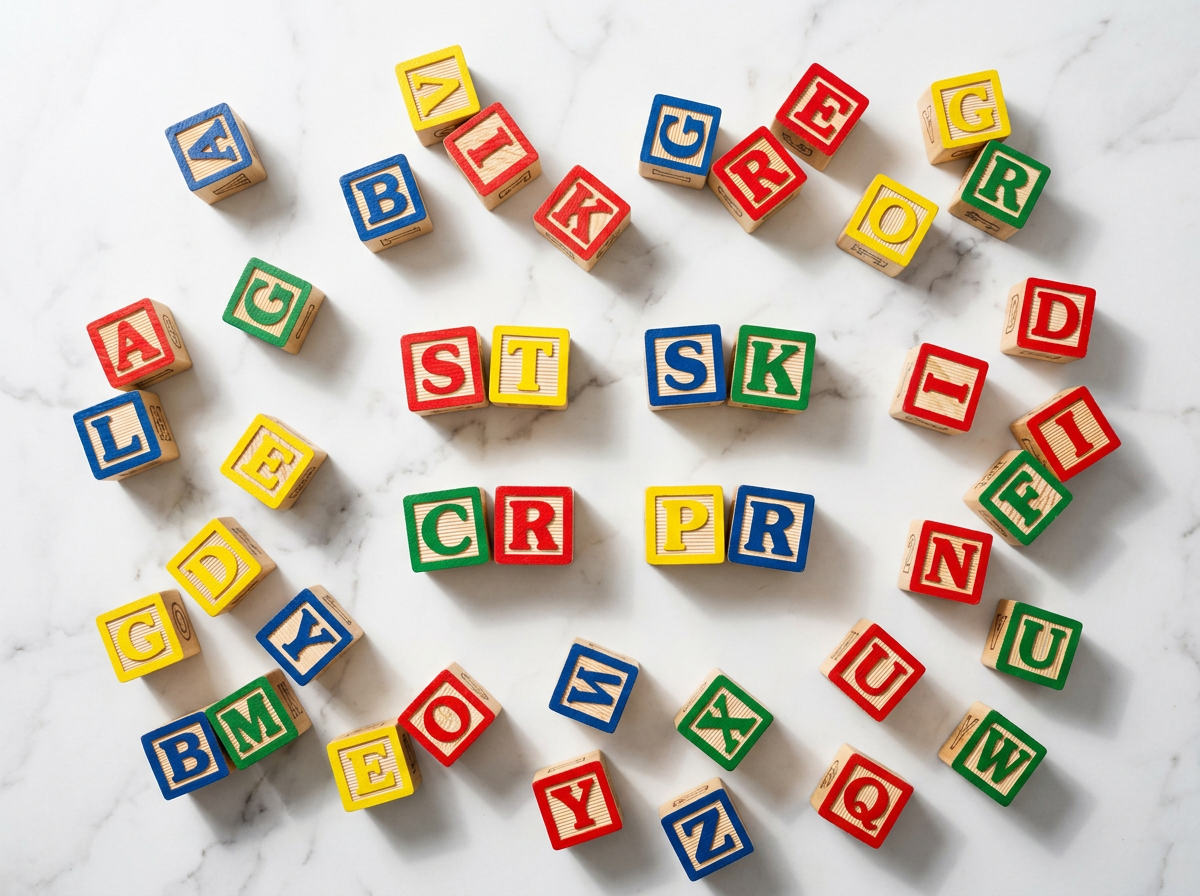

Advanced English Tongue Twisters (36–50)
Boss level. These combine multiple difficult sounds, use longer phrases, and will trip up even native English speakers. If you can handle these, your English pronunciation is in excellent shape.
Multi-Sound Challenges
These twisters don't target just one sound — they're full obstacle courses.
36. How much wood would a woodchuck chuck if a woodchuck could chuck wood? He would chuck, he would, as much as he could, and chuck as much wood as a woodchuck would if a woodchuck could chuck wood. W, CH, and the OOD/UCK vowel switch. (For the curious: a New York State wildlife expert once estimated a woodchuck could chuck about 700 pounds of dirt — roughly 35 cubic feet of wood.)
37. I wish to wash my Irish wristwatch. W, SH, and the ISH/IST ending pattern tangled together.
38. Can you can a can as a canner can can a can? The word "can" used as three different parts of speech. Your brain will fight your mouth.
39. I scream, you scream, we all scream for ice cream. The SCR cluster plus the "scream"/"cream" near-rhyme.
40. You know New York, you need New York, you know you need unique New York. N, Y, and K sounds in a rhythm pattern that's much harder than it reads.
41. Which wristwatches are Swiss wristwatches? W, R, SW, and TCH clusters colliding in rapid succession.
42. Fred fed Ted bread, and Ted fed Fred bread. Name/action reversal. FR, D, and BR sounds in a brain-twisting pattern.
43. If two witches would watch two watches, which witch would watch which watch? W, TCH, and WH sounds. A classic mind-and-mouth twister.
🎯 Challenge: Pick any three from this section. Say them in sequence without pausing between twisters.
The "Impossible" English Tongue Twisters
These stump everyone. Good luck.
44. The sixth sick sheik's sixth sheep's sick. Long considered the hardest tongue twister in English. The X, S, SH, and K sounds crash into each other in every single word.
45. Pad kid poured curd pulled cod. MIT's 2013 champion — officially the world's most difficult tongue twister. Researchers found that test subjects simply couldn't say it, and some stopped trying to speak at all. The alternating P, K, and D sounds create a neurological pile-up.
46. Lesser leather never weathered wetter weather better. L, TH, W, and R sounds in a sentence that gets more confusing the faster you go.
47. I slit the sheet, the sheet I slit, and on the slitted sheet I sit. The SL/SH distinction is critical here. Pronounce carefully.
48. How can a clam cram in a clean cream can? CL, CR, and the AM/AN ending pattern. Sounds simple. It isn't.
49. A skunk sat on a stump and thunk the stump stunk, but the stump thunk the skunk stunk. SK, ST, TH, and NK clusters. The UNK/STUNK ending sequence is diabolical.
50. Good blood, bad blood. Four words. Repeat 10 times fast. The G/B switch and the OOD/AD vowel change will defeat you before round five.
🎯 Challenge: Can you say "pad kid poured curd pulled cod" 10 times fast? MIT offered a prize to anyone who could manage it at their conference presentation. Nobody won.

English Tongue Twisters by Accent: American vs. British
Here's something most tongue twister lists overlook: the same tongue twister feels different depending on which accent you're targeting.
The R Factor
American English is rhotic — the R sound is always pronounced. British RP is non-rhotic — R after vowels is often softened or dropped.
This means "red lorry, yellow lorry" is actually a different exercise depending on your target accent. With an American accent, the strong R in "red" and "lorry" creates an R-versus-L obstacle course. With a British accent, the softened R in "lorry" (closer to "law-ree") shifts the challenge toward the L sound.
The T Sound
In American English, T between vowels often becomes a "flap T" — it sounds like a quick D. "Betty Botter" sounds more like "Beddy Bodder" in casual American speech. In British English, the T stays crisp and distinct.
How Accent Changes the Challenge
| Tongue Twister | American Challenge | British Challenge |
|---|---|---|
| Red lorry, yellow lorry | Strong R vs. L | Softened R vs. L |
| Betty Botter bought butter | Flap T (sounds like D) | Crisp T + B alternation |
| Truly rural | Retroflex R + L | Near-silent R + L |
| Peter Piper picked peppers | Aspirated P + flap T | Aspirated P + crisp T |
If you're specifically working on one accent, choose English tongue twisters that challenge the sounds unique to that accent. Practice Me offers AI tutors with both American and British accents, so you can practice the same tongue twister in each and hear the difference in real time.
For deeper accent-specific training, explore our guides on learning an American accent and learning a British accent.

Practice English Tongue Twisters with Real-Time AI Feedback
The problem with practicing tongue twisters alone is that you can't always hear your own mistakes.
You might think you're nailing the TH sound while actually saying "dink" instead of "think." Without real-time feedback, you reinforce the wrong pronunciation over and over. This is the biggest pitfall of trying to improve your English speaking by yourself.
Practice Me gives you a way around this. Instead of practicing into empty air, you can:
- Say tongue twisters to an AI tutor who responds to your voice in real time
- Choose your target accent — American or British English
- Practice without judgment — no anxiety about messing up in front of someone
- Practice anytime — 6 AM before work, midnight after studying, whenever suits you
Try opening a conversation with one of Practice Me's AI tutors and working through the English tongue twisters in this article. You can also build your vocabulary through those conversations, since any new words get saved automatically.
Tongue twisters are just one piece of the pronunciation puzzle. Combine them with regular conversation practice, and check out the best pronunciation apps and ESL speaking activities for a complete improvement plan.

Frequently Asked Questions
Do tongue twisters really improve pronunciation?
Yes — and there's science behind it. Repeating tongue twisters builds muscle memory in your speech organs (tongue, lips, jaw), making it easier to produce difficult sounds accurately over time. Speech therapists have used tongue twisters as articulation exercises for decades. The key is consistency: saying a tongue twister once won't change anything, but 5–10 minutes of daily practice can produce noticeable improvement within a few weeks.
What is the hardest English tongue twister?
According to MIT researchers, "pad kid poured curd pulled cod" is the world's most difficult tongue twister. In a 2013 study led by psychologist Stefanie Shattuck-Hufnagel, test subjects couldn't repeat it — some simply stopped trying to speak. Before that study, "the sixth sick sheik's sixth sheep's sick" was widely considered the hardest. Both are in the advanced section above.
How often should I practice tongue twisters?
Daily practice of 5–10 minutes gets the best results. Think of it as a warm-up — do it before your regular English study or daily speaking practice. Consistency matters far more than duration. Five minutes every day beats 30 minutes once a week.
Are tongue twisters good for ESL learners?
Extremely. English tongue twisters are especially valuable for ESL learners because they isolate specific sounds that may not exist in your native language. The TH sound, for example, doesn't exist in Spanish, Chinese, Japanese, Arabic, or Hindi — so TH-targeting tongue twisters give you focused repetition on exactly the sound you need most. They're also more engaging than repetitive drills, which helps you stick with the practice long-term.
How fast should I say tongue twisters?
Start slow — much slower than you think you should. The goal is clarity first, speed second. Say each word distinctly, then gradually increase your pace only when you can say it cleanly at the current speed. Think of it like learning a musical instrument: you practice slowly until your muscles know the movements, then you speed up. If you're making errors at a given speed, slow down before pushing faster.