Duolingo taught you words. No one taught you to speak.
PracticeMe: real voice conversations with an AI tutor, 24/7.
Learn English for Spanish Speakers: AI Practice Guide

Trying to learn English for Spanish speakers can feel like a contradiction: you understand so much already, yet speaking feels impossibly hard. The good news? Roughly 30-40% of English words have Spanish cognates — hospital, chocolate, natural, idea, animal. That shared Latin vocabulary is your built-in advantage, and it's a bigger head start than speakers of most other languages get.
But here's where it gets frustrating: you can read English reasonably well, yet the moment you open your mouth, everything falls apart. The vowels sound wrong. The TH feels impossible. You add an invisible "e" before every word starting with S. And the fear of being judged for your accent keeps you from practicing at all.
This guide for learning English for Spanish speakers breaks down exactly why pronunciation is tricky, what to focus on at each stage, and how AI conversation practice lets you work through these challenges without the anxiety of a live classroom — all for an affordable weekly price.
Quick Summary: Spanish speakers have a massive vocabulary advantage when learning English (30-40% cognate overlap), but pronunciation is the main hurdle — English has 12+ vowel sounds compared to Spanish's 5. The fastest path to fluency is consistent speaking practice, and AI conversation tools let you practice 24/7 without judgment for a fraction of the cost of traditional classes or online courses.
Why Spanish Speakers Learn English Faster Than You'd Expect
Here's something most English courses and teachers won't tell you upfront: Spanish speakers are statistically among the fastest learners of English worldwide.
The U.S. Foreign Service Institute (FSI) classifies the Spanish-English language pair as Category I — "closely related." While that ranking was designed for English speakers learning Spanish, the relationship works both ways. The FSI estimates 24-30 weeks of intensive study (552-690 classroom hours) to reach professional proficiency between these two languages.
Why is the English-Spanish connection so strong?
- Shared vocabulary. An estimated 30-40% of everyday English words have Spanish cognates. For academic and professional English, that number jumps to 75% of the Academic Word List. Words like communication (comunicación), important (importante), and opportunity (oportunidad) are practically free vocabulary.
- Same alphabet. Both languages use the Latin alphabet. No new writing system to learn — unlike speakers of Chinese, Arabic, Japanese, or Hindi who have spent years mastering entirely different scripts.
- Similar word order. Both English and Spanish follow Subject-Verb-Object structure. "I eat apples" maps directly to "Yo como manzanas."
- Familiar grammar concepts. Verb conjugation, articles, singular/plural — these grammar concepts exist in both languages. The details differ, but the framework is already in your head.
With 636 million Spanish speakers worldwide — and a growing number needing English for work, education, online business, and travel — this language group has the potential to learn English faster than almost any other. The main barrier isn't vocabulary or grammar. It's pronunciation. And that's completely fixable with the right practice.
5 Pronunciation Challenges Every Spanish Speaker Faces
Let's be honest about the hard parts. Spanish is one of the most phonetically consistent languages in the world — each letter makes one predictable sound. English is the opposite. The same letter can make completely different sounds depending on the word. This inconsistency creates specific pronunciation traps for Spanish speakers learning English.
Here are the five biggest ones, with practical tips for each.
The Vowel Explosion: 5 Sounds Become 12+

This is the single biggest challenge. Spanish has 5 clean vowel sounds. English has at least 12 vowel sounds plus 8 diphthongs — more than triple.
That means distinctions that don't exist in Spanish suddenly matter in English:
- Ship vs. sheep — short /ɪ/ vs. long /iː/. In Spanish, there's just one "i" sound.
- Hat vs. hut vs. heart — three different vowel sounds (/æ/, /ʌ/, /ɑː/) that Spanish speakers often collapse into a single "a."
- The schwa /ə/ — the most common sound in the entire English language, and it doesn't exist in Spanish at all. It's the weak, lazy "uh" in words like about, sofa, banana (the unstressed syllables).
How to practice: Exaggerate the differences at first. Make "sheep" ridiculously long and "ship" absurdly short. Your ear needs to hear the contrast before your mouth can produce it. For more targeted exercises, check out our guide to English pronunciation practice for beginners.
The TH Sounds That Don't Exist in Spanish
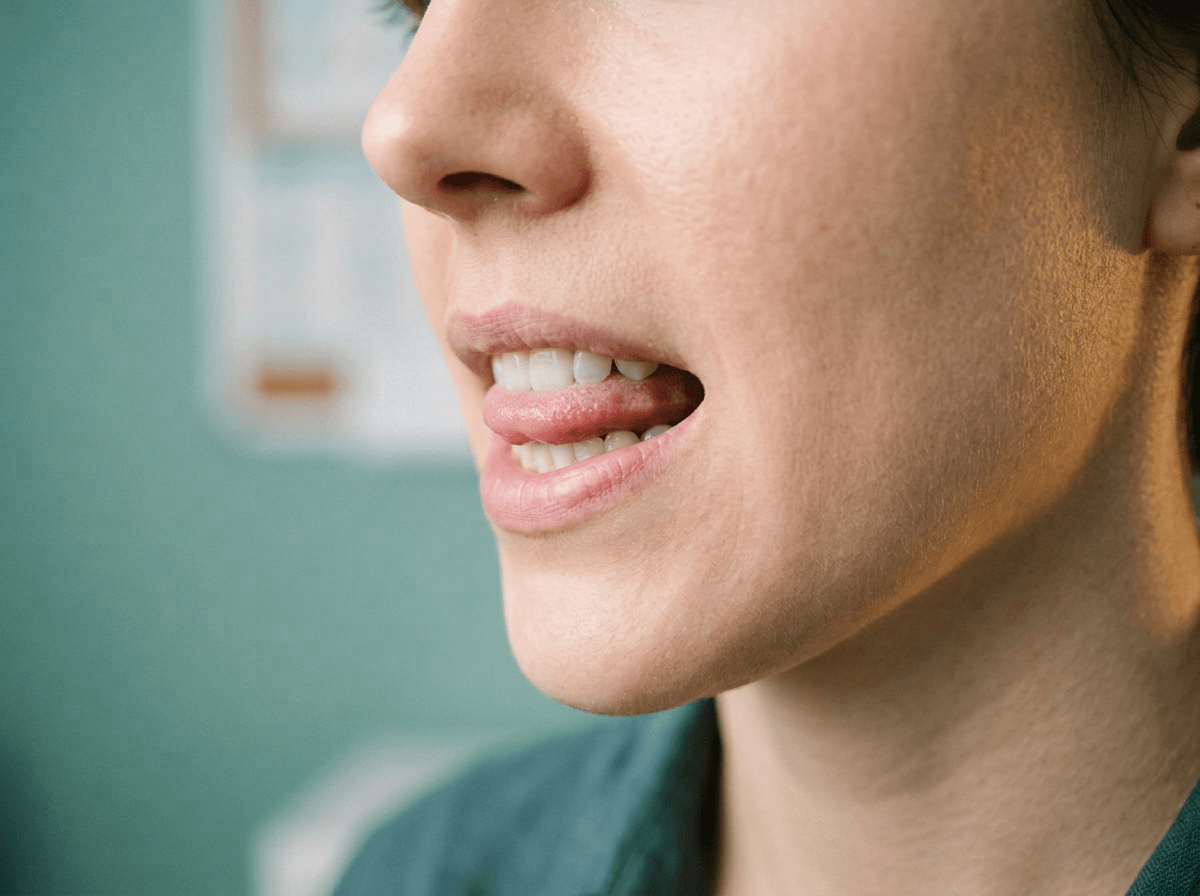
Neither the voiceless TH in "think" (/θ/) nor the voiced TH in "this" (/ð/) exists anywhere in the Spanish sound system. Most Spanish speakers substitute these with /t/, /d/, /s/, or /f/:
- "Think" becomes "tink" or "fink"
- "This" becomes "dis"
- "Three" becomes "tree"
English teachers have watched students struggle with these sounds for years, and the fix is simpler than most courses make it seem.
How to practice: Place the tip of your tongue between your upper and lower teeth, then blow air out gently. For "think," it's unvoiced (just air). For "this," you add vocal vibration. It feels strange at first — no Spanish sound requires this tongue position — but it becomes natural within a few weeks of consistent practice.
B vs. V: They're Not the Same in English
In Spanish, B and V are identical sounds. You can say "vaca" and "baca" with the exact same mouth position and nobody notices. In English, they're different phonemes:
- B = both lips press together, then release (bilabial plosive)
- V = upper teeth touch lower lip, air flows through (labiodental fricative)
This distinction matters. "Berry" and "very" mean different things. So do "boat" and "vote."
How to practice: For V, gently bite your lower lip with your upper teeth, then let the air buzz through. If both your lips are touching, you're making a B. Practice talking through minimal pairs (berry/very, best/vest, ban/van) until the distinction becomes automatic.
The Sneaky E Before S-Clusters
No Spanish word begins with the sound /s/ followed by another consonant. That's why escuela has an E before the S, and España does too. Spanish speakers instinctively add this phantom vowel in English:
- "School" → "eschool"
- "Spain" → "eSpain"
- "Stress" → "estress"
- "Small" → "esmall"
This is one of the most instantly recognizable markers of a Spanish accent in English. Online discussions among language learners frequently cite this as the single biggest quick win. As one Reddit thread on r/EnglishLearning put it, eliminating this one habit has "a huge impact on how you're perceived."
How to practice: Start with a long "sssss" hiss, then slide into the word without stopping. "Ssssschool." Gradually shorten the hiss until you're starting cleanly on the S.
Disappearing Word Endings
Spanish words rarely end in consonant clusters. English words do — constantly. Spanish speakers tend to drop or simplify these endings:
- "Text" → "tex"
- "Breakfast" → "brefas"
- "Mind" → "mine"
- "Loved" → "love" (dropping the past tense -ed entirely)
That last one is particularly problematic because it erases the difference between present and past tense. "I love her" and "I loved her" tell very different stories.
How to practice: Exaggerate the final consonant sounds when practicing. Over-pronounce them. Then gradually dial it back to a natural level. Recording yourself and listening back helps enormously — you'll find you're dropping endings you didn't even realize.
For a comprehensive list of specific words that trip up Spanish speakers, see our guide to hard English words for Spanish speakers.
False Cognates: The Words That Will Embarrass You

About 30-40% of English and Spanish vocabulary overlaps — but roughly 10% of those shared-looking words are false cognates (falsos amigos). They look the same but mean something completely different. Some of these can lead to genuinely awkward moments.
Here are the most dangerous ones every Spanish-speaking English student should know:
| Spanish Word | What It Looks Like | What It Actually Means |
|---|---|---|
| Embarazada | Embarrassed | Pregnant |
| Sensible | Sensible | Sensitive |
| Actual | Actual | Current |
| Éxito | Exit | Success |
| Carpeta | Carpet | Folder |
| Librería | Library | Bookstore |
| Constipado | Constipated | Has a cold |
| Realizar | To realize | To carry out |
| Asistir | To assist | To attend |
| Bizarro | Bizarre | Brave / Generous |
Imagine telling your English-speaking boss that you're embarazada when you mean you're embarrassed about a mistake. Or asking for the éxito when you're looking for the way out of a building.
Tip: Keep a running list of false friends as you find them during practice. Write the Spanish word, what you thought it meant, and what it actually means. Review it regularly. These words stick best when you learn them through a memorable mistake — which is another reason why practicing in a judgment-free environment is so valuable.
Duolingo taught you words. No one taught you to speak.
PracticeMe: real voice conversations with an AI tutor, 24/7.
Your English Learning Path: Beginner to Confident Speaker

Every Spanish speaker's journey to learning English is different, but the general stages are predictable. Here's what students should focus on at each level to learn English efficiently.
Stage 1: Beginner (A1-A2) — Lean on Your Cognates
Your cognate vocabulary is your superpower right now. Hundreds of English words are already familiar: telephone, hospital, restaurant, music, information, family, problem. Use them as your foundation.
At this stage, focus on:
- High-frequency phrases for daily situations (greetings, ordering food, asking for help)
- Basic pronunciation habits — especially the 5 challenges above. Fix them now before they fossilize over the years.
- Listening to natural English — your ear needs exposure to natural English rhythm and speed. Start talking to an AI tutor even if you can only manage a few sentences.
Don't worry about sounding perfect. Worry about being understood. If you're just starting out, our English speaking practice for beginners page walks you through a practical 7-day plan.
Stage 2: Intermediate (B1-B2) — Start Telling Stories
This is where most English students plateau. You can handle basic transactions — ordering coffee, giving directions, small talk — but longer conversations and talking about complex topics feel exhausting.
The breakthrough at this level comes from moving beyond transactional English into narrative English:
- Describe past events (what happened, how you felt, what you learned)
- Express opinions and explain your reasoning
- Talk about future plans and hypothetical situations
- Tell stories with a beginning, middle, and end
This stage is where regular conversation practice becomes essential. Grammar textbooks and online courses alone won't get you here — you need hours of real-time speaking. The students who break through the intermediate plateau are the ones who find ways to practice speaking every day, even just 15 minutes. A daily English speaking routine makes the difference between staying stuck for years and pushing through to fluency.
Stage 3: Advanced (C1+) — Master Idioms and Intonation
At the advanced level, your English is technically correct but might still sound "foreign." The final push toward complete fluency involves:
- Idioms and phrasal verbs — "break down," "get over," "figure out." These don't translate directly from Spanish to English and must be learned through real-world context.
- Intonation and stress patterns — English is a stress-timed language (Spanish is syllable-timed). Mastering the rise and fall of natural English speech is what makes you sound truly fluent.
- Register switching — knowing how to speak differently in a business meeting vs. a casual dinner vs. a job interview.
- Complex English words that signal sophistication without sounding forced.
At this stage, you're not learning English anymore — you're polishing it. You need practice partners who can challenge you with native-speed conversations on abstract topics, every day.
Building English Vocabulary That Actually Sticks
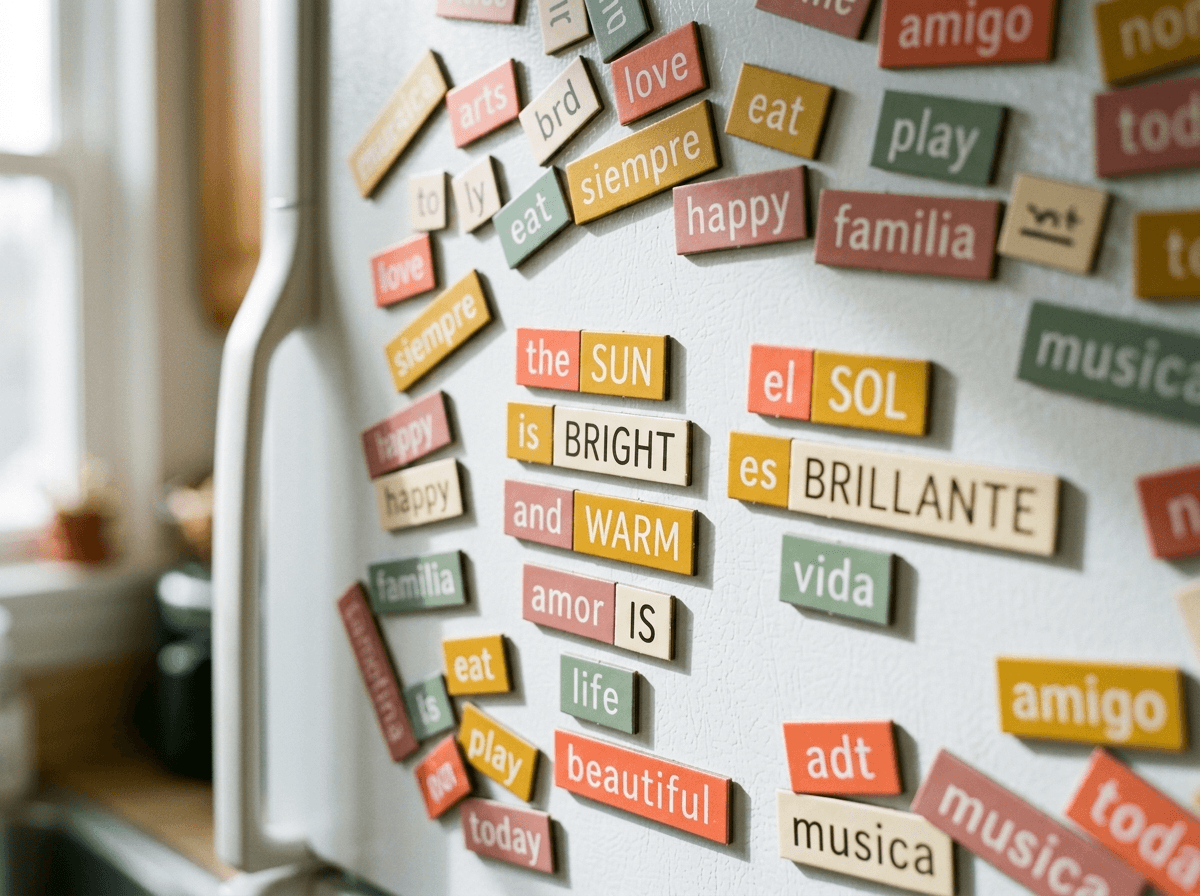
Flashcards and word lists used in many traditional courses have their place, but research consistently shows that vocabulary learned in context — through real talking and conversations — is retained significantly longer than words memorized in isolation.
For Spanish speakers, the vocabulary-building strategy is straightforward:
-
Start with cognates. Your existing knowledge of academic vocabulary (words ending in -tion, -ment, -ble, -al) is massive. These words used in professional and academic English overlap substantially between Spanish and English.
-
Learn words through real conversations. When you encounter a new word while talking, you learn it alongside its pronunciation, natural context, and emotional association. That's three memory hooks instead of one.
-
Review what you've learned. Practice Me automatically saves new vocabulary from your conversations, so you can revisit words you've encountered without manually building flashcards. This turns every practice session into both a speaking workout and a vocabulary lesson.
-
Focus on high-frequency words first. The 2,000 most common English words cover roughly 80% of everyday conversation. As a Spanish speaker, you likely already recognize hundreds of them.
For a deeper look at this approach, read our complete guide on how to build vocabulary through conversations.
Why AI Practice Works for Spanish Speakers Learning English
Traditional English classes and online courses for Spanish speakers are typically expensive, charging a premium hourly rate for a live teacher. They require scheduling in advance, showing up at specific times, and — most importantly — speaking in front of another human who's evaluating your every word.
For many Spanish speakers, that last part is the biggest barrier. There's a real phenomenon called xenoglossophobia — the fear of speaking a foreign language — and it's especially common among students who are self-conscious about their accent. When you're worried about mispronouncing TH sounds or accidentally adding "e" before every S-cluster, the anxiety can shut down your ability to practice at all.
AI conversation practice removes these barriers completely.
No judgment. Practice Me's AI tutors don't wince when you say "berry" instead of "very." They don't get impatient when you pause to find a word. They respond naturally to what you say, keeping the conversation flowing without making you feel evaluated.
Available 24/7. No scheduling. No time zone issues. Practice at 6 AM before work, at midnight when the kids are asleep, or during your lunch break. Whenever you have 10 minutes, you have a conversation partner ready to start talking.
Adapts to your level. Whether you're a beginner working through basic greetings or an advanced student debating complex topics, the AI adjusts its vocabulary, speed, and complexity to match where you are.
Multiple accents. Choose between American and British English accents — with different tutor personalities like Sarah, Oliver, and Marcus — so you can practice understanding the variety of English you'll actually encounter in the real world.
Automatic vocabulary tracking. New words from your conversations are saved automatically. You can see your progress — speaking time, vocabulary growth, improvement trends — without any extra effort.
And the cost comparison is hard to ignore:
| Option | Availability | Judgment-Free? |
|---|---|---|
| Traditional English classes | Fixed schedule | ❌ |
| Online teachers and tutors | Requires booking | ❌ |
| Practice Me (yearly plan) | 24/7 | ✅ |
| Practice Me (weekly plan) | 24/7 | ✅ |
On the yearly plan, you could practice English speaking with AI for an entire year for less than the cost of two traditional classes. That's not a compromise — it's a fundamentally different approach that gives you more practice time and less anxiety. See pricing details.
Want to learn more about how AI conversation practice works? Read our complete guide on how to practice English speaking with AI.
Start Practicing English Today
You have the vocabulary advantage. You know the pronunciation challenges. Now you need consistent practice to start speaking confidently.
Practice Me gives you unlimited conversations with AI tutors who adapt to your level, don't judge your accent, and are available whenever you are — on iPhone, iPad, or the web.
Start your free trial on the iOS app and have your first English conversation today. No scheduling. No classroom anxiety. No teachers judging your accent.
Ready to become fluent in English? Your first conversation is waiting.
Frequently Asked Questions
How long does it take a Spanish speaker to learn English?
The FSI estimates 24-30 weeks (552-690 classroom hours) for closely related languages like Spanish and English. In practice, the timeline depends heavily on how much you actually speak. Spanish speakers who practice conversation daily — even just 15 minutes — typically reach conversational fluency in 6-12 months. Students who only study grammar and vocabulary without speaking often take 2-3 years or more to reach the same level.
Is English hard to learn for Spanish speakers?
Compared to speakers of Chinese, Arabic, Japanese, or Korean, Spanish speakers have a significantly easier time learning English. The shared vocabulary (30-40% cognate overlap), Latin alphabet, and similar word order give you a major head start. The hardest part for most Spanish speakers is pronunciation — specifically the 12+ vowel sounds, TH sounds, and word stress patterns that don't exist in Spanish. But these are skills, not talent — they improve with practice over the course of months, not years.
What English sounds are hardest for Spanish speakers?
The top five challenges are: (1) English vowel distinctions (ship vs. sheep, hat vs. hut), (2) TH sounds (/θ/ and /ð/), (3) the B vs. V distinction, (4) initial S-clusters without an added E (school, not eschool), and (5) final consonant clusters and past tense endings (text, not tex; loved, not love). For detailed practice with each of these, see our guide to improve English speaking as a non-native speaker.
Can I learn English without traditional classes?
Yes. While traditional classes with teachers can be effective, they're not the only path — and for many Spanish speakers, they're not the best one either. The high cost and performance anxiety of live courses hold many students back from consistent practice. AI conversation tools, online self-study resources, and immersion techniques have made it possible to learn English independently. Practice Me costs just a small amount per week on the yearly plan and gives you unlimited speaking practice. The key is consistent daily practice, regardless of the method you choose.
What's the fastest way to improve my English as a Spanish speaker?
Speak. Every day. The biggest mistake Spanish speakers make when learning English is spending all their time on grammar exercises, online vocabulary quizzes, and course materials while avoiding actual conversation. Your cognate vocabulary means you already have the words — you need to train your mouth and ears through talking. Start with 15 minutes of daily conversation practice, focus on the 5 pronunciation challenges above, and gradually increase your speaking time. The students who improve fastest are those who practice speaking consistently, not those who complete the most courses or memorize the most grammar rules.