Duolingo taught you words. No one taught you to speak.
PracticeMe: real voice conversations with an AI tutor, 24/7.
The Schwa Sound in English: Most Important Vowel

Say the word about out loud. Slowly. Notice the first vowel — that quick, lazy "uh" you barely open your mouth to make. That tiny sound is the schwa, and the schwa sound English speakers use more than any other is the most common vowel of them all. It hides in banana, computer, problem, and in roughly every second word you speak.
Here's the part that surprises most learners: mastering the schwa does more for your accent than any tricky consonant ever will. It is the engine behind English rhythm — and the reason careful, "textbook-correct" pronunciation can still sound robotic to a native ear. This guide breaks down exactly what the schwa sound is, where it hides, why your first language might be fighting it, and how to practice it until reductions feel automatic.
Quick Summary: The schwa /ə/ is a short, neutral "uh" vowel that appears in unstressed syllables — the a in about, both outer vowels in banana. It's the most common vowel sound in English and the key to natural, stress-timed rhythm. Learn to weaken your unstressed syllables into schwa and you'll instantly sound less robotic and more fluent.
What Is the Schwa Sound in English?
The schwa is the short, relaxed, neutral vowel you make when your mouth is doing almost nothing. In writing, it's represented by the phonetic symbol /ə/ — a lowercase "e" rotated 180 degrees. In the International Phonetic Alphabet (IPA), that symbol stands for this neutral vowel in any phonetic transcription, and you'll find it in any good dictionary. Say a soft, quiet "uh," like the noise you make when you pause to think (uh… let me see). That's it. That's the schwa.
A few things make this little vowel special:
- It's the only English vowel with its own name. "Schwa" comes from the Hebrew word shva, which roughly means "emptiness" — a fitting label for a sound made by emptying your mouth of effort.
- It's always unstressed. In English, the schwa only ever lives in weak, unstressed syllables. It is the quintessential English unstressed vowel: the moment a syllable gets stressed, its vowel becomes full and clear again.
- Any letter can become a schwa. The vowel letters a, e, i, o, u — and sometimes y — can all reduce to the same "uh." Look at how the bold letters in these examples all sound identical:
- about → /əˈbaʊt/
- taken → /ˈteɪkən/
- pencil → /ˈpɛnsəl/
- lemon → /ˈlɛmən/
- support → /səˈpɔːrt/
According to Encyclopaedia Britannica, the schwa is "the most common vowel sound" in English, and it can be spelled with any vowel letter — or sometimes left unwritten entirely.
How to make the schwa
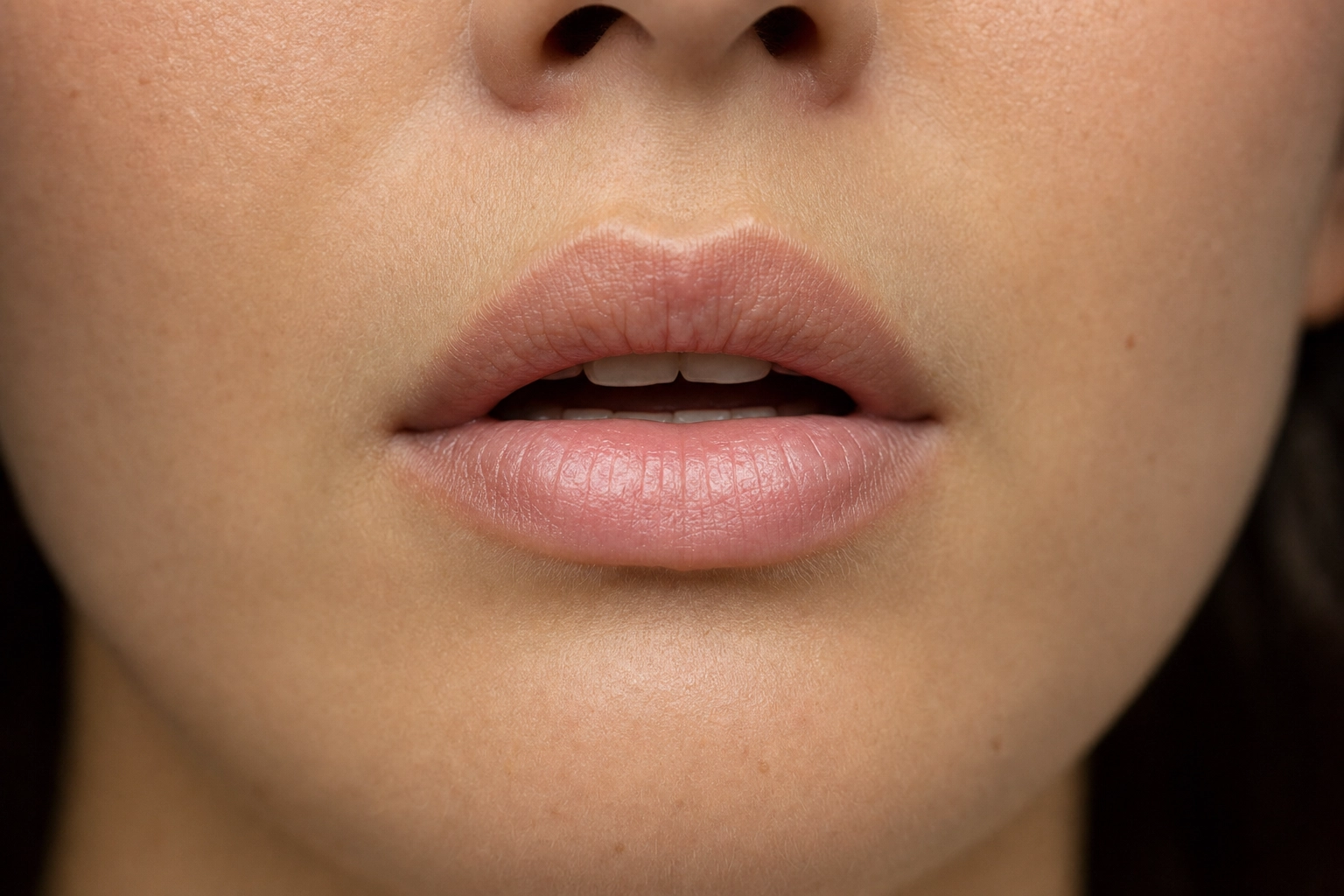
You already know how. Let your jaw drop slightly, relax your tongue so it sits flat in the middle of your mouth, unround your lips, and add voice. The result is a quick, central "uh." Phoneticians call it a mid-central vowel because it's articulated with the tongue resting in a central position — not high, not low, not front, not back — and the lips relaxed and unrounded. There's no stretching, spreading, or rounding. If you feel your mouth working hard, you're not making a schwa.
Schwa vs. the "Cup" Vowel /ʌ/: The Near-Twins
Here's a question that trips up a lot of learners: isn't the schwa just the short "u" sound in cup and butter? Almost. The schwa /ə/ and the STRUT vowel /ʌ/ (as in cup, up, butter) sound nearly identical. The difference isn't really in the mouth — it's in the stress.
- The schwa /ə/ is always unstressed.
- The /ʌ/ vowel is almost always stressed.
Take the word butter /ˈbʌtər/. The first syllable (but-) is stressed, so it gets the strong /ʌ/. The second syllable (-ter) is unstressed, so it collapses into a schwa. Because the two sounds are so close, many dictionaries don't even bother separating them — they just print /ə/ for both. So don't lose sleep over the symbols. The useful question is never "is this /ə/ or /ʌ/?" It's "is this syllable stressed or not?"
Why the Schwa Is the Most Important Vowel in English
If the schwa is so quiet and lazy, why does it matter so much? Two things make the schwa sound English speakers rely on so important: frequency and rhythm.
It's everywhere. The schwa is the single most frequent vowel sound in spoken English. By some estimates, it accounts for around one in five of all the vowel sounds we actually say. You can speak a whole sentence — "a cup of tea for the two of them" — where almost every small word melts into a schwa. Linguists call it a reduced vowel, and as a phoneme it tops nearly every frequency count of English speech; in IPA transcription it always appears as that one little symbol, /ə/.
It carries the rhythm. English is what linguists call a stress-timed language. That means we keep a roughly steady beat on the stressed syllables and squeeze everything in between to fit. As Wikipedia's overview of isochrony explains, stress-timed languages put a fairly constant amount of time between stressed beats, while the unstressed syllables get compressed. When a syllable gets compressed, its vowel has no time to be fully pronounced — so it reduces to the quickest vowel available: the schwa.
This is the secret most learners miss. Native speakers don't pronounce every vowel. They pronounce the stressed ones clearly and let the rest blur into "uh." That contrast — strong beat, weak filler, strong beat, weak filler — is what gives English its da-DUM-da-da-DUM music. Strip the schwa out and pronounce every vowel fully, and your speech flattens into a steady machine-gun of equal syllables. It's grammatically perfect and instantly robotic.
That's why the schwa is such high-leverage practice. You can spend months perfecting a difficult consonant and still sound foreign. But learn to reduce your unstressed vowels, and your rhythm — the part listeners actually notice — snaps into place. It's deeply connected to English word stress rules: once you know which syllable carries the stress, the schwa takes care of the rest.
Where the Schwa Hides: Every Unstressed Syllable
The frustrating truth about the schwa is that spelling won't tell you where it is. The schwa is a product of stress, not letters. The same five vowel letters can each be a clear, full vowel in one word and a schwa in the next, depending entirely on which syllable gets the stress. Every schwa sound English speakers produce lives in an unstressed syllable, so once you find the stress, the schwa falls into place around it.
The clearest demonstration is a single word family that shifts its stress around. Watch where the schwa moves:
- PHO·to·graph → /ˈfoʊtəɡrɑːf/ — stress on PHO, schwa on -to-
- pho·TOG·ra·phy → /fəˈtɒɡrəfi/ — stress on TOG, now pho- and -ra- are schwas
- pho·to·GRAPH·ic → /ˌfoʊtəˈɡræfɪk/ — stress on GRAPH, schwa back on -to-
Same letters. Same root. But the schwa jumps to wherever the stress isn't. This is why you can't memorize the schwa word by word — you have to learn to hear and feel stress, which is exactly what connected speech practice trains.
The schwa shows up so often that you say dozens of them before breakfast without noticing. The articles a, an, and the (before a consonant) are all tiny schwas: a book is /ə bʊk/, an apple is /ən ˈæpəl/, the dog is /ðə dɒɡ/. You say these hundreds of times a day — each one a quick, weak "uh."
Native speakers even drop the schwa completely when a word gets long and casual. Listen carefully and you'll hear:
- chocolate → "CHOC·lit" (the middle o vanishes)
- different → "DIFF·rent" (the middle e vanishes)
- family → "FAM·ly" (the middle i vanishes)
- comfortable → "COMF·ta·ble"
That's not lazy or sloppy speech — that's standard, fluent English. The schwa was so weak to begin with that it disappeared entirely.
Function Words Almost Always Reduce to Schwa
English words split into two groups, and the schwa treats them very differently:
- Content words carry the meaning — nouns, main verbs, adjectives, adverbs (coffee, running, beautiful, quickly). These keep their full, clear vowels.
- Function words are the grammatical glue — articles, prepositions, conjunctions, auxiliary verbs, pronouns (a, the, to, for, of, and, can, was, them). These almost always reduce to a schwa in natural speech.

This is why a sentence like "I'd like a cup of tea and a slice of cake" doesn't come out as ten equally-weighted words. The content words (like, cup, tea, slice, cake) stay strong, and the function words shrink into schwas. Here are the most common reductions, known as weak forms:
| Function word | Strong form | Weak form (schwa) | In a sentence |
|---|---|---|---|
| a | /eɪ/ | /ə/ | have a look → "have uh look" |
| an | /æn/ | /ən/ | just an hour → "just ən hour" |
| the | /ðiː/ | /ðə/ | open the door → "open thuh door" |
| and | /ænd/ | /ən/ | fish and chips → "fish 'n' chips" |
| to | /tuː/ | /tə/ | want to go → "wanna go" |
| for | /fɔːr/ | /fər/ | this is for you → "fer you" |
| of | /ɒv/ | /əv/ | a cup of tea → "a cup əv tea" |
| from | /frɒm/ | /frəm/ | a letter from home |
| was | /wɒz/ | /wəz/ | she was late |
| can | /kæn/ | /kən/ | I can swim → "I kən swim" |
| them | /ðem/ | /ðəm/ | tell them → "tell 'em" |
| than | /ðæn/ | /ðən/ | bigger than ever |
The single most useful example here is can. In a positive sentence, can reduces to /kən/ — a quick schwa: "I can swim" → "I kən swim." But can't keeps a strong, full /æ/: /kænt/. So how do native speakers tell the difference at full speed? Not from the final t (which often disappears) — from the vowel. A weak schwa means can; a strong "a" means can't. Mishandle this one reduction and you can flip your sentence into its opposite. You'll find more of these blends in our guide to linking sounds.
Stressed vs. Unstressed: The REcord / reCORD Drill
English is full of word pairs spelled identically but pronounced differently — and the schwa is what flips them. When the stress moves, the unstressed syllable's vowel collapses into a schwa, and the meaning changes too. The classic example:
- RE·cord (noun) → /ˈrekərd/ — "I bought a new REcord." Stress on the first syllable; the second reduces.
- re·CORD (verb) → /rɪˈkɔːrd/ — "Let me reCORD this." Stress on the second syllable; the first reduces toward schwa.
This noun-stressed-first, verb-stressed-second pattern repeats across dozens of common words. In every case, the unstressed syllable gets the weak schwa:
| Word | Noun (stress 1st) | Verb (stress 2nd) |
|---|---|---|
| record | RE·cord /ˈrekərd/ | re·CORD /rɪˈkɔːrd/ |
| present | PRE·sent /ˈprezənt/ | pre·SENT /prɪˈzent/ |
| object | OB·ject /ˈɒbdʒɪkt/ | ob·JECT /əbˈdʒekt/ |
| contract | CON·tract /ˈkɒntrækt/ | con·TRACT /kənˈtrækt/ |
| protest | PRO·test /ˈproʊtest/ | pro·TEST /prəˈtest/ |
| conduct | CON·duct /ˈkɒndʌkt/ | con·DUCT /kənˈdʌkt/ |
Try this drill out loud:
- Pick a pair, like contract.
- For the noun, hit the first syllable hard and long — CON — then let -tract fall away weakly.
- For the verb, do the opposite: mumble con- into a schwa (/kən/) and punch TRACT.
- Exaggerate the contrast. Make the stressed syllable twice as loud and long as feels natural, and the unstressed one almost a throwaway.
- Record yourself and compare to a dictionary's audio.
The goal isn't to make the schwa clearer — it's to make it weaker. For more pairs and ear-training, our minimal pairs practice drills the contrast between similar sounds.
Duolingo taught you words. No one taught you to speak.
PracticeMe: real voice conversations with an AI tutor, 24/7.
30 Schwa Sound English Examples (Stressed vs. Unstressed)
Below are 30 of the most common examples — everyday words built around a schwa. The stressed syllable is in CAPS; everything else is a weak "uh." Say each one with the bold syllable strong and the schwa barely there. Notice that some words — like banana and anonymous — pack in two or three schwas.
| Word | Say it like (CAPS = stressed) | Where the schwa is |
|---|---|---|
| about | uh·BOUT | the a |
| banana | buh·NAN·uh | 1st & 3rd a (two schwas) |
| computer | kuhm·PEW·tuh | com- and -er |
| problem | PROB·luhm | the e |
| pencil | PEN·suhl | the i |
| family | FAM·uh·lee | middle i (often dropped) |
| camera | CAM·ruh | the final a |
| support | suh·PORT | sup- |
| again | uh·GEN | the a |
| police | puh·LEECE | po- |
| today | tuh·DAY | to- |
| teacher | TEE·chuh | -er |
| doctor | DOC·tuh | -or |
| dollar | DOLL·uh | -ar |
| woman | WUH·muhn | -an |
| children | CHIL·druhn | -en |
| chocolate | CHOC·luht | -ate (and dropped o) |
| breakfast | BREK·fuhst | -fast |
| mountain | MOUN·tuhn | -ain |
| president | PREZ·uh·duhnt | -i- and -ent |
| difficult | DIFF·i·kuhlt | -cult |
| confident | CON·fuh·duhnt | -fi- and -dent |
| average | AV·ruhj | the -er- |
| tonight | tuh·NITE | to- |
| machine | muh·SHEEN | ma- |
| suppose | suh·POZE | sup- |
| balloon | buh·LOON | ba- |
| anonymous | uh·NON·uh·muhs | a- and -mous |
| effort | EFF·uht | -ort |
| complete | kuhm·PLEET | com- |
A quick tip: the -er, -or, and -ar endings (teacher, doctor, dollar) are all the same schwa. In American English they pick up a slight "r" colour; in British English they're a pure, r-less "uh." Either way, the vowel is a schwa.
Why Your First Language Fights the Schwa
If reducing vowels feels unnatural — even wrong — to you, you're not imagining it. The problem usually isn't your ears or your effort. It's that your first language keeps a different kind of rhythm than English does. Linguists sort languages onto a rough spectrum (it's a useful heuristic, not a hard rule), and where your language sits predicts your exact schwa struggle.

Spanish, Italian & Brazilian Portuguese Speakers
Spanish, Italian, and Brazilian Portuguese are syllable-timed languages. Every syllable gets roughly equal length, and — crucially — every written vowel is pronounced fully and clearly. Spanish has just five crisp vowel sounds, and you say all of them, every time. There's almost no vowel reduction at all.
That's a beautiful, clear system — and it's exactly what makes English hard. Take banana. In Spanish it's bah·NAH·nah: three full, bright "ah" sounds. In English it's buh·NAN·uh: one stressed vowel surrounded by two schwas. The instinct to give every a its full value is so strong that it carries straight into English, where it produces speech that sounds over-precise, staccato, and — to a native ear — a little robotic.
The fix: give yourself permission to be "lazy." Deliberately weaken every unstressed vowel until it almost disappears. It will feel like you're mumbling or being careless. You're not — you're finally matching English rhythm. Trust that the blurry, reduced version sounds more native, not less. If you want targeted help, see our breakdown of hard English words for Spanish speakers.
Japanese & Korean Speakers
Japanese is mora-timed and Korean is syllable-timed, but for the schwa they create a similar challenge: both give each unit roughly equal weight and a full, clear vowel. Japanese, in particular, builds most syllables as a clean consonant-plus-vowel beat, so the idea of a vowel that's barely there runs against deep habit.
This shows up most when English words get borrowed into the language: extra vowels get inserted to fit the home sound system, so a tight English consonant cluster becomes a string of full syllables. That same instinct — add a vowel, give it full value, keep every beat equal — makes English reductions feel uncomfortable to produce.
The fix: consciously shorten and blur unstressed syllables instead of giving them a clean vowel, and resist the urge to insert a vowel between consonants (say str- in street as one cluster, not "su-to-ri"). For a wider look at sound-by-sound hurdles, our guide to the hardest English words to pronounce by native language goes deeper. The schwa is the bridge from equal-beat rhythm to the strong-weak music of English.
How to Practice the Schwa (Exercises + Audio Prompts)
You can't think your way to a natural schwa — you have to say it until it becomes muscle memory. Here are five exercises, from isolated sound to full conversation. Do them out loud; silent reading won't build the habit.
Exercise 1 — Find the rest position. Drop your jaw a little, relax your tongue, and make a quiet "uh." Don't shape it into anything. Now glue it to the front of real words: uh·BOUT, uh·GAIN, uh·LONE, uh·WAY. Feel how little your mouth moves. That effortlessness is the target, and it's the foundation of good schwa pronunciation.
Exercise 2 — Stress and squash. Take any multi-syllable word from the table above. Clap once, loudly, on the stressed syllable, and mumble everything else into schwa. CLAP-uh (banana → buh-NAN-uh), CLAP for COM-pyoo-tuh. The clap forces you to feel the contrast between strong and weak.
Exercise 3 — Weak-form sentences. Read these aloud as fast as you comfortably can, letting every small word reduce:
- "I'd like a cup of tea for the two of them."
- "She can come, but he can't." (Feel the schwa in can vs. the strong vowel in can't.)
- "It's a piece of cake to get there and back."
Exercise 4 — Shadowing. Pick a short clip of a native speaker — a podcast line, a film scene — and speak along a half-second behind them, copying the rhythm, not the spelling. Chase their strong beats and let your weak syllables fall where theirs do. Our shadowing guide has a full method, plus five ready-made shadowing exercises to start with, and tongue twisters make great warm-ups for loosening your mouth.

Exercise 5 — Record and compare. Say a word, then play the audio in an online dictionary like the Cambridge Dictionary and compare. Are your unstressed syllables as weak as theirs? Usually the answer is "not yet" — natives reduce harder than learners expect.
The catch with solo drills is that you can't always hear your own habits, and you have no one reducing back at you in real time. That's where conversation practice changes everything.
Turn Schwa Rules Into Real Speech With Practice Me
Reading about the schwa sound English learners overlook is the easy part. The hard part is producing it automatically, in the middle of a real sentence, without thinking. That only comes from speaking out loud, a lot, with feedback — which is exactly what Practice Me is built for.
Practice Me lets you have judgment-free, real-time voice conversations with AI tutors — Sarah, Oliver, and Marcus — who remember you across sessions and let you practice as much as you want without anyone judging your "uh"s. Because you can choose American or British accents, you can hear directly how schwa endings shift: the slightly r-coloured teacher of American English versus the pure, r-less teacher of British English. Topic starters give you something to talk about, and the more you talk, the more those reductions stop being rules and start being reflexes. It's the fastest way to bridge the gap between knowing the schwa and actually sounding natural in English.
Frequently Asked Questions
What is the schwa sound in simple terms?
The schwa is a short, relaxed "uh" — the most common vowel sound in English. You make it by letting your mouth go slack and adding a tiny bit of voice, like the a in about or the e in taken. It only appears in weak, unstressed syllables.
Why is the schwa the most common vowel sound in English?
Because English is stress-timed: we stress some syllables strongly and squeeze the rest. Whenever a syllable is unstressed, its vowel has no time to be fully pronounced, so it reduces to the quickest, most neutral vowel available — the schwa. Since most syllables in connected speech are unstressed, it's the schwa sound English leans on to keep speech flowing, which is why it ends up everywhere.
Is the schwa the same as the short "u" sound /ʌ/?
They sound almost identical, and many dictionaries print them with the same symbol. The practical difference is stress: the schwa /ə/ is always unstressed (about), while the /ʌ/ vowel is usually stressed (cup, butter). Rather than worrying about which symbol to use, just ask whether the syllable is stressed.
How do I know which syllable gets the schwa?
Find the stressed syllable first — that one keeps its full, clear vowel. Almost any other unstressed syllable is a candidate for the schwa, regardless of how it's spelled. Because spelling can't predict it, the reliable method is to learn the word's stress pattern (a dictionary's IPA shows it with a small ˈ mark) and reduce everything else.
Why do native English speakers seem to skip vowels in words like "chocolate" and "different"?
Those vowels were already weak schwas, and in fast, casual speech the schwa can disappear completely. So chocolate becomes "CHOC-lit," different becomes "DIFF-rent," and family becomes "FAM-ly." This is standard, fluent pronunciation — not careless speech — and copying it will make you sound more natural.
Does the schwa sound different in American and British English?
The core "uh" is the same, but the endings differ. In rhotic American English, -er/-or/-ar endings (teacher, doctor, dollar) carry a slight "r" colour. In non-rhotic British English, those same endings are a pure, r-less schwa. Both are correct — Practice Me lets you train with either accent.
Why is it called the "schwa" sound?
The name comes from the Hebrew word shva (sometimes written shewa), which marks a reduced or "empty" vowel, and it reached English through German. It's the only vowel sound in English with its own special name — a small sign of how important and unusual it is.
Start Speaking English Confidently
The schwa proves a surprising truth about English: sounding fluent isn't about pronouncing more — it's about pronouncing less, in the right places. Nail your stressed syllables, let everything else relax into "uh," and your rhythm will start to sound effortlessly native. Master the schwa sound English speakers reduce in nearly every sentence, and the rest of your pronunciation starts to fall in line.
But rhythm lives in conversation, not on the page. The best way to make the schwa automatic is to speak — daily, out loud, and without fear of mistakes. Practice Me gives you 24/7 voice conversations with patient AI tutors in American and British accents, available on iPhone, iPad, and the web. Start your 3-day free trial, pick a tutor, and start turning these rules into real, rhythmic speech.