Duolingo taught you words. No one taught you to speak.
PracticeMe: real voice conversations with an AI tutor, 24/7.
15 Best YouTube Channels to Learn English
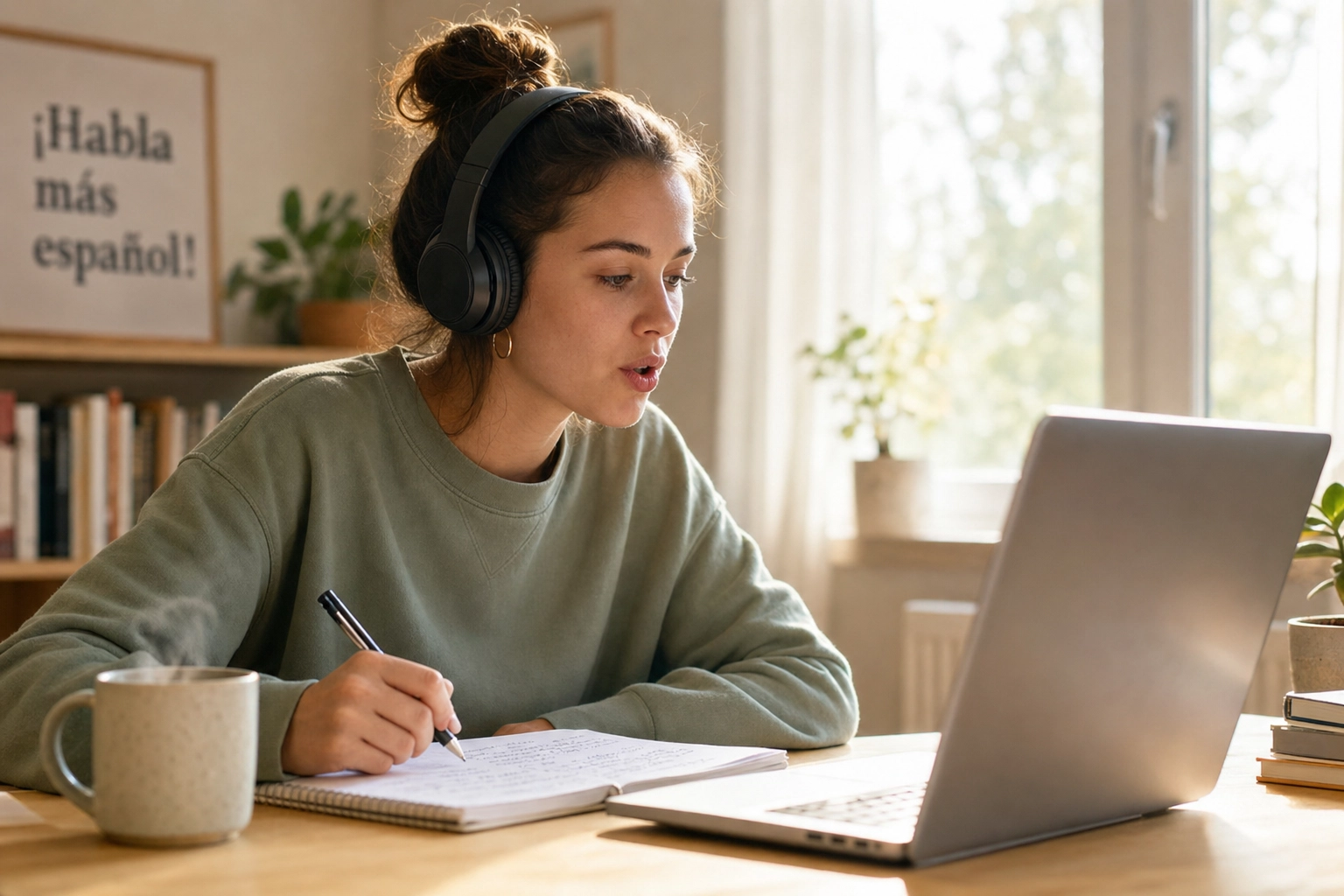
You could pay a private tutor by the hour, or you could open YouTube and learn English from teachers with millions of students — for free. The best YouTube channels to learn English explain exactly what textbooks skip: why "want to" sounds like "wanna," how to fix a stubborn R, and what British people really mean when they say "not bad."
The hard part isn't finding videos — it's that there are millions of them, and most lists just throw twenty names at you with no plan. Below are 15 channels worth your time in 2026, grouped by what you want to improve: pronunciation, conversation, beginner comprehension, or exam prep. For each, you get what it's best for, the right level, and one tip to make watching active. Then we'll cover the one thing YouTube can't do for you.
Quick Summary: The best YouTube channels to learn English include BBC Learning English and EnglishClass101 for structure, Rachel's English and English with Lucy for pronunciation, and Learn English With TV Series for natural speed. All are free. But YouTube only trains input — listening and vocabulary — so to build fluency you also have to speak. Pair these channels with real conversation practice.
Why YouTube is one of the best free tools to learn English (and the one catch)
No other free resource comes close to YouTube for English input. You get thousands of teachers, every accent, native-speed conversation, and full control of the pace — pause, rewind, slow it down, or turn on subtitles. Learning English with YouTube is immersion on demand.
Here's the catch, and we'll return to it: YouTube is input. It trains your ears and grows your vocabulary, but it can't hear you talk back. Watching a hundred videos helps you understand English; it won't automatically make you speak it. The goal is to feed your brain great input, then convert it into speech.
The 15 picks below are grouped into four goals: pronunciation and accent, everyday conversation, beginners (comprehensible input), and exam prep with serious listening. These are, in my view, the best YouTube channels to learn English right now — but the real skill is how you watch them.
Best YouTube channels for pronunciation and accent
If people often ask you to repeat yourself, pronunciation is the fastest win. Pick one channel that matches your target accent — American or British — and stick with it. Switching accents every week only confuses your mouth.
1. Rachel's English — American pronunciation
Rachel's English is the most-recommended channel for American pronunciation. Her videos use the International Phonetic Alphabet, slow-motion close-ups of her mouth, and "English in real life" clips to show how sounds link together in natural speech. Her focus is American vowels, stress, and rhythm — the clearest free breakdown you'll find.
Level: Intermediate–Advanced Make it active: Don't just watch her form a sound — record yourself copying it and compare. Her lessons pair perfectly with our guides to the American R sound and tricky English vowel sounds.
2. Accent's Way English with Hadar
Hadar Shemesh is a non-native speaker who learned American English as an adult — which is exactly why her channel connects with over a million learners. She focuses on connected speech, melody, and the mindset side of sounding natural, without asking you to erase your identity.
Level: Intermediate–Advanced Make it active: Shadow a 30-second clip. Play a sentence, pause, and repeat it out loud, matching her rhythm and melody — not just the words. This is classic shadowing, one of the best ways to move pronunciation from your head to your mouth.
3. English with Lucy — British English
For British English, English with Lucy is the go-to. Lucy teaches clear pronunciation, high-value vocabulary and grammar, and the differences between British and American usage, with well-produced weekly lessons that also cover B1–C1 exam skills.
Level: All levels Make it active: After each new phrase, pause and say it aloud inside a sentence of your own — not just a repeat of hers. Her work on melody pairs well with our guide to intonation patterns.
4. mmmEnglish — rhythm and natural speech
Run by Australian teacher Emma, mmmEnglish is brilliant for the music of English: word stress, rhythm, and the small natural phrases that make you sound fluent. Her "imitation" lessons are built for repeating after her, line by line.
Level: Beginner–Intermediate Make it active: Use an imitation video and don't move on until your rhythm matches hers. Pay special attention to the weak schwa sound — it's the secret to natural-sounding English.
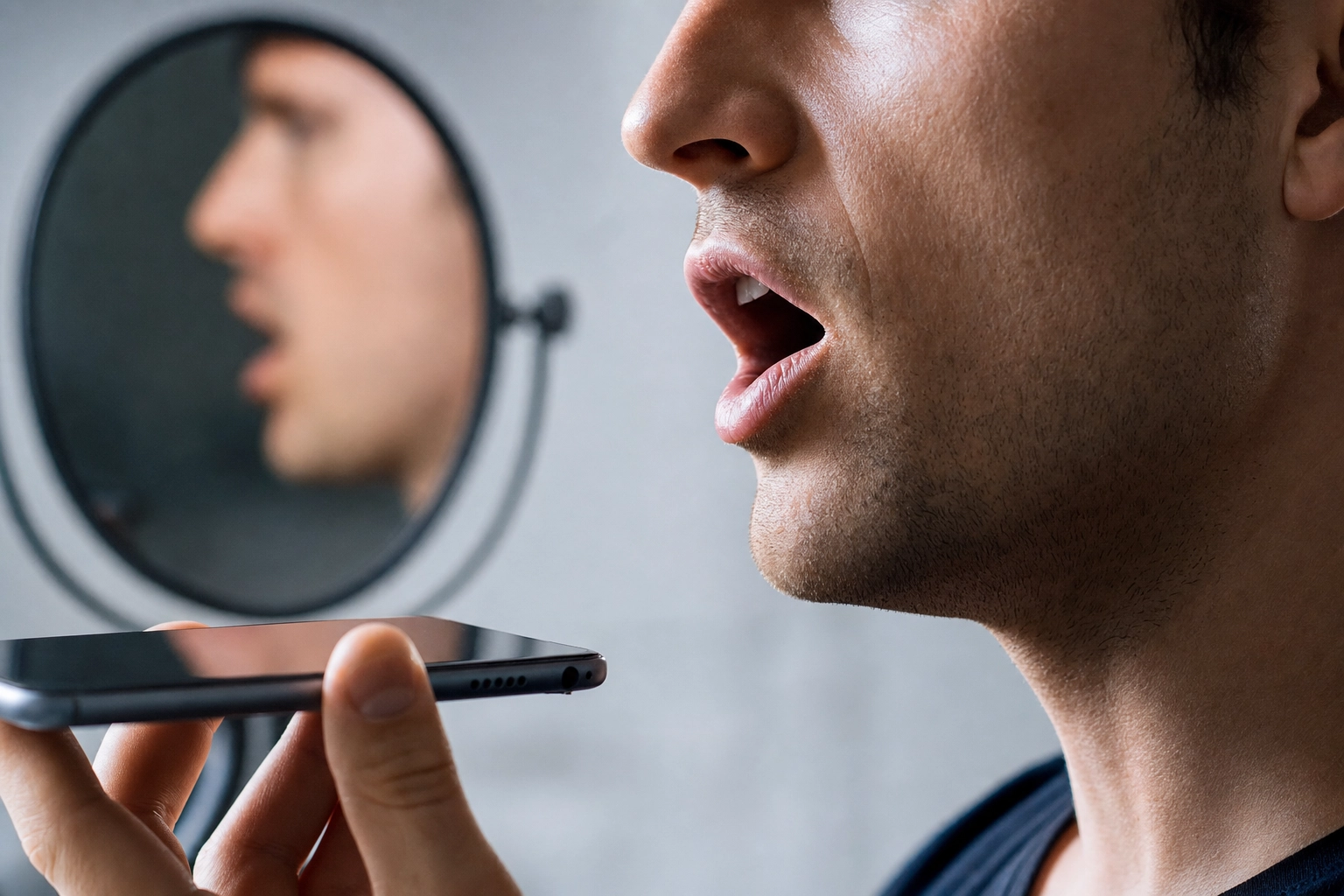
Best YouTube channels for everyday conversation and natural English
Textbook English and real English can feel like two different languages. These channels bridge the gap, teaching the slang, phrasal verbs, and fast, messy speech you'll actually hear.
5. Speak English With Vanessa — practical everyday English
Speak English With Vanessa teaches warm, practical American English — everyday conversation, phrasal verbs, and the vocabulary you need for real situations. Her lessons focus on both listening and speaking, and she's especially good at building confidence.
Level: All levels Make it active: She constantly asks questions — answer them out loud instead of nodding along. Then take one phrase into a real setting, like making small talk in English.
6. Learn English With TV Series — native-speed English
Learn English With TV Series takes clips from shows like Friends and The Office and dissects them: the slang, the connected speech, the jokes you'd otherwise miss. It's a great way to train your ear for how fast native speakers really talk.
Level: Intermediate–Advanced Make it active: Watch each clip once without subtitles, then again with them, and note what you missed. It's a perfect companion to learning English with movies and TV shows on your own.
7. Papa Teach Me — British slang and humor
Aly, a London teacher, runs Papa Teach Me, delivering British slang, idioms, and spoken grammar with a comedian's timing. If you want to understand British friends, memes, and banter, this is your channel.
Level: Intermediate–Advanced Make it active: Grab three phrases per video and actually use them the same day. Learning natural filler words and connectors helps too, and so does knowing how to keep a conversation going.
8. linguamarina — real-world and business English
Marina is a non-native creator who built a life in the US, and linguamarina teaches real-world and business English: interview phrases, productivity language, and how to sound polished at work.
Level: Intermediate–Advanced Make it active: Steal one "upgrade your English" phrase per video and reuse it that week. Pair it with our tips on sounding more natural in English and how to stop translating in your head.

Best YouTube channels for beginners (comprehensible input)
Beginners don't need harder material — they need comprehensible input: language just above your current level, made understandable through pictures, context, and a slower pace. It's roughly how children acquire language, and these four channels do it better than anyone for new learners. They're a great fit while you're still mapping out the CEFR English levels.
9. BBC Learning English — the structured gold standard
BBC Learning English is the closest thing to a free, structured course. From "English in a Minute" to grammar explainers and News Review, the BBC Learning English team covers every skill with clear British English and reliable quality.
Level: All levels (very beginner-friendly) Make it active: Follow one full playlist start to finish instead of hopping between random videos. Structure beats scrolling.
10. EnglishClass101 — a course-style path
EnglishClass101 offers a huge, organized library that runs from survival phrases up to advanced lessons, covering grammar, vocabulary, and dialogues, with long listening compilations for repeated exposure to American English.
Level: Beginner–Intermediate Make it active: Play the long compilations while commuting for repeated exposure — then quiz yourself afterward instead of letting them run as background noise. It's one of the best ways to practice English online for free.
11. Bob the Canadian — slow, calm real-life English
Bob the Canadian films everyday places — farms, stores, hardware shops — and narrates them slowly in clear English, explaining tricky words as he goes. It's calm, friendly, and perfect for nervous beginners who need help easing in.
Level: Beginner–Intermediate Make it active: After a video, describe the same scene out loud in your own simple sentences. Then recreate the feeling at home with our English immersion at home guide.
Duolingo taught you words. No one taught you to speak.
PracticeMe: real voice conversations with an AI tutor, 24/7.
12. Easy English — real people on the street
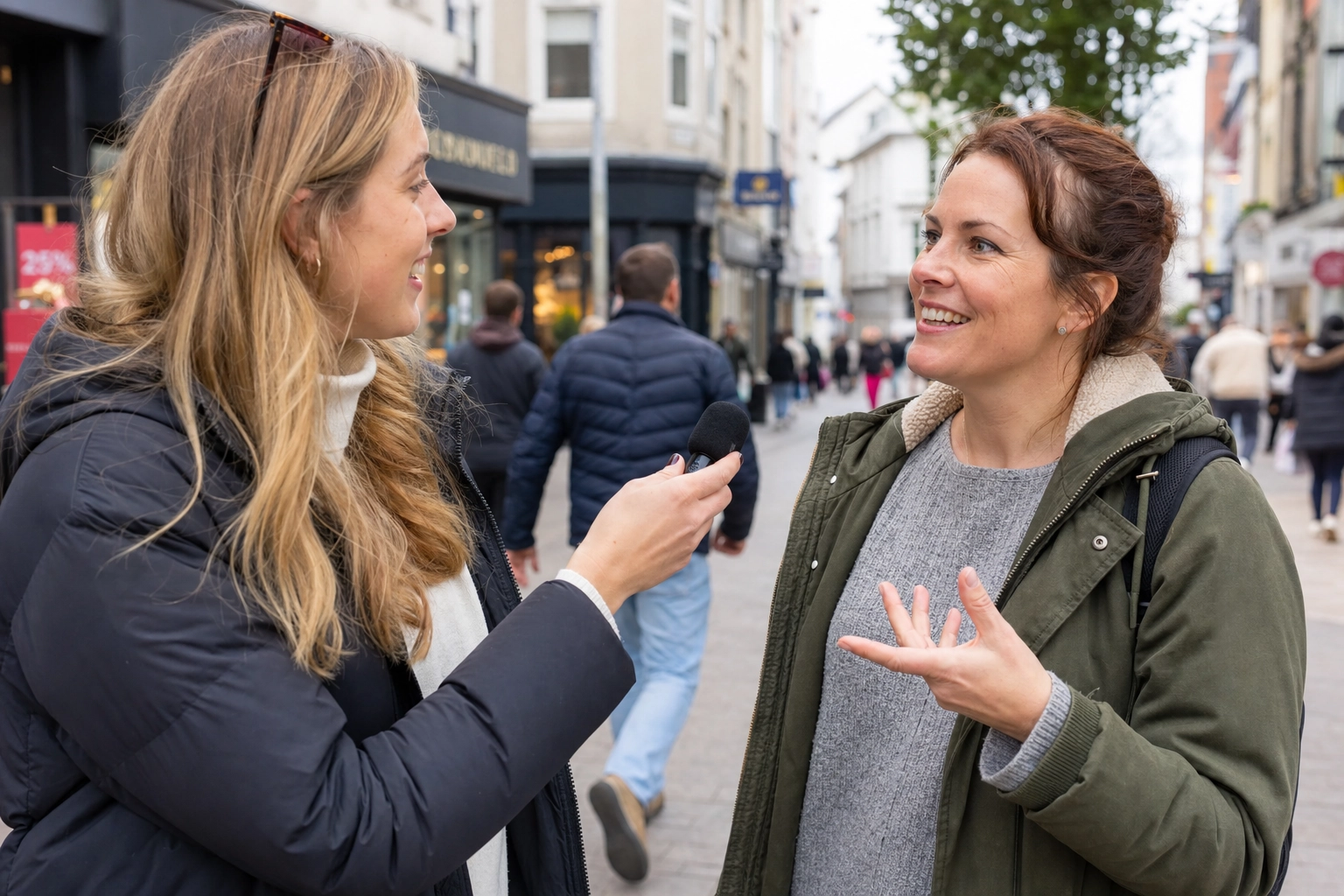
Easy English sees hosts Mitch and Isi stop real people on the streets of Brighton and beyond, with dual subtitles so you can follow authentic, unscripted English. Nobody is reading a script — this is how everyday English actually sounds.
Level: Beginner–Intermediate Make it active: Pause after each interview question and answer it yourself before the strangers do. You'll be surprised how much you can already say.
Best YouTube channels for exam prep and serious listening
Preparing for IELTS, TOEFL, or the Duolingo English Test? These channels focus on advanced listening and exam strategy — but remember, the speaking sections still demand spoken practice.
13. VOA Learning English — news at a slower speed
VOA Learning English reads real news slowly and clearly, with topic vocabulary and short "English in a Minute" clips. It's ideal for building listening comprehension and current-affairs vocabulary — and great prep for exam listening sections.
Level: Beginner–Intermediate Make it active: Listen once, then summarize the news story out loud in three sentences. Summarizing forces you to produce language, not just absorb it.
14. engVid — grammar, vocabulary and exam skills
engVid brings together eleven native-speaker teachers covering grammar, vocabulary, phrasal verbs, business English, and IELTS/TOEFL prep in both British and American accents. If one teacher's style doesn't click, another will.
Level: All levels Make it active: Do the short quiz at the end of each lesson on their site to confirm you actually learned the grammar — don't just watch and assume it stuck.
15. E2 IELTS — exam strategy from ex-examiners
Hosted by ex-examiners Jay and Mark, E2 IELTS delivers polished IELTS, TOEFL, and PTE strategy: band-score techniques, common mistakes, and model speaking answers from people who have scored thousands of real tests.
Level: Intermediate–Advanced Make it active: After watching a Speaking sample, record your own answer to the same question and self-score it. For more, rehearse real Duolingo English Test speaking questions out loud.
How to turn passive watching into active learning
Here's the uncomfortable truth: when you're learning English, watching videos feels productive, but passive watching barely moves your fluency. The learners who improve fastest treat their videos as a workout, not entertainment. A few habits make the difference.
Watch it twice and control the speed
Play your videos once for the gist with no subtitles, then rewatch with subtitles to catch what you missed. Use YouTube's playback speed controls — slow a hard clip to 0.75x until every word is clear, then push it to 1.25x to train your ear for real pace.
Shadow the speaker, don't just listen
Pause after a sentence and say it out loud, copying the speaker's intonation and rhythm as closely as you can. This is shadowing, the bridge between understanding a phrase and being able to say it smoothly — and it's how you stop sounding robotic in English.
Keep a spoken vocabulary log
When you meet a useful word, don't just write it down — say it in a full sentence you might actually use, then review it a few days later. Vocabulary you can produce beats vocabulary you merely recognize, which is the whole difference between passive and active knowledge. Build the habit with our daily English speaking exercises.
The missing half: YouTube can't hear you speak
Now the honest part. You can watch English YouTube for a year, understand almost everything, and still freeze the moment someone asks, "So, tell me about yourself." It's one of the most common frustrations in language learning — people who understand English but can't speak it fluently.
There's a reason. Linguists separate comprehensible input — the listening that YouTube is fantastic for — from comprehensible output, the act of actually producing language. Watching builds the first; only speaking builds the second. As one popular teacher puts it, the videos can't talk back — sooner or later you need a conversation partner.
That used to mean expensive tutors or awkward language exchanges. Now you can practice English speaking with an AI tutor any time, out loud, judgment-free. Practice Me gives you real-time voice conversations with AI tutors in both American and British accents — the same accents you hear on YouTube. You can rehearse a job interview, a business presentation, or travel plans; the tutor remembers you, saves the new vocabulary you use, and tracks your speaking progress over time.
The winning routine is simple: get your input from the channels above, then spend 10–15 minutes turning it into output by talking. If you're comparing tools for that speaking half, see our roundup of the best apps to learn English and our honest take on using ChatGPT voice for practice.

How many English YouTube channels should you actually follow?
Two or three. That's the sweet spot. Pick one channel for structured lessons at your level, one for a specific skill you're improving (usually pronunciation), and one for authentic content on topics you genuinely enjoy — whether your goal is casual chat or business English.
Subscribing to twenty channels feels ambitious but leads to shallow, scattered exposure — you watch one video from each and remember none. Depth beats breadth. Commit to a small set, follow full playlists, and stay with one accent for a few months before switching. Consistency with a few great channels beats channel-surfing through dozens, and it keeps your path to fluency realistic.
Frequently asked questions
What is the best YouTube channel to learn English?
There's no single best channel — it depends on your goal. For structured lessons, BBC Learning English is the gold standard. For American pronunciation, Rachel's English is hard to beat, and for British English, English with Lucy. True beginners should start with EnglishClass101 or VOA Learning English, where the language is slower and clearer.
Can you become fluent in English just by watching YouTube?
No. YouTube can take your listening and vocabulary a very long way, but fluency is a speaking skill, and speaking only improves when you actually speak. You'll build huge passive understanding from videos, then need conversation practice to turn it into confident speech. Think of YouTube as half the equation.
How many English YouTube channels should I follow?
Two or three is ideal: one for structured lessons at your level, one for a skill like pronunciation, and one for authentic content you enjoy. Following too many leads to surface-level exposure with little retention. Depth beats breadth every time.
What level do I need to learn English on YouTube?
Most popular channels suit A2 (elementary) and above. True beginners should start with BBC Learning English, EnglishClass101, or VOA Learning English, then lean on subtitles and slower playback speed. As you improve, add faster, native-speed channels like Learn English With TV Series.
Are these English learning YouTube channels free?
Yes. Every channel on this list is completely free to watch on YouTube. Some teachers also sell optional courses, apps, or worksheets, but the core video lessons — which are all you need to make real progress — cost nothing.
Is YouTube or an app better for learning English?
They do different jobs in language learning, so the honest answer is both. YouTube is the best free source of input — listening, vocabulary, and accents. A speaking app or AI language-learning tool gives you the output half: real practice talking. Learners who combine authentic video with daily speaking practice improve far faster than those who do only one.
The bottom line on the best YouTube channels to learn English
For learning English, YouTube offers world-class input for free, and these 15 channels cover every goal — from fixing your R with Rachel's English, to decoding native speed with Learn English With TV Series, to acing IELTS with E2. Choose two or three that match where you are, watch them actively, and commit to one accent.
Then close the loop. Feed your brain with the best YouTube channels to learn English, but build real fluency by speaking — because understanding English and speaking English are two different skills, and only one of them shows up when someone finally asks you a question. When you're ready for that half, practice out loud with an AI tutor and put everything you've watched to use.