Duolingo taught you words. No one taught you to speak.
PracticeMe: real voice conversations with an AI tutor, 24/7.
English Speaking Exercises: 20 Daily Drills [2026]
![English Speaking Exercises: 20 Daily Drills [2026]](https://cdn.babyseo.ai/images/practiceme.app/english-speaking-exercises-guide/daily-english-speaking-exercises-kitchen.webp)
The single biggest reason people stay stuck at "I understand English but I can't speak it" is simple: they spend almost all their time on input — reading, watching, listening — and barely any on output, which means actually talking. The fix is English speaking exercises: small, repeatable drills that get you producing the language out loud. Speaking is a physical skill, like playing an instrument — you don't get better by watching someone else do it, you get better by doing reps.
This guide is a complete library of those reps: 20 drills across five categories, nearly all of which you can do completely alone, in 15–20 minutes a day. For each one you'll get exactly how to do it, why it works, how long it takes, and who it's best for — plus a ready-to-follow 30-day calendar at the end so you never have to wonder "what should I practice today?"
Quick Summary: The fastest way to improve spoken English is short, daily output practice — not more passive study. This guide gives you 20 speaking exercises in 5 categories (solo speaking, shadowing, mirror and pronunciation drills, AI conversation, and role-play), most needing no partner. Spend 15–20 focused minutes a day, rotate exercises using the 30-day calendar, and record yourself so you can hear your own progress.
Why English Speaking Exercises Actually Work (the 30-Second Science)
You don't need to read research papers to get fluent, but knowing why these drills work will keep you doing them on the days you don't feel like it.
Producing language is different from understanding it. Applied linguist Merrill Swain's Comprehensible Output Hypothesis came out of Canadian immersion programs where students understood French almost perfectly but still spoke it with errors after years of class. Her conclusion: input isn't enough. The act of speaking forces your brain to shift from passively recognizing words to actively assembling them — and that's the moment you notice the gaps in what you can actually say. Every exercise below is built to create that productive struggle.
Short daily reps beat long weekly sessions. The spacing effect is one of the most reliable findings in learning science: a meta-analysis of classroom studies found a moderate advantage (effect size d = 0.54) for practice spread out over time versus the same amount crammed into one block. Fifteen minutes a day genuinely outperforms two hours every Sunday. That's the whole logic behind the 30-day calendar later in this guide.
Lowering anxiety unlocks the rest. Researchers Horwitz, Horwitz, and Cope identified foreign language anxiety as a distinct fear made of communication apprehension, test anxiety, and fear of negative evaluation — and speaking is the skill most vulnerable to it. When you're nervous, your mental "affective filter" rises and blocks learning. Practicing alone, or with a judgment-free AI partner, removes the audience that makes your mind go blank — so you can focus on the language instead of the fear.
Put it together and the recipe is clear: lots of low-pressure speaking, in small daily doses, across varied exercise types. No textbook, no scheduled lessons — just you, talking. Here's the menu.
How to Use This Guide
You don't do all 20 exercises every day. You pick one or two, total 15–20 minutes, and rotate them so you're training different skills over the week. The best English fluency exercises all share one trait: they make you produce language, not just absorb it. These are active lessons, not passive ones — you're the one talking the whole time.
Match the exercise to what you're trying to fix:
| Category | What it builds | Partner needed? |
|---|---|---|
| 1. Solo speaking | Fluency, automaticity, thinking in English | No |
| 2. Shadowing | Pronunciation, rhythm, intonation | No |
| 3. Mirror & pronunciation | Specific sounds, clarity, confidence | No |
| 4. AI conversation | Real-time fluency, recovery, feedback | AI only |
| 5. Role-play | Real-world readiness, useful phrases | No (or AI) |
Three rules make everything below work better:
- Record yourself. Your phone's voice memo app is the most important tool here. You can't fix what you can't hear, and re-listening is how you'll prove to yourself you're improving. If you want a benchmark first, test your fluency level and save the result.
- Speak out loud, for real. Whispering or "saying it in your head" doesn't train the muscles. Volume matters.
- Don't stop to translate. If you can't find a word, talk around it. Building the habit to think directly in English is worth more than getting every word perfect.
Ready? Let's start with the drills that need nothing but you.
Category 1: Solo Speaking Exercises (No Partner Needed)
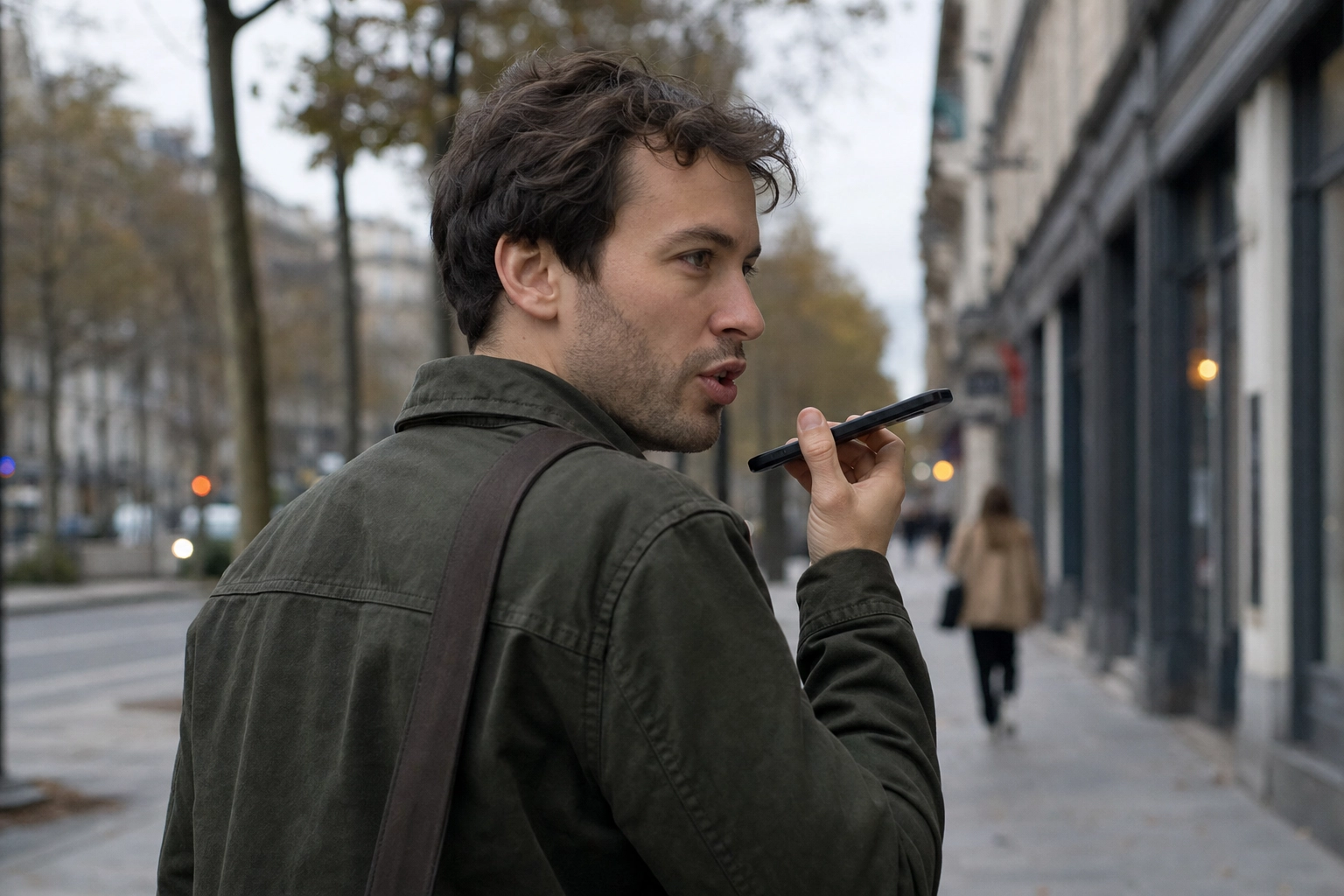
These five drills are the backbone of self-study. They cost nothing, need no equipment beyond your voice, and they're the reason you can build real speaking skills even if you don't know a single English speaker. If this is your main path, our deeper guide on how to improve your English speaking skills by yourself pairs perfectly with this section.
1. Self-Narration (the Sportscaster Method)
How to do it: Narrate what you're doing, out loud, as you do it. "I'm filling the kettle. Now I'm hunting for a clean mug — ah, they're all in the dishwasher." Commentate your morning routine, your walk to the bus, your cooking, like a sports announcer calling a game.
Why it works: It turns dead time into speaking time and forces real-time output — exactly the productive struggle that drives acquisition. Because you're describing your own life, you quickly discover the everyday words you're missing and start reaching for English instead of translating.
Time: 5–10 minutes, scattered through the day. Best for: Beginners, and anyone who freezes when asked "so, what did you do today?" It's also the single best cure for over-translating.
2. The Voice Diary (Audio Journaling)
How to do it: Once a day, open your voice recorder and talk for 2–3 minutes about your day, a decision you're weighing, or an opinion you hold. No script. When you're done, listen back once and note one thing to improve tomorrow.
Why it works: It pairs output with self-assessment. Speaking generates the language; re-listening lets you notice errors and hear progress over weeks — something you literally cannot do in the moment. Keep your recordings, and your Day 1 entry will surprise you a month later.
Time: 3–5 minutes. Best for: All levels, and especially anyone who wants visible proof they're improving.
3. Describe Your Surroundings
How to do it: Look around wherever you are. Pick an object, a view out the window, or the room itself, and describe it in as much detail as you can for 60–90 seconds — colors, shapes, materials, position, how it makes you feel.
Why it works: It drills vocabulary retrieval under mild pressure and teaches circumlocution: talking around a word you don't know ("the thing you use to open bottles"), which is a core fluency skill. You'll instantly find your vocabulary gaps and can look them up afterward.
Time: 5 minutes. Best for: Beginner to intermediate learners building everyday vocabulary.
4. The 5-Minute Monologue
How to do it: Choose a topic ("my hometown," "a film I love," "should remote work be permanent?") and speak about it nonstop for five minutes — no long pauses, no switching to your first language. For a powerful upgrade, use the 4/3/2 technique: give the same talk three times, first in 4 minutes, then 3, then 2, forcing you to deliver the same ideas more smoothly each round.
Why it works: Sustained speaking builds endurance and reduces hesitation, and repeating the same content in less time directly trains fluency — your message stays fixed, so all your effort goes into delivery.
Time: 5–10 minutes. Best for: Intermediate learners and anyone prepping for a speaking exam or presentation.
5. Speed-Talking Drills
How to do it: Take a sentence or short paragraph you can already say correctly. Say it at a comfortable speed, then a little faster, then faster again — staying clear, never sloppy. Stop the second it falls apart, then build back up.
Why it works: Fluent speech relies on automatic articulation. Pushing your speed trains the smooth blending between words known as connected speech, so words stop coming out one stiff block at a time. Pair these spoken English practice exercises with focused work on linking sounds for the biggest gains.
Time: 5 minutes. Best for: Intermediate to advanced speakers who sound "correct but choppy."
Category 2: Shadowing Exercises
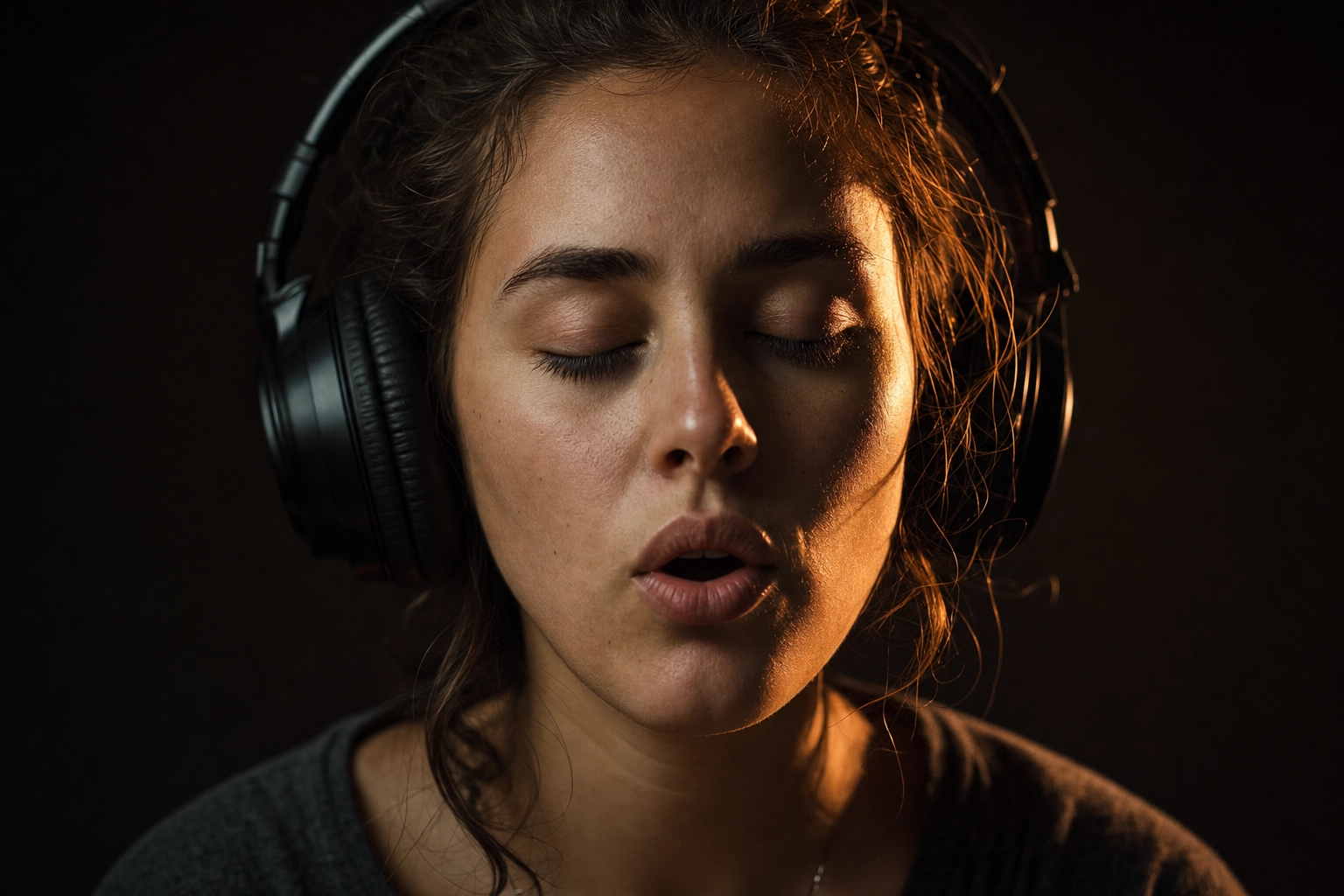
Shadowing is a technique popularized by polyglot and linguist Professor Alexander Arguelles: you play native-speaker audio and repeat it as you hear it, with almost no delay — like a shadow trailing the original. It trains your ear and mouth together and is one of the most efficient pronunciation tools that exists. For a full walkthrough, see our complete shadowing guide; below are four variations to slot into your rotation.
6. Full Shadowing
How to do it: Choose a 30–60 second clip of clear native speech — a podcast, audiobook, or interview you can find online for free. Play it and speak along simultaneously, copying every sound, pause, and intonation as closely as you can. Loop the same clip 5–10 times.
Why it works: You're not translating or thinking about grammar — you're physically rehearsing native rhythm, melody, and pronunciation at full speed, which builds the muscle memory that "knowing the rules" never gives you.
Time: 10–15 minutes. Best for: Intermediate to advanced learners.
7. Chunk Shadowing (Beginner-Friendly)
How to do it: Same idea, but pause the audio after each short phrase, repeat that chunk, then continue. Gradually shorten the pause until you can shadow continuously.
Why it works: Full shadowing overwhelms beginners. Chunking lowers the cognitive load so you can actually match the sounds instead of falling behind and giving up. Our 5 shadowing exercises break this down step by step.
Time: 10 minutes. Best for: Beginners and anyone shadowing for the first time.
8. Silent / Mumble Shadowing
How to do it: Shadow under your breath — barely moving your lips — while commuting, queuing, or walking. Earbuds in, audio playing, you quietly mouth along.
Why it works: It removes the "I have no time or privacy to practice" excuse. Even mumbled, you're rehearsing the articulation patterns, and it keeps your daily streak alive on busy days.
Time: Any spare moment. Best for: Busy learners and shy speakers who aren't ready to be heard yet.
9. Prosody Shadowing (Intonation & Rhythm)
How to do it: Pick a short, emotionally expressive clip. Ignore the individual words and shadow only the melody — the rises, falls, and stresses. Exaggerate them, as if you're imitating the speaker's mood.
Why it works: Listeners forgive imperfect sounds far more readily than wrong intonation. Nailing prosody is the fastest route to sounding more natural in English, because rhythm and pitch carry meaning that native ears rely on.
Time: 10 minutes. Best for: Learners who pronounce words correctly but still sound "flat" or robotic.
Category 3: Mirror & Pronunciation Drills

These exercises target the physical side of speech: how your mouth moves and how clearly individual sounds come out. They're short, oddly satisfying, and they fix the small errors that make listeners say "sorry, what?"
10. Mirror Practice
How to do it: Stand in front of a mirror and speak — a monologue, a shadowing clip, anything. Watch your mouth, jaw, and facial expressions, and compare your mouth shape to a native speaker's on video for tricky sounds.
Why it works: Pronunciation is partly visual. Seeing that your mouth barely opens on certain vowels, or that you're not rounding your lips, gives you feedback you can't get by ear alone. It also builds the confident body language and eye contact you'll need in real conversations.
Time: 5–10 minutes. Best for: Anxious speakers and anyone preparing to present or interview.
11. Tongue Twisters
How to do it: Pick a twister that targets your problem sound and repeat it slowly and perfectly, then speed up only as fast as you can stay accurate. "She sells seashells" for /s/ and /ʃ/; "red lorry, yellow lorry" for /r/ and /l/.
Why it works: Twisters isolate and overload one tricky sound so your mouth drills the movement intensively. Work through our list of 50 English tongue twisters, organized by the sound each one trains.
Time: 5 minutes. Best for: All levels — and brilliant as a 60-second warm-up before any other exercise.
12. Minimal Pairs Drills
How to do it: Practice pairs of words that differ by exactly one sound — ship/sheep, light/right, very/berry, thin/tin. Say each pair aloud, exaggerating the difference, then use both in a sentence.
Why it works: Your first language probably merges sounds that English keeps separate, so your ear and mouth never learned to tell them apart. Targeted minimal pairs practice retrains both at once, and which pairs you need depends on your native language.
Time: 5–10 minutes. Best for: Anyone whose accent causes specific, repeated misunderstandings.
13. Word & Sentence Stress Tapping
How to do it: As you say a word or sentence, tap the table on the stressed syllable or the important words. Say "pho-TO-gra-phy," not "PHO-to-graphy." In a sentence, tap the content words: "I WANT to BUY a new PHONE."
Why it works: English is stress-timed — getting the stress wrong garbles a word even if every sound is correct. Tapping makes the rhythm physical and memorable. Our guide to English word stress rules shows the patterns worth drilling.
Time: 5 minutes. Best for: Intermediate learners whose individual sounds are fine but who still get misheard.
Duolingo taught you words. No one taught you to speak.
PracticeMe: real voice conversations with an AI tutor, 24/7.
Category 4: AI Conversation Practice

Here's the honest limitation of every exercise above: you're talking at the world, not with it. Real conversation adds unpredictability, real-time pressure, and the need to listen and respond — and until recently, getting that meant finding a patient human. AI voice tutors changed that. They give solo learners the one thing they were always missing: a responsive partner, online and available at 3 a.m., that never gets bored and never judges. (For the bigger picture, see our guide to practicing English speaking online for free and our realistic take on using ChatGPT for English practice.)
14. Free-Flow AI Voice Conversations
How to do it: Open a voice-based AI tutor and just talk — about your weekend, your job, a show you're watching. Let it ask follow-up questions and follow the tangents naturally, the way a real chat works.
Why it works: It's pure comprehensible output with almost no anxiety. Because there's no human to impress, your affective filter drops and you'll say far more than you would with a stranger — and you can do it for as many reps as you want. An app like Practice Me is built for exactly this, with real-time voice and a choice of American or British tutors.
Time: 10–20 minutes. Best for: Everyone — especially confidence-building and anyone with speaking anxiety.
15. AI Interview & Exam Drills
How to do it: Tell the AI to act as an interviewer — for a job, or for the IELTS, TOEFL, or Duolingo English Test speaking section — and to ask questions one at a time. Answer out loud as if it's the real thing, then ask for feedback at the end.
Why it works: It lets you rehearse high-stakes speaking in a no-stakes setting, so the real interview or exam feels familiar instead of terrifying. Repetition turns panic into routine.
Time: 15 minutes. Best for: Job seekers and test-takers.
16. The Correction Loop
How to do it: Say a sentence, then ask the AI: "Was that correct? How would a native speaker say it more naturally?" Listen to the improved version, then say that version out loud two or three times.
Why it works: This closes the exact gap Swain described — you produce, you notice the difference, you correct, you re-rehearse. Saying the fixed version aloud (not just reading it) is what moves it into your active speech.
Time: 10–15 minutes. Best for: Intermediate and advanced learners focused on accuracy and natural phrasing.
17. AI Debate & Opinion Drills
How to do it: Pick a debatable topic and argue one side. Instruct the AI to push back and challenge you. Defend your position, concede points, and counter — keeping the exchange going.
Why it works: Debating forces fast, unscripted thinking and stretches your supply of connectors and opinion phrases. It's also great practice for the skill of keeping a conversation going when you're put on the spot.
Time: 15 minutes. Best for: Advanced learners building fluency under pressure.
Category 5: Role-Play Scenarios

Role-play rehearses the specific conversations you'll actually have, so when the moment comes, your mouth already knows the lines. You can run these alone, in the mirror, or with an AI tutor playing the other part. For a full set of scripts and situations, our guide to 10 English role-play scenarios is the companion to this section.
18. Solo Two-Role Role-Play
How to do it: Pick a simple two-person scene — customer and barista, patient and receptionist — and play both parts, switching your position (or your voice) for each speaker. Run it once, then again with a complication ("they're out of what you wanted").
Why it works: It rehearses turn-taking and the predictable phrases of common interactions without needing a partner, so the rhythm of real back-and-forth dialogue stops feeling foreign.
Time: 10 minutes. Best for: Beginner to intermediate learners.
19. Real-World Scenario Rehearsal
How to do it: Choose a situation you'll genuinely face — ordering at a café, checking in at the airport, a doctor's visit, a first day at work — and run it end to end out loud, anticipating what the other person might say. Start with the basics, like how to introduce yourself in English and make small talk.
Why it works: It pre-loads the exact vocabulary and phrases for situations you'll actually encounter, so you're recalling rehearsed language instead of inventing it under stress.
Time: 10–15 minutes. Best for: Travelers, newcomers, and people starting a new job.
20. The "Tomorrow" Rehearsal (Anticipation Practice)
How to do it: Look at your calendar. Is there a real English conversation coming up — a meeting, a call, a class introduction? Rehearse it out loud tonight: your opening line, the key things you want to say, the likely questions and your answers.
Why it works: This is the exercise with the most direct payoff, because it transfers straight to real life. Walking in already having "spoken" the conversation once is the single biggest confidence boost on this list.
Time: 5–10 minutes. Best for: Anyone with a real speaking event on the horizon.
Your 30-Day English Speaking Exercise Calendar
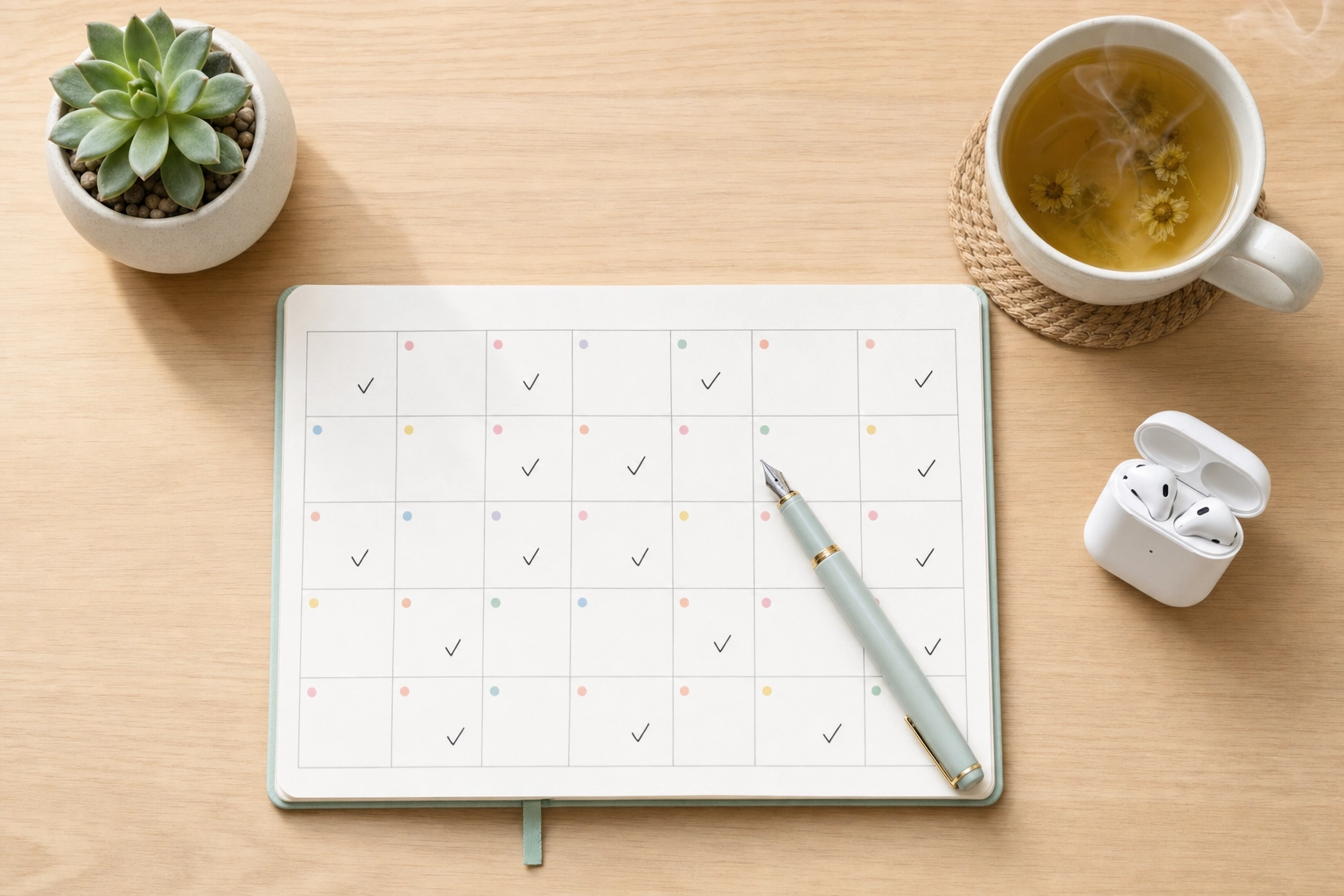
Knowing 20 exercises is useless if you spend every session deciding which one to do. So here's a done-for-you rotation. It mixes all five categories (variety keeps your brain engaged and transfers skills better than drilling one type for weeks), ramps up gently, and builds in review days where you re-record an earlier exercise and compare — putting the spacing effect to work.
Aim for 15–20 minutes of daily speaking practice. Miss a day? Just pick up where you left off; the streak matters more than the date.
Week 1 — Foundations
| Day | Exercise | Time |
|---|---|---|
| 1 | #2 Voice Diary (record a baseline — keep this file!) | 5 min |
| 2 | #7 Chunk Shadowing | 15 min |
| 3 | #11 Tongue Twisters + #10 Mirror Practice | 10 min |
| 4 | #14 Free-Flow AI Conversation | 15 min |
| 5 | #1 Self-Narration (your morning routine) | 10 min |
| 6 | #3 Describe Your Surroundings | 10 min |
| 7 | Review: re-listen to Day 1, note 2 wins + 1 fix | 5 min |
Week 2 — Building
| Day | Exercise | Time |
|---|---|---|
| 8 | #6 Full Shadowing (new clip) | 15 min |
| 9 | #12 Minimal Pairs (your problem sounds) | 10 min |
| 10 | #4 The 5-Minute Monologue | 15 min |
| 11 | #15 AI Interview Drill | 15 min |
| 12 | #18 Solo Two-Role Role-Play | 15 min |
| 13 | #9 Prosody Shadowing | 15 min |
| 14 | Review: re-record Day 10 monologue, compare | 15 min |
Week 3 — Stretching
| Day | Exercise | Time |
|---|---|---|
| 15 | #5 Speed-Talking Drill | 10 min |
| 16 | #19 Real-World Scenario Rehearsal | 15 min |
| 17 | #13 Word & Sentence Stress Tapping | 10 min |
| 18 | #17 AI Debate & Opinion Drill | 15 min |
| 19 | #1 Self-Narration (narrate a task start to finish) | 15 min |
| 20 | #16 The Correction Loop | 15 min |
| 21 | Review: Voice Diary reflecting on the week | 10 min |
Week 4 — Integrating
| Day | Exercise | Time |
|---|---|---|
| 22 | #20 The "Tomorrow" Rehearsal | 10 min |
| 23 | #14 Free-Flow AI Conversation (harder topic) | 20 min |
| 24 | #8 Silent Shadowing (on your commute) | 10 min |
| 25 | #4 The 5-Minute Monologue (new topic, 4/3/2) | 15 min |
| 26 | #19 Real-World Scenario (a tougher situation) | 20 min |
| 27 | #9 Prosody Shadowing | 15 min |
| 28 | Review: re-take a quick fluency self-check | 15 min |
Days 29–30 — Capstone
| Day | Exercise | Time |
|---|---|---|
| 29 | #14 Free-Flow AI Conversation, topic of your choice | 20 min |
| 30 | Re-record your Day 1 Voice Diary topic, then play both back to back | 15 min |
That Day 30 comparison is the entire point of the month. Most learners are genuinely surprised by the difference. When you finish, start the cycle again with harder clips and topics, or fold these drills into a broader plan to learn English fast.
How to Make These Exercises Stick
The exercises work. The hard part is showing up. A few things make consistency far easier:
- Stack practice onto an existing habit. Shadow during your commute, narrate while you cook, do your voice diary right after brushing your teeth. Attach practice to something you already do and you'll find the habit sticks without relying on motivation.
- Solve the feedback problem. The one real weakness of solo drills is that nobody tells you what to fix. Two cheap solutions: record everything and listen back, and use an AI tutor for the conversation and correction exercises so you get instant, judgment-free feedback. The more you can build English immersion at home, the faster everything compounds.
- Track two numbers. Minutes spoken and new words learned. Watching them climb is what keeps people going when progress feels invisible week to week. For the mindset side, work through our speaking confidence checklist.
This is exactly the gap Practice Me is built to fill. It gives you real-time voice conversations with AI tutors in American and British accents, saves new vocabulary from your chats automatically, and tracks your speaking time and progress over weeks — so the AI conversation, interview, correction, and role-play exercises above all live in one judgment-free app you can open whenever you have ten minutes. It starts with a free trial; see pricing for current plans.
Frequently Asked Questions
How can I practice English speaking by myself without a partner?
Most of the exercises in this guide are designed for exactly that. Start with self-narration (talk through what you're doing), a daily voice diary, and shadowing native audio — none of these need another person. When you want genuine back-and-forth, an AI voice tutor stands in for a partner and gives you feedback. In short: you can build real fluency completely solo if you commit to daily output practice. Our full guide to improving your English speaking by yourself goes deeper.
How long should I practice English speaking each day?
Aim for 15–20 focused minutes every day rather than one long session a week. Research on the spacing effect consistently shows that distributed practice outperforms cramming, and speaking is a physical skill that rewards frequent, short reps. Ten honest minutes daily will take you further than two hours every Sunday.
Which English speaking exercises are best for beginners?
Begin with the low-pressure solo drills: self-narration, describing your surroundings, and chunk shadowing (where you pause and repeat each phrase). Add tongue twisters for pronunciation and solo two-role role-plays for everyday situations. Hold off on speed drills and debate-style exercises until your foundation is steadier — they're more useful once you can already hold a basic conversation.
Do speaking exercises really work without feedback or a teacher?
Yes, with one caveat: feedback speeds things up, so build it in cheaply. Recording yourself and listening back catches a surprising number of errors on its own. For the rest, an AI tutor or a correction loop gives you instant guidance without booking lessons or paying a teacher by the hour. Solo practice builds fluency and confidence; light feedback keeps your accuracy on track.
How long does it take to see improvement in spoken English?
With 15–20 minutes of daily practice, most learners notice they hesitate less and recover from mistakes faster within 3–4 weeks — which is why this guide includes a 30-day plan with a built-in before-and-after recording. Bigger jumps in range and accuracy usually show over 3–6 months of consistent practice. The variable that matters most isn't talent; it's how many days you actually speak.
Are these exercises good for IELTS or TOEFL speaking prep?
Very. The 5-minute monologue trains the sustained, organized answers those tests reward, and the AI interview drill lets you rehearse exam-style questions under realistic pressure. Combine them with prosody shadowing (for natural delivery) and the correction loop (for accuracy), and you're practicing every skill the speaking sections measure — without paying for a tutor per session.
Start Speaking Today
You don't need a class, a partner, or a perfect plan to start — you need to open your mouth today. Pick one exercise from this list, set a timer for fifteen minutes, and talk. Then do it again tomorrow.
The reason most learners stall isn't ability; it's that they simply ran out of chances to speak. These 20 English speaking exercises remove that excuse, and the 30-day calendar removes the guesswork. The only piece left is a partner who's always available and never makes you feel judged — which is exactly what practicing English with an AI tutor gives you, in both American and British accents, whenever you have a few minutes free. Your future fluent self starts with the next sentence you say out loud.