Duolingo taught you words. No one taught you to speak.
PracticeMe: real voice conversations with an AI tutor, 24/7.
AI Language Learning Apps: Complete Guide [2026]
![AI Language Learning Apps: Complete Guide [2026]](https://cdn.babyseo.ai/images/practiceme.app/ai-language-learning-apps-guide/ai-language-learning-apps-guide-hero.webp)
The AI language learning app market exploded in the last two years. Where you once had Duolingo and a handful of flashcard apps, there are now dozens of AI-powered tools promising fluency through conversation practice, pronunciation coaching, and personalized lessons.
The problem? Most review sites are written by companies selling their own app, and the "top 10" lists are really just ads. This guide is different. We'll break down how these apps actually work, what category each one falls into, and which ones are worth your time and money in 2026.
Quick Summary: AI language learning apps fall into five distinct categories: conversation AI, pronunciation AI, gamified AI, hybrid human+AI, and general-purpose AI tools. For speaking fluency, conversation-focused apps like Practice Me, Speak, and TalkPal deliver faster results than gamified alternatives. Your best choice depends on your goal, budget, and target language — scroll to the comparison table for a quick side-by-side view.
What Makes AI Language Apps Different?
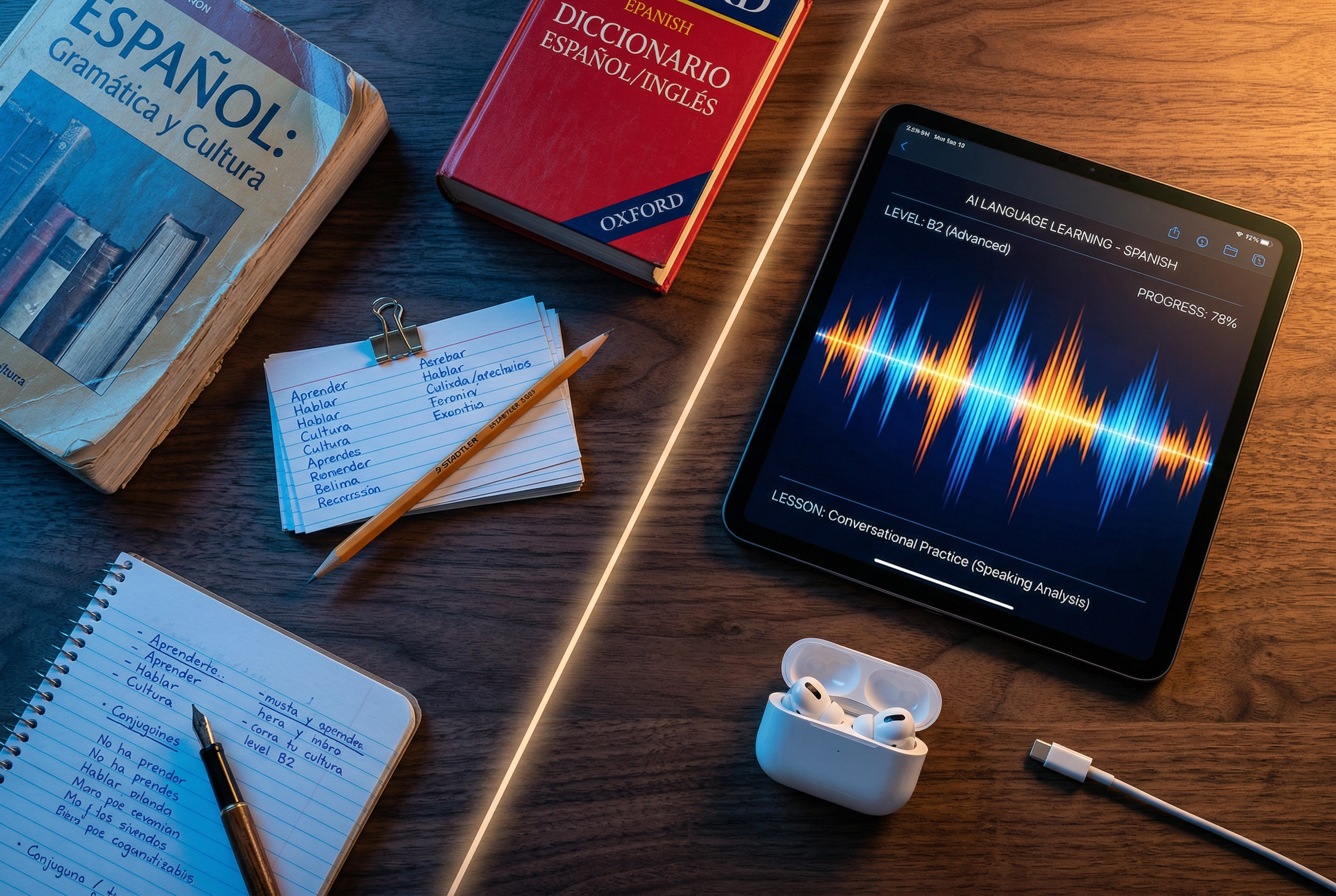
Traditional language learning apps follow a predictable pattern: translate this word, match these pairs, fill in the blank. You might learn vocabulary, but you never actually speak.
AI language learning apps flip this model. Using natural language processing and speech recognition, they let you have real conversations — either typed or spoken — with an AI that responds naturally, corrects your mistakes, and adapts to your level in real time.
This matters because of what linguists call the Output Hypothesis. Researcher Merrill Swain demonstrated in the 1990s that learners who actively produce language — speaking and writing — develop fluency and grammatical accuracy far faster than those who only consume it through reading and listening. More recently, research by Lyster & Sato (2013) found that learners who prioritize conversation and interaction achieve higher fluency and more natural grammatical acquisition compared to those focused on rule memorization.
In plain terms: you can't get fluent by only studying. You have to actually talk. And AI apps finally make it possible to practice speaking anytime, without needing a human partner, without judgment, and without scheduling headaches.
The global language learning market continued its rapid expansion through 2025 and is projected to keep growing at around 22.9% annually. Over 60% of leading platforms have now integrated AI-driven adaptive learning features, and mobile language apps are used by 73% of learners under 30.
The 5 Categories of AI Language Learning Apps
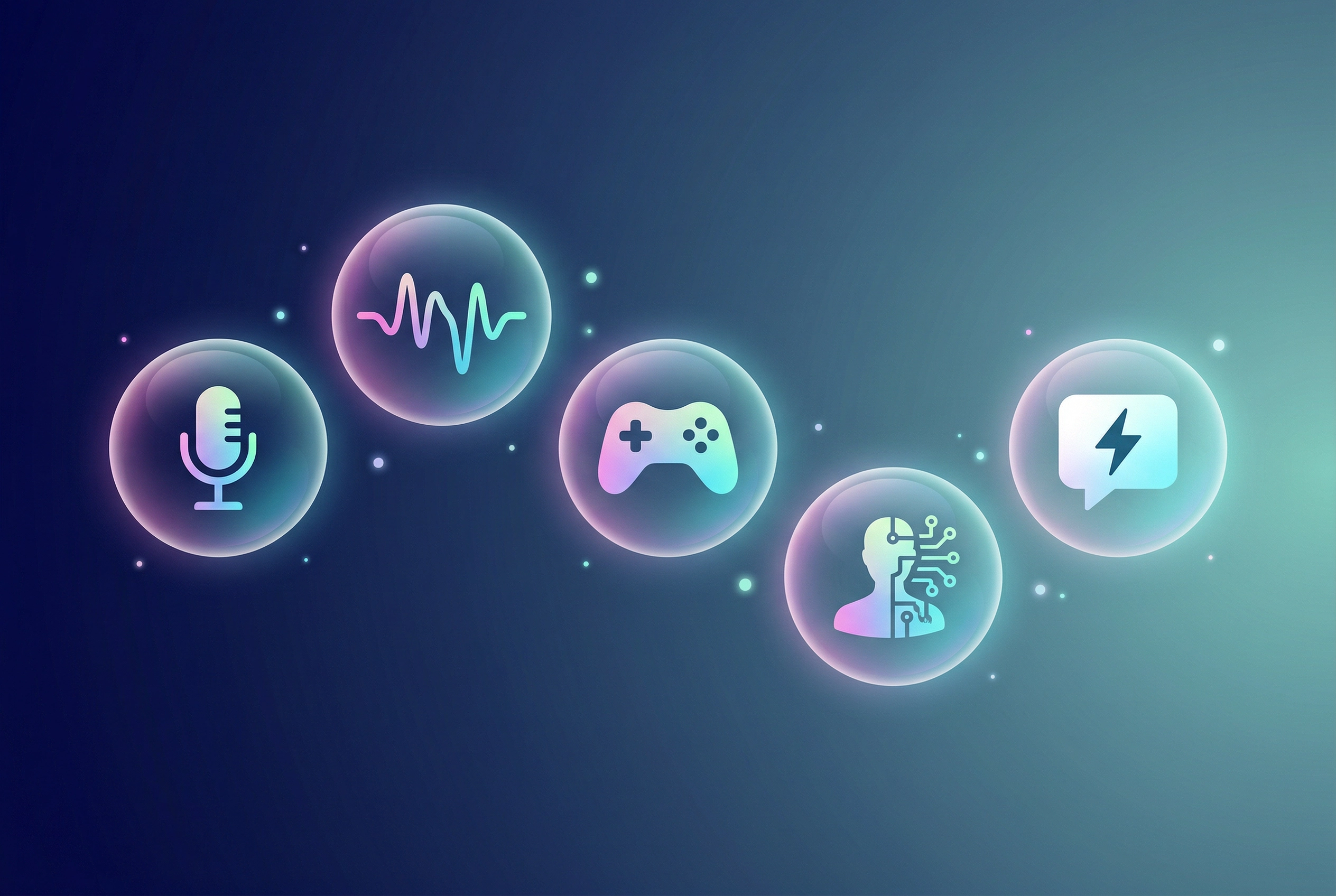
Not all AI language learning apps work the same way. Understanding these five categories helps you pick the right tool for your specific learning goals.
Conversation AI Apps
These apps focus on one thing: getting you speaking through real-time voice conversations with AI. No grammar drills. No flashcards. Just talk.
Examples: Practice Me, Speak, TalkPal, Loora, Gliglish
Best for: Building speaking fluency and confidence. If your main problem is "I understand English but I can't speak it," this is your category.
Why they work: Conversation AI apps force the kind of active output that builds automaticity — the ability to produce language without consciously thinking about grammar rules. Research consistently shows that learners who engage in regular conversational practice develop this automaticity faster than those who rely on passive exercises (VanPatten, 2015).
If you want to practice English speaking with AI, conversation apps are the most direct path to fluency.
Pronunciation AI Apps

These apps specialize in analyzing exactly how you pronounce individual sounds (phonemes) and giving you detailed scores and feedback on your speech patterns.
Examples: ELSA Speak, Speechling
Best for: Accent reduction, clearing up specific pronunciation issues, and preparing for language proficiency speaking tests.
The trade-off: You'll get granular feedback on your pronunciation, but these apps typically don't build conversational fluency. You're repeating scripted sentences, not having dynamic conversations. For a deeper look, check our guide to the best English pronunciation apps.
Gamified AI Apps
These are established language learning platforms that have bolted AI features onto their existing gamified experience.
Examples: Duolingo Max, Memrise
Best for: Building vocabulary habits, learning new words and phrases, and maintaining daily practice streaks. If you enjoy earning points and competing on leaderboards, gamified apps keep you coming back.
The limitation: The AI features often feel like add-ons rather than the core experience. Duolingo Max's AI video call feature, for instance, is limited to a few languages and only available on its priciest plan. The gamified approach is excellent for vocabulary building but struggles to develop real speaking fluency. For alternatives that focus more on speaking, see our Duolingo alternatives for speaking guide.
Hybrid Human + AI Apps
These apps combine structured lessons designed by linguists with AI-powered conversation features layered on top.
Examples: Babbel, Busuu
Best for: Grammar-focused learners who want a clear curriculum path but also want some AI conversation practice on the side.
The trade-off: You get breadth — grammar, vocabulary, reading, listening, and AI conversation — but the conversation component is usually less developed than in dedicated conversation AI apps. Jack of all trades, master of none.
General-Purpose AI Tools
These aren't language learning apps at all — they're general AI assistants that happen to be useful for language practice.
Examples: ChatGPT Voice, Google Gemini, Claude
Best for: Budget-conscious learners who want free or low-cost supplementary conversation practice alongside a dedicated app.
The limitation: No progress tracking, no structured feedback on pronunciation, no vocabulary saving, and no curriculum. You're essentially having unstructured conversations with a chatbot that wasn't designed for learning. It works, but it's like learning to swim in the ocean instead of a pool — possible, but not optimized.
10 Best AI Language Learning Apps in 2026

Here's every major AI language learning app worth considering in 2026, organized by category. For each app, I've noted what it does well, where it falls short, pricing, and who it's built for.
Practice Me — Best for English Conversation Practice
Category: Conversation AI | Languages: English | Platforms: iOS, Android | Price: Subscription (yearly or weekly), with a free trial
Practice Me is a dedicated English speaking practice app built around real-time voice conversations with AI tutors. You choose from distinct tutor personalities — Sarah, Oliver, and Marcus — each with different conversational styles. You can practice with American or British accents, and the app covers specialized topics including job interviews, business English, travel scenarios, everyday conversation, storytelling, and TOEFL preparation.
What stands out: The app automatically saves vocabulary from your conversations and tracks your progress over time — speaking minutes, vocabulary growth, and improvement trends. The AI adapts its difficulty based on your level, and the judgment-free environment makes it especially useful for learners who feel anxious about speaking English. If that resonates, we've written about how to overcome the fear of speaking English.
Where it falls short: English only, so it's not for learners studying other languages.
Best for: Non-native English speakers who understand English reasonably well but need consistent, low-pressure speaking practice to build real fluency. Also strong for beginners who need a patient, adaptive practice partner.
Check out Practice Me pricing for current plan details, including the free trial on iOS and Android.
ELSA Speak — Best for Pronunciation Training
Category: Pronunciation AI | Languages: English | Platforms: iOS, Android | Price: Free tier; paid Premium subscription
ELSA (English Language Speech Assistant) uses AI-powered speech recognition to score your pronunciation at the phoneme level. Say a word or sentence, and ELSA highlights exactly which sounds you're getting right and which need work, often down to the position of your tongue and lips.
What stands out: The pronunciation scoring depth is unmatched among language learning apps. If you have specific sounds you struggle with — the "th" in "three" or the "r" in "world" — ELSA can isolate and drill those with precision. It's also one of the few apps with a meaningful free tier for daily practice.
Where it falls short: It's a pronunciation tool, not a conversation partner. You're repeating scripted sentences, not having dynamic conversations that build speaking fluency. Some Reddit users report the scoring can feel overly strict, sometimes marking correct pronunciation as wrong. Limited to English only.
Best for: Learners who already have conversational ability but want to clean up their pronunciation and reduce their accent. Works well paired with a conversation AI app. See our ELSA Speak alternatives comparison for more context.
Speak — Best for Structured Speaking Lessons
Category: Conversation AI | Languages: 6 (Spanish, French, Korean, Japanese, Italian, English) | Platforms: iOS, Android, Web | Price: Premium subscription; Premium Plus tier costs significantly more
Speak blends short video lessons by native-speaking instructors with AI-powered speaking drills and a "Speak Tutor" feature for open conversation practice. The app was recommended by the New York Times' Wirecutter as one of the best language learning apps in 2026.
What stands out: The onboarding and beginner experience are polished. Video lessons with real instructors break down vocabulary and grammar before asking you to practice speaking. The voices are natural-sounding, and the speech recognition is accurate. Speak raised $78 million in Series C funding from investors including the OpenAI Startup Fund, signaling serious investment in their AI capabilities.
Where it falls short: Feedback at higher levels lacks depth — corrections are brief without much explanation. The premium tier structure is confusing, with unclear limits for lower-tier subscribers. Only 6 languages supported, and video lessons are limited to early course levels. For a deeper look at how it compares for English practice, see our Speak app review.
Best for: Beginners and lower-intermediate learners who want structured lessons combined with speaking practice, especially in Korean, Japanese, or Spanish.
TalkPal — Best for Multi-Language Coverage
Category: Conversation AI | Languages: 80+ | Platforms: iOS, Android, Web | Price: Monthly subscription, cheaper on longer plans; free basic tier (10-minute limit)
TalkPal's biggest selling point is language coverage. With support for 80+ languages, it's the go-to option when your target language isn't covered by more specialized apps. It offers multiple practice modes: AI voice chat, roleplays, debates, image descriptions, and sentence building exercises.
What stands out: The sheer breadth of languages and practice formats. If you're learning a less common language like Swedish, Turkish, or Vietnamese, TalkPal is likely your best AI conversation option. The pricing is competitive, and the free basic tier lets you try it (though limited to 10 minutes daily).
Where it falls short: Voice quality is more robotic compared to specialized apps. Multiple users and reviewers report that pronunciation feedback is unreliable — the app often gives positive feedback even for clearly incorrect pronunciation. Conversation questions can be oddly advanced for stated difficulty levels. See TalkPal alternatives for other options.
Best for: Learners studying less common languages, or anyone who wants one app covering multiple languages. Not ideal if speaking feedback accuracy is a top priority.
Loora — Best for Professional English

Category: Conversation AI | Languages: English | Platforms: iOS, Android | Price: Subscription-based (varies by plan)
Loora positions itself as an AI English tutor built specifically for professional and workplace contexts. It offers industry-specific vocabulary training, business scenario practice, and a management console that makes it suitable for corporate language training programs.
What stands out: The professional focus sets Loora apart from other English-focused AI apps. If you need English for work — client meetings, presentations, job interviews — Loora tailors conversations to those scenarios. The team management features make it practical for companies training international employees.
Where it falls short: English only, subscription pricing can be higher than consumer-focused alternatives, and the professional focus means it's less suitable for casual conversation or travel-related English practice. Read our Loora review for a detailed comparison.
Best for: Working professionals and corporate teams who need to improve business English speaking skills quickly.
Duolingo taught you words. No one taught you to speak.
PracticeMe: real voice conversations with an AI tutor, 24/7.
Gliglish — Best Free Option for Quick Practice
Category: Conversation AI | Languages: Multiple | Platforms: Web, iOS, Android | Price: 10 minutes/day free; premium for unlimited access
Gliglish takes a stripped-down approach: open the website, pick a language, and start talking. No sign-up required for the free daily tier. It's powered by GPT and offers a straightforward AI conversation experience without a lot of bells and whistles.
What stands out: The 10-minutes-per-day free tier with zero signup friction. If you just want a quick daily English speaking practice session without any commitment, Gliglish delivers that. The simplicity is refreshing — no gamification, no progress bars, just conversation practice.
Where it falls short: Limited features compared to dedicated language learning apps — no vocabulary tracking, no structured lessons, no detailed pronunciation feedback. The free tier's 10-minute limit forces very short sessions. If you want free Duolingo alternatives with more substance, there are better options.
Best for: Supplementary practice alongside another app, or for learners who want to test AI conversation practice without any financial commitment.
Duolingo Max — Best for Gamified Learners
Category: Gamified AI | Languages: AI features in Spanish, French, English (expanding) | Platforms: iOS, Android, Web | Price: Free tier (no AI); paid Super tier; pricier Max tier (for AI features)
Duolingo needs no introduction — it's the world's most popular language learning app with over 50 million daily active users. The "Max" tier adds AI-powered video calls with the animated character Lily, plus "Adventures," an immersive simulation feature for practicing real-world scenarios.
What stands out: The massive user base means constant improvement and polish. The gamified daily practice model genuinely works for building vocabulary habits and learning new words. If you're already a committed Duolingo user, Max adds AI conversation without requiring you to learn a new app.
Where it falls short: The Max tier is the most expensive option on this list for what's essentially an add-on to a gamified vocabulary app. The AI video call is limited to one character (Lily), a sulky animated teenager — no variety in age, accent, or personality. The AI conversation feels bolted on rather than central to the experience. AI features are currently available in only a handful of languages.
Best for: Existing Duolingo users who want to add speaking practice without switching platforms. Not the best value if you're starting fresh and speaking fluency is the primary goal.
ChatGPT Voice — Best Budget AI Conversation
Category: General-purpose AI | Languages: Any | Platforms: iOS, Android, Web | Price: Free; paid ChatGPT Plus tier for enhanced voice experience
ChatGPT's voice mode is arguably the most accessible way to have an AI conversation in any language. The voice quality is remarkably natural, it can switch between languages seamlessly, and it handles any topic or scenario you throw at it.
What stands out: No language limitations — practice speaking in any language, including uncommon ones. The conversational ability is genuinely impressive, and you can customize the experience with prompts like "Pretend you're a barista in Rome and only speak Italian to me." Free to use, with voice features available even in the free tier.
Where it falls short: It's not designed for language learning. No progress tracking, no vocabulary saving, no pronunciation scoring, no structured curriculum, and no feedback on your specific mistakes unless you explicitly ask for it. It won't correct your grammar by default, which means you might reinforce bad habits over time. It's a conversation partner, not a language tutor.
Best for: Intermediate-to-advanced learners who want additional, unstructured conversation practice on a budget. Best used alongside a dedicated language learning app, not as a full replacement.
Fluently — Best for Real-Time Writing Assistance
Category: Writing AI | Languages: English | Platforms: Desktop (Chrome extension) | Price: Subscription-based
Fluently takes a different approach entirely — instead of voice conversation, it provides real-time AI coaching on your written English across any app or website. As you type emails, messages, or documents, Fluently suggests improvements to grammar, phrasing, and tone.
What stands out: It works where you actually write — inside Gmail, Slack, LinkedIn, and any web-based text field. This means practice happens during your real work communication, not in a separate study session.
Where it falls short: It's a writing tool, not a speaking tool. If your goal is to improve English speaking by yourself, Fluently won't help directly. No voice practice, no conversation mode, no speaking feedback.
Best for: Professionals who need to improve written English communication in their daily work. Complementary to speaking-focused apps but not a substitute for conversation practice.
Babbel — Best for Grammar-First Learners
Category: Hybrid Human + AI | Languages: 14 | Platforms: iOS, Android, Web | Price: Monthly or discounted yearly subscription
Babbel has been around since 2007 and is known for well-structured lessons designed by linguists. The app recently added AI-powered conversation chat features to complement its traditional lesson format, which covers grammar, vocabulary, reading, and listening practice.
What stands out: The grammar explanations are among the best in any language learning app — clear, contextual, and genuinely helpful. Lessons are well-paced and build logically on each other. If you're the type of learner who needs to understand why a sentence is structured a certain way before you can use it, Babbel delivers.
Where it falls short: The AI conversation features feel supplementary, not core to the experience. The conversational AI is less advanced than dedicated conversation apps. Lesson content can feel repetitive at higher levels. Only 14 languages are supported.
Best for: Structured, grammar-focused learners who want a complete curriculum with some AI practice on the side. Pairs well with a conversation-first app for actual speaking practice.
AI Language Learning App Comparison Table
| App | Category | Languages | Free Tier | Platforms | Best For |
|---|---|---|---|---|---|
| Practice Me | Conversation AI | English | Free trial (iOS) | iOS, Web | English speaking practice |
| ELSA Speak | Pronunciation AI | English | Yes (limited) | iOS, Android | Pronunciation training |
| Speak | Conversation AI | 6 | 7-day trial | iOS, Android, Web | Structured speaking lessons |
| TalkPal | Conversation AI | 80+ | 10 min/day | iOS, Android, Web | Multi-language coverage |
| Loora | Conversation AI | English | Limited | iOS, Android | Professional English |
| Gliglish | Conversation AI | Multiple | 10 min/day | Web, iOS, Android | Free daily practice |
| Duolingo Max | Gamified AI | 3 (AI features) | Yes (no AI) | iOS, Android, Web | Gamified learning |
| ChatGPT Voice | General AI | Any | Yes | iOS, Android, Web | Budget conversation |
| Fluently | Writing AI | English | Limited | Desktop | Written English |
| Babbel | Hybrid | 14 | Trial | iOS, Android, Web | Grammar-first learning |
How to Choose the Right AI Language Learning App

With 10+ options on the table, here's how to narrow it down quickly based on what actually matters for your situation.
Choose Based on Your Primary Goal
"I need to speak more fluently" → Conversation AI apps are your best bet. Practice Me for English specifically, TalkPal for other languages, Speak for structured beginner-level courses. The key is regular speaking practice, not more vocabulary drills. Our guide on how to get fluency in English breaks down the full strategy.
"I need better pronunciation" → ELSA Speak provides the most detailed phoneme-level feedback for English. For accent-specific work, check our guide to the best app to learn American accent.
"I'm just starting out" → Begin with a structured app like Babbel or Speak to build a vocabulary foundation, then transition to conversation AI apps as you progress. See English speaking practice for beginners for specific strategies.
"I need English for work" → Loora for professional contexts, or Practice Me for business English speaking practice with its dedicated interview preparation and workplace conversation topics.
"I want to maintain a daily habit" → Duolingo for gamified consistency, supplemented with a conversation app for actual speaking time.
Choose Based on Your Budget
Free options: Gliglish (10 min/day), Duolingo (no AI features), ChatGPT Voice (basic). Useful for testing the waters but limiting for serious long-term improvement.
Best value: Practice Me's yearly plan is the most affordable dedicated conversation AI app available. TalkPal's longer subscription plans also offer strong value.
Mid-range: ELSA Speak Premium, Babbel, TalkPal monthly plan. Solid options with full feature access and regular updates.
Premium: Speak Premium Plus, Duolingo Max, ChatGPT Plus. Higher prices don't always mean better results — especially for speaking fluency goals.
Choose Based on Your Level

Beginner (A1-A2): Start with structured content. Babbel or Speak give you the vocabulary and grammar foundation you need before open conversation becomes productive. You can supplement with ESL speaking practice activities designed for self-study learners.
Intermediate (B1-B2): This is where conversation AI apps shine. You have enough vocabulary to hold a conversation but need practice to become fluent and automatic. Practice Me, TalkPal, or Gliglish for daily speaking sessions. Focus on building vocabulary through conversations rather than flashcards at this stage.
Advanced (C1+): Combine conversation AI for fluency maintenance with pronunciation tools for refinement. ChatGPT Voice works surprisingly well at this level since you can steer sophisticated conversations on complex topics without hitting AI limitations.
Why Conversation Practice Matters Most for Fluency

If you take one thing from this guide, let it be this: speaking practice is not optional for fluency. It's the main ingredient.
Linguist Merrill Swain's Output Hypothesis, developed through decades of research on second language acquisition, demonstrates that actively producing language serves functions that passive study simply cannot replicate. Speaking forces you to test your hypotheses about how the language works, notice gaps in your knowledge in real time, and develop the automatic processing that makes fluent speech possible.
Research by Lyster & Sato (2013) confirmed this across immersion settings — learners who prioritized conversation and interaction developed higher fluency and more natural grammar than those who focused on studying rules. VanPatten (2015) added that excessive grammar instruction without fluency practice leads to a lack of automaticity, meaning learners know the rules but can't apply them when it's time for real-time conversation.
This is precisely why conversation AI apps represent the most significant advancement in language learning technology. For the first time in history, learners have access to unlimited, judgment-free, on-demand speaking practice — something that previously required either expensive human tutors or the luck of living in a country where the target language is spoken.
For English learners specifically, apps like Practice Me make it possible to practice English speaking alone at home with the kind of consistent daily practice that builds genuine fluency. If you're deciding between multiple English-focused options, our best AI English tutor apps comparison goes deeper into the English-specific landscape.
Frequently Asked Questions
Are AI language learning apps better than traditional apps?
AI apps excel at conversation practice and personalized, adaptive feedback — areas where traditional apps are weakest. Traditional apps like Babbel and Pimsleur are often better for structured grammar instruction and curriculum-based learning. The best approach for most learners is combining both: a structured app for building your foundation and an AI conversation app for daily speaking practice.
Can I become fluent using only an AI language learning app?
An AI language learning app can take you much further than textbook study alone, but true fluency is a multi-dimensional skill. You'll benefit from combining app-based conversation practice with real-world exposure — watching TV shows and movies, reading books and articles, and eventually speaking with native speakers. That said, conversation AI apps get you the closest to independence because they target the hardest skill to practice alone: speaking.
What's the best free AI language learning app?
For free conversation practice, Gliglish offers 10 minutes per day with no signup required. Duolingo's free tier includes vocabulary and grammar exercises but no AI conversation features. ChatGPT's voice mode works well for unstructured conversation practice in any language. Keep in mind that all free tiers have significant limitations — if speaking fluency is your real goal, investing in a dedicated app like Practice Me pays off quickly compared to the cost of ongoing human tutoring.
Which AI app is best for English specifically?
For English conversation practice, Practice Me is purpose-built with native American and British accent AI tutors, automatic vocabulary saving, and specialized topics for interviews, travel, and test prep. For English pronunciation specifically, ELSA Speak provides the most detailed phoneme-level feedback. For a complete comparison of all English-focused options, see our guide to practicing English with an AI tutor.
Can AI language apps replace human tutors?
Not entirely — but they're closing the gap fast. AI apps are better for high-volume daily practice (you can practice 30 minutes a day for a small weekly subscription, while a human tutor costs far more per session). Human tutors remain better for cultural nuance, complex error correction, and motivational accountability. The most cost-effective approach in 2026: use an AI language learning app for daily practice and schedule a human tutor for periodic check-ins and feedback. You can also explore Cambly alternatives if you're weighing the human tutor route.
Looking for a more focused comparison? Check out our best AI English tutor apps review, or jump straight into practicing English speaking with AI. If you're ready to start speaking today, try Practice Me — free trial available on iOS.